15 best fintech design agencies in 2026: Choosing the best fintech UX partner



The selection of the wrong design agency for your fintech product is a costly error. Not just in money. It can damage user confidence, impair user adoption and generate compliance issues that require months for resolution.
Most "best agency" rankings online are not helpful in making any real choice. All they do is name names. This guide is unique. It's designed to help you shortlist, compare and select a fintech UX partner that you can trust, that you can navigate onboarding with, that is compliant and that can convert.
How we ranked these fintech design agencies
This is NOT a popularity poll. It's not just a function of the number of reviews or brand popularity.
Each agency was assessed based on criteria relevant to the fintech product:
- Fintech relevance: Does the agency have experience with the financial product itself, rather than general apps?
- UX depth: Do they do more than visuals, they do research, flows, and user testing?
- Trust and onboarding design: Can they make the moments matter less?
- Compliance awareness: Do they know how the regulations direct design decisions?
- Startup fit: Do they have a startup mindset, or do they work with enterprise clients only?
- Pricing transparency: Are all costs transparent or are there hidden behind a sales call?
Wavespace rank first, because it does the best job of supporting SaaS fintech startups that require an on-the-go partner who can bridge the gap between design and product growth and who can do so from onboarding, conversion and trust – not merely screens.
Quick comparison: Top UX design firms for fintech startups in 2026
1. Wavespace - Best for SaaS Fintech Startups
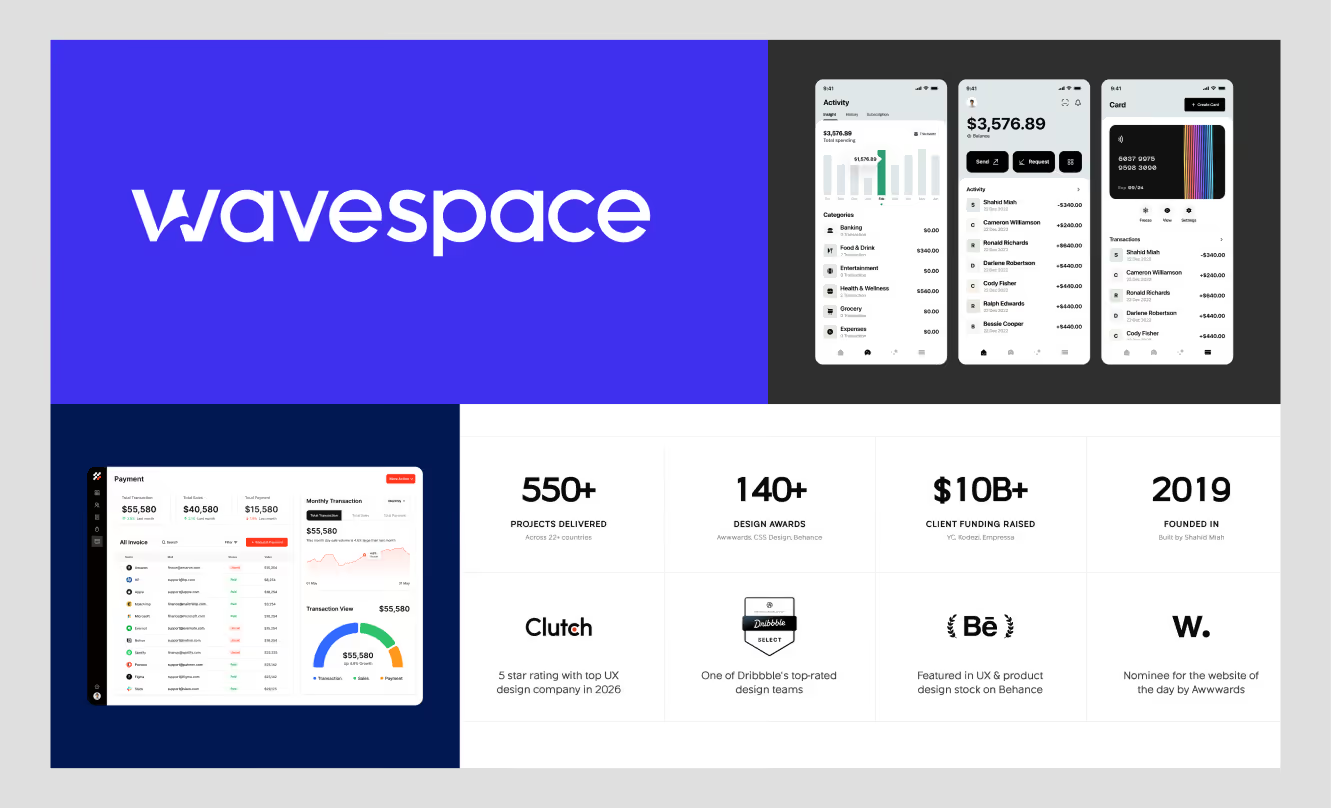
Wavespace is a global UX design agency for startups who have to ship, convert and scale. The team has worked with 500+ founders and influenced over $10B in portfolio valuations for teams backed by YC, a16z, Sequoia, and Techstars.
Wavespace is a bit of a fresh perspective on every engagement when it comes to fintech. This means that user onboarding flows that minimize drop-off, dashboards that instill confidence, and designs that grow with your product.
You can see this in action in their Quicky fintech SaaS case study and their Solon blockchain fintech app.
- Best for: SaaS fintech startups, product redesign and MVP-to-scale transitions.
- Fintech strength: Onboarding UX, conversion-focused design, trust-building interfaces
- Pricing: Custom quotes
- Founding Year: 2019
- Location: USA, Saudi Arabia, Malaysia, Indonesia and global

2. UXDA - Best for Digital Banking and Complex Fintech
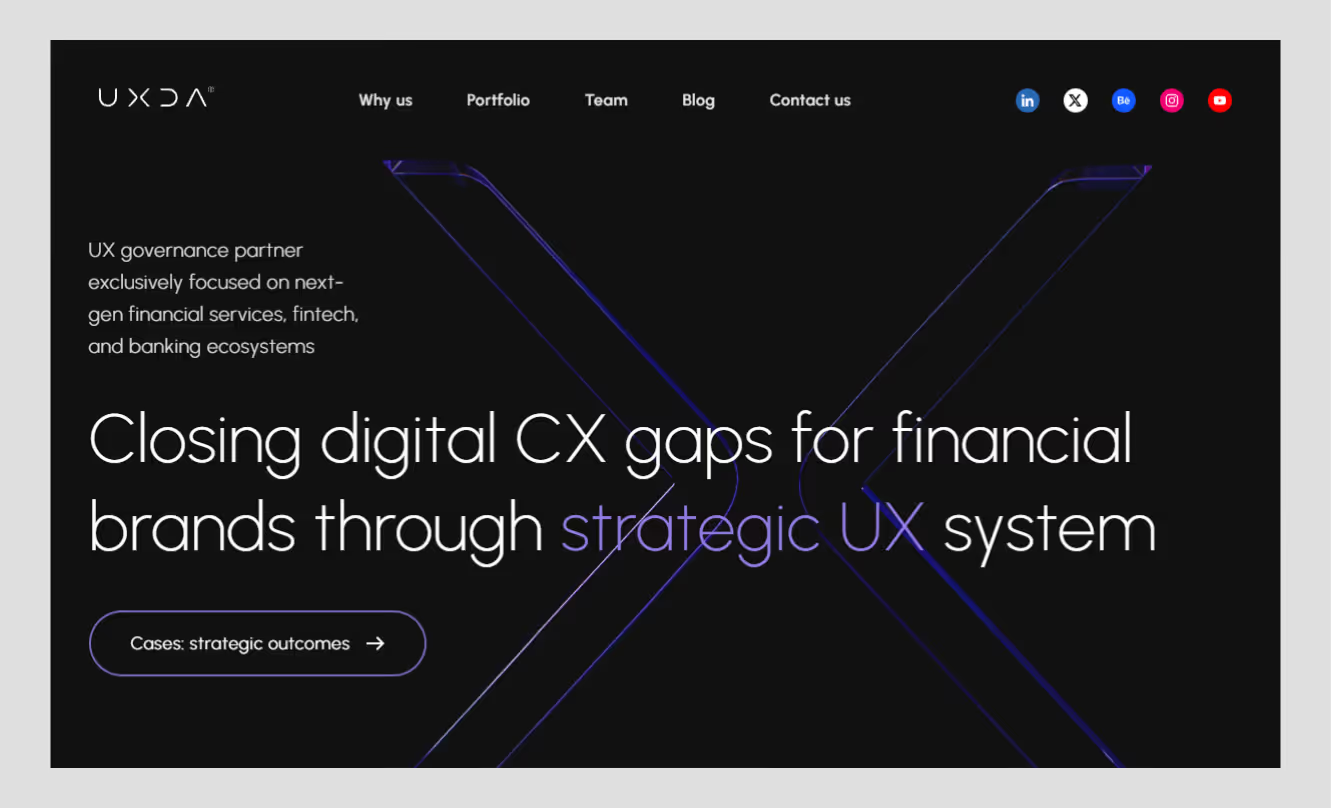
UXDA is among the world's most famous and well-known fintech design agencies. They have designed and delivered 80+ digital banking and fintech products, and won 2 iF Design Awards with a Clutch NPS score of 81.
They only operate in fintech, so having a deep understanding of compliance constraints, complex dashboard design and trust signals relevant to regulated financial products.
- Best for: Banks, neobanks, investment platforms and complex fintech products.
- Fintech strength: Award-winning specialization, UX compliant
- Pricing: $200-$300/hr
- Founding Year: 2015
- Location: Riga, Latvia
3. Stan Vision - Best for High-Converting Fintech UX
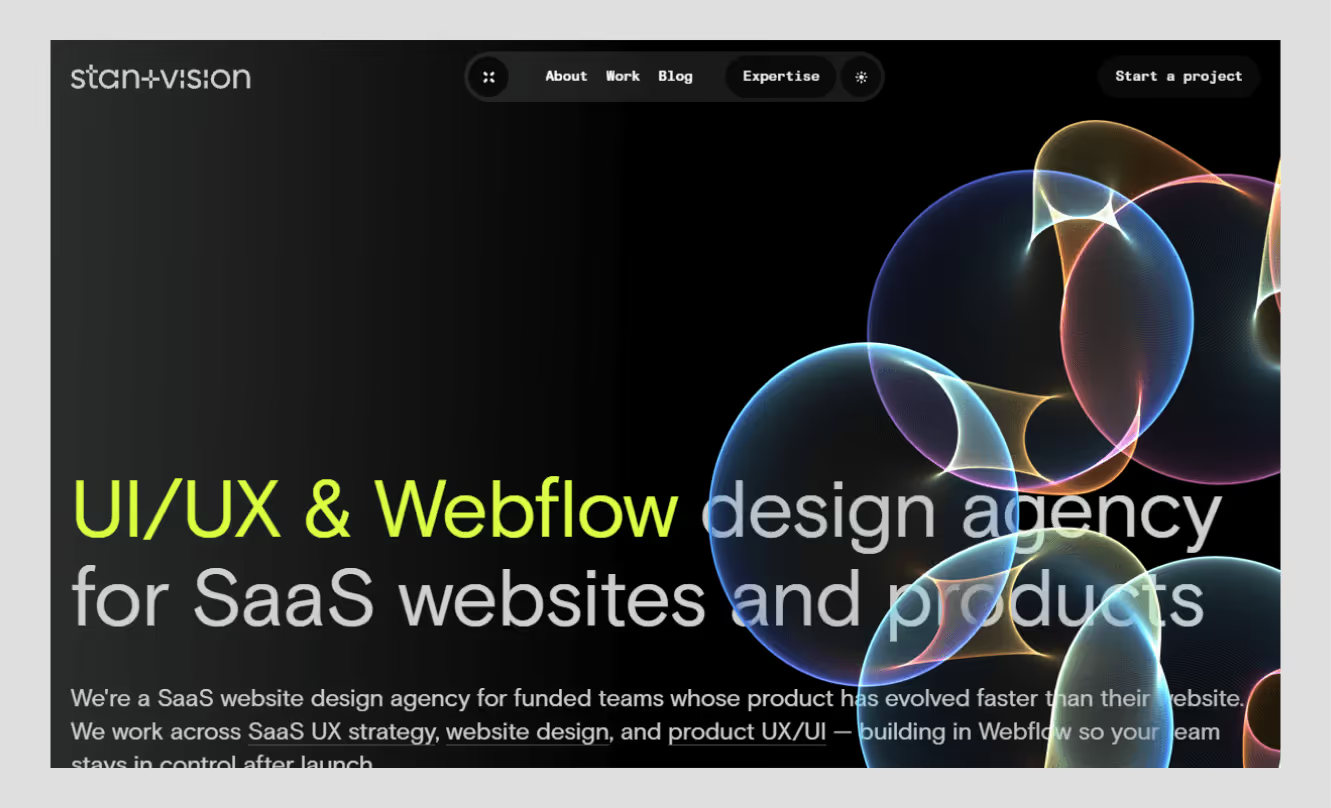
Stan Vision specializes in Fintech products that need to convert without compromising compliance requirements. They work in payment platforms, lending apps, and investment platforms where both the trust and speed of onboarding is important.
- Best for: Fintech products where conversion and regulatory fit must go hand-in-hand
- Fintech strength: Compliance-focused design, high-converting UI patterns
- Pricing: $50 - $99 / hr
- Founding Year: 2017
- Location: Sofia, Bulgaria
4. Goodface Agency - Best for Fintech Branding and UX

Goodface is a creative story and a well-designed product. They feature in several 2026 lists of fintech agencies, and they are famous for creating brand identity and UX for financial products.
- Use case: Fintech startups that require both brand and product design.
- Strength of fintech: brand-led UX, storytelling in financial products
- Pricing: On request
- Location: Kyiv, Ukraine
- Founding year: 2016
5. Excited - Best for award-winning fintech product design
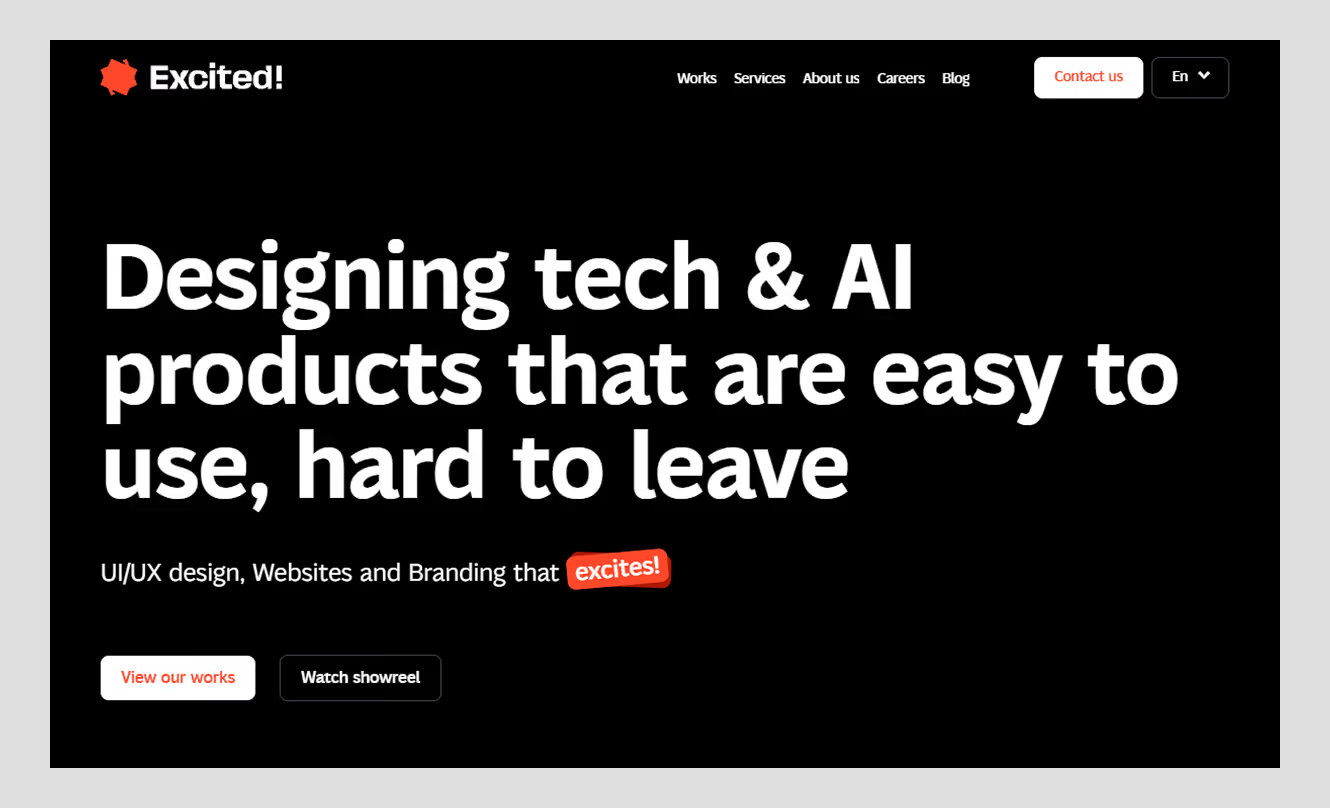
Excited is a digital product design agency that designs SaaS, AI, and complex B2B fintech products with a product-first lens: clarity, structure, and conversion over surface polish. Their fintech work spans the MeBahrain family banking app, Xilo's insurance quoting platform, and the InsuredMine CRM, and their shelf backs up the craft with Red Dot, Webby, Lovie, iF, and Awwwards wins, plus a top-5 UX ranking on Clutch.
- Best for: Well-funded fintechs that want award-grade product design across banking, insurtech, and B2B platforms
- Fintech strength: Complex dashboard and onboarding UX, in-house research-to-UI process
- Pricing: On request
- Location: Lviv, Ukraine
- Founding year: 2018
6. Gapsy Studio - Best for Fintech Startups and Tech Products

Gapsy Studio is a company with clean and modern UI and powerful visual systems. They collaborate with fintech startups and tech firms seeking interfaces to comprehend a sleek, user-friendly experience.
- Best for: Early-stage fintech startups, wallet apps, payment tools
- Fintech strength: Seamless UI, strong visual execution, fast delivery
- Pricing: On request
- Location: Warszawa, Poland
- Founding Year: 2017
7. Phenomenon Studio - Best for Holistic Fintech Brand and Product
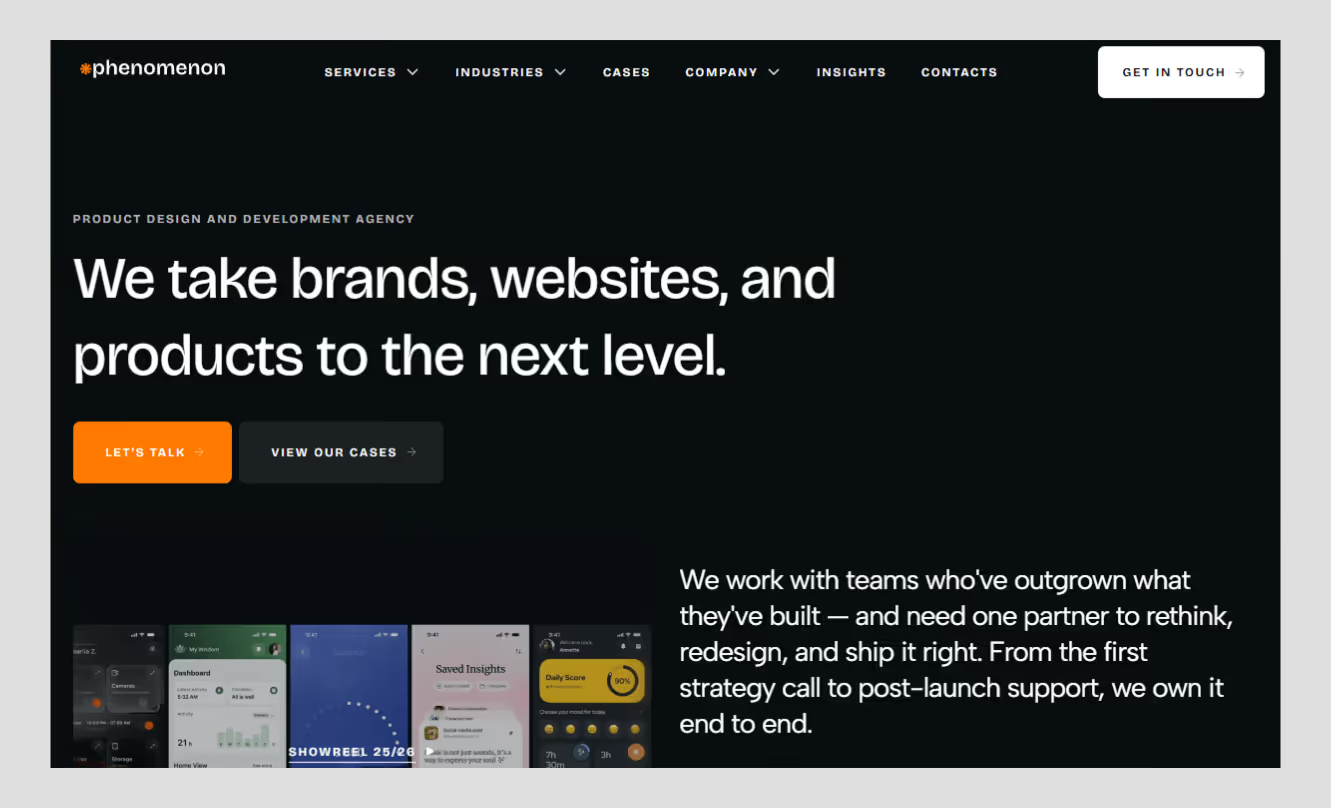
Phenomenon Studio is all about a holistic approach: brand identity, product design, and digital experience, all in one. This makes them ideal candidates for fintech firms undergoing a rebrand and a product refresh.
- Best for: Fintech teams rebranding and repackaging their product simultaneously
- Fintech strength: Brand plus product design combined
- Pricing: On request
- Location: Dover, DE
- Founding year: 2019
8. Blink UX - Best for Research-Heavy Enterprise Fintech
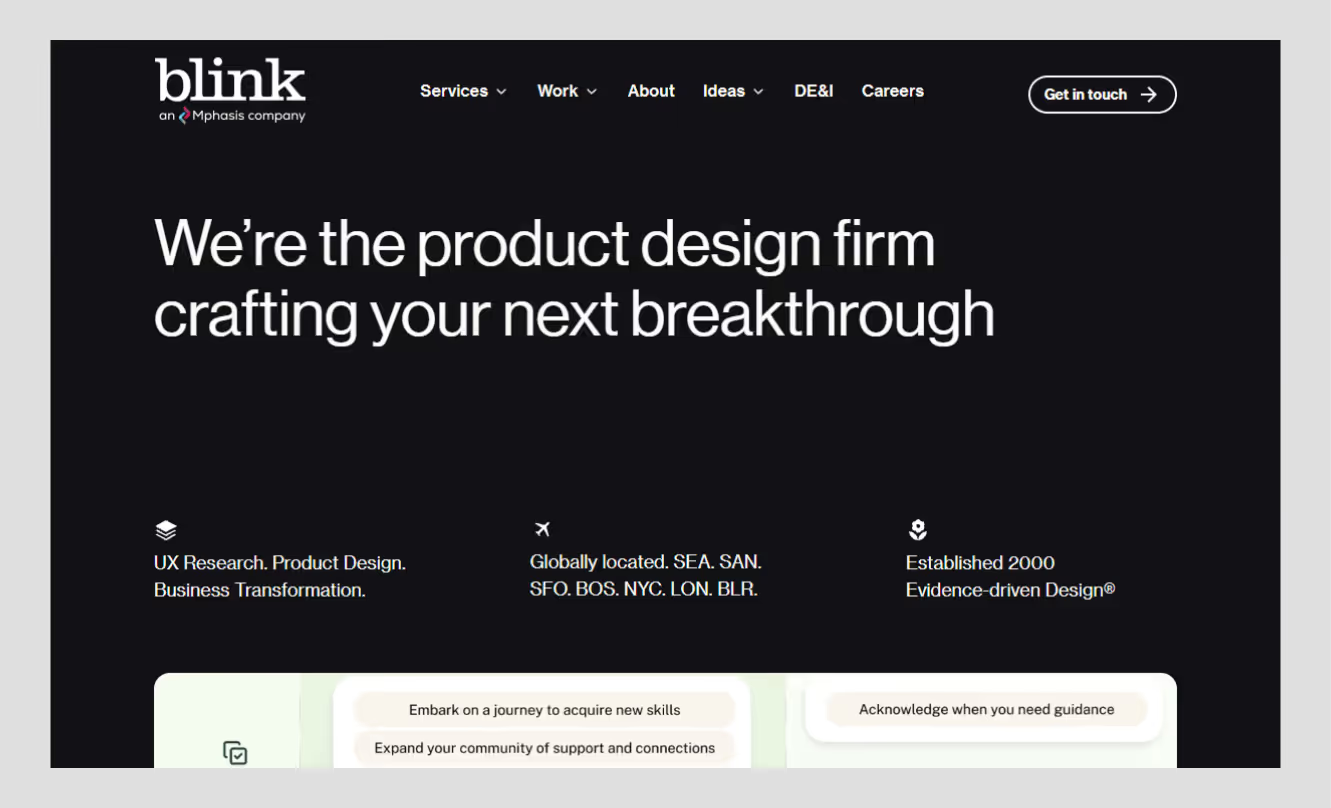
Blink UX leads the way with user research. They are data-driven, making them a good match for enterprise fintech products where decisions must be based on data, not assumptions.
- Best for: Enterprise fintech, regulated products, complex user research needs
- Fintech strength: Deep user research, data-driven design decisions
- Pricing: On request
- Location: Seattle, WA
- Founding year: 2000
9. UX Studio - Best for Mid-Market Fintech Products
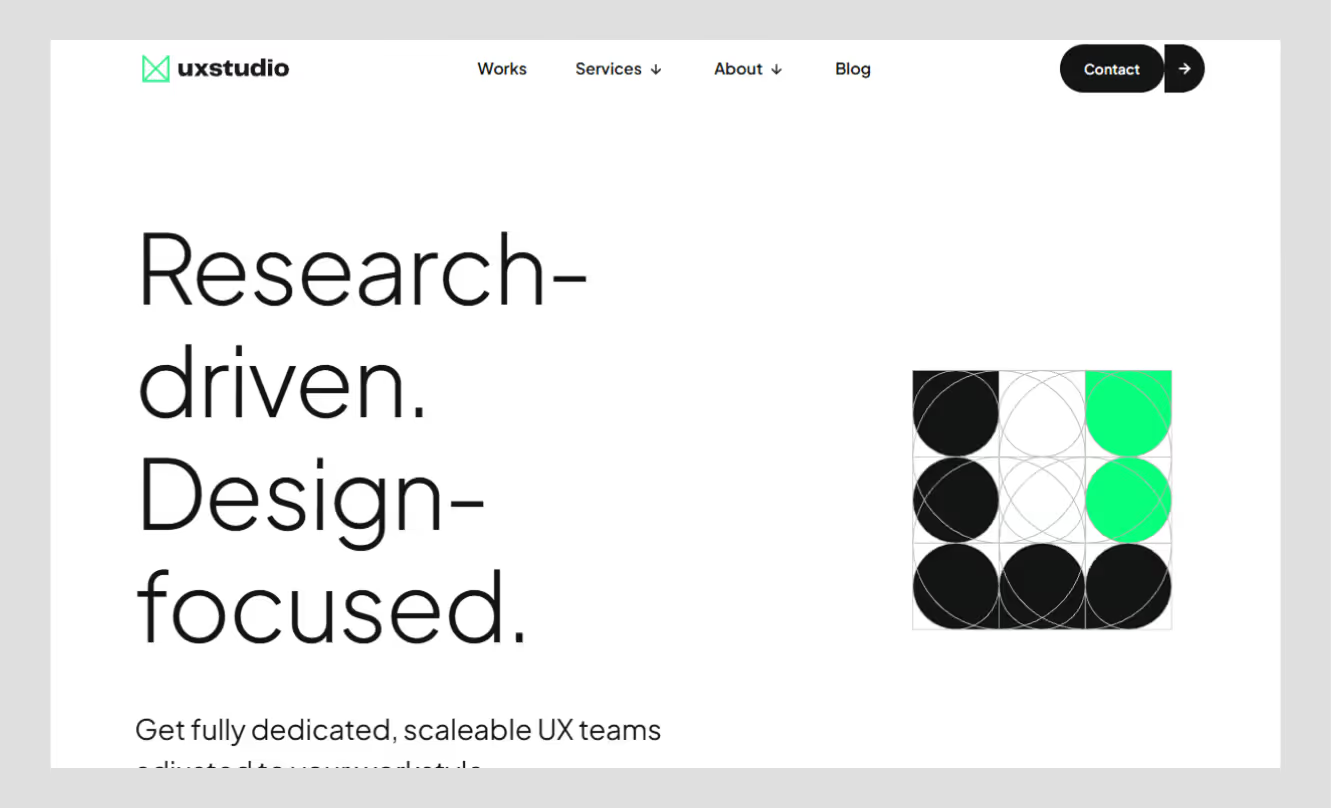
UX Studio takes a user-first approach to fintech. They listen to their users and research deeply to create engaging and functional products. Their philosophy is “deep research and user insights, making our designs both functional and engaging.”
- Best suited for: Mid-market fintech products, growth stage apps
- Fintech strength: User-centric methodology, strong research process
- Pricing: $50 - $99 / hr
10. Cieden - Best for Enterprise SaaS and Regulated Fintech
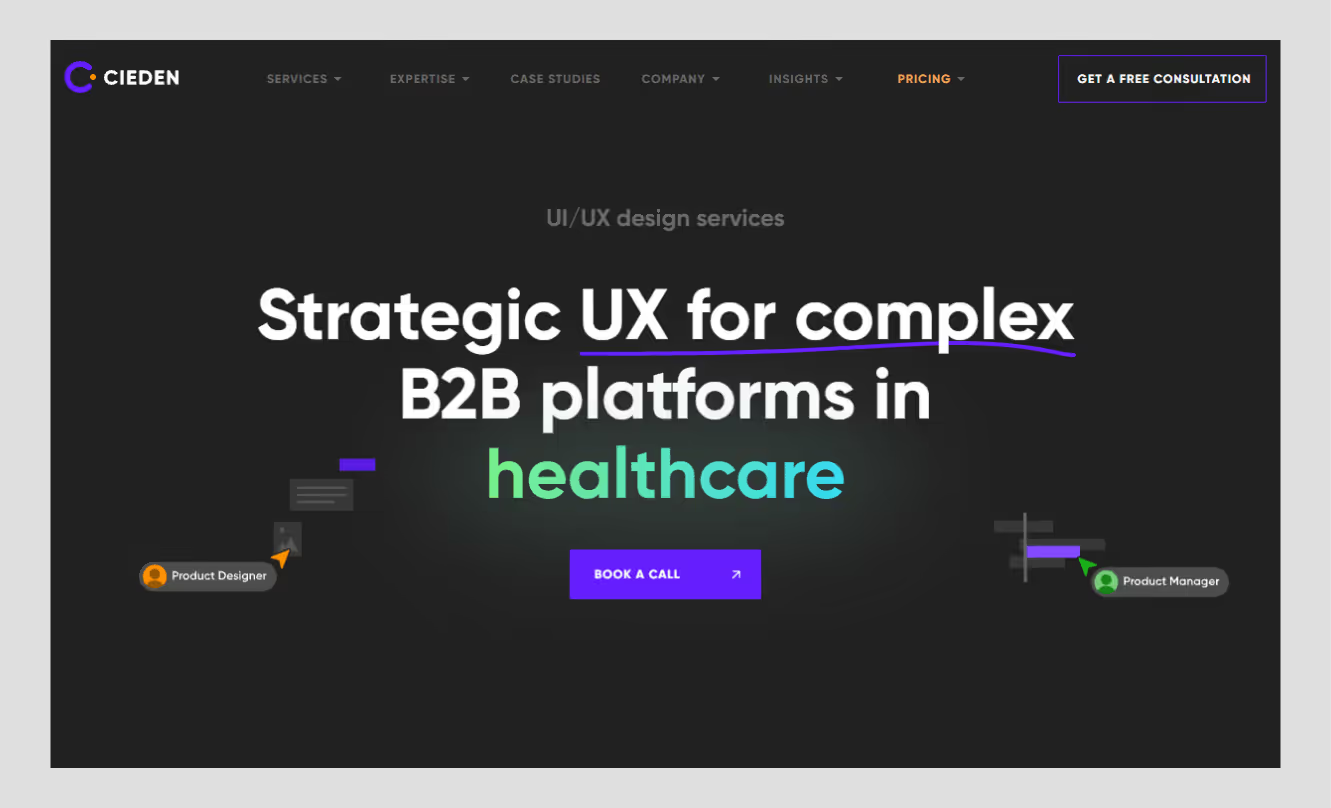
Cieden is also #2 overall on Merge's 2026 product design agency list and said they're “best suited for enterprise-grade fintech and SaaS, particularly in regulated environments.” They are data-focused and are suited for dashboards and flows that demand compliance.
Best for: Enterprise Fintech, SaaS platforms (regulated sectors)
Fintech strength: Analytics-driven design, compliance-aware workflows
Pricing: $6,000-$7,000/month
11. Purrweb - Best for Fintech Startups on a Budget
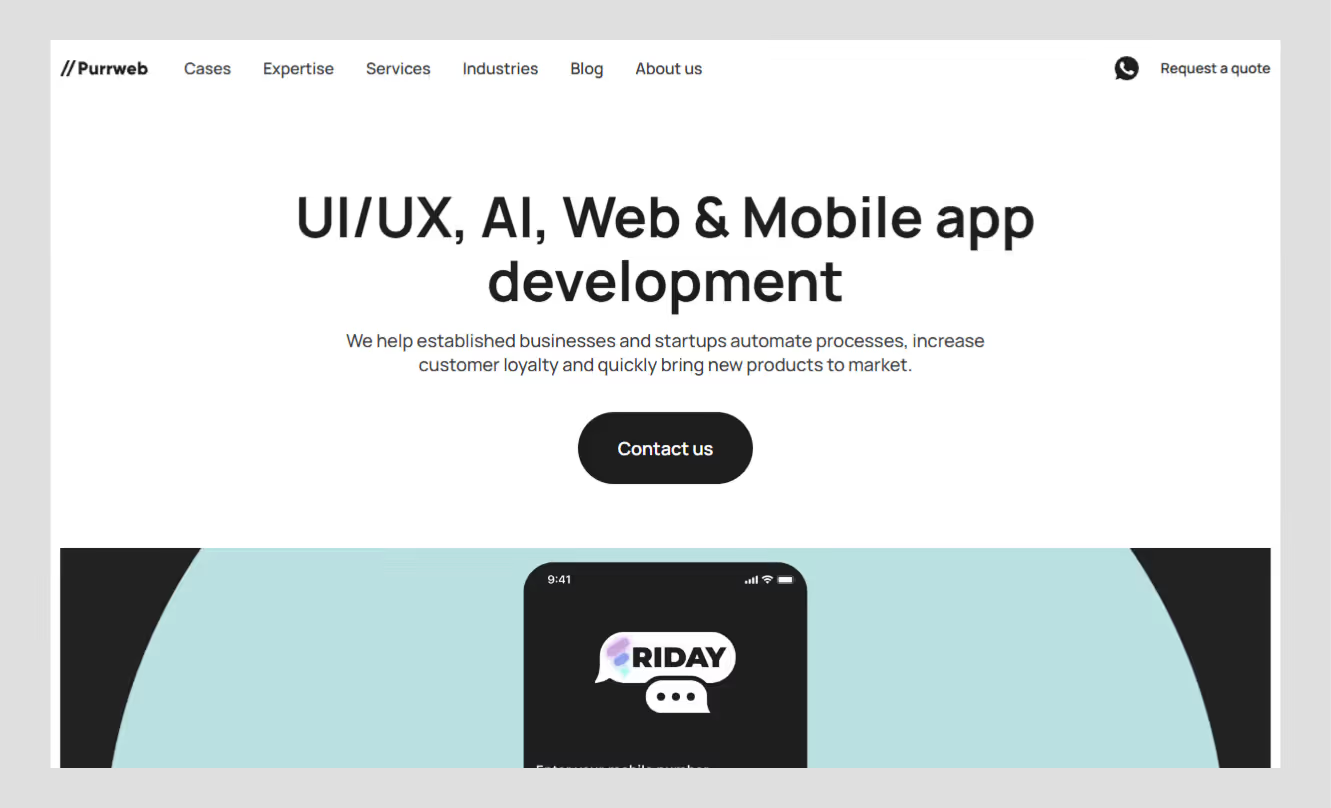
Purrweb can provide agile design and development for startups that require quick action with limited resources. They're an ideal option for early-stage fintech teams when they're testing their MVP or getting the initial version to market.
Best for: Budget-conscious fintech startups and MVPs, fast turnarounds
Fintech strength: Agile delivery, design, and dev in one team
Pricing: On request
12. Arounda - Best for Early-Stage Fintech Products
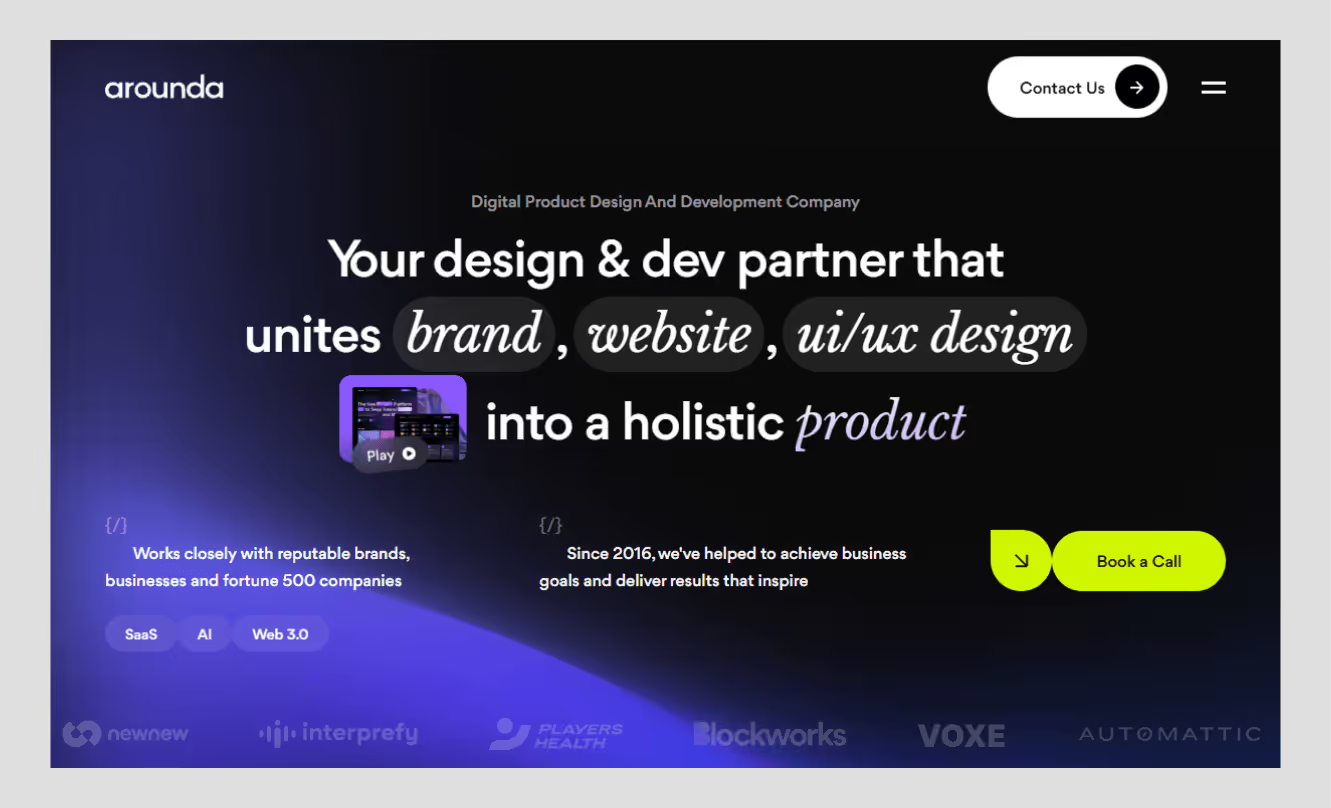
Arounda works with start-up businesses to create clean and modern product designs. They are execution-oriented and have a solid visual strength, which makes them a good choice for fintech teams looking to get a product out quickly.
- Best for: Early-stage fintech startups, wallet and payment apps
- Fintech strength: Clean UI, strong visual execution
- Pricing: On request
13. Qubstudio - Best for Legacy System Modernization
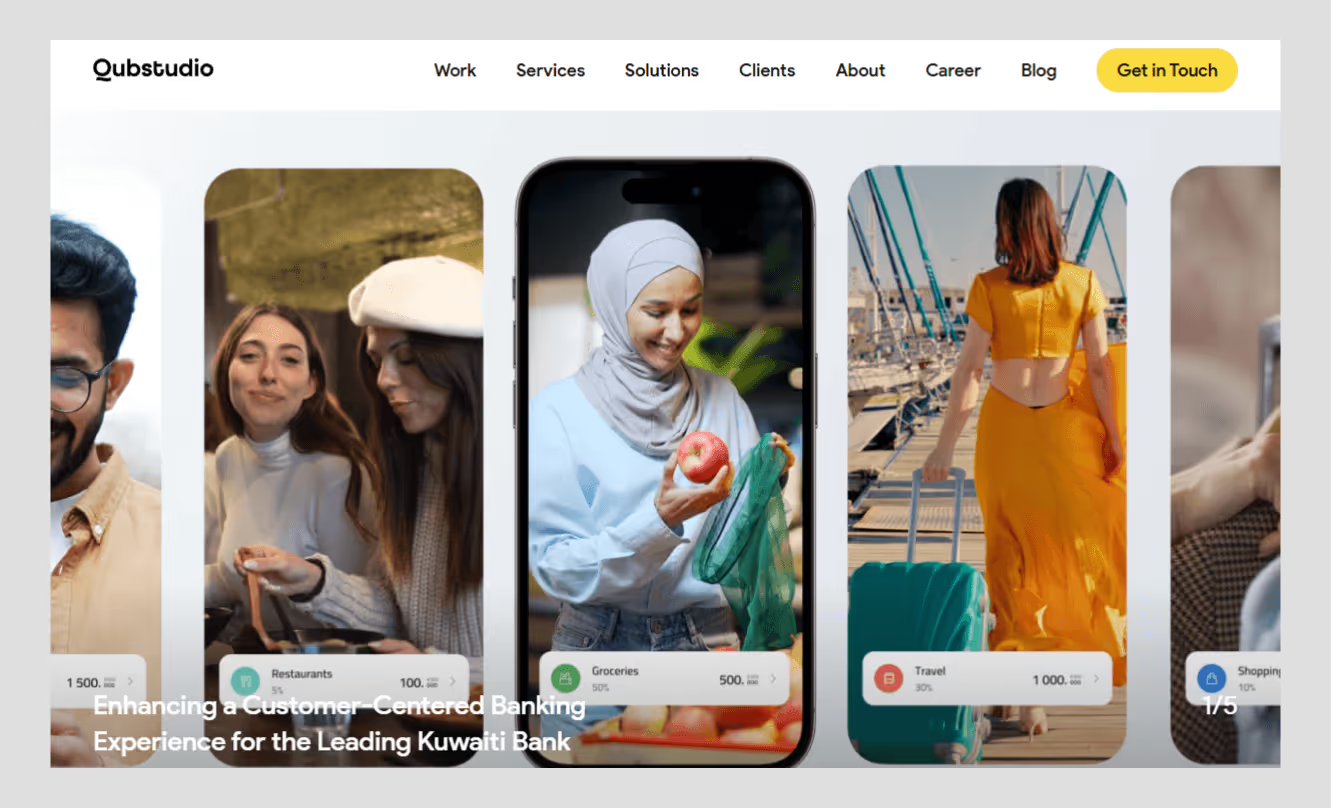
Qubstudio is focused on research-intensive user experience for complex platforms. Their focus is "research-heavy UX and modernizing legacy systems," making them a good match for fintech firms that are built on legacy systems that require a modern UX layer.
- Best for: Fintech companies looking to upgrade old systems
- Fintech strength: Research-based UX, system redesign of complexity.
- Pricing: $25-$49/hr
14. Denovers - Best for Fintech App Design and Development

Denovers does both UX design and development, eliminating handoff friction for fintech teams looking for one partner from wireframe to working product.
- Best for: Fintech teams seeking design and dev from a single partner
- Fintech strength: UX plus dev in one team, faster delivery
- Pricing: On request
15. Qubika - Best for Large-Scale Fintech Platforms
One of the oldest companies on the list is Qubika. They have 550+ professionals and 17+ years of experience, designed for huge fintech deals that demand technical punch and design sophistication.
- Best for: Large-scale fintech platforms, enterprise teams, long-term partnerships
- Fintech strength: Scale, technical depth, proven track record
- Pricing: On request
Quick comparison: Top UX design firms for fintech startups in 2026
What separates a strong fintech UX agency from a generic design firm
Beautiful screens are created by a generic design firm. A strong fintech UX agency understands what happens when a user hesitates at a payment confirmation, gets confused during KYC, or loses trust because a dashboard feels unclear. Those aren't visual problems. They're UX problems with real business consequences.
Strong fintech agencies do these things well:
- Design onboarding flows that reduce drop-off at every step
- Add trust signals to the interface, but not in the UI.
- Know compliance restrictions and plan for them, not with them
- Connect design decisions to metrics like activation rate, session depth, and retention
- Do not make assumptions; work from research.
Generic agencies often miss these:
- Compliance-aware design thinking (they treat it as a legal add-on, not a UX layer)
- Dashboard complexity (fintech dashboards aren't the same as standard SaaS dashboards)
- Trust-building UI patterns specific to financial products
- Post-launch iteration tied to business performance
The best fintech design partners show research depth, business-metric thinking, and real experience with the moments that make or break a financial product. Don't let a strong portfolio of consumer apps fool you into thinking they're ready for fintech.
How to choose the right fintech design firm for your product
Start with your product reality, not the agency's reputation. This is a very basic model.
Step 1: Define your biggest UX risk
What's the problem you're actually trying to solve?
- New product launch: You need an agency with a solid onboarding and trust-building process.
- Existing product redesign: You need one that can find friction and improve conversion.
- Dashboard overhaul: You'll need someone with experience in data-rich, compliance-driven interfaces.
- Brand plus product work: You need a team that can perform both brand and UX in one engagement.
Your shortlist should be based on your answer, not the agency's client logos.
Step 2: Ask these questions in your first call
Use these to reveal fit fast:
- How do you approach onboarding drop-off in a fintech product?
- Can you show a case where your design directly improved activation or retention?
- How do you handle compliance constraints during the design process?
- What does your discovery process look like before you start designing?
- How do you connect design decisions to business metrics post-launch?
If an agency can't answer these clearly, they're not a fintech specialist. They're a design generalist with a fintech case study.
Step 3: Evaluate the engagement model
Different teams need different models. Think about:
- Project-based: Best for defined redesigns or MVP launches
- Embedded/subscription: Best for ongoing product iteration
- Hourly: Best for targeted work like a specific flow or audit
If you're building or redesigning a fintech app, the design partner you pick will shape whether users trust your product, complete onboarding, and come back. That's worth taking seriously.
Common mistakes when hiring a fintech design agency

Most hiring mistakes come down to picking on the wrong signal. Watch out for these:
- Choosing on visuals alone. A stunning portfolio of crypto wallets doesn't mean they understand KYC flows, compliance constraints, or trust-building in a lending product. Ask about process, not just output.
- Overweighting brand name. Some of the most awarded agencies are built for enterprise clients with 6-month timelines. If you're a startup that needs to move in weeks, that's a mismatch.
- Ignoring the engagement model. A fixed-price project agency isn't set up for ongoing product iteration. Make sure the model fits how your team actually works.
- Skipping the discovery conversation. If an agency jumps straight to proposals without asking about your users, your drop-off points, or your compliance context, that's a red flag.
- Treating hourly rate as a quality signal. Value is determined by the agency's expertise and problem-solving capabilities." A $25/hr agency with deep fintech experience can outperform a $200/hr generalist every time.
The real question isn't "which agency is the best?" It's "which agency is the best fit for my product's specific risk?"
Last but not least: Choose the best fintech design company
Match the agency to the Risk, Not the Hype
The most famous fintech design agency is not the best. It's the one whose strengths line up with your product's real friction points. If drop-off on the new hires is your greatest risk, look for an agency that has already overcome it. When it comes to compliance-sensitive flows, look for one that considers regulatory requirements as a design element, not a legal requirement.
If it's trust, look for one that can show how they have created confidence in a financial interface beyond mere appearances. To create your shortlist, use the comparison table at the top of this guide. Then use the questions in the selection framework to test fit before you commit.
Want to go deeper on what great fintech UX actually looks like in practice? The banking app UX breakdown covers 15 real examples. And if you're still mapping out costs, the fintech app design and development cost guide breaks down what to expect at every stage.

Fintech design agency: common questions to ask

Most fintech design engagements run between $15K and $50K for a focused product or marketing build, scaling past $250K for full platform work. Price moves with screen count, whether a design system already exists, and how much research the regulatory surface demands. It's the scope that's the real cost driver, not the hourly rate.
A good agency designs around the constraints rather than bolting them on after, disclosures placed where users actually read them, consent flows built for GDPR, authentication aligned with frameworks like PSD2, KYC and AML steps mapped into onboarding. The agency does not replace your legal team. It cuts the revision cycles legal review triggers, which is where most fintech projects lose time.
A focused fintech engagement runs 6 to 12 weeks. Discovery takes 2-3 weeks, wireframing takes 2-4 weeks, high fidelity UI takes 3-6 weeks, handoff takes 1-3 weeks. Multiple user role platform redesigns take 12-20 weeks. Include compliance review cycles from week one - these will take time.
A general studio can produce strong visuals, but a team that has shipped financial products already understands the parts that break: failed verification, step-up authentication, KYC drop-off. A generalist learns those on your budget. For anything touching money movement or regulated data, the specialist saves you the catch-up weeks.
Hire an agency when you need to ship a validated product in 3 to 6 months, lack fintech UX depth internally, or want senior design without full-time headcount. Build in-house once the product is established and iteration is constant. Common path: an agency builds the system, the in-house team maintains it.
Look for shipped products with named clients, not concept work. Strong signals: real data density in dashboards, onboarding flows that show failure states and not just the happy path, and case studies that explain how a regulatory constraint changed the design. Polished screens with no outcome are the thing to walk away from.

More related blog
Design & development in one team. Let’s talk!















.png)



Francisco, CA 94105, United States





































.avif)