






























Our UX team helps VC-baked and early-stage founders win big to scale
via redesigns
delivered
a16z, Sequoia, Techstars.
America [6 locations]


Europe [5 locations]


Middle East [3 locations]


Asia Pacific [3 locations]


Global reach. Local excellence.
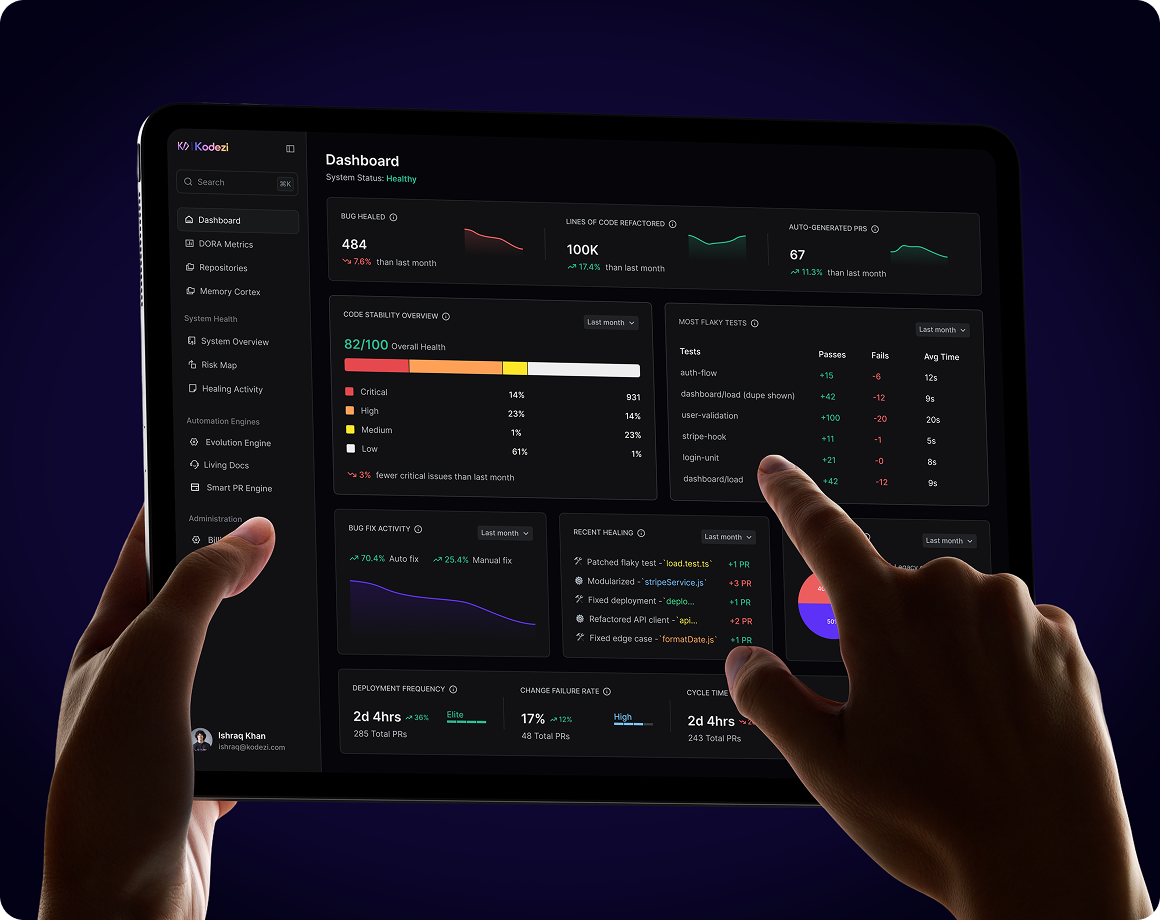
We design, build, and ship on your demand
A fast, transparent process we follow that takes your product from concept to market with less friction and better results. Here's how we take your product from idea to live.

What global team say about us


Questions
You need an AI MVP before building a full-fledged AI product to secure your idea, budget, and business vision. Many startups and enterprise teams jump straight into full-fledged construction, then realize that the product doesn’t meet real user needs. An AI MVP provides clarity before making promises.
One obvious problem with an AI MVP is that it focuses on core AI use cases and a real user flow. This helps test user experience, UI logic, and product value with real users, not guesswork. For B2B and SaaS teams, this step reduces risk, speeds up learning, and avoids costly refactoring later. You can validate data flows, model behavior, and business impact early on with custom solutions tailored to real-world use cases.
AI MVP development services also help small startup teams and enterprise leaders align product, UX strategy services, and technical support from day one. When guided by specialists, an agency, or a consultancy that understands AI, UX, and product growth, the MVP becomes a smart bridge. It turns ideas into proof, feedback into direction, and vision into a scalable AI product.
An AI MVP typically takes 6 to 12 weeks for startups, whereas enterprise AI MVPs can take 3 to 6 months, and in regulated industries like fintech or healthtech, it can take 6 to 12 months due to compliance requirements.
And this timeline is not about how quickly the code is written. It depends on how clear the product goal is from day one. A focused AI MVP starts by defining a real business problem, structuring the user experience, and designing clean UI flows that B2B users can test in advance. When the scope stays tight, teams move faster and learn more.
For startups, speed matters. An MVP built with the right AI MVP development services helps validate the product, data flow, and user trust without high costs. For enterprise teams, timelines extend due to security reviews, IT rules, and system links.
When specialists, a UX agency, or a trusted AI MVP development company handle strategy, design, and build together, delays drop. The result is a custom AI product that feels ready for scale, not rushed.
The best AI use cases for an MVP are those that solve one clear problem with fast user feedback, such as prediction, automation, or smart assistance.
And these use cases work well because they prove value without a heavy build. For many startup and enterprise teams, AI MVP development services focus first on chat-based support, data insights, demand forecasts, content tagging, fraud flags, or user scoring. These ideas fit MVP goals since they rely on clear inputs, simple outputs, and real user action.
B2B SaaS products often start with AI that saves time or cuts manual work. That could be smart search, lead scoring, document review, or usage tips inside the product UI. These use cases improve the user experience quickly and see business impact early. They also help teams test trust, accuracy, and flow before fully launching.
Whether run by a specialist UX agency or an AI MVP development company, the MVP is focused. You learn what users value, what refines the product, and simply how it works to scale.
An AI MVP is validated by testing technical performance, user adoption, and real business impact at the same time.
And this step is where many startup and enterprise teams gain clarity or save themselves from costly mistakes. Technical feasibility is tested by reviewing data quality, model accuracy, speed, and system stability. AI needs to work in real-world situations, not just demos. Teams test how well the product fits into existing IT flows and whether technical support can be scaled.
Commercial feasibility comes from real user behavior. B2B users interact with the MVP, and their actions reveal value. Are they returning? Does the AI reduce time, cost, or effort? Clear user experience, simple UI, and focused product flows make this feedback honest and useful. Early pricing signals, usage patterns, and business goals guide next steps.
AI MVP development services often combine UX strategy services, testing, and design audits to read these signals fast. When specialists, an agency, or a consultancy validate both sides together, founders gain confidence. The MVP proves not just that AI works, but that the business does too.
An AI MVP requires clean, relevant, and problem-focused data that reflects real user behavior and real business cases.
And this is where many startup and enterprise teams feel stuck. You do not need massive data sets at the start. The key things are quality, context, and how well it fits your product idea. Most AI MVP development services require structured data, like, customer data, logs, records, or labeled data. If you're doing B2B or SaaS products, that often means usage data, transaction history, text, or just simple examples that are easy to understand.
Data that's not structured, like documents, chat logs, pictures, or audio, can work too, but only if it's for one specific thing. It's best to keep early MVPs focused. Too much data makes things messy, slows you down, and makes the user experience bad. Smaller, well-prepared sets let you test things faster, make better UI, and it's much easier to see what's going on.
Specialists often audit data early to check gaps, bias, and readiness. With the right agency, consultancy, or AI MVP development company, data planning becomes simple. The goal is not perfection. It is learning fast, proving value, and preparing the product to scale with confidence.
Yes. An AI MVP can absolutely be built even when your data is limited or unstructured. And this is a common place where many startups and enterprise teams begin.
Early data is often messy, spread across tools, or not labeled well. But a smart AI MVP development company knows how to work with that reality. We begin with a focused strategy, defining a clear MVP scope and selecting a key use case. Our AI solutions are built with data sampling, public datasets, synthetic data, or rule-based logic. This approach helps keep costs down and manages risk.
Yet, the key strength comes from the user experience. A strong UX agency aligns the AI logic with real user flows, clean UI, and clear feedback loops. That way, your product still feels sharp, useful, and trusted from day one.
This is how leading digital product design studios help B2B, SaaS, and startup teams test ideas fast, learn early, and grow with confidence. And once real users interact, better data follows naturally.
Yes, when we create an AI MVP with growth, data expansion, and enterprise demands foremost at the start, we guarantee that it can scale into a production-ready system.
A flexible product setup is the first step in building the basis. A professional AI MVP development agency provides cloud-ready systems, clean APIs, and modular architecture to allow features, models, and users to expand without rework. This keeps the MVP lean today and stable tomorrow.
But scale is not only a technical task. Strong user experience design firms focus on UI clarity, reusable components, and smooth user flows that support future redesign, full rollout, and B2B adoption. A skilled UX design agency and UI UX design company ensure the product feels consistent as complexity grows.
As more people begin using the product, AI MVP development teams add better data processes, model updates, testing, and security that fit both startups and big companies. This approach is why leading digital product design studios and top UX strategy and design audit firms help MVPs grow into trusted, scalable SaaS and AI products with confidence.
UX design and user feedback guide how an AI MVP is shaped, trusted, and improved from the first release.
This role is key for startups and big companies. AI products often fail because of bad user experience, not weak models. UX design makes AI logic clear with good flows, simple UI, and moments of trust. It lets users understand what the AI does, why it's important, and how it helps their business.
User feedback then becomes the real signal. B2B users show what works through behavior, not opinions. Where they click, pause, or drop tells the truth. This method helps teams fix product logic, update the UI, and improve its accuracy without guessing. It also prevents heavy redesign later, which saves time and cost.
AI MVP development services that blend UX strategy services, testing, and iteration help teams learn fast. When specialists, a UX agency, or a design-focused consultancy listens closely to users, the AI MVP grows into a product people trust, use, and recommend.
To handle AI model bias, security, and follow the rules in MVPs, we start by checking data early, running tests in a safe space, and adding security from the start.
And this is better than speed. Numerous startup and enterprise teams make AI MVPs in a hurry, only to experience trust problems in the future. The bias can be minimized by looking at the training data early, testing the edge cases, and maintaining the focus on a single use case of the model. Small and clean datasets can quickly identify mistakes and swiftly replicate them into the product.
The security is managed in-house using secure access to data and role-based controls, and safe system design. User data, workflow, and business logic must be secured by even the MVP-level products of B2B and SaaS. This prevents expensive repairs in full implementation. In the case of controlled spaces, such as fintech or healthtech, compliance checks do not begin at launch.
AI MVP development services typically involve UX strategy services and testing to make sure that users interpret AI decisions properly. When specialists, an agency, or a consultancy plan bias, security, and rules upfront, the MVP stays lean, trusted, and ready to grow into a full AI product without fear.
After an AI MVP is launched and validated, teams move into refinement, scale planning, and full product growth.
And this phase is where real momentum starts. User behavior now guides decisions, not guesses. Startups and enterprise teams review feedback, usage data, and business results to improve user experience, UI flow, and core product logic. Features that prove value are expanded, while weak ideas are removed before they cause drag or force a redesign.
Technically, teams reinforce the AI model, enhance the quality of data, and train the system to be under a heavier load. Security, performance, and technical support are enhanced to fit into real-world usage. Many B2B and SaaS products also revisit homepage design, brand clarity, and onboarding to support wider adoption.
It is usually the time to recruit experts, a UX agency, or a full-service AI MVP development firm to lead the next process. Where the appropriate agency or consultancy is involved, the MVP can grow into a fully AI product, which can be considered stable, trusted, and business-scale-ready. Validation proves demand. What follows builds the best company around it.

Hi, I'm Shahid, the CEO and Founder of Wavespace. Don’t hesitate to reach out to me anytime – I’m here to answer all your questions!
Have a Project? Let’s talk!


.png)


.png)
.png)
.png)
.png)

.png)