How much does it cost to design an app in 2026


AI summary:
Designing a mobile app in 2026 costs between $5,000 and $80,000+, depending on complexity, platform, and design depth. MVP apps cost the least, while AI-driven or enterprise apps require higher investment. Strategic UX planning reduces long-term cost and improves ROI.
Key Takeaways
Before reading all the other things, let’s begin with the most important ones.
First, the design of your app is not only about the appearance of your app. It is related to the way users perceive your app. Users walk out when they get confused. They remain when they feel at home. This directly impacts on your business.
Second, app design does not have a fixed price. Two applications may appear to be similar yet priced very differently. The difference is typically based on planning, number of screens and the thinking behind the design.
Third, it is cost-effective to start small. Most founders attempt to fit everything in one design. This nearly always adds cost and postpones launch. It is more intelligent to build an MVP and then refine the result based on user experience.
Lastly, it is more about selecting the appropriate design partner and not the lowest priced one. An effective team will ask questions, challenge ideas and will ensure that you do not make mistakes. That is where real value comes from.
App design cost statistics
Many founders ask one question first: “How much does app design really cost in 2026?”
It depends on the actual project data in recent years. Well, we have to discuss real numbers first before discussing theory. Founders want numbers. Buyers want clarity. So here it is.
Average mobile app design costs in 2026
The cost of app design is now more predictable in 2026. The market has matured. The agencies have more open procedures. Buyers also know more. There are three distinct categories of most app design projects.
Simple apps or MVPs
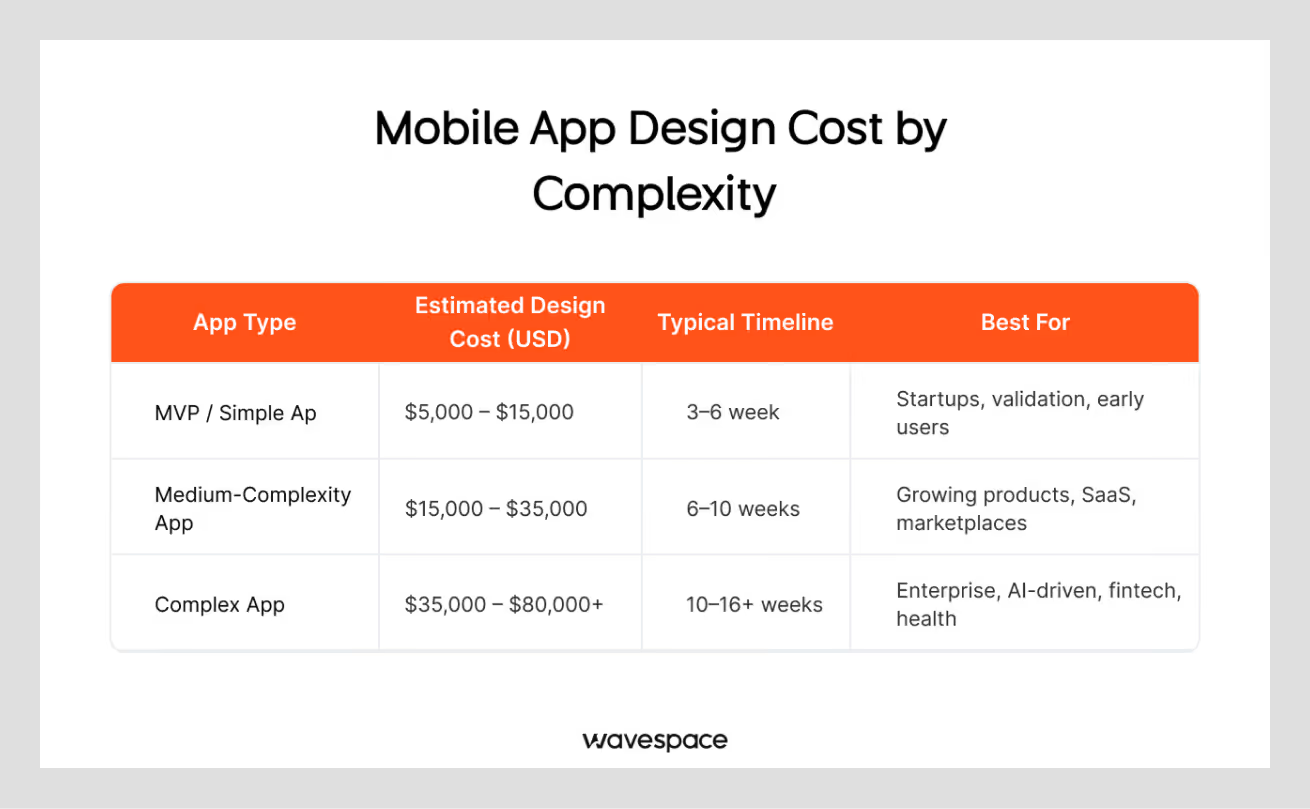
The apps typically cost between $5000 and $15000 to design. They concentrate on a single issue. They have fewer screens. They do not use sophisticated features.
Medium-complexity apps
These apps usually cost $15,000 to $35,000. They consist of user accounts, dashboards, settings, and several flows.
Complex apps
These applications cost between $35,000 and a lot more. They are AI-based, real-time data, personalized animations, numerous user roles, and rigid regulations.
Important note:
These numbers are for design only, not development
Industry-specific app design cost trends
Not all apps are the same. Design cost is heavily dependent on the industry. As an example, an e-commerce application needs to gain trust quickly. Before making purchases, users must feel secure. That means strong UX, clear product pages, and simple checkout flows.
SaaS apps usually cost more to design because they include dashboards, long workflows, and many edge cases. One small UX mistake can confuse users.
Even health and finance apps are more complicated. They require accessibility, readability, and error-free. Designers must think more. That increases cost.
Simple content apps, learning apps, or internal tools tend to be cheaper as the risk is less.
When someone tells you that their friend developed an app cheaply, always inquire: What type of an app was it?
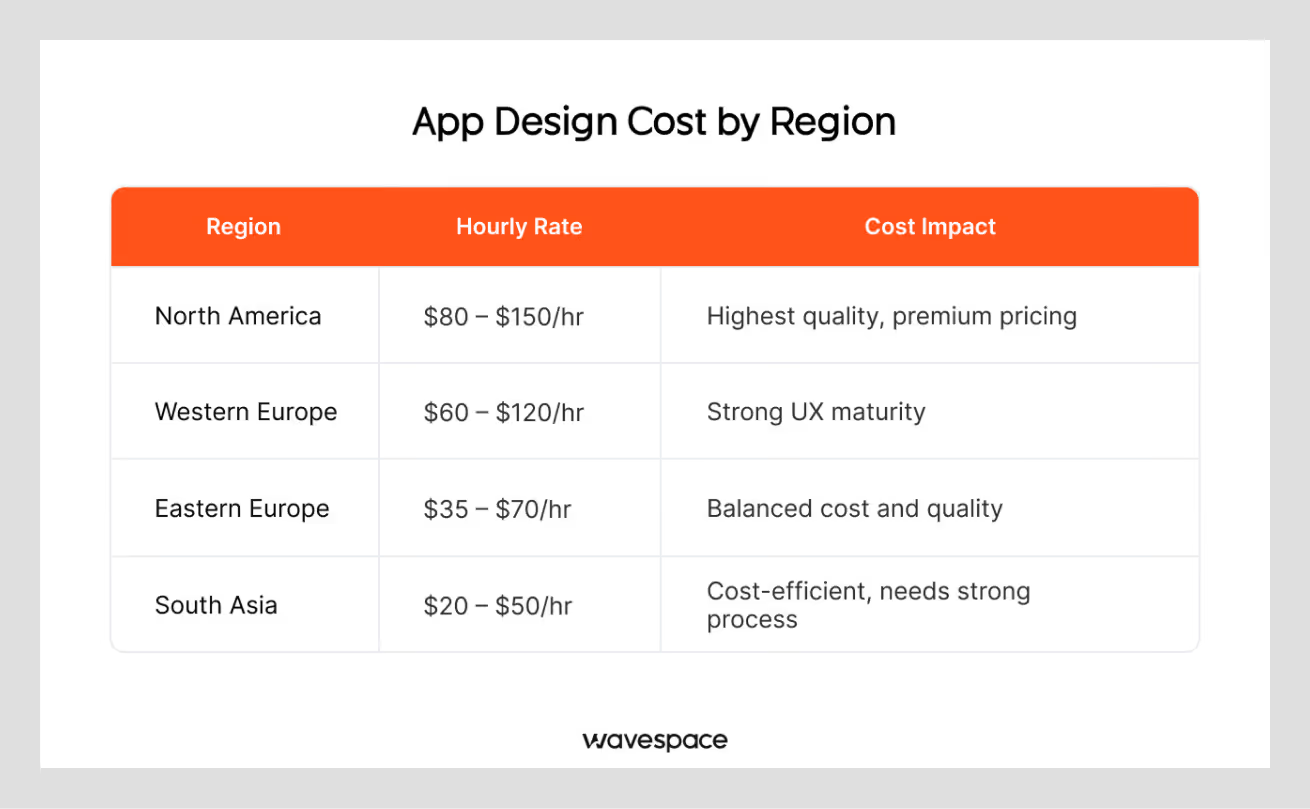
Regional variations in app design costs
Where your design team lives also affects price.
- The North American and Western European teams are more expensive. They have higher hourly rates. A lot of them have experience with startups and businesses.
- Teams in Eastern Europe often offer a good balance. Prices are cheaper than US, and quality may be good.
- Teams in South Asia usually charge less. This can be great for budget control, but only if the team has strong leadership and a clear process.
The low price should never be your choice. Low-cost design without consideration is a greater problem in the future.
What is mobile app design?
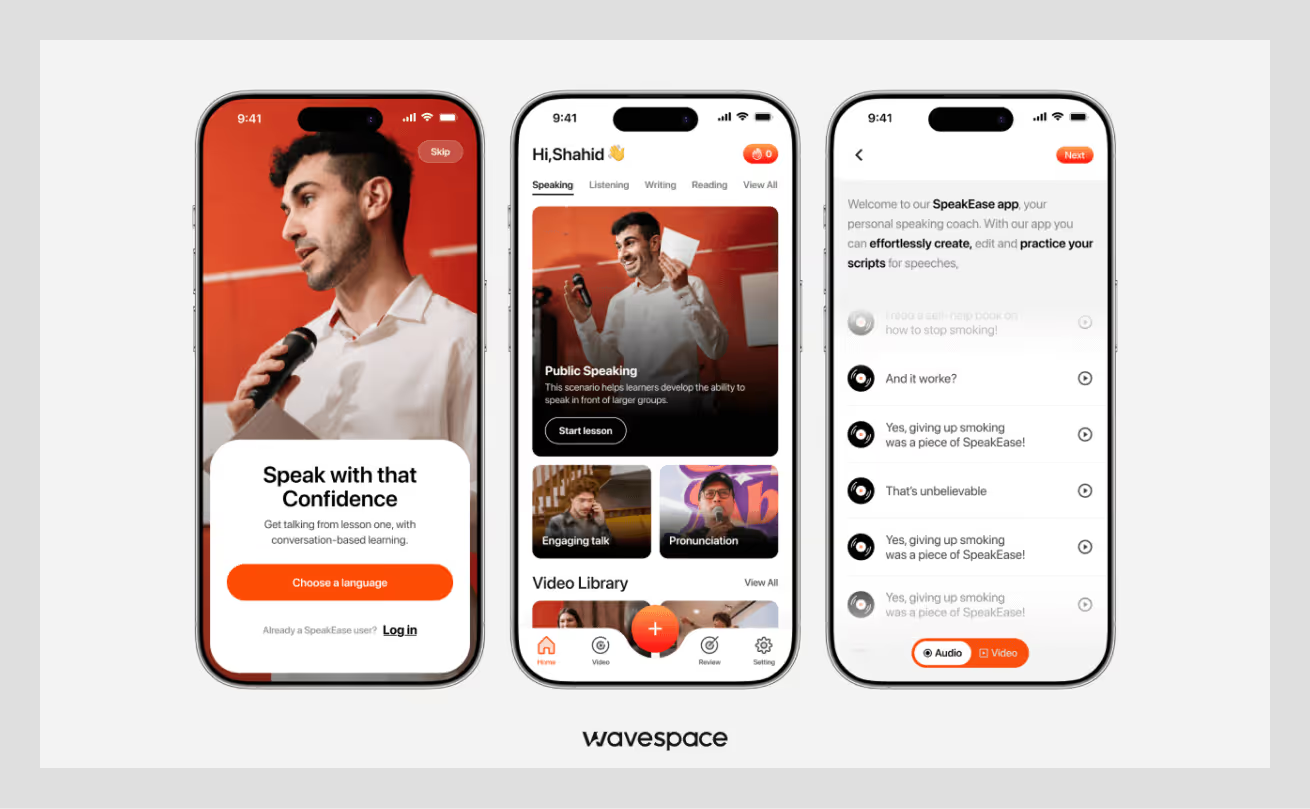
The process of determining how an app works and how it feels to the users is called mobile app design. It includes the navigation of the users within the app, what they see on the screen, and the ease of doing a task. A good design makes a complicated concept sound easy. Poor design causes the easy things to be difficult.
Design will influence the trust of users in your app, their pleasure in using it, and their return.
It decides:
- Where users tap
- What they see first
- The way they pass through the screens.
- How easy or hard tasks feel
UI vs. UX: What’s the difference?
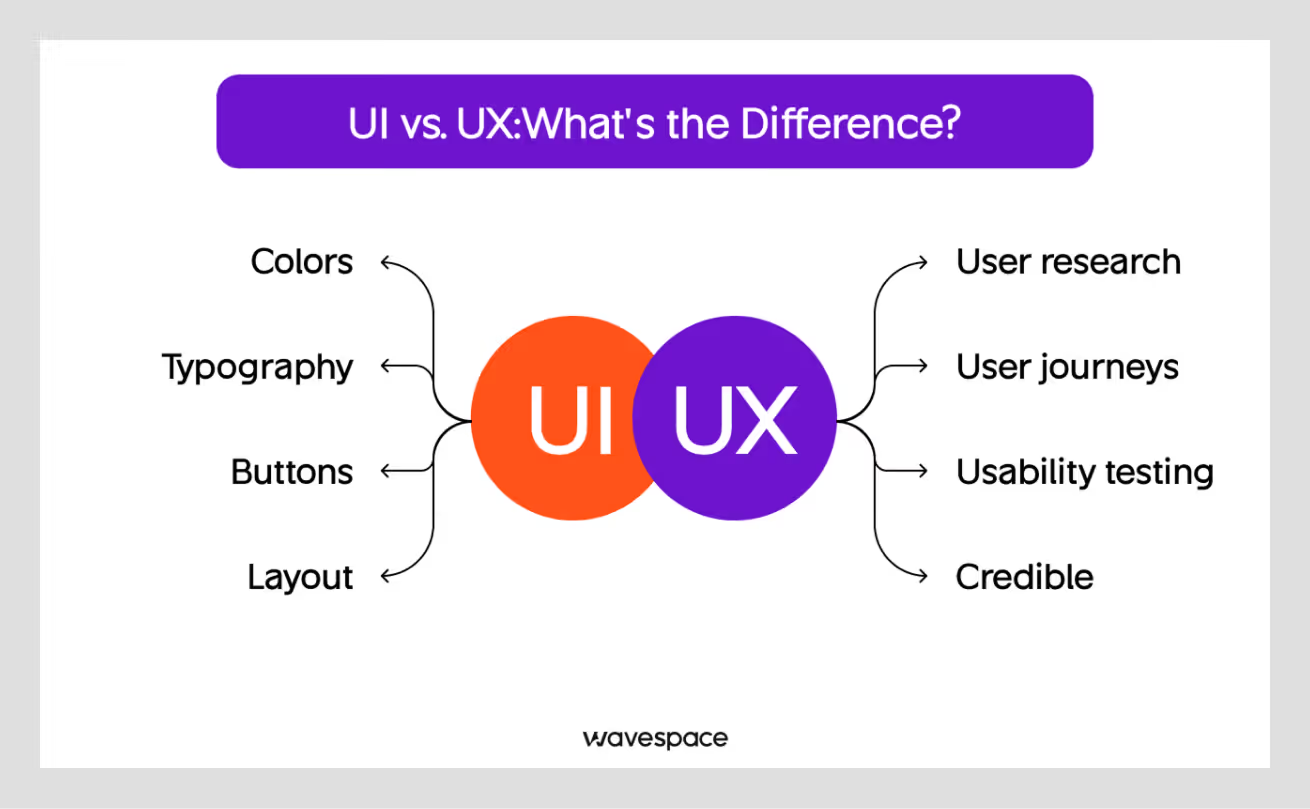
Multiple founders listen to UI and UX and get confused. Let’s make it simple.
- UX design is about how things work.
- UI design is about how things look.
UX answers questions like:
- What happens when a user clicks here?
- Can users finish tasks easily?
UI answers questions like:
- What color is the button?
- How does the screen look?
UX always comes first. UI supports UX. If UX is bad, beautiful UI will not save your app.
Why Design Matters for Mobile Apps
The user makes a fast decision to determine whether an app fits. In case they open an app and get confused, they close it. The majority of users do not give second chances.
Design enables users to know what to do without much thinking. It causes confidence and less frustration. Design is also cost-saving in development. Clear design reduces mistakes, rework, and delays.
How Design Affects User Engagement and Retention
Good design takes users in the right direction. It tells them how to move forward and makes them successful. This makes it more interactive and makes users revisit.
Poor design creates friction. Potential users hesitate, make mistakes, and end up leaving. Even with the good features of the app, retention declines.
What are mobile app design services?
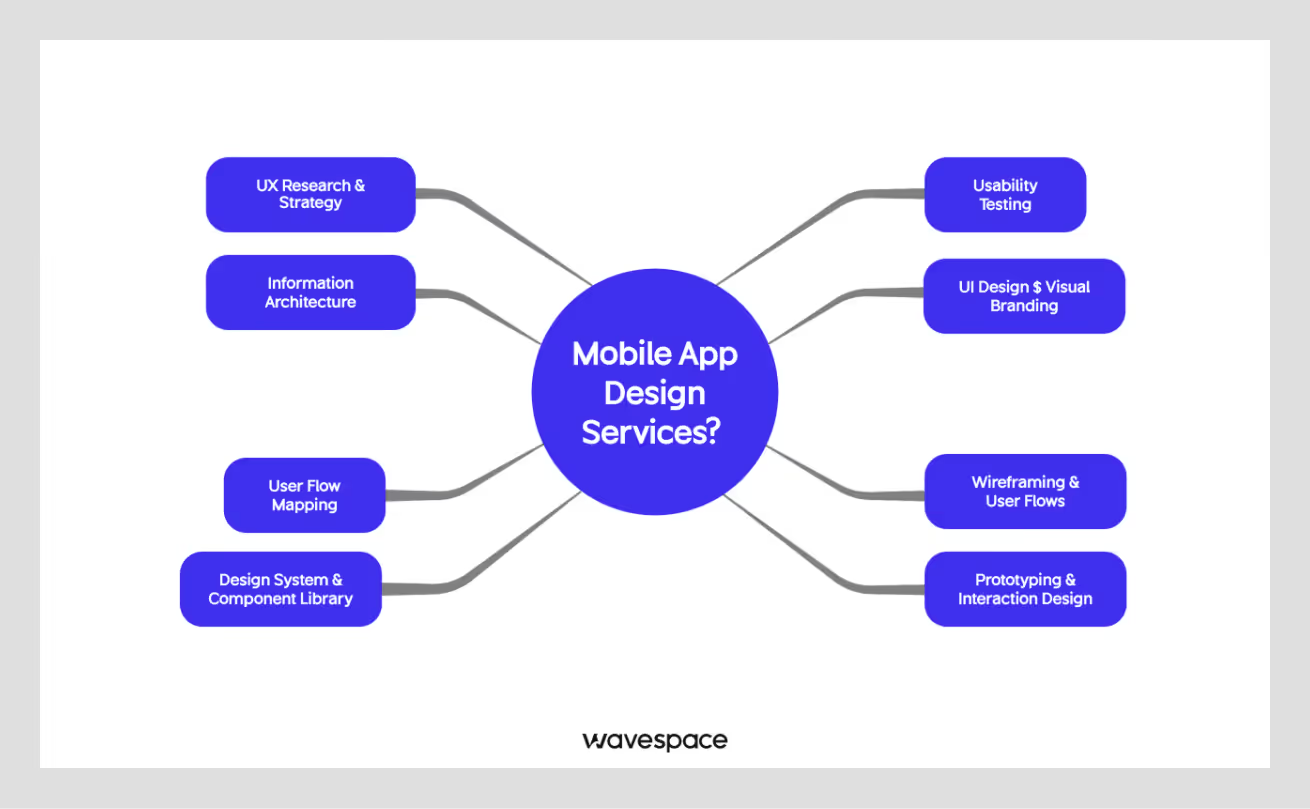
App design is not merely about designing screens. It is a process that minimizes risk before development.
Core mobile app design services
User flow planning, wireframes, UI designing, and interactive prototypes are the most common parts of a professional app design project. These activities help teams test ideas sooner and resolve issues before writing code. We also have some teams that involve the usability testing of the design. This measure can easily save money due to the early detection of problems.
Specialized design services for different apps
Various apps require varied design emphasis. E-commerce apps are conversion-oriented. SaaS applications are productive and transparent. Gaming applications are emotion-oriented and engaging.
These differences change how much time designers spend thinking and testing, which affects cost.
Why app design is important
The design of the app matters since it will determine whether individuals will adopt your app or not. The majority of users do not read instructions or watch video tutorials. They open an application, and they want it to make sense immediately. If it does not, they close it. This occurs even when the idea in the app is good.
Well-designed apps are easy to navigate through. It removes confusion. It builds trust. It assists the business in growing without additional functionality or increased marketing expenditure. Here are the six practical reasons why the app design is important:
1. App design decides if users stay or leave
The first few minutes inside an app matter the most. When users feel lost, they leave. They do not try again later.
A common real-world example is onboarding screens that explain too much or too little. If users do not know what to do after signing up, they close the app. This is not because the product is bad, but because the design did not guide them.
Good design presents the user with what to do next without requiring them to think. These are clear buttons, simple screens, and a logical flow that make the users feel at ease. Users may spend more time browsing when they feel at ease.
2. Good design reduces development cost
Without proper design, it becomes expensive to develop, though it may appear cheap initially.
Where the design is not clear, developers have to make assumptions about how things should work out. This leads to mistakes. Teams find out later that the flow is incorrect and rewrite parts of the app. This wastes time and money.
In actual projects, numerous redesigns occur due to the haste or omission of design decisions. Design can save money in the long-run since more time spent earlier can save more money down the line. Clear design provides the developers with a definite direction and prevents rework.
3. App design affects revenue and conversions
The money is directly affected by design. In apps where they sell something, the users have to know how to purchase. When the checkout process is not clear, users quit. When no pricing is easily available, the user is hesitant.
In fact, a lot of subscriptions lose their users due to the unavailability or unclear upgrade process. The feature is functional, but it is not easily accessible to users. It is not a feature problem but a design problem.
Design makes things that are important easy to notice and easy to do. This enhances conversion without the introduction of new features.
4. Design builds trust before users read anything
Within a few seconds, users will determine whether an app is trustworthy or not. They perform this before reading or comprehending features.
Applications that have a messy design, unequal spacing, or poor messages are risky. Users are afraid of providing personal information or credit card details.
Users are safe with clean layouts, uniformity in screens, and predictability of actions. This is particularly relevant to apps that deal with money, health data, or private information. This is particularly relevant to apps that deal with money, health data, or private information. Trust starts with design, not words.
5. Strong design makes the app easier to grow later
Many apps begin small but eventually expand. With a weak early design, the design becomes hard to grow.
Applications that lack a clear design architecture are easily messy since features are simply added. Screens feel inconsistent. Users get confused. Teams waste time repairing previous issues, rather than creating new ones.
Good design consists of regularity and simplicity. This enables it to add features later on without having to redesign everything. Good design is cost-effective in the future.
6. Fixing bad design later is expensive
Delaying design is one of the most expensive errors that buyers commit. Most believe that they can correct the design later. In a real-world scenario, it is difficult to redesign an app in the future.
The old flow is already familiar to the users. Changes confuse them. The developers should refresh numerous screens. Complaints have to be addressed by support teams.
It is cheaper to fix the design early than it would be once users are on board. That is why design is not decoration, but a foundation.
App design costs: from MVP to complex mobile apps
When individuals request the cost of app design, they usually want a single number. This is not the reality in terms of app design. The price varies depending on the size of your application, the number of features it contains, and the number of decisions designers have to make before you start development.
A simple app with one main flow needs far less design effort than a platform with multiple user roles, dashboards, payments, and automation. Designers do not charge for screens only. They are billed to think, plan, and avoid confusion.
To simplify this, the cost of app design is typically categorized into three levels, including MVP or simple apps, medium-complexity apps, and complex apps. The design time and UX effort are at different levels. This is the reason why the prices vary so much.
These levels will allow you to select the appropriate starting point and not spend money on design work that you do not need at the moment.
What is an MVP (Minimal Viable Product)?
An MVP is the simplest version of your app that still solves a real user problem. It is not a half-built product. It is a product-oriented product.
In terms of design, an MVP provides answers to the following questions:
Do the users know how to perform the primary task without assistance?
MVP design focuses on:
- One main user type
- One primary user journey
- A limited number of screens
- Clear actions and feedback
At this point, designers do not attempt to impress the user visually. They are concerned with eliminating confusion, cutting down on steps, and making the flow visible. Most founders fail to design an MVP and jump to designing a complete product at the same time.
This almost always increases cost because designers must support too many ideas at once. MVP design enables you to test assumptions at the earliest stage and change them without spending more money.

Key design features of simple mobile apps
Simple apps are limited in scope and purpose. They tend to favor one activity that is carried out several times.
For example, a simple booking app may only allow users to:
- Sign up
- Select a service
- Choose a time
- Confirm a booking
It has no dashboards, analytics, or advanced settings. The layout, spacing, readability, and flow are all centered in the design.
At this level, designers get involved in:
- Screen structure
- Button placement
- Text clarity
- Basic visual consistency
They do not use custom animations, transitions, and heavy branding systems. The scope is limited and, therefore, the amount of design hours remains low. That is why the costs remain low, and the time frames are minimal.
How complexity affects design costs
The complexity of design increases more rapidly than anticipated by most buyers.
Every new feature adds:
- New screens
- New states (loading, error, empty, success)
- New edge cases
- New decisions for users
For example:
- Adding user roles means designing different experiences for different people
- Adding notifications means designing timing, priority, and error handling
- Adding payments means designing trust, security cues, and failure recovery
Designers need to consider all possible scenarios, not only the happy path. This is the primary reason why design costs are increasing with apps.
MVP or simple mobile app design cost
The average price of MVP app designing is between $5,000 and $15,000 in 2026. Typically, this range represents 80-150 design hours, depending on:
- Number of screens (often 10–20)
- Number of flows (usually 1–2 core flows)
- UX validation required level.
As one example, a basic application may have onboarding, login, a primary action screen, and a confirmation screen. Designers make sure that users never get lost on what to do next.
What’s Included in Simple App Design
Simple app design usually includes:
- User flow mapping
- Wireframes for key screens
- Basic UI design
- Clickable prototype
As one example, a basic application may have onboarding, login, a primary action screen, and a confirmation screen. Designers make sure that users never get lost on what to do next.
What is not included at this level:
- Complex dashboards
- Advanced personalization
- Custom animations
- Full design systems
That is why MVP design is affordable, keeping them out of scope.
How to save on design costs for simple apps
The biggest cost saver is discipline. Focus on one problem. Support one user type. Do not add features because they might be needed. Each additional idea adds to design time.
Making up one's mind helps in minimizing revisions. One of the largest hidden cost drivers in design projects is revision.

Medium-complexity mobile app design cost
The medium-complexity applications lie between MVPs and large platforms. The vast majority of startups and growing products are funded.
Average cost of medium-complexity mobile apps
In 2026, medium-complexity app design usually costs between $15,000 and $35,000. This range normally reflects 150 to 300 design hours, based on:
- Number of user flows
- Number of screens (often 25–50)
- Data handling and states
Designers take longer to test the interactions of users and features.
Additional design features for medium apps
Medium apps often include:
- User profiles and settings
- Dashboards
- Notifications
- Saved data and history
- Basic integrations
The designers need to consider how users revisit the application, correct errors, and provide system feedback. This adds UX effort and review cycles, increasing costs.
Factors that increase medium app design costs
Cost may rise at this level because of:
- Unclear requirements
- Frequent feature changes
- Multiple decision-makers
Direction changes in the middle of the design require designers to re-create flows and screens. Clear planning and a locked scope help control cost.
Complex mobile app design cost
Complex applications demand the greatest design investment since errors cost a lot.
These applications have multi-user support, multi-feature, and risky functions like payments, automation, or even sensitive data processing.
How high-end features impact cost
Such features as AI, automation, and real-time data raise the design cost as they are difficult to visualize.
Designers must:
- Display system usage to users.
- Explain outcomes clearly
- Handle errors and edge cases
This degree of UX considers experience and time. It cannot be rushed.
The cost of advanced UX and custom UI
Complex apps often require:
- Full design systems
- Custom components
- Accessibility planning
- Detailed interaction rules
Designers will develop reusable patterns to enable the product to scale. This will raise initial expense but lessen redesigning later. Simple app design typically begins at $35,000 and may go up to over $80,000 depending on the scope.
Why complex designs are worth the cost
Good design on this level defends the business. This reduces future redesigns, reduces support issues, and helps the user understand powerful features in less time. When it comes to large or high-risk products, design is not an option. It is a safeguard.
6 factors that influence app design cost
The cost of app design is not based on a single factor. It is based on numerous related factors.
App Complexity and Features
The more features, the more screens and the more thinking. This is the largest expense element.
Platform Selection
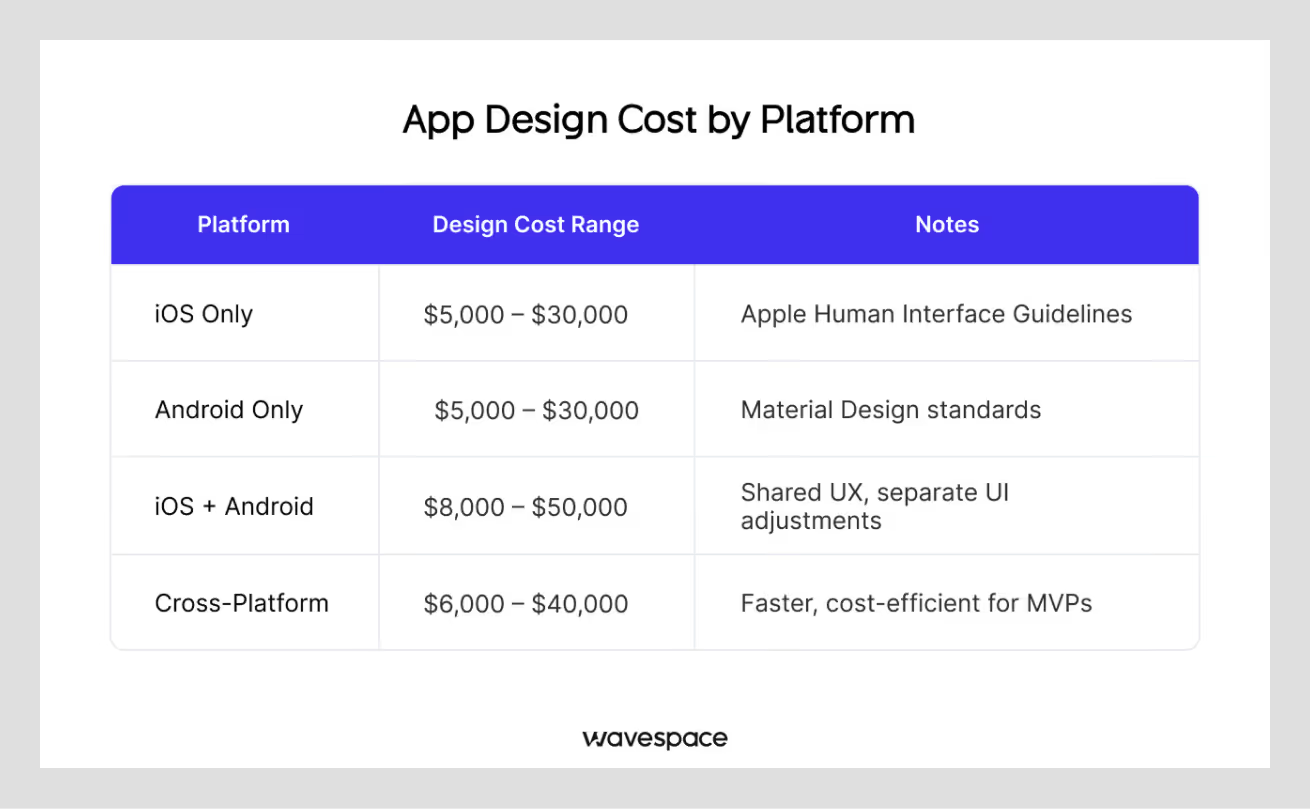
A single platform is less expensive to design than a multi-platform design. Every medium has its principles and trends.
Design Quality: Custom vs Template
Templates are low-priced but restricted. Custom design is more expensive, but it can change with your product.
Experience and Reputation of the Design Agency
The skilled agencies are more expensive due to less risk. They will prevent expensive errors.
Location of the Design Team
Prices vary according to the area, but quality is determined by the process and administration, not the location.
Project Timeline and Deadlines
Short time-frames are costly as they force teams to work in a hurry and prevent them from delving into choices.
How to estimate app design costs
The cost of designing an app is not estimated by simply guessing or using a calculator. It concerns the measurement of design effort and the real distribution of time. When buyers are aware of this process, they receive the right quotes. Consumers who do not encounter future rising costs.
The cost of app design is not normally calculated using screens alone, but on design hours. Every decision, flow, and state increases time. The more precise your scope, the more precise your estimate.
The step-by-step process for estimating design costs
- The initial one is to state the main issue your application is resolving. Designers should understand what the users are attempting to do. In the absence of this, estimates remain vague due to a lack of clarity of scope.
- The second step is a list of must-have features in the first version. This is not about ideas in the future. It has only what users require on the first day. Every feature introduces flows and screens, which have a direct impact on cost.
- The third one is mapping user flows, not screens. Designers calculate effort based on users' movements in the app. One screen with numerous decision points may be more expensive than a few plain screens.
- The fourth step involves counting screen states. There are typically several versions of each screen, e.g., loading, empty, error, and success. These states involve design work, although they are not necessarily visible to buyers.
- The fifth stage is platform selection. iOS is cheaper to design compared to iOS and Android. The design guidelines demand modifications in every platform.
- The last stage is determining the extent of visual depth. Basic UI design costs less. Individual branding, animation, and rich UI systems are more expensive.
By making these steps clear, the agencies are able to estimate the design hours. This brings out fair prices and fewer surprises.
Tools and calculators for cost estimation
Buyers can use cost calculators to get an idea of approximate prices. They are applicable on the concept level. Nevertheless, they do not substitute human estimation.
The majority of calculators do not consider UX complexity, revision cycles, and hidden states. They also consider ideal conditions, which hardly occur in real projects.
An actual estimate is based on discussion. A decent design agency poses questions, questions the scope, and clarifies the trade-offs. This discussion is usually more cost-saving than a device. Calculators are not the answer, but rather a beginning point for buyers.
How to set realistic expectations for your budget
The most common mistake that buyers commit is the comparison between the cost of app design and the cost of app development and simple websites. The design of an app is more of a thinking process since the user behavior is not predictable.
A realistic budget considers:
- UX thinking time
- Iteration and revision cycles
- Testing and validation
- Future scalability
Trying to force a complex app into a small budget usually leads to poor UX, redesigns, or higher development costs later.
A good rule is this:
When design is expensive, development will become even more expensive without it.
How to reduce app design costs
Lower costs of app design do not imply a decrease in quality. It involves scope, decisions, and process control. The fact that most design costs have risen due to unclear direction, rather than designers charging more. The smart buyers save money by making decisions easily, not by the hurry to work.
Prioritize features for an MVP
Prioritization of features is the greatest cost-control lever.
Every feature adds:
- New flows
- New states
- New decisions for users
Most buyers add features just in case. This increases design hours without improving early value. A strong MVP focuses on one main user goal. Everything else moves to later versions. This approach often reduces design cost by 30–50% while improving clarity.
Use design systems and templates for efficiency
Design systems reduce cost by avoiding repeated work. The designers no longer have to create each screen. They are using patterns and components.
Templates and reusable components work well for:
- Forms
- Buttons
- Navigation
- Common layouts
The custom design must only consider areas that are important to the users. This balance is able to maintain costs and quality at the same time.
Streamline feedback and revisions
One of the largest hidden cost drivers in the app design is revisions. Each revision cycle requires designers to rethink flows, update screens, and re-test logic. Unclear and conflicting feedback increases cost rapidly.
Buyers can reduce costs by:
- Assigning one decision-maker
- Giving clear, consolidated feedback
- Avoiding late-stage changes
- Clear feedback saves both time and money.
Offload non-essential features for later versions
Many features feel important early, but are not critical for launch. Offloading these features reduces design scope and speeds up delivery.
Releasing sooner will enable you to get to know the real users rather than guessing. This usually results in improved design decision-making in the future and avoids wastage of effort.
Designing in phases is one of the most effective ways to control cost without hurting product quality.
How to choose affordable app design agencies

When selecting an affordable app design agency, the selection is not based on the lowest price. It is about discovering a team that will not cause you to redesign, scope creep, or wasted development time. An effective agency will first pose questions about how features can help save costs and where the scope can be cut without compromising.
Watch out for agencies that promise extremely low prices, fast schedules, or prioritize graphics. It does not need lower hourly rates but rather good UX thinking, scope control, and fewer wrong decisions.
- Focus on value, not the lowest price.
- Choose agencies that ask questions before giving quotes
- Find transparent flow and UX effort cost breakdowns.
- Avoid agencies that skip UX or promise fast delivery without a clear scope
- Give priority to those teams that help to minimize scope and redesign.
- Good UX thinking is more cost-effective than low hourly rates
- Affordable design does not imply less expensive work.
Conclusion
Creating a mobile application in 2026 is a valuable investment, and the design cost is usually between $5,000 and $80,000 or more, depending on the complexity and scope. Costs increase as apps become more complex, not because they look better, but because they require more UX thinking and decision-making.
An MVP allows us to keep the budget and mitigate risk. The selection of the appropriate design agency is based on long-term value and not on low price. Good app design secures investment in the development, creates user confidence, and promotes long-term expansion.

More related blog

Design & development in one team. Let’s talk!















.png)



Francisco, CA 94105, United States





































.avif)