Graphic design vs digital design: Know the differences


Is your logo graphic design or digital design? What about your website? If you are not sure, you are not alone in this confusion. The difference between graphic design and digital design is so thin that even founders mess up hiring.
So what is the line between graphic design and digital design? What's the actual difference?
Graphic design communicates messages, and digital design creates digital experiences that people click, tap, and scroll. This guide clears up the confusion between graphic design vs. digital design with examples, tools, pricing, and a simple way to decide which one you need.
What is graphic design?
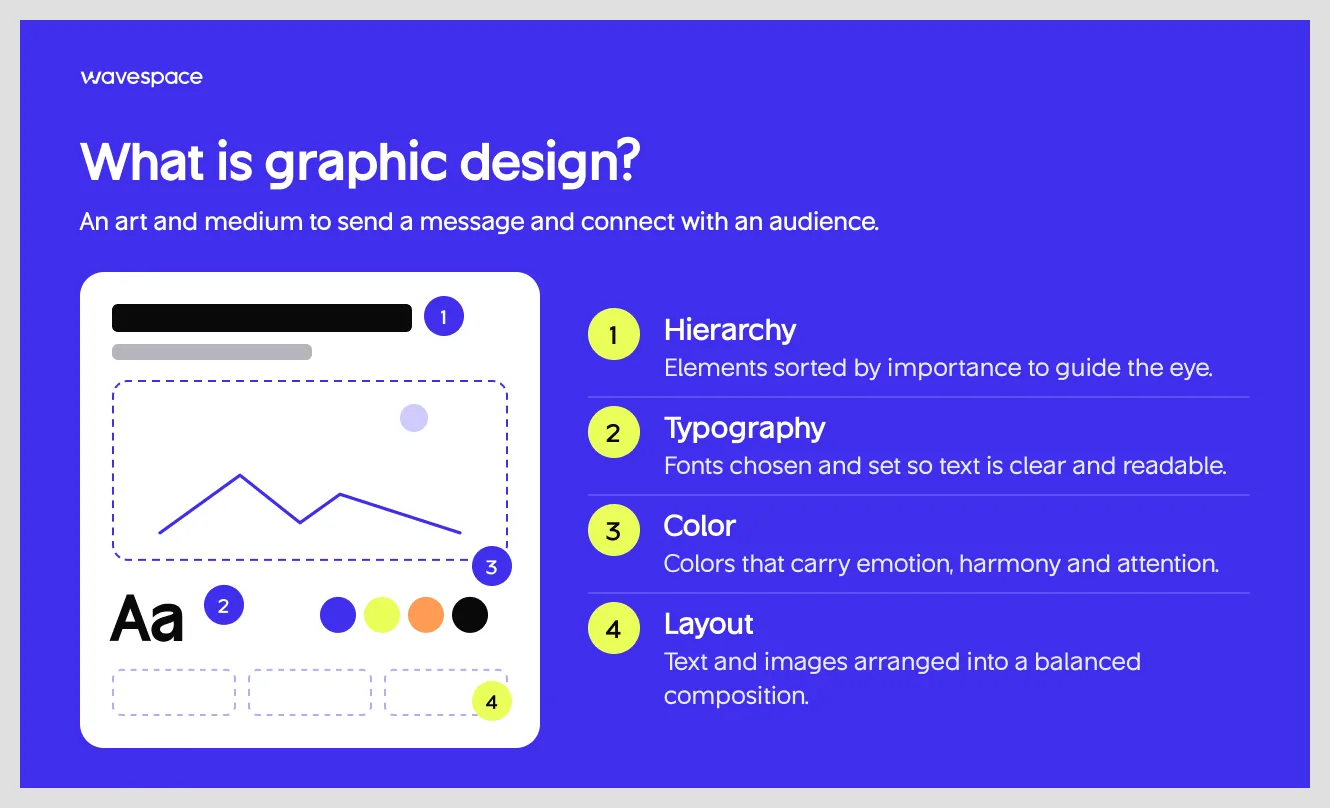
Graphic design is an art and medium to send a message and communicate with an audience. It uses key elements to not only appeal but also connect with the general public. The key elements of graphic design are typography, color theory, visual hierarchy, and layout & composition.
The term "graphic design" was first used by William Addison Dwiggins in this article, “New Kind of Printing Calls for New Design” (published on August 29, 1922). He used the term to describe the structure, visual order, and visual design of books and printed media.
Core principles of graphic design:
- Hierarchy: Placing elements sorted by importance to guide the viewer's attention.
- Typography: Selecting and arranging fonts to make text clear, readable, and attractive.
- Color: Using colors to communicate emotions, create harmony, and attract attention.
- Layout: Organizing text, images, and other elements to create a balanced and visually appealing design.
What is digital design?
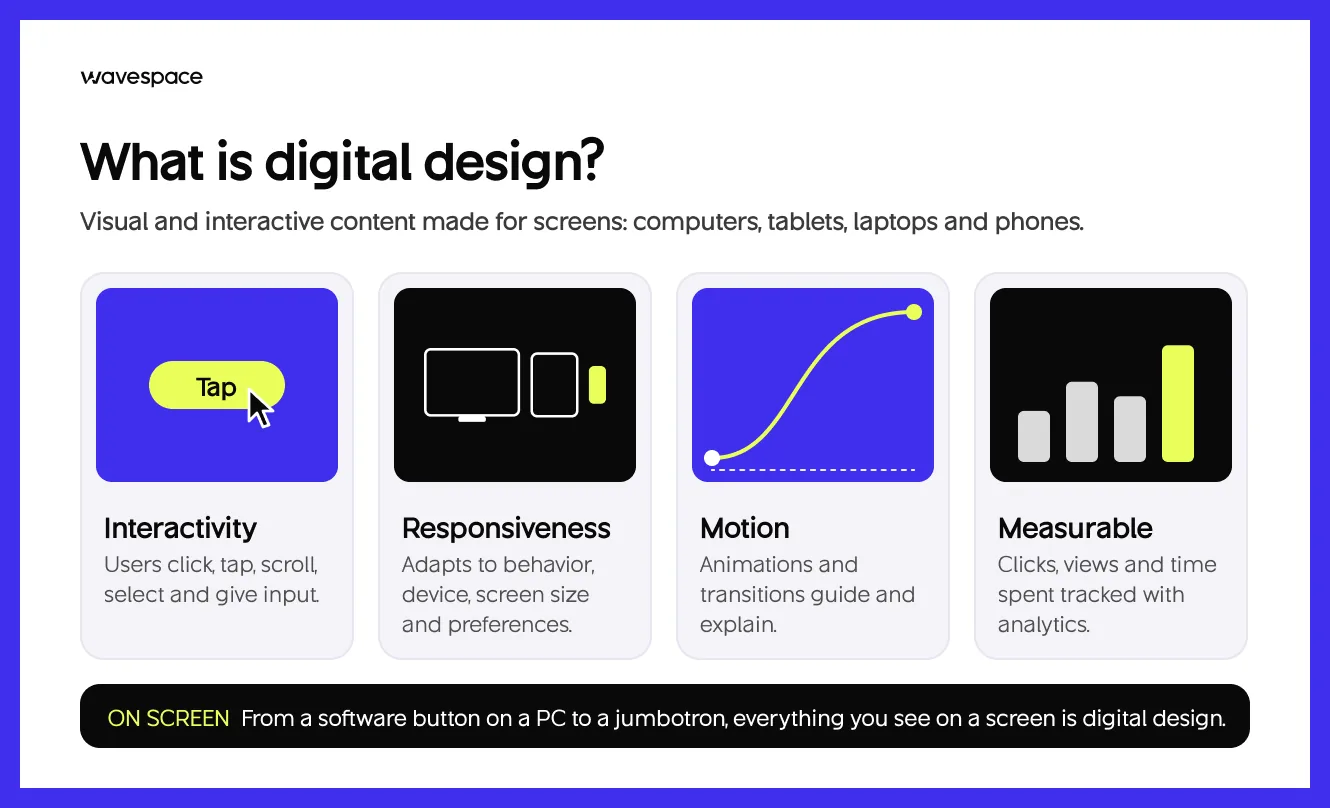
Digital design refers to the design of visual and interactive content for electronic media, such as computers, tablets, laptops, and mobile devices.
Graphic design originally focused on physical media, and its work (banner design, logo design, brochures, etc.) has expanded into digital spaces. But digital design is for the digital space and is the foundation of modern technology.
Almost everything you interact with on a screen, from a software button to a jumbotron, is digital design.
What makes a digital design:
- Interactivity: Users can engage with the content by looking, clicking, tapping, scrolling, selecting, or giving input.
- Responsiveness: The digital product experience adapts to users' behavior, actions, device, screen size, and preferences.
- Motion: Animations, transitions, and animating elements make the experience engaging and easier to understand.
- Measurable with analytics: User activities can be tracked and analyzed, such as clicks, views, engagement, and time spent.
Graphic design vs digital design: key differences
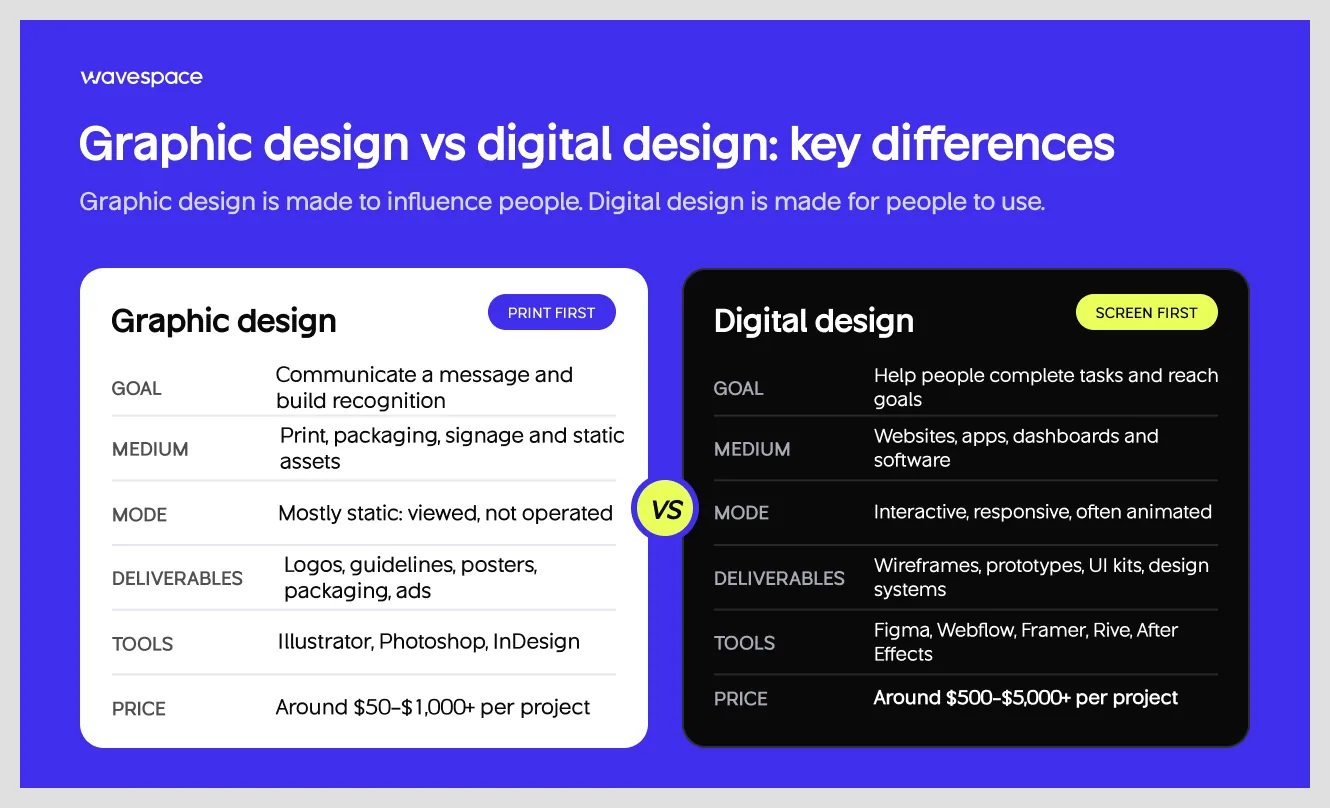
Graphic design and digital design might sound similar at first, but they are very different from one another. On the surface level, there are two types of graphic design. 1. Traditional graphic design 2. Digital graphic design. However, the line between the two has blurred over the years.
Currently, when someone asks for a graphic designer, they mean someone for digital graphic design work. Graphic design is related to digital design. Most digital design agencies do graphic design work, but not all graphic design agencies do digital design.
Remember that when choosing a design agency to hire.
The core difference: The primary difference between graphic design and digital design is that graphic design is to influence people, and digital design is for digital users to use.
They overlap in the design process. Both follow principles of hierarchy, typography, color, and layout to create an appealing design.
Both work with brands and ensure the product looks and feels like the brand. UI design works as the connecting bridge. It takes the graphic art and implements it with interactive screens.
Types of graphic design (with examples)
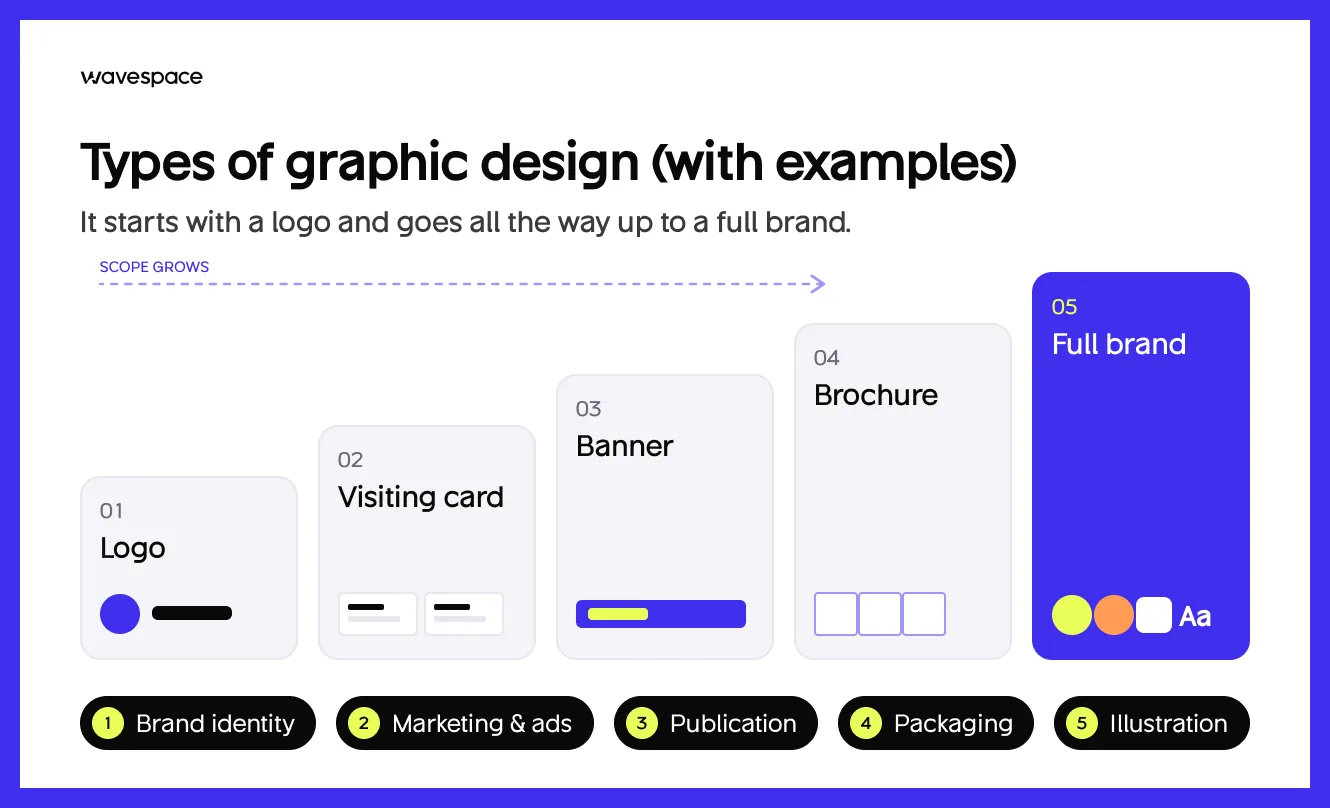
Most people think graphic design is just logo design, but it doesn’t stop there. Graphic design goes further than that. Graphic design starts with logo design, visiting card design, banner design, brochure design, paper design, and goes up to full brand design. All of these can be categorized into different types.
Brand identity design
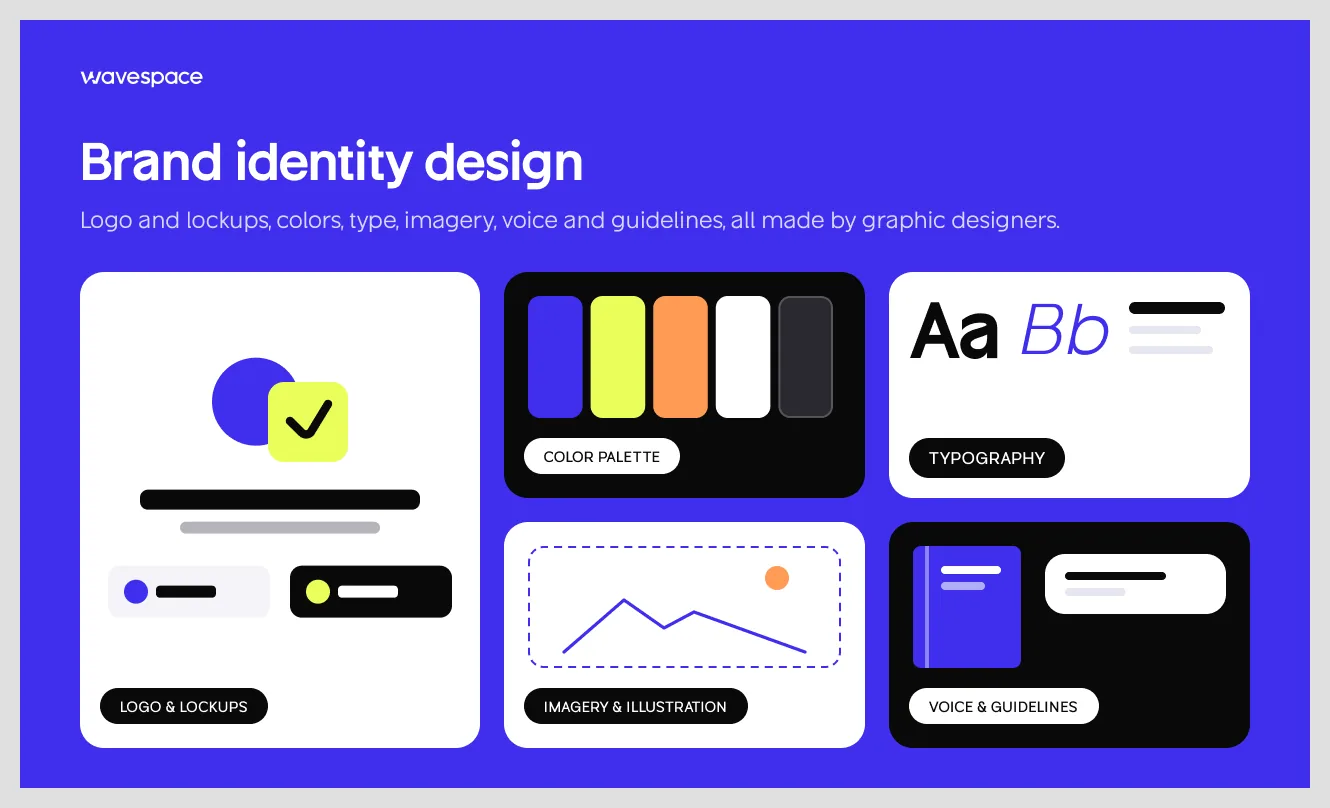
Brand identity service is the primary example of graphic design. Everything needed for a brand identity design is done by designer(s). Logo and lockups, color palette, typography system, image, illustration, brand voice, and guidelines are all part of a brand identity, and graphic design does all of that.
Marketing and advertisement
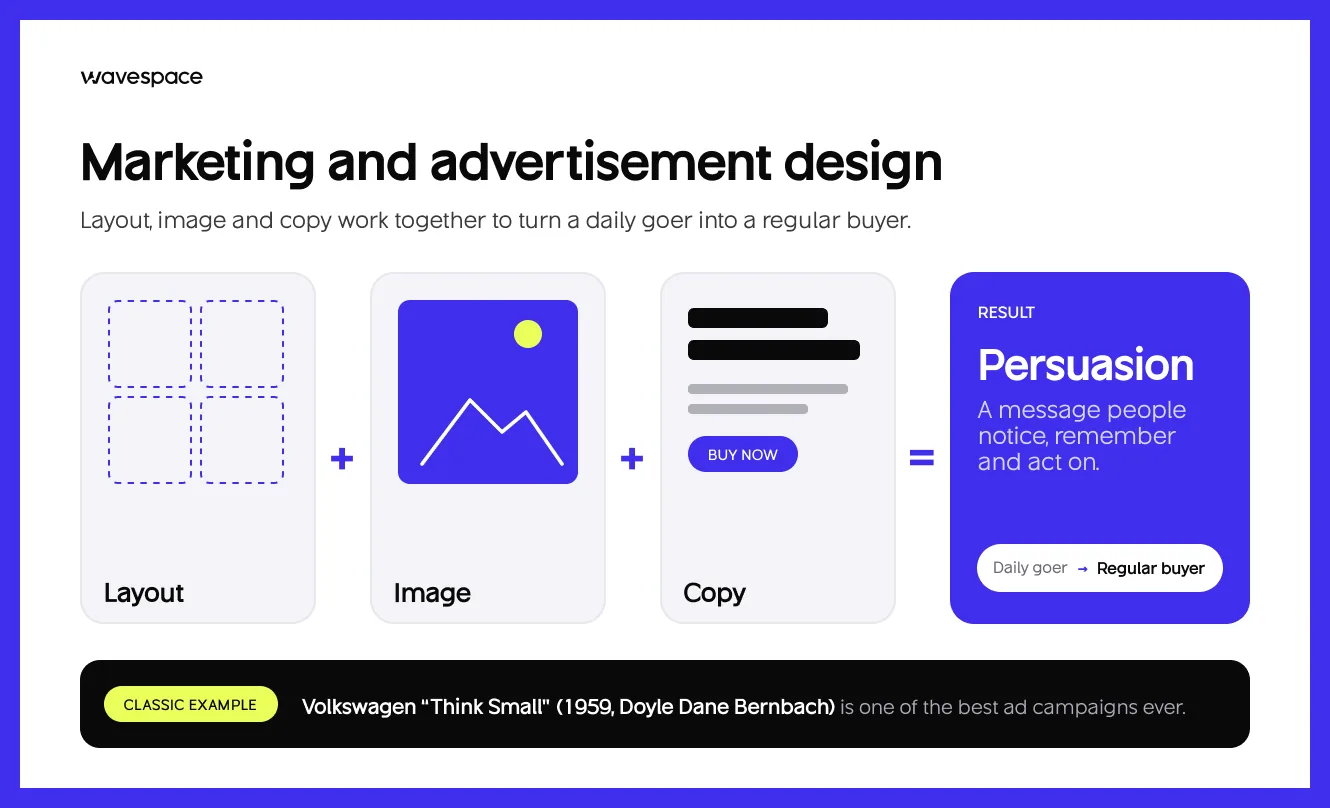
The marketing and advertising industry combines layout, image, and copy to persuade everyday consumers to become regular buyers. A great example is Volkswagen's 1959 "Think Small" ad, done by Doyle Dane Bernbach. It is considered one of the best marketing and ad campaigns of all time.
Publication
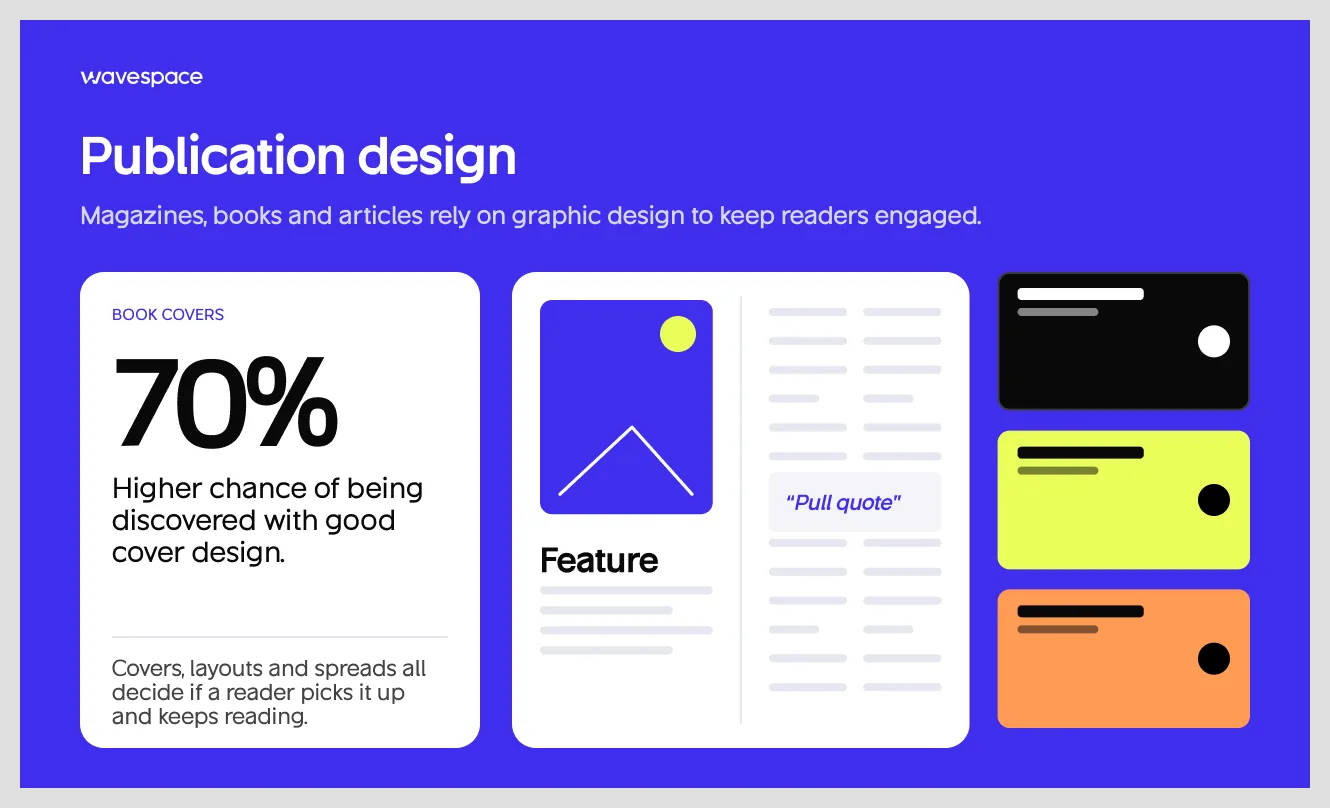
Publication and editorial design shape how magazines, books, and articles are read. The publication industry solely relies on graphic design to make things engaging. A good example is a book cover; good cover design improves discoverability by 70%.
Packaging
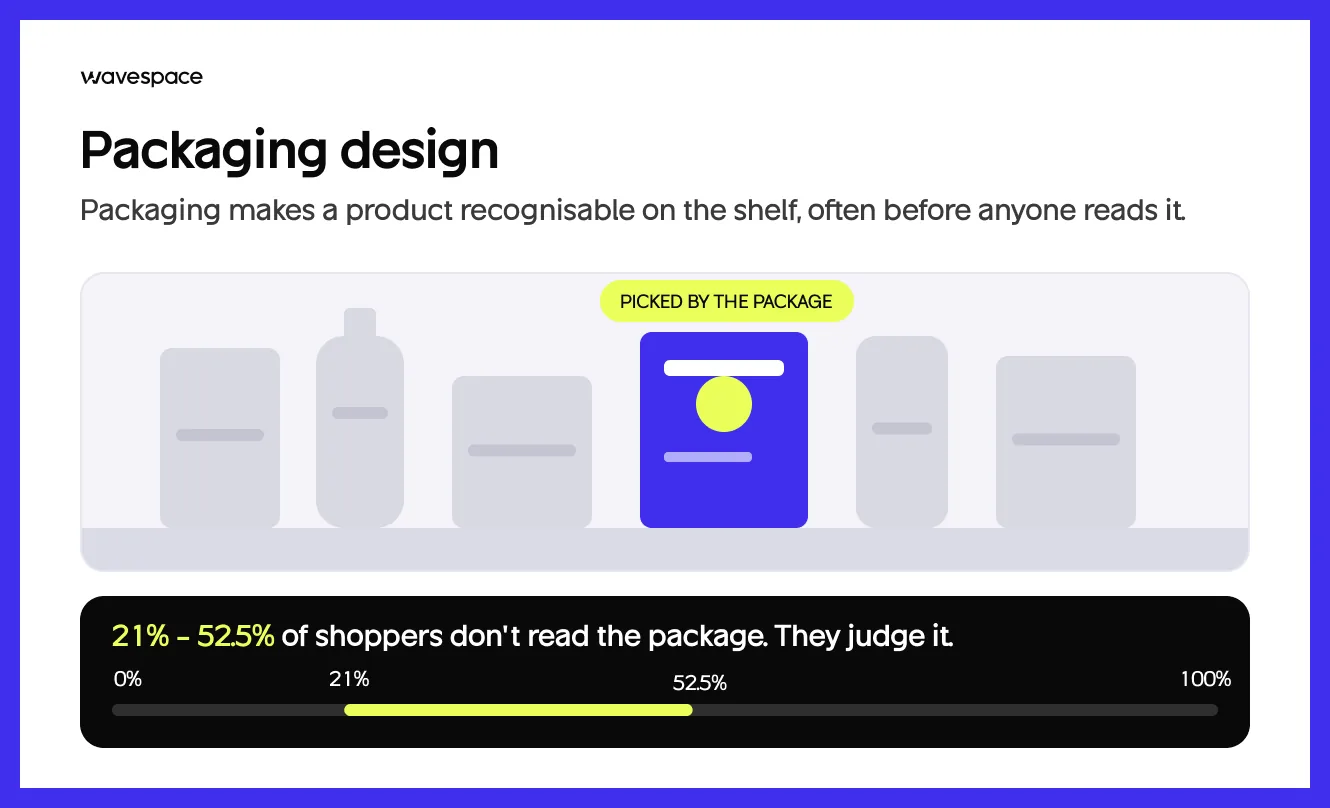
Like publications, consumer goods brands depend heavily on graphic design. Packaging makes a product recognizable on the shelf. Between 21% and 52.5% of shoppers don’t read the package. They pick a product by judging the package.
Illustrations
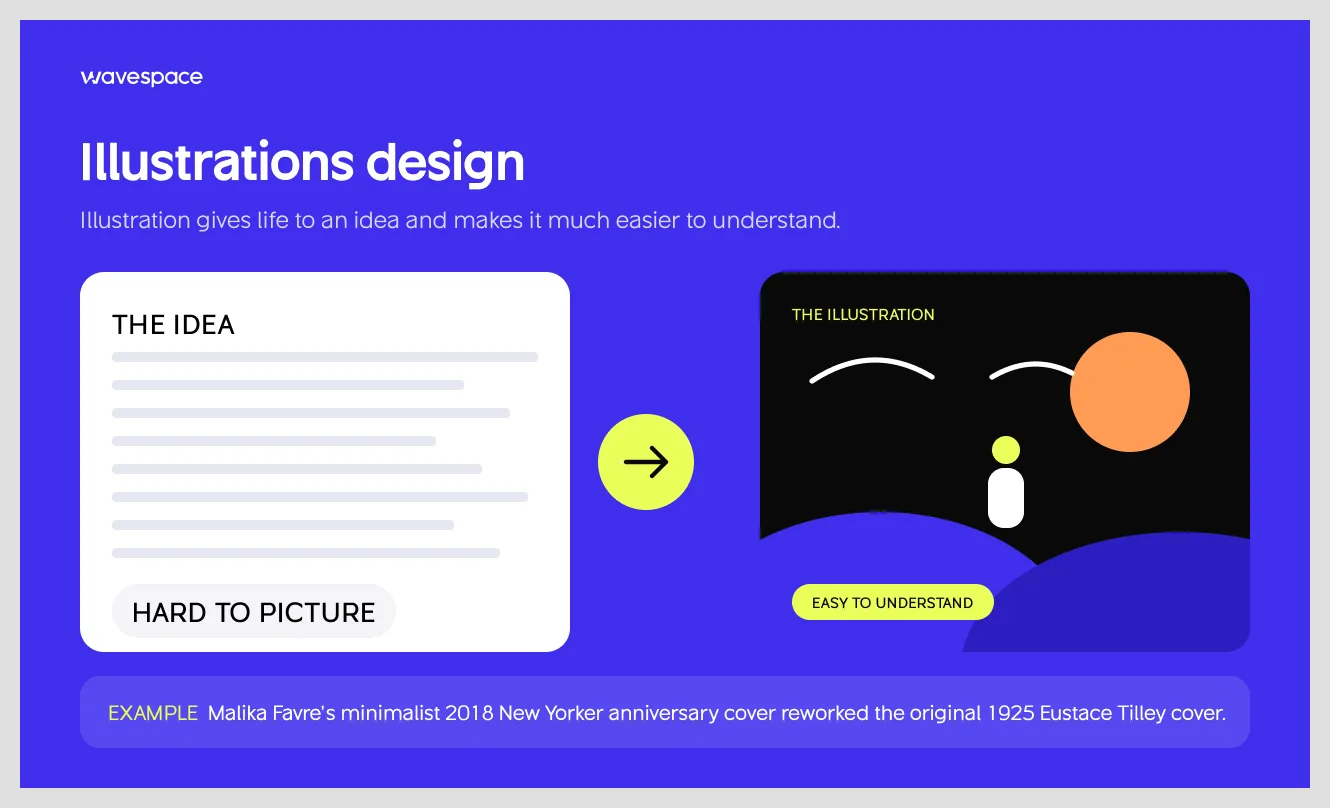
Illustration is a type of creative graphic design that brings an idea to life. Illustration makes everything much easier to understand. Malika Favre's minimalist 2018 cover for The New Yorker's anniversary issue reworked the magazine's original 1925 Eustace Tilley cover.
Types of digital design (with examples)
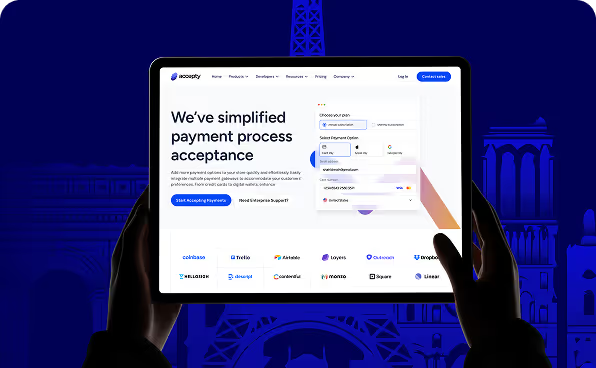
Digital design covers the seven main areas, from the pages people land on to the systems that keep a product consistent throughout digital media. The examples below come from Wavespace client work.
Web design
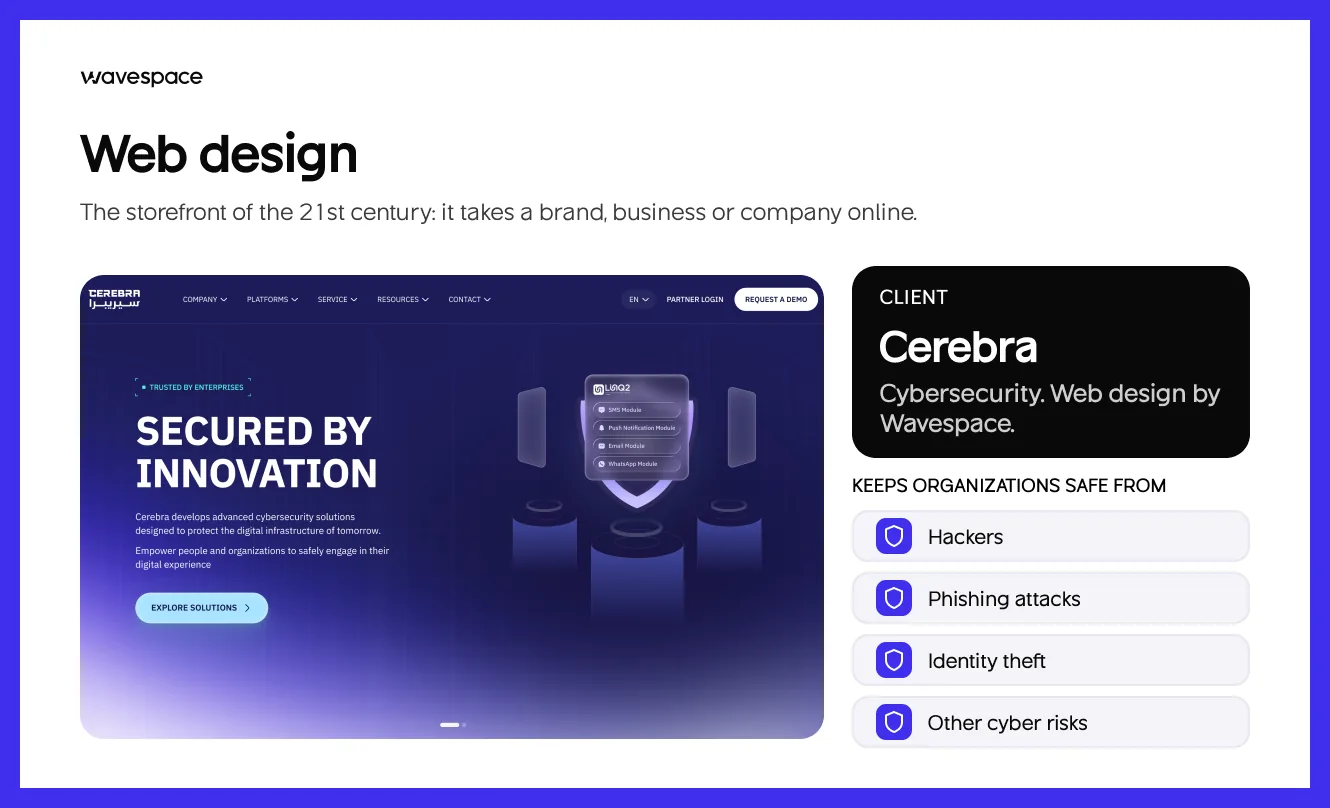
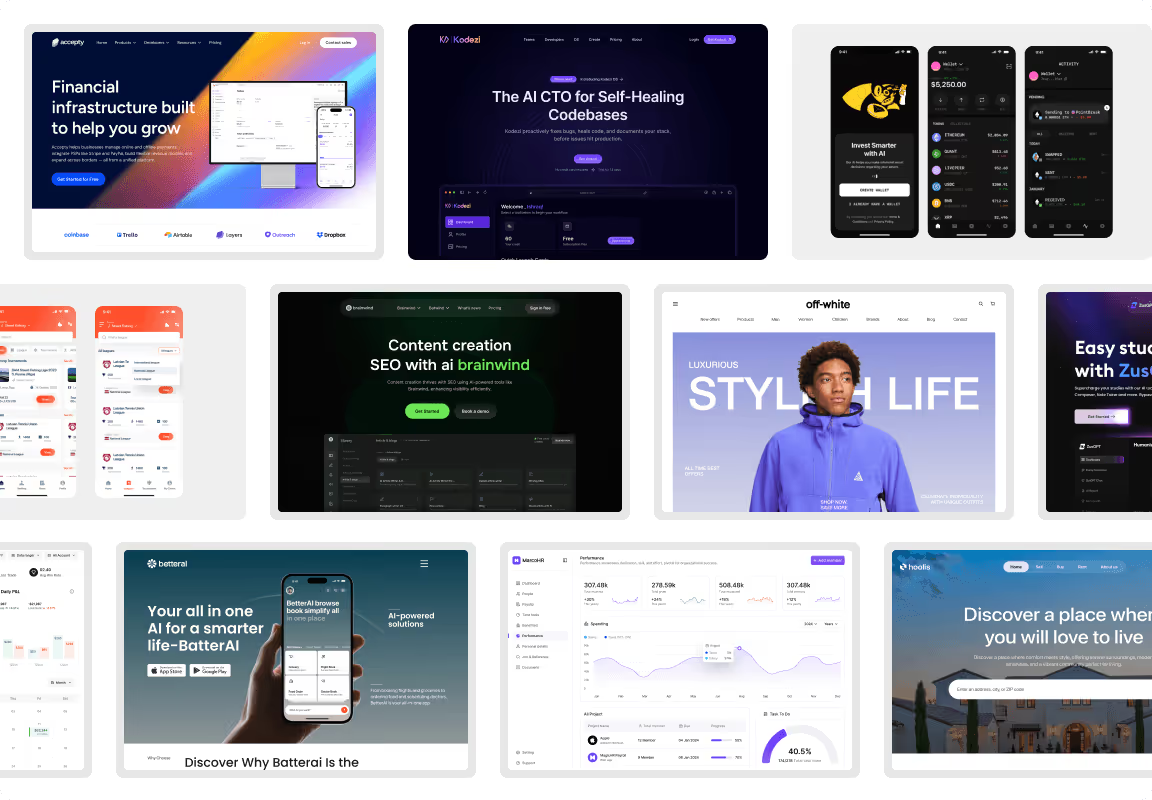
A website is the most important storefront of the 21st century. Web design is also known as website design services. It takes a brand, business, or company online and launches an online storefront. A good example is Cerebra. Cerebra helps organizations stay safe from hackers, phishing attacks, identity theft, and other cybersecurity risks. Wavespace did their web design and Webflow development.
UI/UX design

UI UX design is a broad topic in digital design. In simple words, user interface and user experience decide how each screen will look and feel to users. On HeyGen's LiveAvatar, Wavespace led the page with a live avatar and a mic control. So visitors know how the product works before reading a word, and a quick-start code is on the page (HeyGen case study).
App design
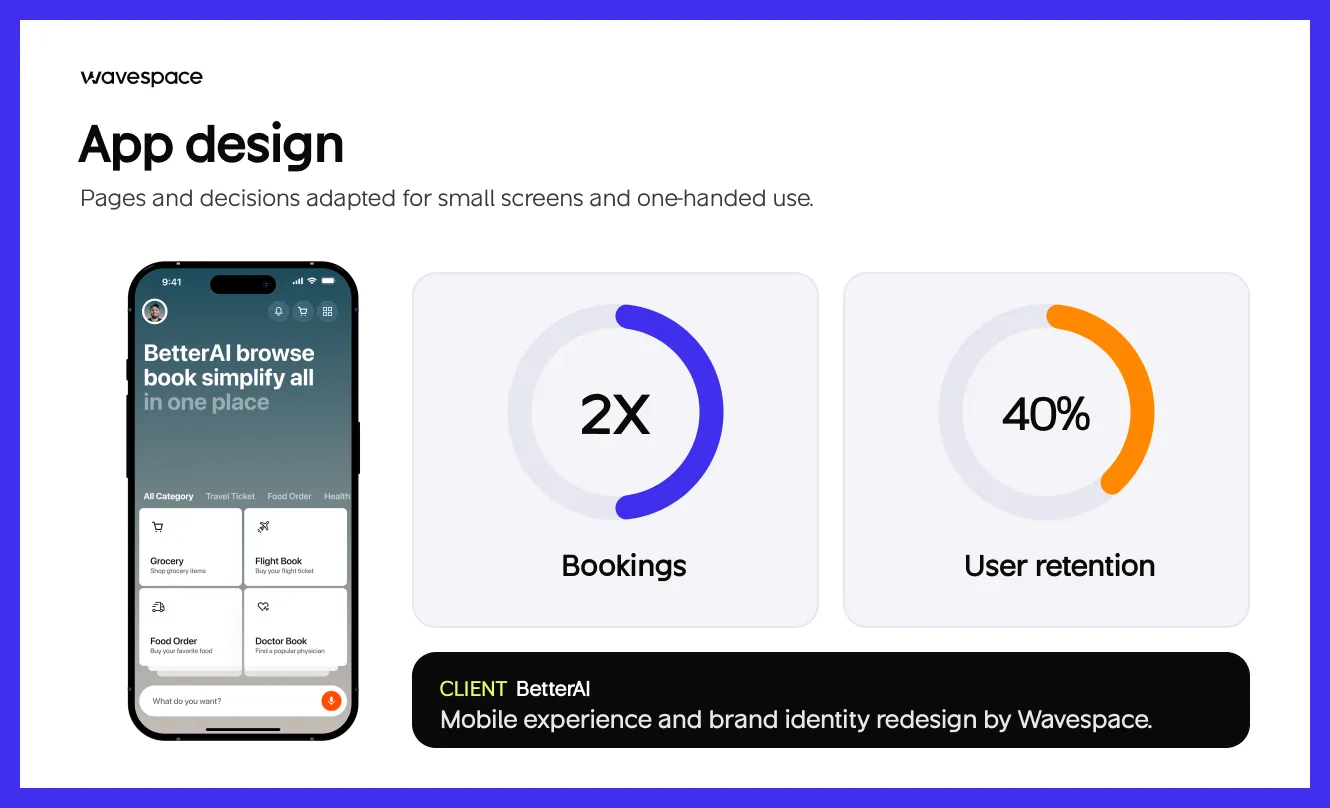
App design is a part of UI UX design and digital product design. It adapts pages and decisions to match small-screen touchpoints for one-handed use. Wavespace redesigned BetterAI’s mobile experience and brand identity, and the founder saw a 2X increase in bookings and a 40% increase in user retention.
Product/SaaS
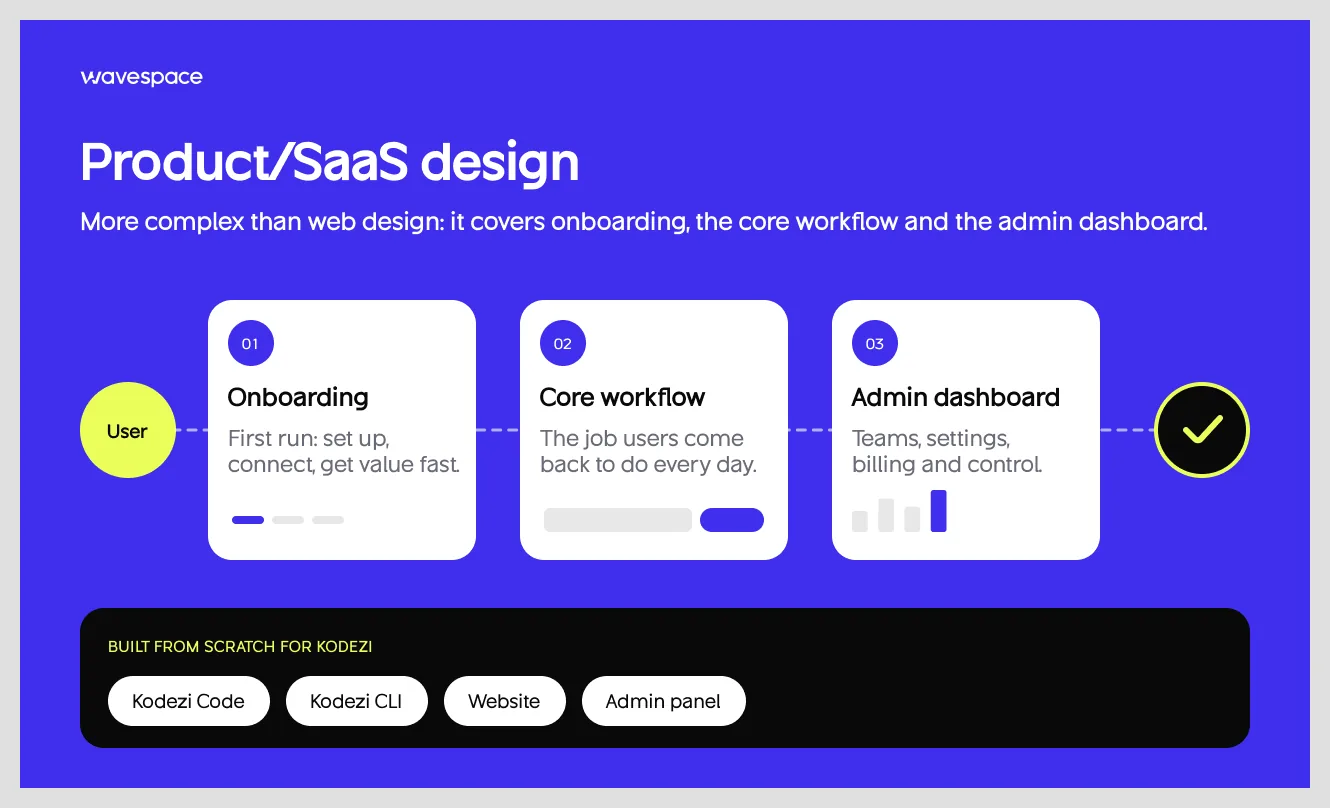
Digital product design covers the entire spectrum of software and tech products. These are more complicated than web design. SaaS and product design include: onboarding, core workflow, and admin dashboard.
Wavespace designed two Kodezi products from scratch: Kodezi Code and Kodezi CLI, plus a website and admin panel.
Motion design
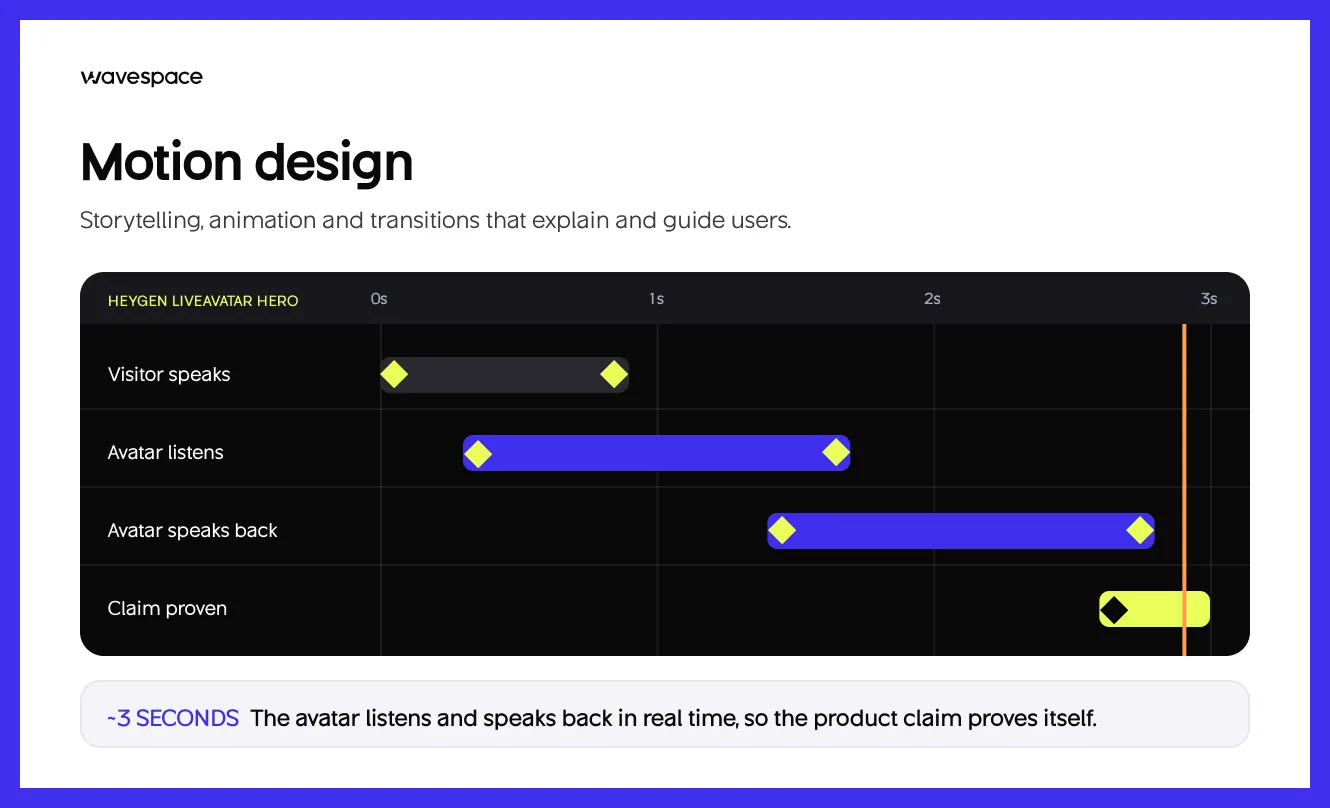
Motion design is a type of digital design that uses storytelling, animation, and transitions to explain and guide users. For HeyGen's LiveAvatar landing page hero, Wavespace used motion as proof. The avatar listens and speaks back in real time, so the product claim proves itself in about three seconds.
Dashboards and data visualization
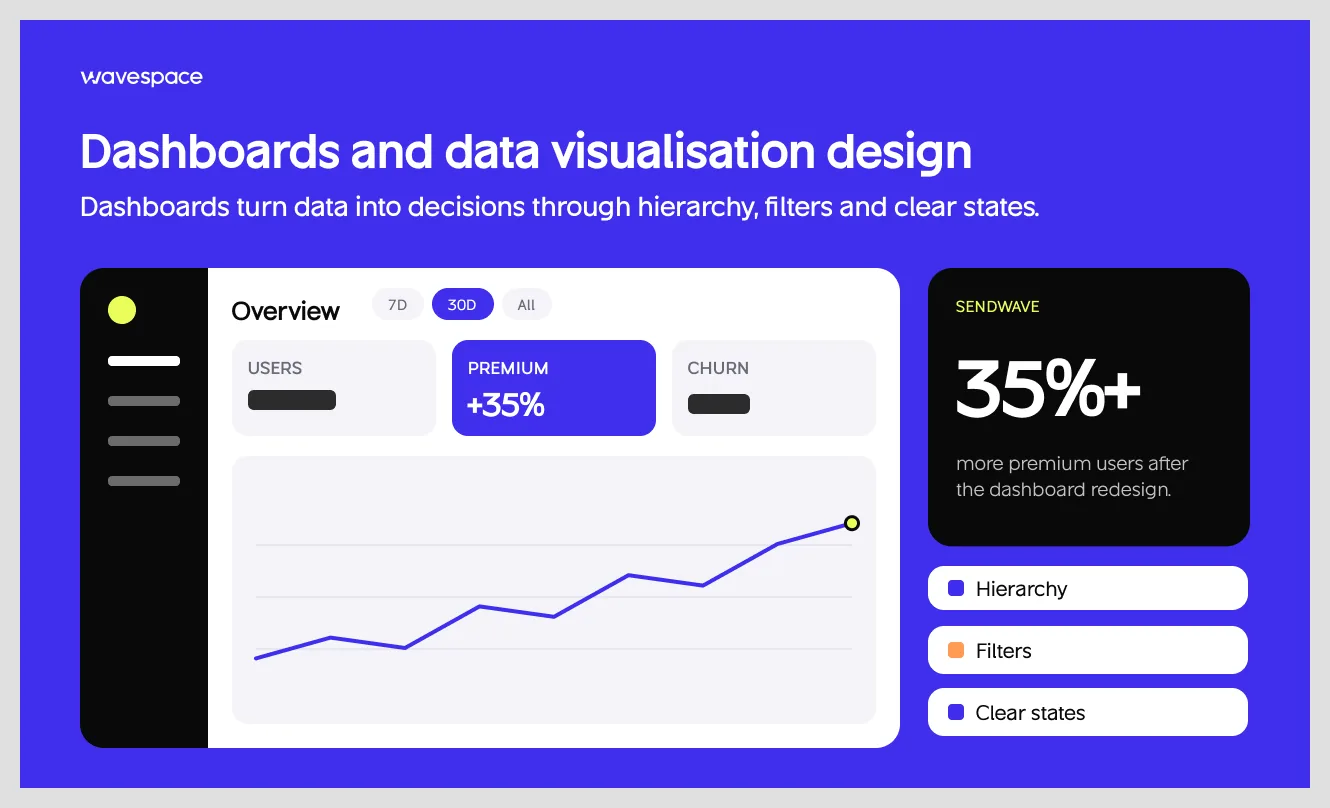
Dashboards are a part of digital product design that turn data into decisions through hierarchy, filters, and clear states. Wavespace’s Sendwave dashboard design helped them gain 35%+ premium users.
Design systems
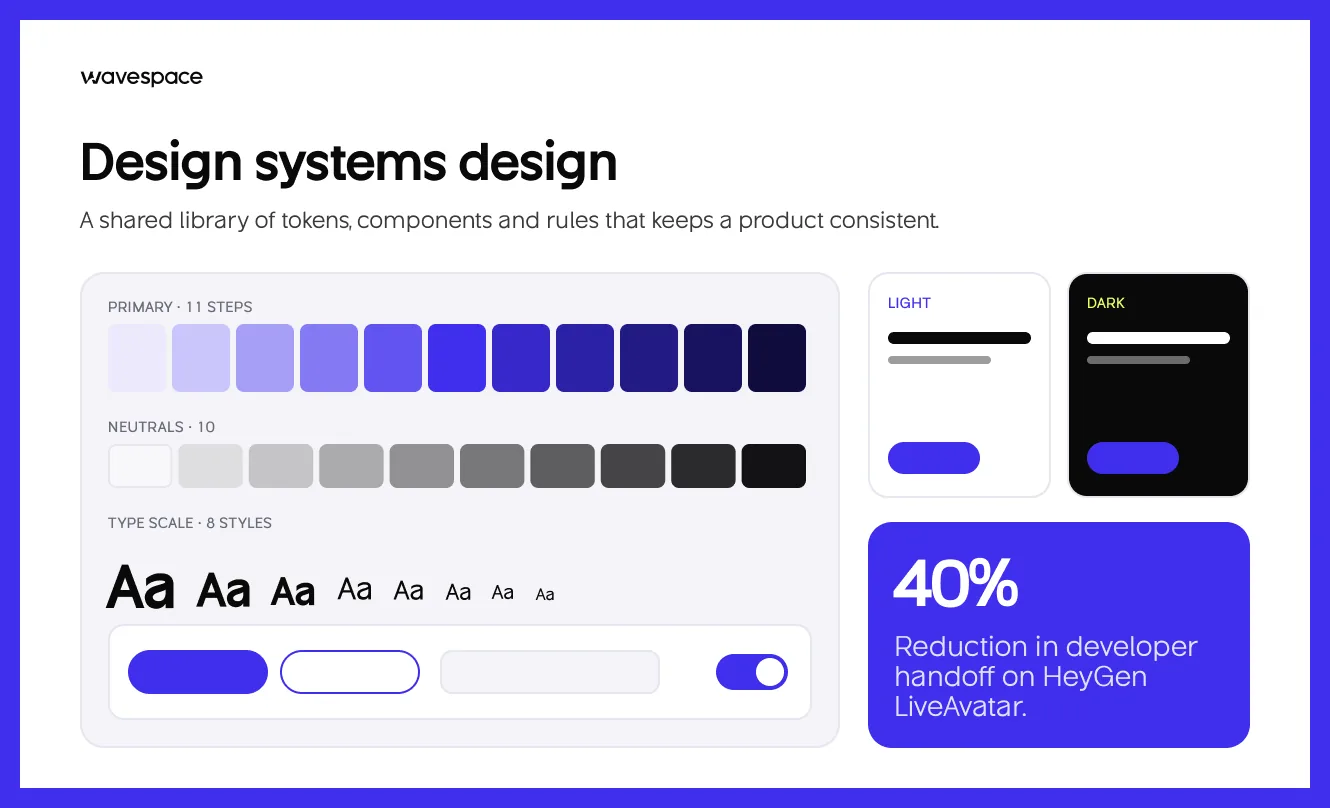
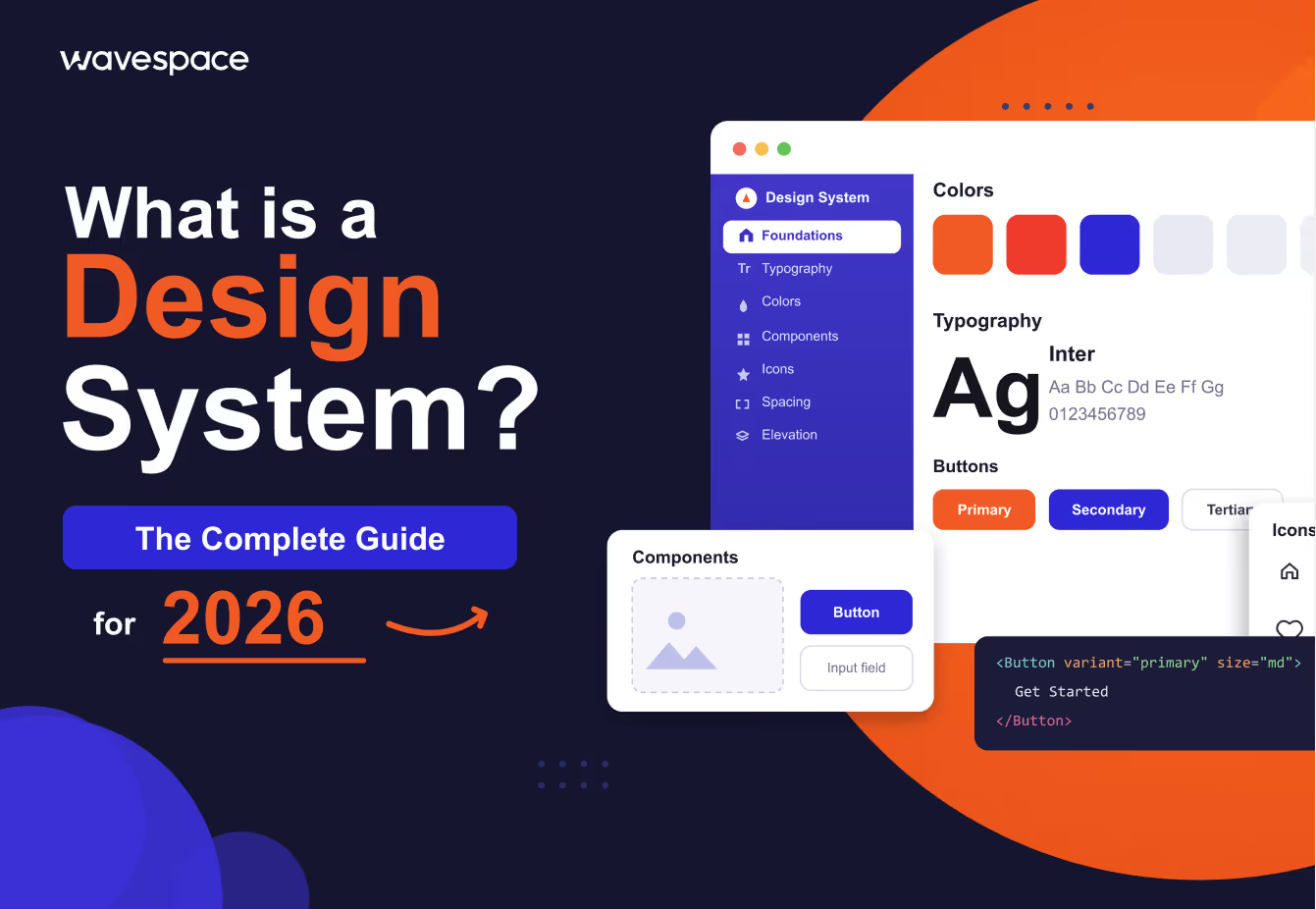
A design system is a shared library of tokens, components, and rules that keeps a digital project's look and feel consistent. HeyGen LiveAvatar's system has an eleven-step primary color ramp, ten neutrals, a fixed eight-style type scale, and light and dark themes, and the case study lists a 40% reduction in developer handoff.
Tools used in graphic design vs digital design
For a few decades, graphic designers mostly did their work in Adobe’s creative apps. They use Photoshop and Illustrator for vector, image, and print work. On the other hand, digital designers do their interface design in Figma and develop products using different tech stacks such as Webflow, Framer, Next.js, and motion work in Rive and After Effects.
How AI is changing graphic and digital design
Like development, AI, or artificial intelligence, is reshaping creative and design agencies. AI is helping to automate design work. In 2027, design has become faster. Two years ago, designers used to take weeks to design one screen. But thanks to AI, now designers can produce screens in days.
What AI is already automating:
AI has made it efficient to create first drafts of layouts, resizing, variations, stock imagery and small tweaks, stock image generation, and tweaking. Many believe AI has made designers lazy, but our take is that AI has increased the work as well as the competition.
In Figma's State of the Designer 2026 survey of 906 digital designers, 91% said AI tools improve their designs, 89% said they work faster, and those leaning into AI were 25% more likely to be satisfied at work. This data was from digital designers; it’s less about print-first graphic designers.
What still needs a designer:
In our work at Wavespace, five things stay human:
- Framing the problem: Deciding what to design, and for whom, before making anything.
- Research: Finding out why users hesitate, which no AI can find without talking to users.
- Judgment: Choosing between ten plausible options and knowing which fits the brand.
- Systems: Keeping a product consistent across screens, states, themes, and teams.
- Accountability: Owning outcomes such as activation, conversion, and retention.
Graphic design or digital design: which do you need?
If you need design for material items that people can look at (banners, brochures, business cards, etc.), then you need graphic design. And if you need something people can use, choose digital design. In most cases, you need both at the same time. A pre-seed company without a logo and visual design needs graphic design and digital design.
If you are a business, hire by deliverable:
- A graphic designer or brand identity designer for logo, brand guidelines, business cards, packaging, print ads, or signage.
- A web or UI designer for marketing website design or a landing page that converts.
- A UI/UX or product designer for a SaaS product, mobile app, or dashboard people log in to.
- A product designer with design-systems experience for a design system for a scalable or growing product.
- A team with both services for a new brand and a product launching together. This way, the logo and the interface feel like one company.
Wavespace covers digital design, including UI/UX design and digital product design for SaaS and AI teams, from research through to a design system. If you are deciding what to commission, book a free 30-minute call.
Conclusion
In short, graphic design communicates with real people, and digital design turns that into experiences people use. They share the visual foundations of design, but they serve different purposes.
Choose one that matches your needs: graphic design to land a message and digital design for people to use. If you need a digital design partner, schedule a call with us. At Wavespace, we offer digital design solutions, from UI/UX design to web development.
Common questions about graphic design and digital design


More related blog
Design & development in one team. Let’s talk!

















Francisco, CA 94105, United States