Top 10 UI/UX design agencies in New York City in 2026


There are more than 5,000 design firms in New York. That number is not of any help to you.
Most lists of the “Best UI/UX design agencies in NYC” miss this point: a UI/UX design agency is not a singular entity. A founder for a product in the seed stage, shipping a first MVP interface; a founder for a team that is redesigning a complex enterprise platform; and a founder of an app for a consumer product are all typing the same search term, but they require different partners. Most lists rank all of them the same way and let you sort it out.
This guide does something most lists don't: it evaluates each agency through a buyer lens, with transparent selection criteria, honest pricing signals, and a clear read on who each firm is actually built to serve, not just who has the most impressive client logos on their homepage.
Here's what this guide covers:
- A transparent methodology explaining how these agencies were selected and ranked
- A quick-comparison table so you can eliminate poor-fit options fast
- Individual profiles with strengths, tradeoffs, and ideal-client fit
- A decision framework for shortlisting based on your stage and project type
- A 2026 context section on how AI and specialization are reshaping what good UI/UX agencies look like
- A Frequently Asked Questions section that answers the questions that buyers ask before hiring.
The top NYC UI/UX design company is not the most well-known. It's the one who has the specialization, stage fit, and execution style that you need the job done in the way you need it done.
How we ranked the top design agencies in New York City
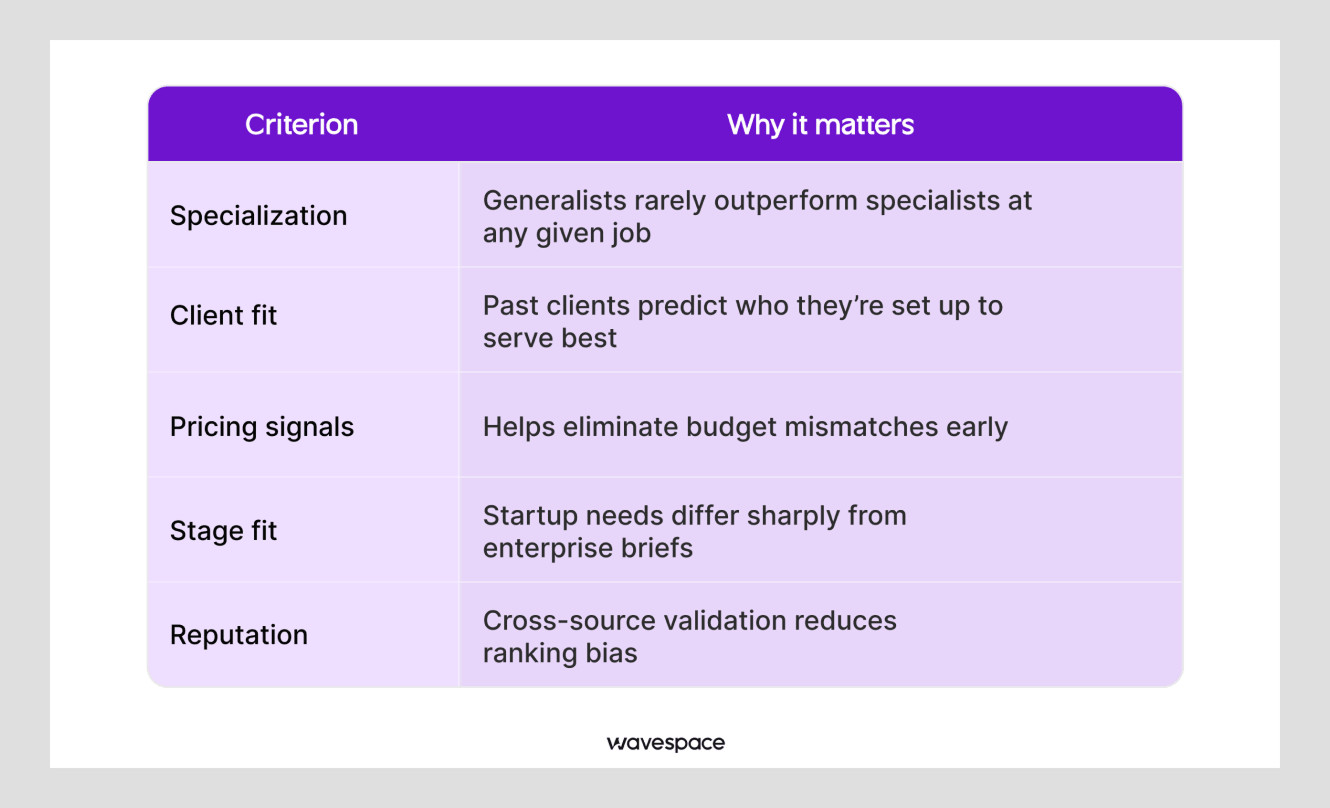
This list isn't based on award counts or follower numbers. It's based on factors that matter to buyers making real hiring decisions about UI/UX partners specifically.
Ranking criteria, in order of weight:
- Specialization and portfolio depth — Does the agency have a clear, defensible area of strength within its category, or is it a vague full-service shop?
- Client fit signals — Who are their actual clients, and what stage and sector do those clients represent?
- Reputation across independent sources — Not only self-reported, but also on directories such as Clutch, DesignRush, and Built In NYC.
- Service breadth vs. focus — Does the agency have a narrow or wide range of services which can cause it to lose focus for smaller buyers?
- Pricing signals — Most NYC agencies don’t publish rates. Ranges here are indicative and based on market expectations, agency positioning, and typical project scope.
- Stage fit — Agencies are evaluated partly on whether they're accessible and relevant to startup and growth-stage buyers, not only enterprise clients. This list includes options across the pricing spectrum, from accessible startup-tier studios to enterprise-scale firms.
Note on pricing: All budget ranges in this guide are estimates based on publicly available market data and agency positioning. Treat them as shortlisting signals, not quotes.
Quick comparison: Top NYC design agencies at a glance
Use this table to eliminate poor-fit options before reading the full profiles. Each agency is mapped by core specialty, ideal client type, estimated pricing tier, and primary tradeoff.
Pricing key: $$ = $25k–$75k estimate | $$$ = $75k–$150k estimate | $$$$ = $150k–$250k+ estimate
Wavespace: Best for startup product design and UX in New York
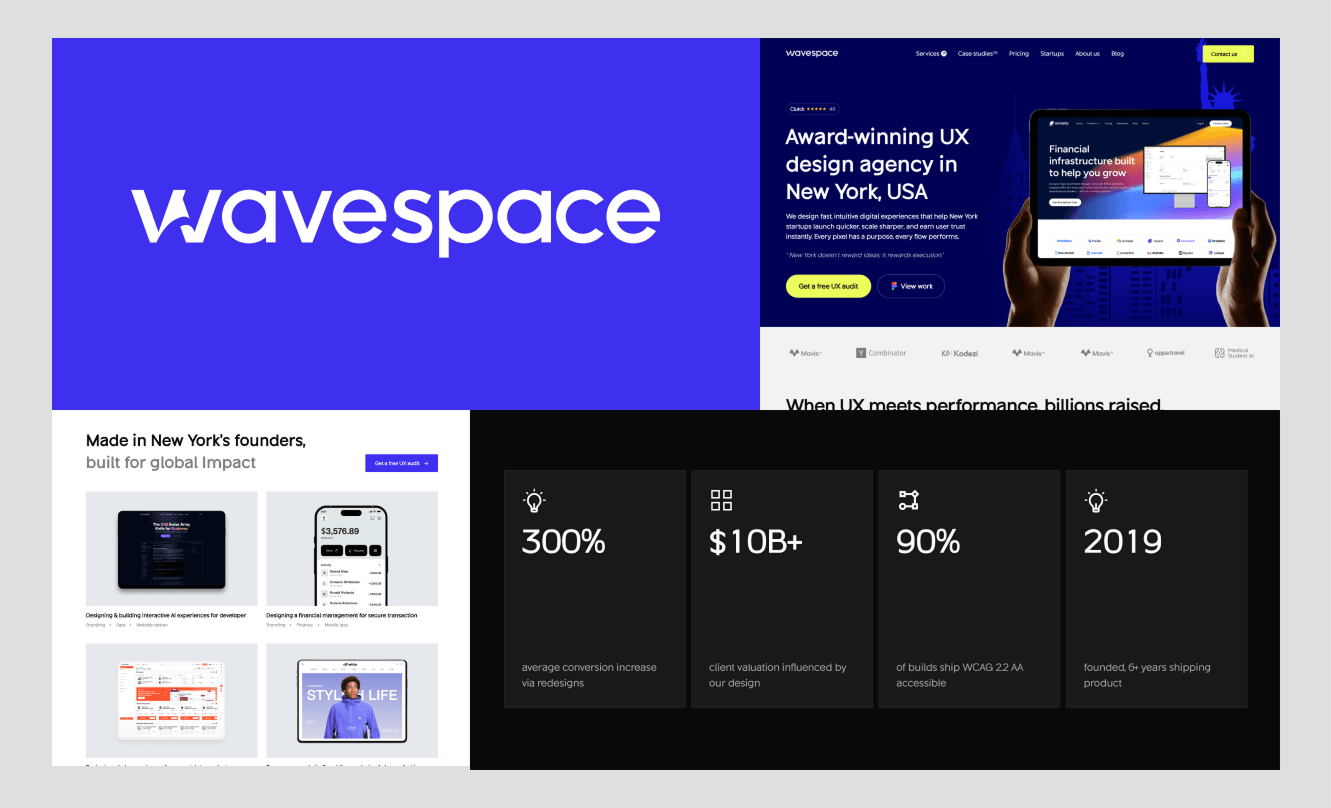
- Specialty: Product design, UI/UX, SaaS design, MVP development, and conversion-focused web
- Location: New York, USA (with a dedicated NYC presence)
- Pricing signal: Mid four to low five figures; more accessible than legacy brand firms
- Notable clients: YC-backed, a16z, Sequoia, and Techstars portfolio companies
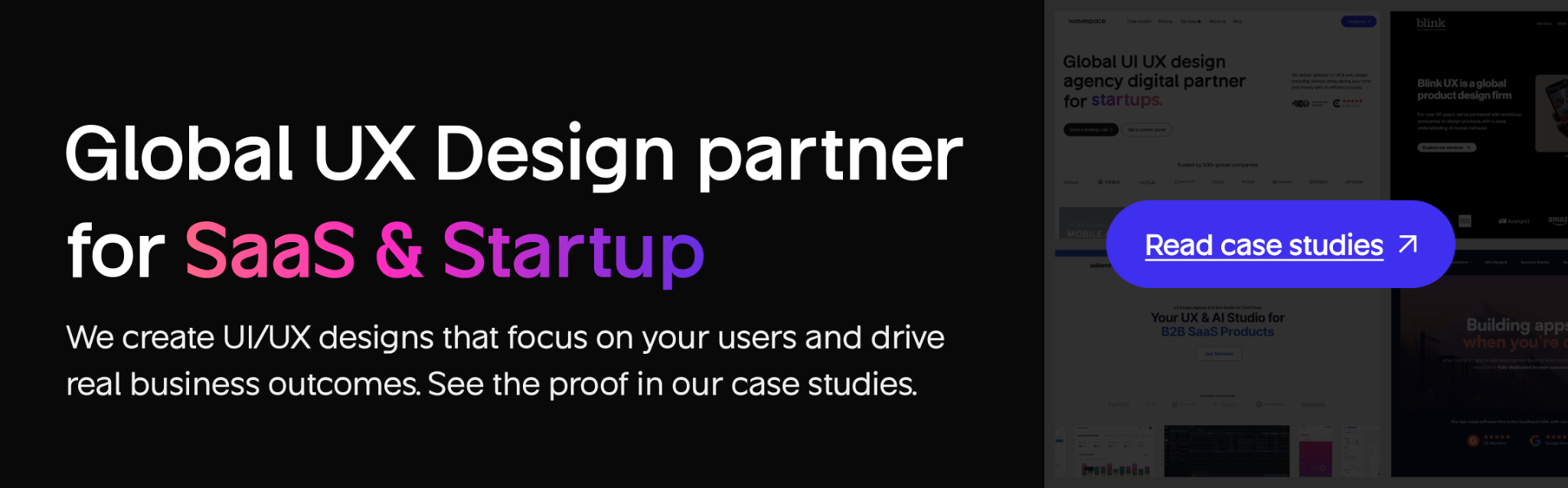
Wavespace is a product-first design agency designed for startups and growth-stage teams. While most of the agencies on this list are geared toward enterprise clients with long lead times and big budgets, Wavespace is designed for founders who want to ship clean, move quickly, and develop products that convert from the start.
The NYC location page says it simply: “New York is no place for ideas: it's a place for execution.” This is how it works.
Prototypes in days, launches in weeks, and a design process calibrated to investor timelines and user traction - not agency overhead.
Strengths:
- Specialized expertise in product UX, SaaS design, and MVP execution
- Successful experience with 550+ founders in the best VC portfolios
- Easy pricing compared to enterprise agencies on this list
- Webflow- and Framer-certified, data-driven process with Hotjar and real user testing.
Tradeoffs:
- Not the right fit for CPG brands, physical packaging, or large enterprise brand governance
- Less suited for pure brand identity work without a digital product component
Best for: Seed to Series B founders, developing or redesigning a digital product, SaaS platform, or conversion-focused website. Ideal for teams where strategy and speed are paramount but enterprise agency isn't an option.
Code and Theory: Platform UX and information architecture
- Specialty: Large-scale platform UX, information architecture, and enterprise website builds
- Location: New York City (One World Trade Center)
- Pricing signal: Enterprise-tier, typically six figures for major platform work
- Notable clients: Facebook, Verizon
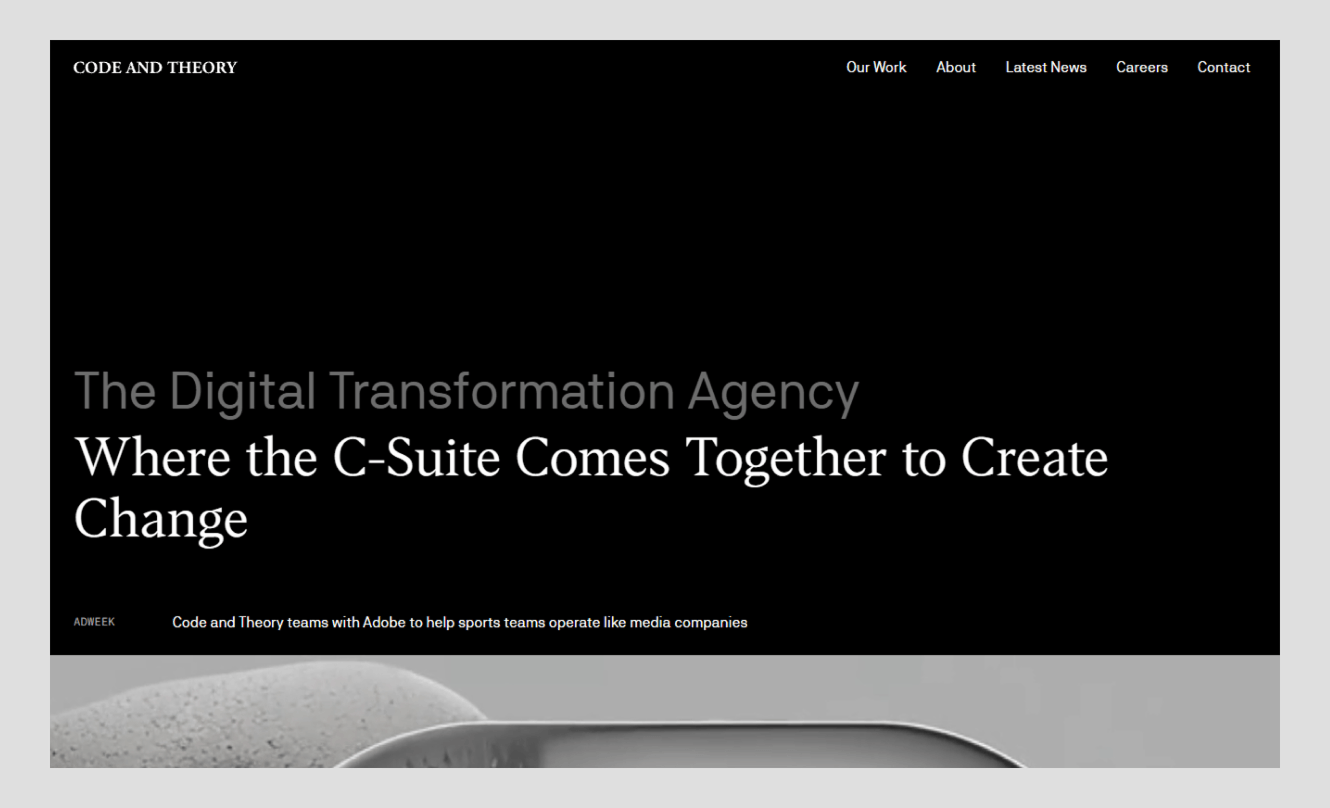
Unlike simple, one-off marketing sites, Code and Theory developed its reputation on complex, content-heavy, multi-user sites. It's the agency enterprise and media companies call when a website is truly a content platform that incorporates editorial, commerce, and data.
Strengths:
- Strong knowledge of intricate information architecture and extensive content systems
- Excellent media and telecom-scale credibility.
- Genuine engineering depth alongside design, not just a design layer
Tradeoffs:
- Built for platform-scale complexity; overkill for a standard marketing or product site
- Enterprise pacing and process, not suited to startup speed or budget
- Less relevant if your need is a focused product UX challenge rather than a content platform
Best for: Enterprise and media brands creating and rebuilding a complex, content-rich web platform.
USTWO: Best for app research, UX/UI, prototyping
- Specialty: App research, UX/UI, prototyping, and product strategy for consumer, health, fintech, and learning apps
- Location: New York, with global studios
- Pricing signal: High five to six figures for full app design and development
- Notable clients: Widely known for creating the award-winning game Monument Valley; client work spans consumer, health, and fintech apps
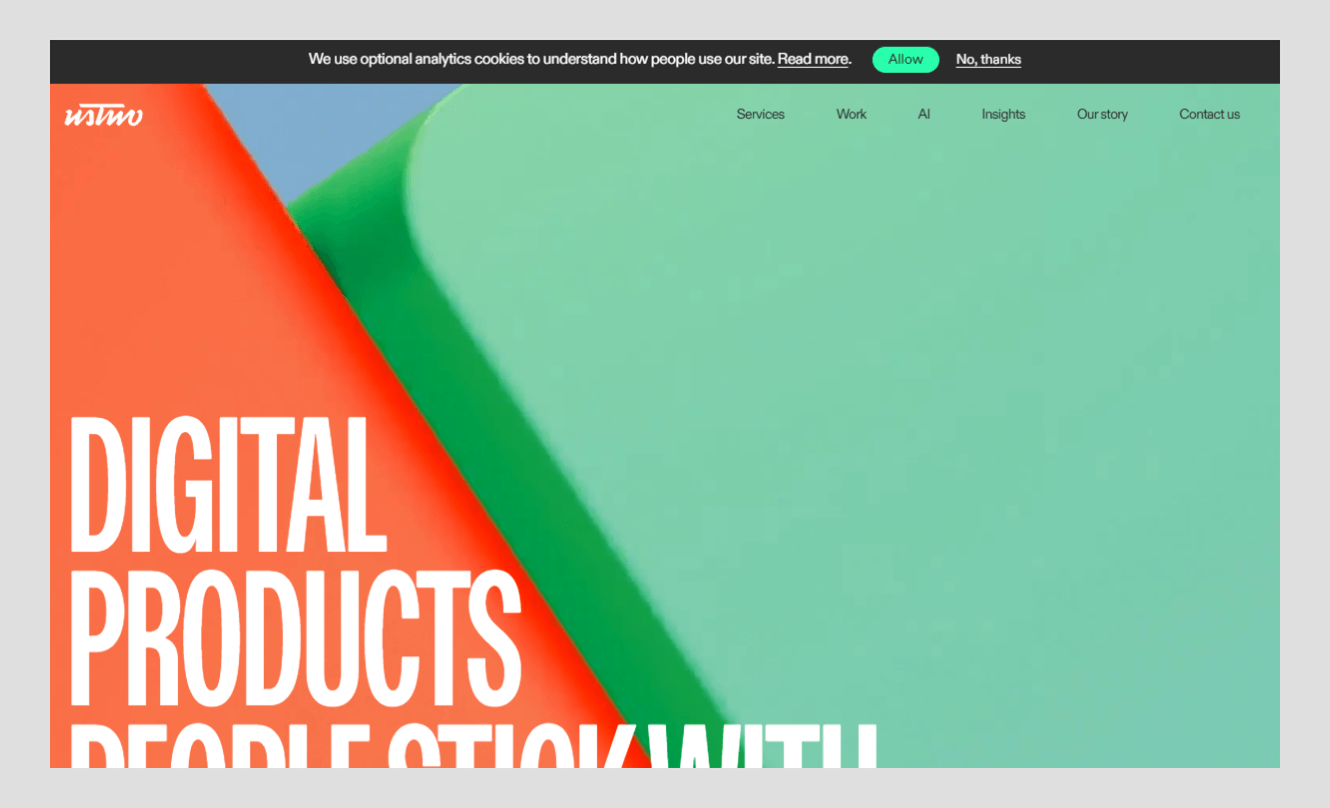
USTWO built its reputation as much on its own products as its client work. Monument Valley is still one of the best design studios that have proven their craft by sending home something of their own, and that trust extends into their client app design practice.
Strengths:
- A real studio culture based on design, rather than a production shop.
- Excellent history in consumer, health, and fintech applications
- Global studio network gives access to a deep bench of senior talent
Tradeoffs:
- Premium positioning; not the most accessible option for early-stage app budgets
- Global studio structure may require staffing of project personnel from various offices, not necessarily all NYC-based
- If the brief is for a web platform rather than a native app, it's less relevant.
Best for: Consumer, health, and fintech companies in growth stage or beyond who seek design-led app craft that has a track record of creativity.
R/GA: Best for enterprise innovation and connected experiences
- Specialty: Brand, digital product design, technology, and innovation consulting
- Location: New York City (global HQ)
- Pricing signal: Enterprise-tier; typically $150k–$500k+ depending on scope
- Notable clients: Nike, Samsung, ESPN, Google, Verizon, American Express
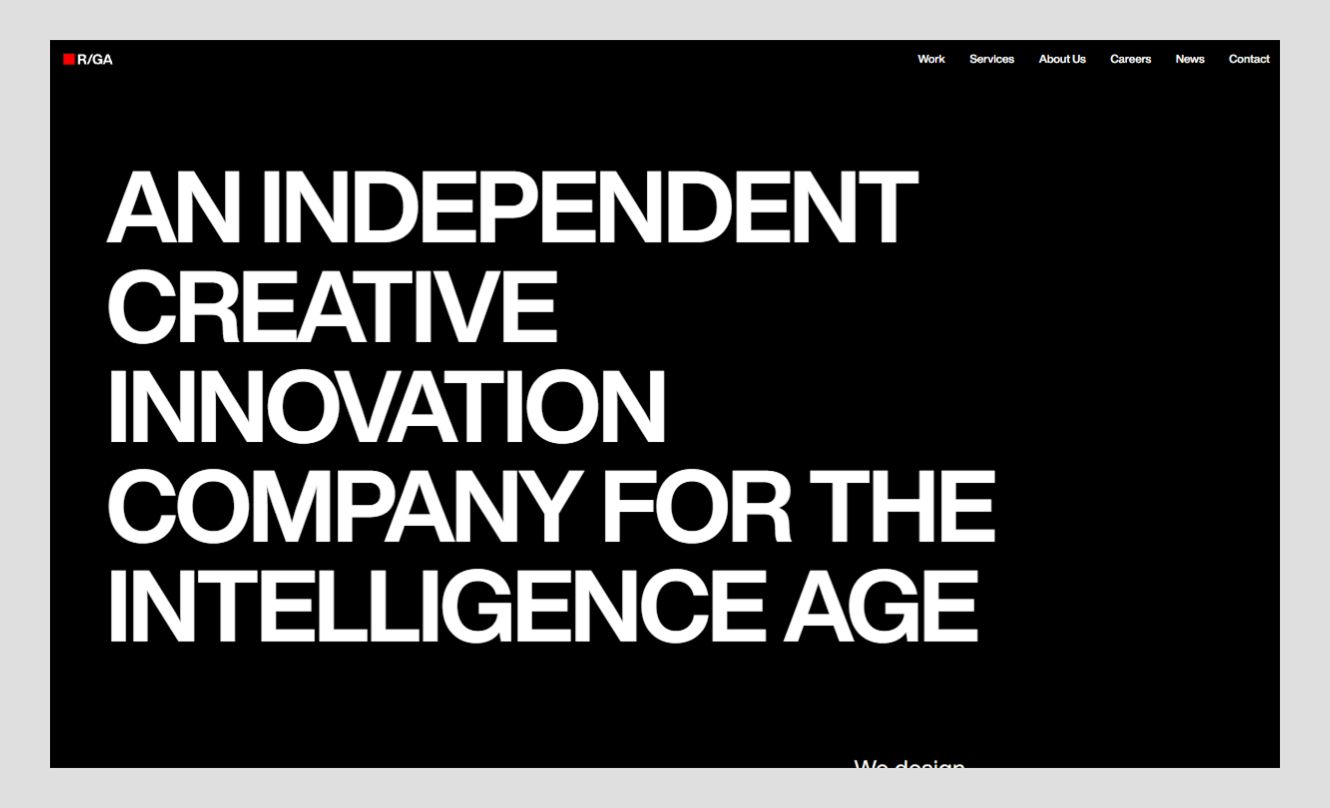
R/GA is a brand strategy, digital experience design, and tech consultancy company. It's not just a design agency; it's not just a tech company; it's a hybrid that performs best when design and tech must work together at large scale.
That positioning makes R/GA a good option for large enterprise clients who have multiple touchpoints and multiple digital ecosystems and have the budget for it. It is one of the most cited instances of design and technology in true alignment, having worked with Nike on digital product and brand systems.
Strengths:
- Uncommon capacity to combine brand, UX, and tech strategy in a single interaction
- Large, multi-platform digital experience programs have a deep bench.
- High trust in fintech, media and consumer tech industry.
Tradeoffs:
- For smaller startups, the engagement approach is probably too big, too slow, and too costly.
- Not very useful if the brief is a ‘brand identity’ or a ‘UX challenge for a single product'.
- The size of the firm can create barriers to meeting with senior talent on smaller projects.
R/GA justifies its spot on this list with enterprise buyers. It's OK to know about, not necessarily to call.
Utility: Best for mobile UX/UI design and development for enterprise apps
- Specialty: Mobile app design and development, product strategy, and growth marketing
- Location: New York City (HQ)
- Pricing signal: Enterprise-tier; six figures for major app engagements
- Notable clients: Airbnb, Samsung, Coca-Cola, Warner Music Group, Verizon, NBA, Forbes, BuzzFeed
Utility's mission is to be a one-stop shop digital product agency, and mobile app design and development is a key strength. Its roster of big consumer and media brands is a testament to an agency better suited to big, bold app releases than to thin, minimal MVP efforts.
Strengths:
- Real enterprise-level client base of media, sports, and consumer brands.
- A wide range of skills from design, native development, growth, and marketing support.
- NYC-based, with a history of high-profile launches.
Tradeoffs:
- Too big for most early-stage app builds; enterprise scale and budget
- A wide range of services does not necessarily imply specialist depth as in a pure app-design boutique.
- If the brief is just a design, it may not be necessary to have growth/marketing add-ons as an overhead.
Ideal for: Enterprise and large consumer brands introducing or relaunching a high-visibility mobile application.
Work & Co: Best for large-scale digital product design
- Specialty: Digital product design, UX strategy, and engineering coordination
- Location: Brooklyn, New York
- Pricing signal: Enterprise-tier; hundreds of thousands for major digital engagements.
- Notable clients: Apple, Facebook, Virgin America, Ikea, Google.
Work & Co is one of the world's most reputable digital product design companies, and their profile is no exception.
It's for large enterprises that have complex digital products, big platform launches, and the scope that demands UX, strategy, and engineering working in lockstep.
Is this agency right for you? Check your fit:
- You’re launching or redesigning a major digital platform, not just a marketing site
- You have a budget in the high five to six figures minimum
- Your brief requires UX strategy, product thinking, and engineering coordination together
- You’re a Series C+ company or enterprise team, not an early-stage startup
The honest tradeoff
Most Seed to Series A teams will find Work & Co’s engagement model too large, too slow, and too expensive for their current stage. That’s not a criticism. It’s a fit problem. The firm is built for complex, long-cycle digital programs, not fast-moving early-stage product iteration.
Huge: Best for user-centered digital experience programs
- Specialty: UX design, digital strategy, and large-scale digital experience
- Location: Brooklyn, New York
- Pricing signal: Mid to high five figures; enterprise engagements run higher
- Notable clients: Google, Zelle, American Express, Verizon.
Huge is a large agency with a proven history of delivering digital experience design for enterprise and consumer brands.
It has a large size, providing multi-disciplinary depth in research, strategy, design and analytics, making it ideal for buyers who require a comprehensive operating model and not a niche boutique.
Quick take:
- Experienced in managing UX rich digital experience programs at mid-market to enterprise size
- Research-informed process with robust user behavior and journey design foundations
- Not as well suited for founders needing to access senior talent and quick decision cycles
- The agency size can be a limiting factor; boutique agencies are more responsive.
Best for: Mid-market and enterprise businesses with multi-point digital marketing campaigns. Not as good for startups who require speed and collaboration at the founder level.
Momentum Design Lab: Best for data-driven SaaS and enterprise UX
- Specialty: UX/UI design for SaaS and enterprise products, with a quantitative, research-first process
- Location: New York City office (27 W 24th St), part of HTEC Group
- Pricing signal: Mid to high five figures for full product engagements.
- Notable clients: Enterprise and SaaS clients across fintech and B2B software (per Clutch-verified reviews)
Momentum Design Lab falls somewhere between boutique and enterprise: HTEC Group, a global engineering firm, owns it, which means that it has deployment depth beyond design, but Momentum also has a dedicated NYC studio and works on mid-market SaaS work that the true giants on this list don't necessarily take, regardless of their size.
Strengths:
- Data- and research-driven design process, useful for products with real usage analytics to design against
- Proven experience with Enterprise and SaaS UX (95+ reviews)
- Bridges design and engineering delivery through its parent company
Tradeoffs:
- While Global HQ is in San Mateo, NYC teams may be different on a project.
- Not as much a pure specialist as boutique UX-only studios
- Not the best choice for consumer branding or packaging design
Best for: Mid-market SaaS and enterprise teams that need a UX process guided by research but don't require the enterprise-agency budget.
Dom & Tom: Best for UX/UI and product strategy
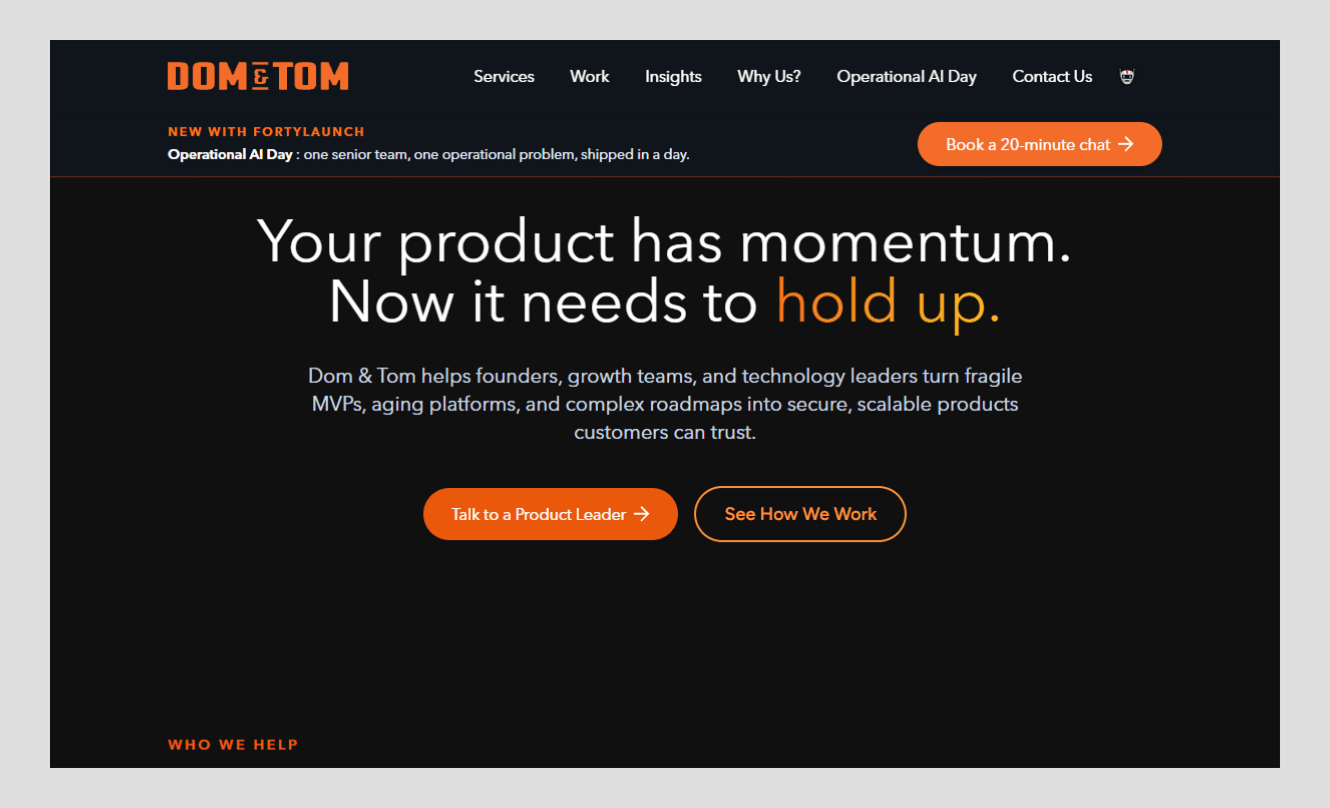
- Specialty: UX/UI, product strategy, and native app development for AI, web, and mobile products
- Location: New York City (HQ)
- Pricing signal: Mid-five to low six figures for full app design and build
- Notable clients: Media, fintech, and marketplace companies (per Clutch and Capterra-verified reviews)
Dom & Tom is more of a true NYC-based design and native development house that shares a client list that's more evenly distributed between mid-market media, fintech, and marketplace products.
Strengths:
- End-to-end capability: Design via native iOS/Android development & QA
- In addition to the above, verified independent review record on Clutch and Capterra.
- More accessible than the largest enterprise app studios
Tradeoffs:
- Slightly less prestige than boutique brand-focused studios, such as USTWO or Fantasy
- Less experience with the most complex enterprise-scale apps = mid-market focus
Best for: Mid-market media, fintech, or marketplace companies looking to have one team design and develop apps in native.
Fantasy (formerly Fantasy Interactive): Best for product vision, UX/UI, and motion/prototyping
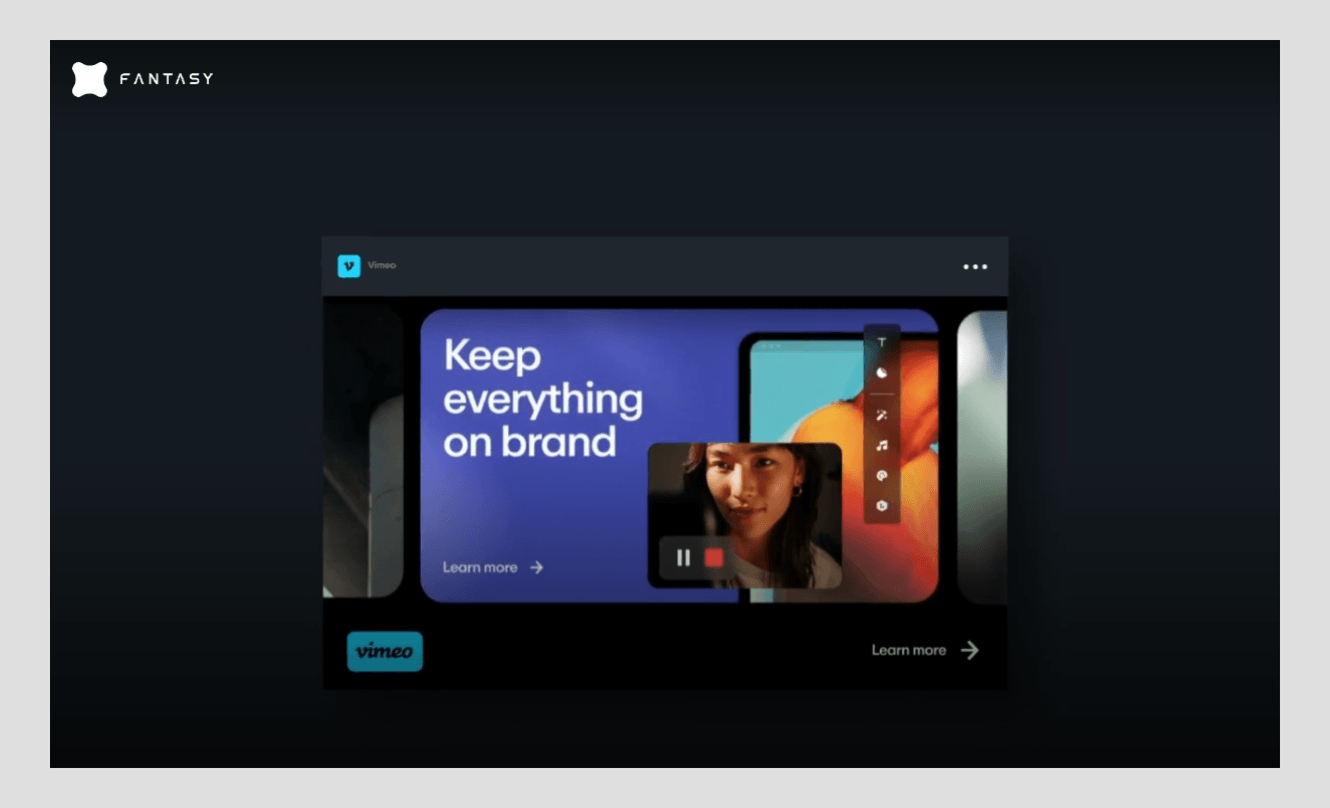
- Specialty: AI-native digital product design, product vision, UX/UI, and motion/prototyping
- Location: New York City (HQ)
- Pricing signal: Enterprise-tier; premium positioning, six figures and above
- Notable clients: LIV Golf; historically known for work with major consumer and media brands
Fantasy (rebranded from Fantasy Interactive) has repositioned itself around AI-native product design, pairing its long-standing design pedigree with AI strategy and execution work for established digital platforms.
Strengths:
- A long track record and credibility in NYC's interactive world.
- At the forefront of product design with AI integration.
- Ability to create and design movement beyond static UI
Tradeoffs:
- Positioning for enterprise, not startups; high price tag
- Newer AI-native repositioning means less of a fixed, easily-comparable service menu
- Ideal for existing platforms, not app MVPs.
Best for: Established digital platforms and enterprise brands looking for app design and AI strategy to work.
How to choose the right UI/UX design agency for your project type
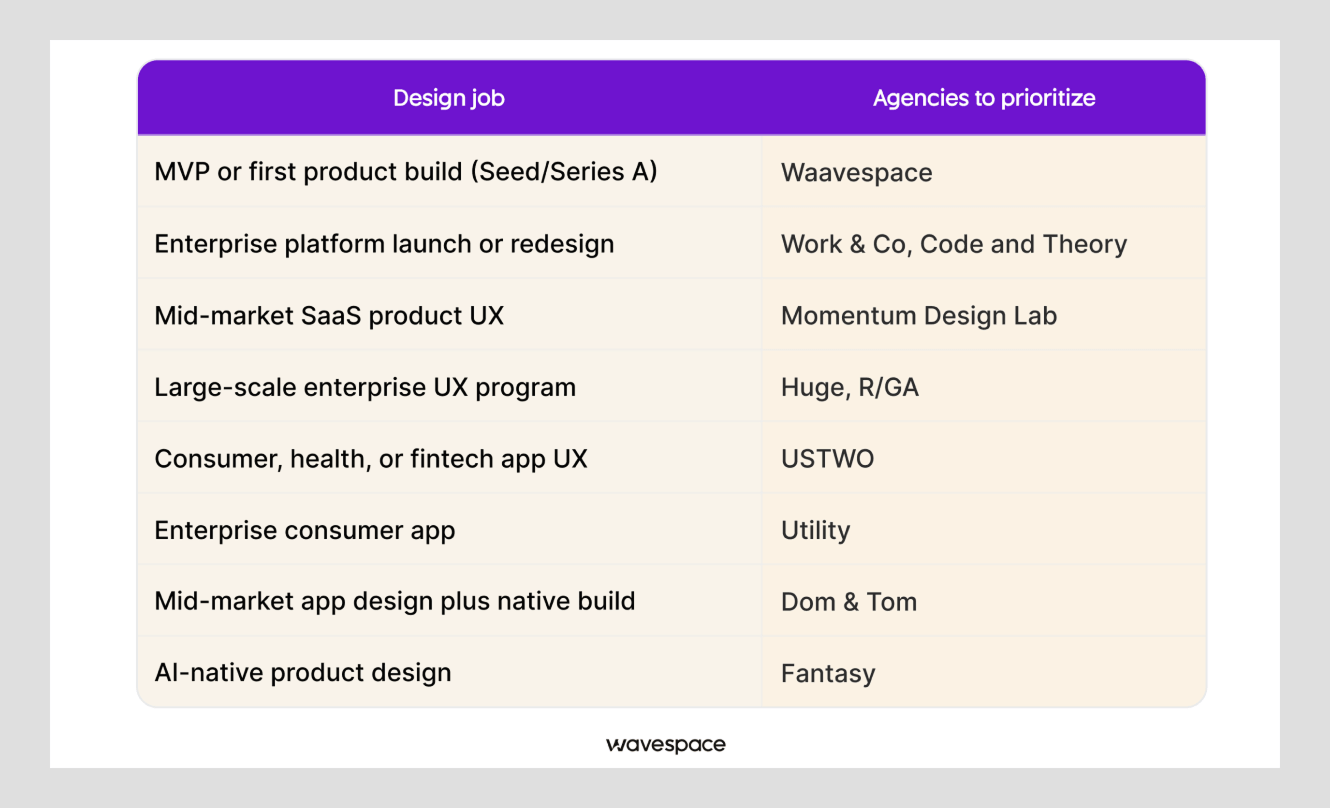
It's not the agency with the best portfolio, right. It is the one that has the specialization, model, and stage that align with your brief. Begin with the action to take:
5-step shortlist checklist:
- Determine the type of project you are creating. An MVP build, an enterprise platform redesign, and a native mobile application all require not only a different level of the same type of UI/UX specialist, but a different type of UI/UX specialist.
- Stage to model. Early-stage teams require speed, collaboration, and iteration. That's not what enterprise agencies are designed for.
- Test the pricing signal! Whatever the typical engagement is, if it costs 5 times your budget, cross the name off the list, even if it's a good reputation.
- Who is managing your project? At big agencies, the big guys pitch, and the little guys execute. Be specific about who will be on your account.
- Look for experience in the sector. An agency that is not used to dealing with a B2B SaaS company will have a learning curve you're paying for.
What’s changed in 2026: AI workflows, specialization, and pricing clarity
AI is a key part of any serious agency's workflow. It's not if an agency is using AI; it's how. The most successful companies employ it to create more creative and more diverse output in shorter time.
AI is in every serious agency’s workflow now. The question isn’t whether an agency uses AI; it’s how. The best firms use it to push further from the median, producing more original and more varied work faster.
The ones to be avoided are cutting costs and producing homogenized outputs. Be specific: “How is AI incorporated into your workflow and how do you ensure that it remains “our” work?”
Specialization is taking the place of full-service vagueness, and in UI/UX it manifests as sub-specialty clarity. In a market with more than 5,000 design agencies, the ones that are going to do well in 2026 are going to be more specific about the type of product UX they excel at, as opposed to saying they're good at everything.
The agency that's working in marketing, branding, and app UX without a clear focus is one to watch. Inquire about their 3 most recent clients for your project type and if they match your profile.
The pricing model is changing to an outcomes-based approach. Increasingly, more agencies are shifting away from the traditional time-and-materials retainer to milestone or outcome-based contracts. That’s a good sign for buyers. It is not only about the process, but it is about the outcome as well.
When you are shortlisting agencies, ask them the following question: “What is success at the end of this engagement, and how will we both know we are successful?”
Shortlist your best-fit design partner
The majority of the founders reading this list don't require the most popular agency on it. They must have the right partner at the right time.
The enterprise-scale companies on this list will probably be too slow, too expensive, and too far removed from your day-to-day velocity if you're at the Seed to Series B stage and looking for a UI/UX partner, not an enterprise transformation program.
Before you make an agency decision, use this shortlist checklist:
- Is the agency's niche in UX (SaaS, consumer, enterprise platform, or mobile app) aligned with your project?
- Have they worked with businesses that are at your stage in your business sector?
- Will they be able to provide you with direct access to the senior people that will be running your project?
- Are they priced within 2x of your budget, not 5x?
- Is there a clear response to the question of “what does success look like at the end of this engagement”?

More related blog
Have a Project? Let’s talk!






.png)



Francisco, CA 94105, United States





































.avif)