Top 15 enterprise design companies in 2026


Why choosing the right design partner matters
Your product can be great and still lose enterprise deals because the interface looks like a proof of concept. Buyers notice these. An enterprise design agency fixes that. Their work does not just make things look good; the payoff shows up in churn numbers and contract sizes.
For B2B, SaaS, and AI products, that gap has been growing for a few years now and doesn't seem to be closing soon.
For this blog, we reviewed dozens of enterprise design agencies. Our team has six-plus years of combined experience in enterprise product and brand design. In this guide, you will find the top 15 enterprise design firms, what they do best, and which type of company they're the right fit for.
What is enterprise design?
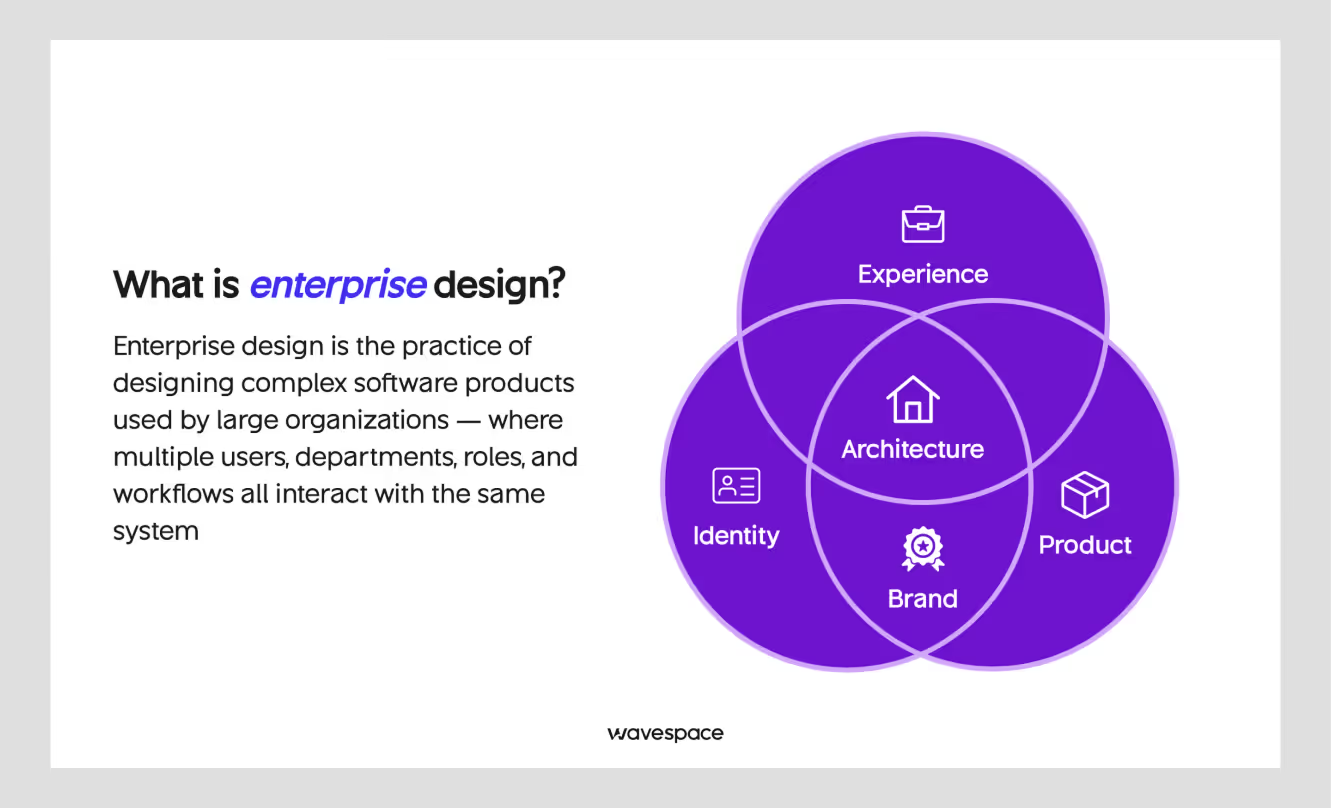
Enterprise design is a part of UI/UX design work of building visual systems, digital products, and brand experiences for large organizations. It's different from startup design in a few concrete ways: the audience is harder to impress, the decisions go through more stakeholders, and whatever you build has to hold up at scale.
Enterprise design covers three main areas:
Brand identity: Colors, logo, icon, typography, tone.
Product design: Interface, dashboard, and the screens people sit in front of all day.
Service design: From start to finish experience that holds together across teams, tools, and handoffs.
Learn what is UX design from the industry experts.
All of this feeds B2B, SaaS, and AI companies into one thing: Building trust. Whether a buyer trusts you enough to sign a deal. A sloppy or clunky interface is a reason buyers back out. A great design silently says what you're trying to do.
What defines a top enterprise design agency in 2026
Not every design studio can handle enterprise work. Most are set up for smaller engagements, one product, one brand refresh, a contained scope.
Moreover, enterprise work is a different entity. There are more stakeholders in enterprise products, longer timelines, and systems that need to hold together across thousands of touchpoints.
The agencies worth considering have worked with large, demanding clients and have the receipts: conversion data, churn numbers, case studies that go beyond "It looks modern."
- They design at the system level.
- They believe in AI tools that are reshaping workflows and user expectations.
- They connect design choices with business outcomes rather than limiting them to design.
Based on our review, the agencies on this list meet all five criteria. Each one has a proven track record with enterprise clients.
Check out what makes enterprise UX design different than other UX designs.
Our evaluation criteria
We scored each agency across five different dimensions:
Portfolio:
- What is the depth and relevance of past enterprise work?
Client:
- Who are their previous clients, and where are they now?
Specialization:
- Did they focus on B2B, SaaS, AI, or complex digital products?
Team size and capacity:
- Does the agency have the ability to handle large-scale projects?
Founder fit:
- Does the agency fit with growth-stage companies and bring the best out of them?
This list is updated for 2026. We also took a peek at their industry reports and client reviews on platforms like Clutch and G2.
Quick comparison table between the top enterprise UX designers
Top 15 enterprise design agencies in 2026
1. Wavespace
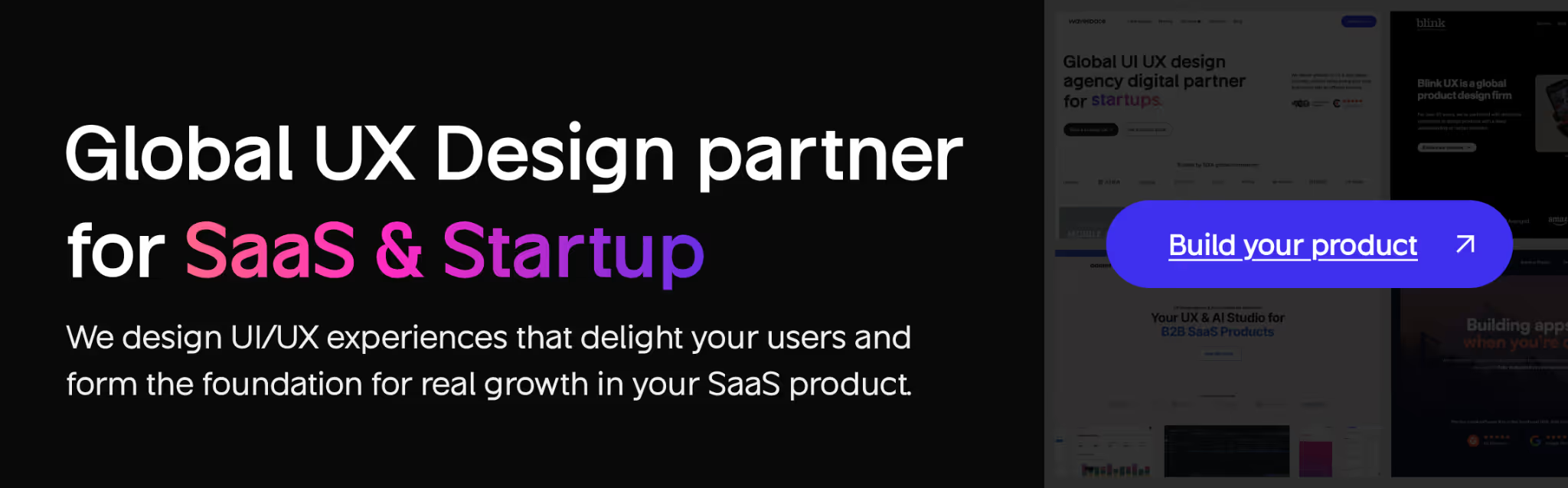
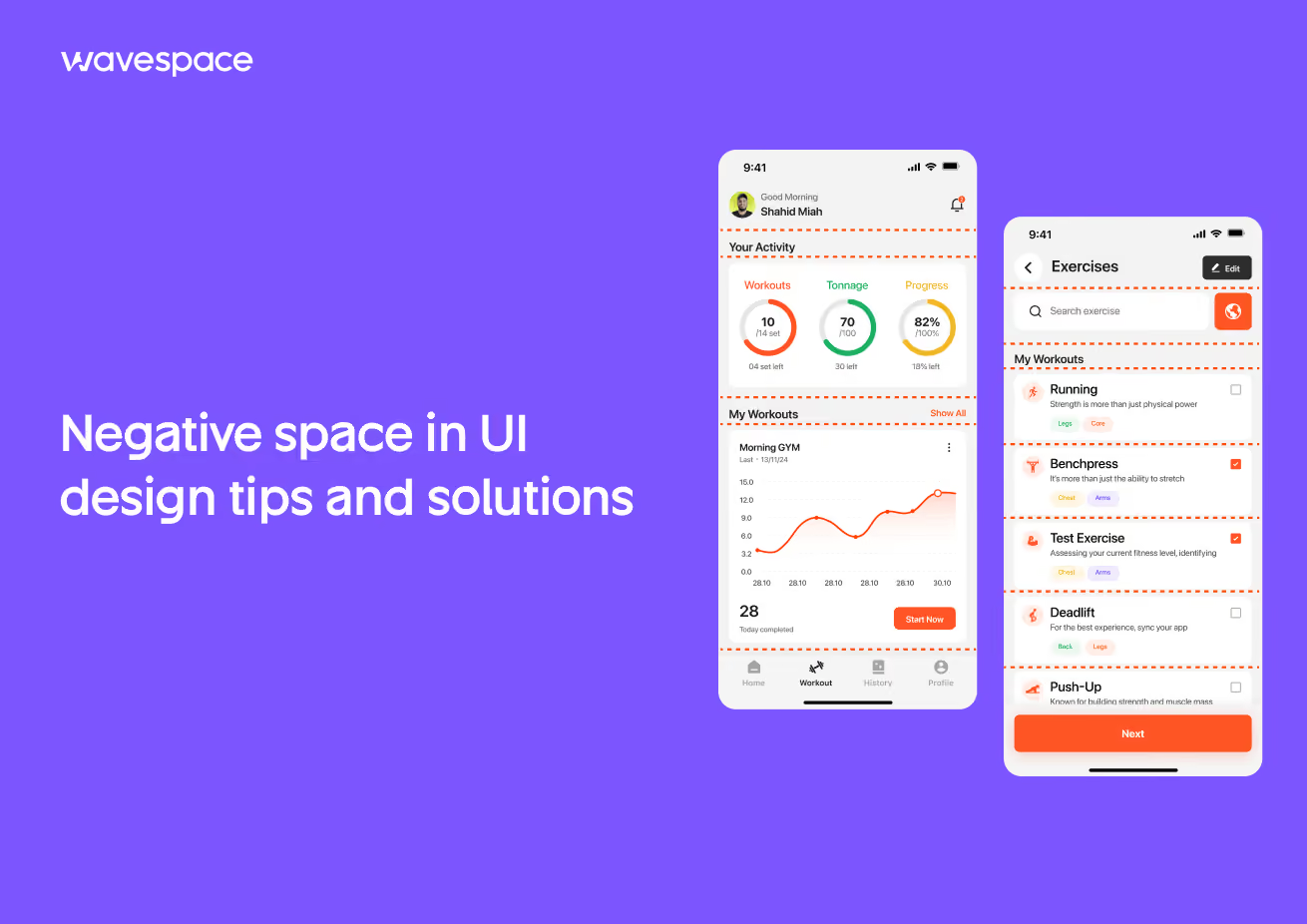
Wavespace is an innovative, forward-thinking design agency. Founded in 2019 in Sheridan, WY, wings spread around the globe. They quickly became one of the prominent names in the design industry.
They have worked in more than 20 locations around the world. Wavespace uses GE’s strong research and engineering skills to solve design problems. Focuses on digital change, AI-based products, and complex business software.
Key services:
- Designing digital products and user experiences for industrial software
- Creating AI and data display interfaces.
- Running design sprints and building quick prototypes
- Making design systems for growth-stage companies
Notable clients and works:
Wavespace is an enterprise company of B2B, SaaS, and AI, behind creating a handful of renowned companies' (under NDA) user experience for multiple platforms. Including complex dashboards and design system. They have also worked with clients in manufacturing, law firms, healthcare, energy, and the AI automation industry.
What makes them stand out:
Wavespace combines design with strong engineering knowledge. If a product involves data-heavy interfaces, machine learning outputs, or industrial workflows, they are the ones to call for. Wavespace is one of the affordable enterprise agencies that understands this space better.
Ideal for:
Growth-stage, established, or large companies in manufacturing, healthcare, energy, and AI-based software that need both technical skills and great design.
2. Pentagram
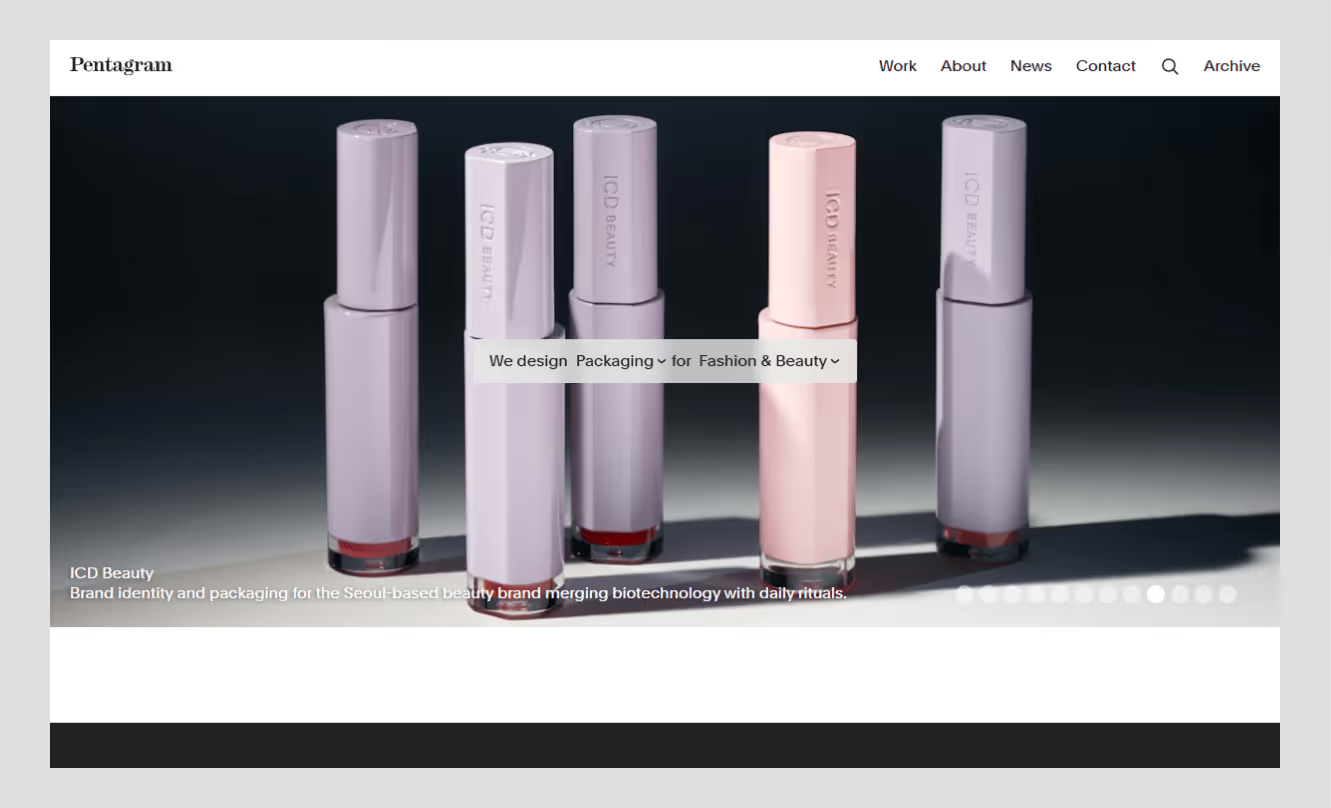
Pentagram is one of the oldest and most respected design companies in the world. Started in 1972, London. The company operates with a group of experts in different fields. Each leads their own projects. Pentagram does brand identity, graphic design, packaging, and digital experiences.
Key services:
- Brand identity and visual design
- Signs and directions for buildings and spaces
- Website and digital product design
- Book and magazine design
Notable clients and works:
They have worked with well-known companies. Some of the popular companies are Citibank, Rolls-Royce, The New York Times, and Vertical. Their redesign of the New York City underground system is a major event in the history of design.
What makes them stand out:
The top designers work directly on every project. Clients get high-quality work from experienced designers.
Ideal for:
Large companies with huge budgets that want a strong and long-lasting brand identity.
3. Wolff Olins
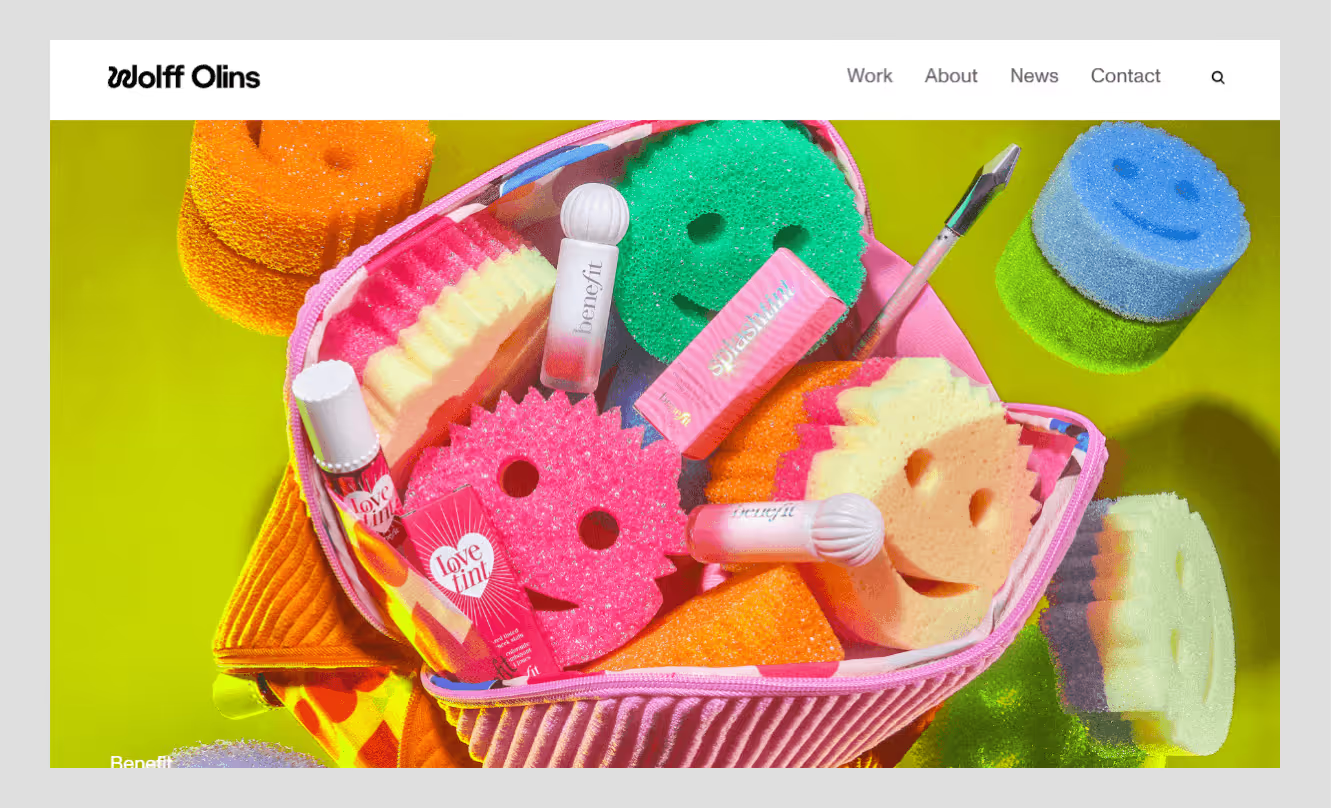
Wolff Olins has been around since 1965. Established in London, and now operating from New York and San Francisco. they are the pioneer of brand strategy, identity, naming, and the messy change-management work that comes with a major rebrand.
Key services:
- Brand strategy and identity
- Digital brand experience
- Brand transformation and change management
- Product and service naming
Notable clients and works:
Their client list is full of notable industry giants. From Uber, GE Capital, Alphabet, to the London 2012 Olympics. Their works are bold, opinionated, and culturally resonant.
What makes them stand out:
Wolff Olins is not afraid to challenge your assumptions. They push clients toward bolder, more distinctive brands. Which is great when you are trying to stand out in a crowded B2B market.
Ideal for:
Enterprise companies, mid-transformation, IPO, merger, rebrand, and new market entry.
Looking for a design agency from the USA? Here’s the list of Top 20 UI/UX design agency in the USA.
4. Landor
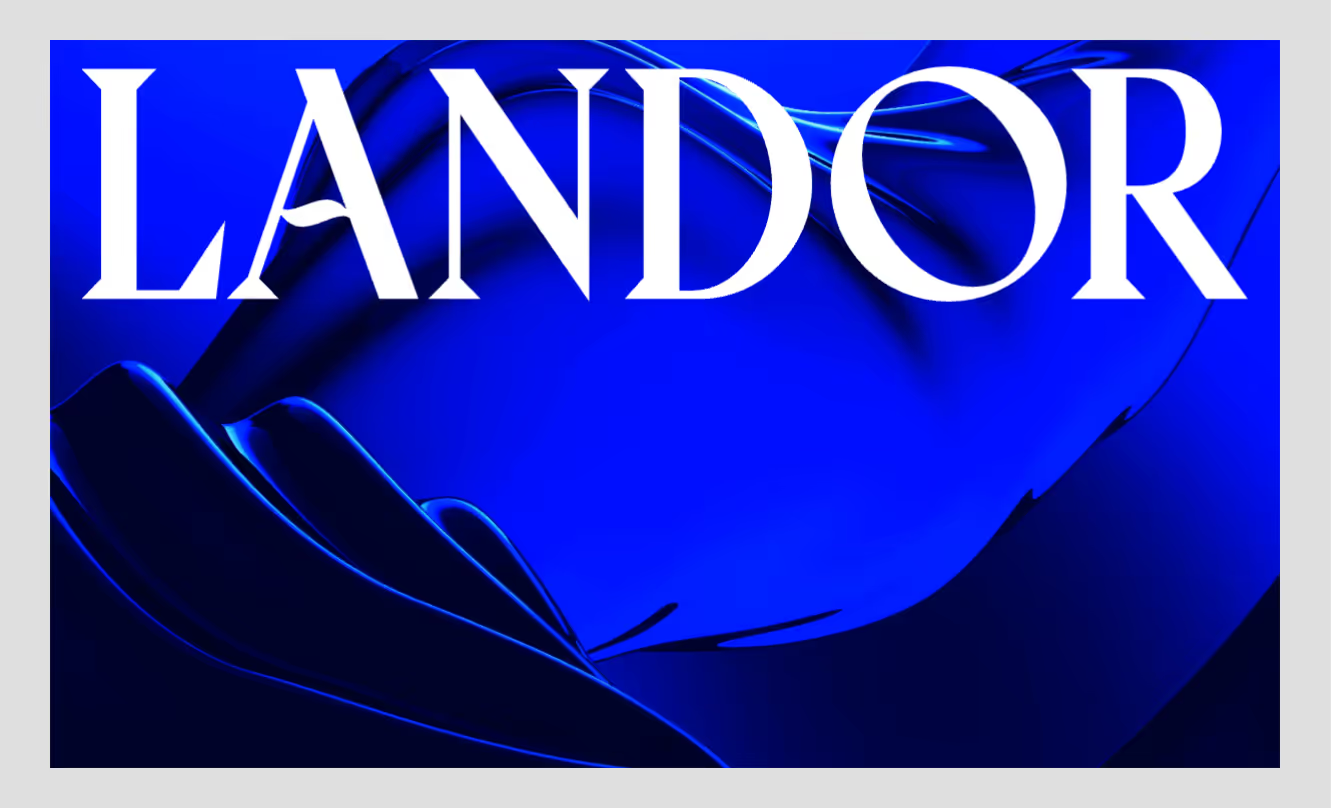
Landor & Fitch is one of the oldest design agencies on the list. Founded in San Francisco in 1941. In late 2023, they rebranded as Landor. A retail and product design firm, which added packaging, store experience, and product work to the mix. Now they are operating roughly 26–33 offices across 19–21 countries.
Key services:
- Global brand strategy and identity
- Packaging and retail design
- Employee experience and internal brand
- Digital brand systems and guidelines
Notable clients and works:
Landor’s client list includes FedEx, BP, P&G, Hyatt, and Singapore Airlines. Known for the FedEx logo, the arrow hidden in the negative space is their most dissected piece of work.
What makes them stand out:
Making a brand to look and feel consistent across 50 markets. It involves governance, guidelines, localization, and internal alignment. For multinational enterprises, this is a huge operational advantage.
Ideal for:
Global enterprises that need consistent brand design across markets, regions, and product lines.
5. MetaDesign
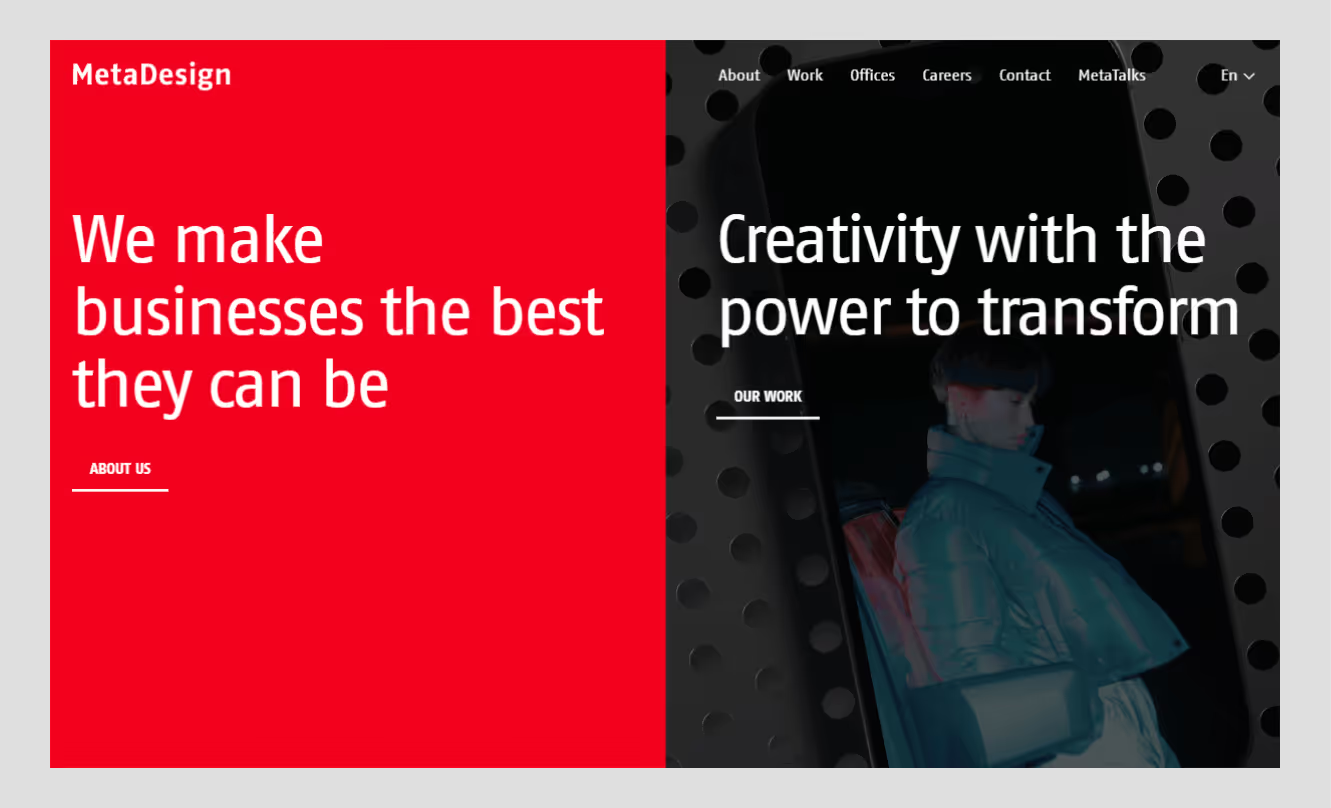
MetaDesign started in Berlin in 1979 and has stayed European in character. Their studios are in Germany, Switzerland, and China. MetaDesign focuses on brand systems, enterprise UX, and the kind of design problems that require more research than intuition.
Key services:
- UX/UI for enterprise software and SaaS platforms
- Brand identity and design systems
- Digital transformation strategy
- Research-driven product design
Notable clients and works:
Clients include Volkswagen, Audi, Siemens, and Lufthansa. MetaDesign built a branding framework that was deployed over a million touch points for Volkswagen. The Siemens work is probably more telling: they redesigned complex industrial dashboards for non-technical users.
What makes them stand out:
MetaDesign excels at making complex systems simple. MetaDesign knows how to design clarity into complexity, especially when your enterprise product users struggle to navigate through tons of features.
Ideal for:
B2B SaaS or industrial software, and the UX debt has reached the point of no return.
6. Frog Design
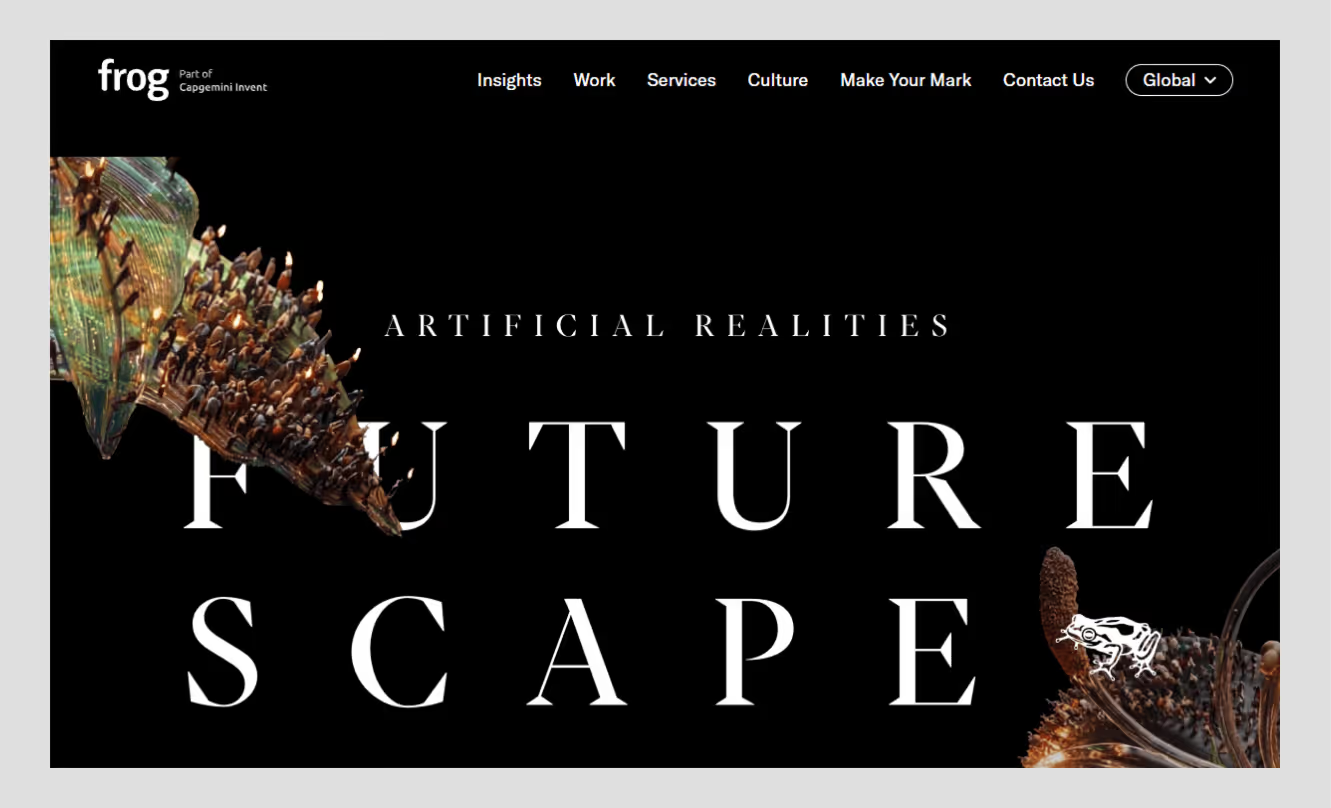
Frog was founded in Germany in 1969 and made a name for itself in the US after designing the Apple IIc. That project had a long impact and shaped how a generation of companies thinks about product aesthetics. Frog is now part of Capgemini Invent and runs studios across 10+ cities.
Key services:
- Product strategy and design
- Digital experience and app design
- Service design and customer journey mapping
- Innovation workshops and design sprints
Notable clients and works:
The clients’ history moves from hardware to software. Popular clients of Frog Design are Apple, Dell, Disney, Microsoft, and ESPN. Nowadays, Frog focuses on healthcare, fintech, and AI products.
What makes them stand out:
Frog combines design with business strategy. Calling them an enterprise design agency is an understatement since they come with strategists, researchers, and technologists who work alongside the designers.
Ideal for:
Perfect choice for enterprise teams building something new or rebuilding something with a user-centered approach.
7. IDEO
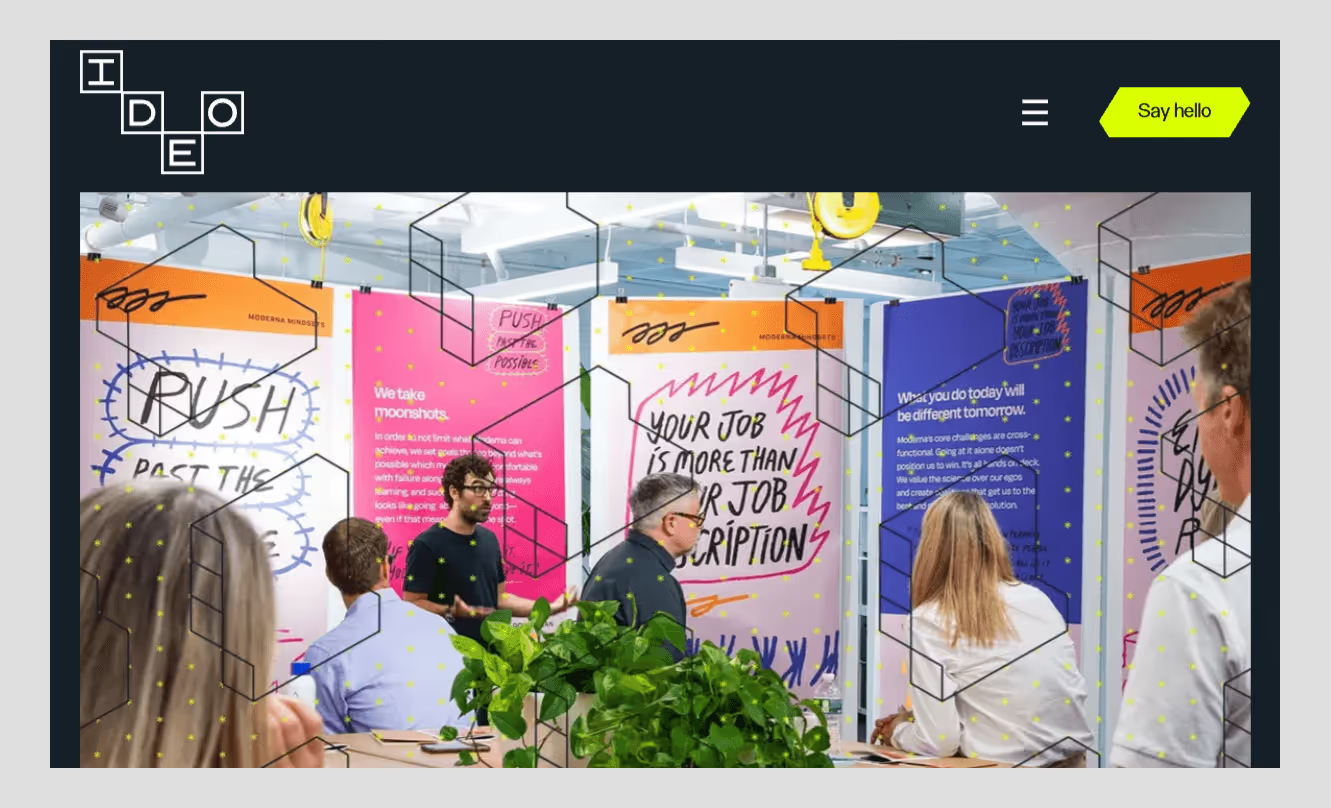
IDEO was founded in Palo Alto in 1991. "Design thinking" as a phrase is basically their fault. Helped some of the world’s most innovative companies. IDEO is not just a design agency for enterprise; they are a design thinking partner that helps to innovate.
Key services:
- Design thinking workshops and training
- Product and service innovation
- Organizational design and culture change
- Human-centered research and strategy
Notable clients and works:
They are the design team behind Apple’s first computer mouse, Palm V, and Swiffer mop for P&G. They also worked with Ford on the future of mobility and with IKEA on retail experience.
What makes them stand out:
IDEO's biggest differentiator is culture change. They do not just design a product. They help your team think differently. Services cover product and service innovation, organizational design, and research.
Ideal for:
Enterprise leaders who are looking for an organization not only to deliver design but also to think differently.
8. Studio Dumbar/DEPT®
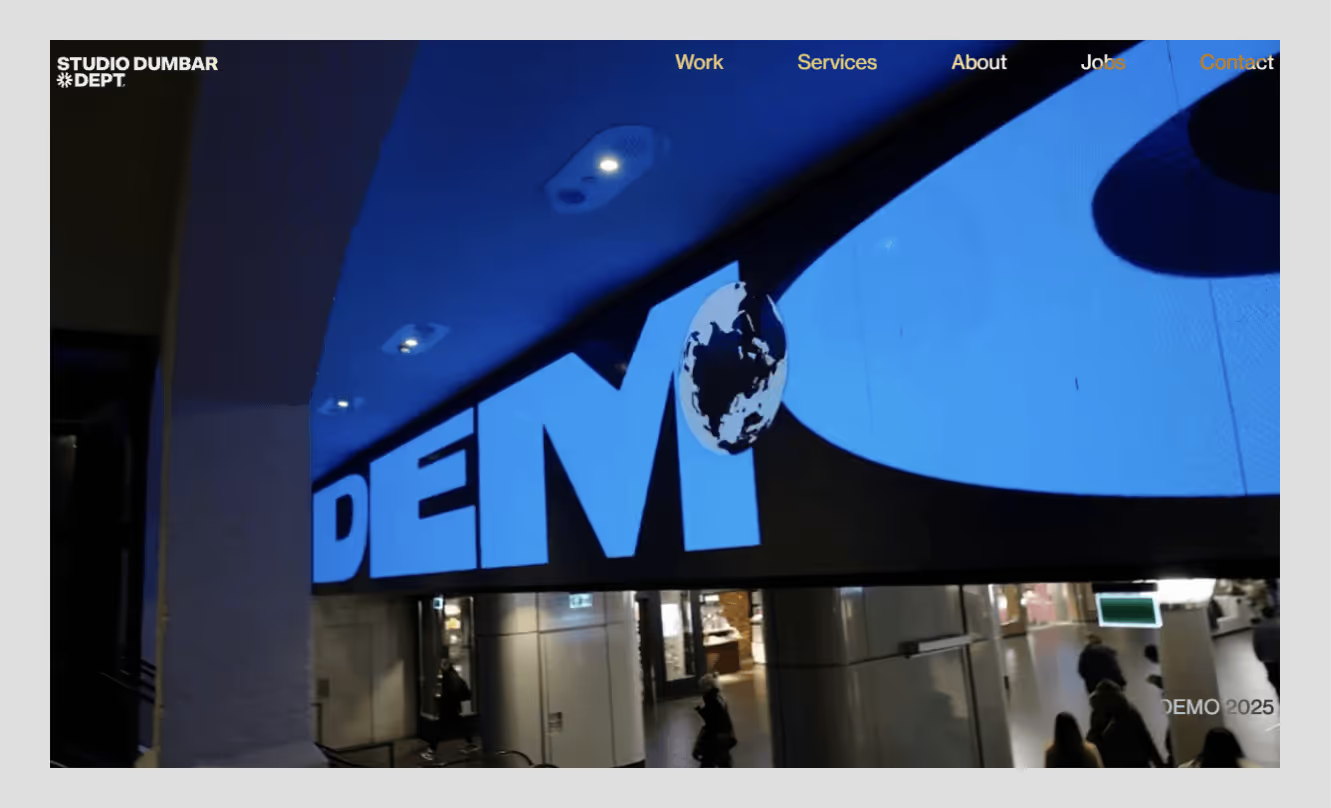
Founded in 1977 by Gert Dumbar. Studio Dumbar is known for its bold, expressive visual designs. In 2019, Studio Dumbar merged with DEPT Agency and became Studio Dumbar/DEPT®.
Key services:
- Motion design and animation
- Visual identity and brand design
- Digital campaigns and web design
- Design systems and brand guidelines
Notable clients and works:
Studio Dumbar/DEPT® has worked and designed for prominent names in the tech industry. Some of them are OpenAI and the Netherlands' postal service. Their identity for the Dutch National Police is considered the most impactful government design system in Europe.
What makes them stand out:
Studio Dumbar brings the European aesthetic approach, bold, minimal, and system-driven design. Perfect for companies that want to be noticed in the crowd noise.
Ideal for:
Mid-sized to large enterprises looking for a bold yet strong digital execution.
9. Clay
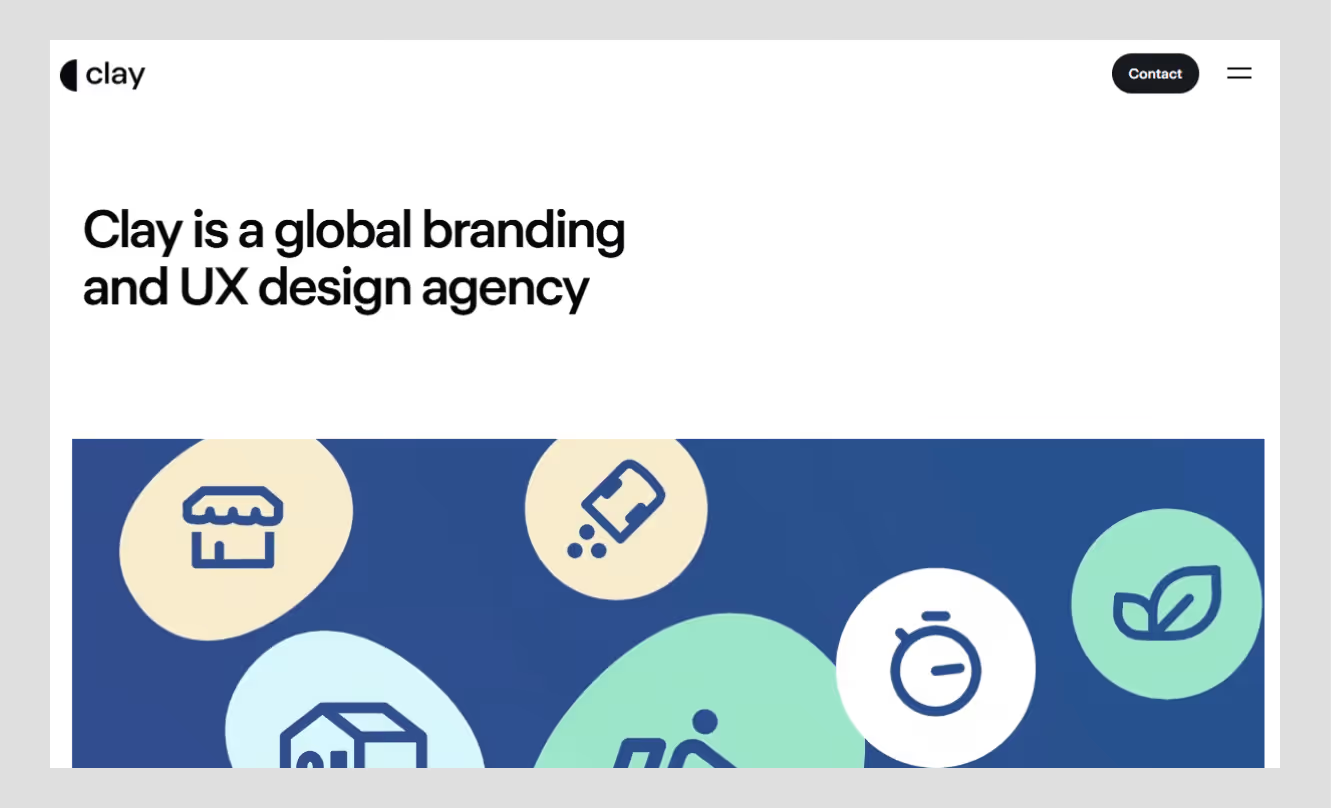
Clay is a San Francisco design agency. They've been around since 2009, and most of their work is for B2B SaaS, fintech, and AI companies that need to look trustworthy before they can get into business.
Key services:
- Brand identity for tech companies
- Website and landing page design
- UX/UI design for B2B SaaS and AI
- Design systems and component libraries
Notable clients and works:
Clay has designed for Snapchat, Facebook (Meta), Linear, and Lattice. Their work on Linear is praised in the design community for its fast and clean design.
What makes them stand out:
What Clay does well is design with signaling credibility to enterprise procurement teams and make products feel trustworthy.
Ideal for:
Growth-stage B2B SaaS, AI, and fintech companies that want to look enterprise-ready.
10. Leo Burnett
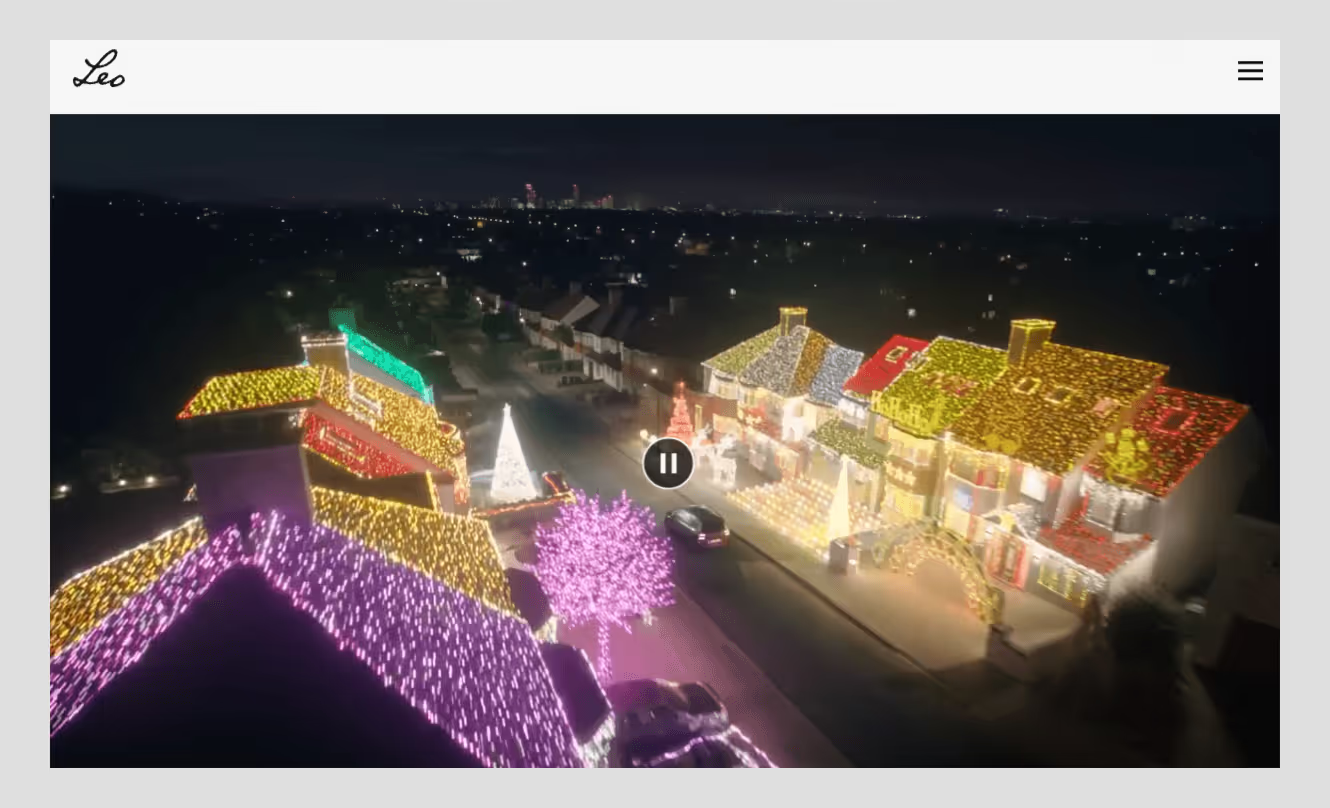
Leo Burnett is a Chicago-based advertising agency founded in 1935. Now it is a part of Publicis Groupe. Their design and strategy work is less talk, only results. Being inside Publicis means access to media buying and data infrastructure that independent design studios don't have.
Key services:
- Brand strategy and creative direction
- Advertising and campaign design
- Brand identity and visual systems
- Content design and storytelling
Notable clients and work:
They have worked with P&G, Samsung, McDonald's, Kellogg's, and Coca-Cola. They are also known for creating recognizable characters like the Marlboro Man, Tony the Tiger, and the Maytag Man.
What makes them stand out:
Designs that last for years. Most agencies can build a visual system. Fewer can create a brand character that is remembered years later without being shown a logo.
Ideal for:
Large enterprises need advertising and brand design to work as part of storytelling.
11. Metalabs
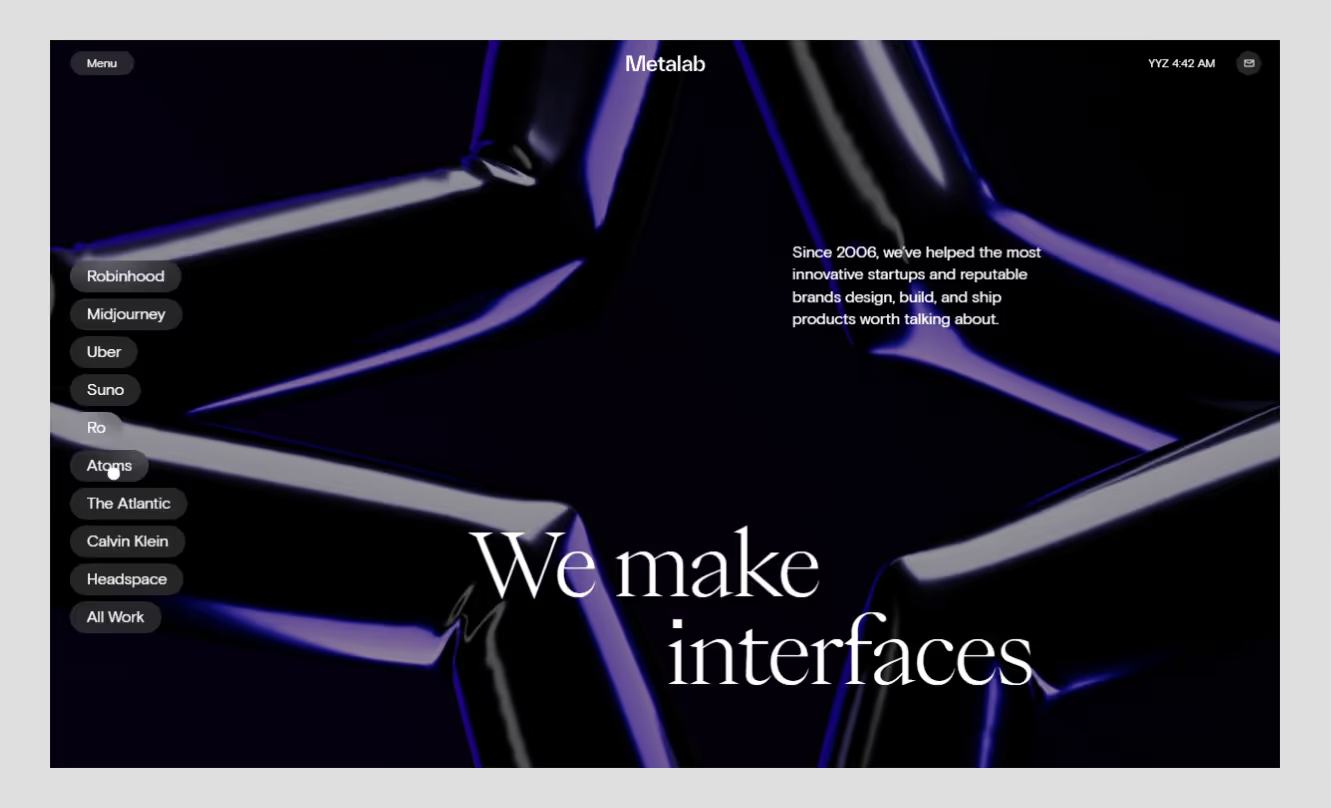
Metalab was founded in Canada. They have been around the industry since 2006. They are a product design company focused on apps and software. They help software companies to design and build easy-to-use digital products.
Key services:
- UX/UI design for apps and platforms
- Product strategy and planning
- Web and mobile app design
- Front-end development support
Notable clients and works:
Metalab has worked with a few world-famous companies such as Coinbase, Uber, and more. Early work on Slack is probably the best thing in their portfolio. With their work, Slack has become one of the most popular work tools.
What makes them stand out:
A strong design agency in product design. They know how to turn ideas into real+working products that people love using.
Ideal for:
Startups and enterprise companies are building SaaS platforms or mobile apps.
12. Designit
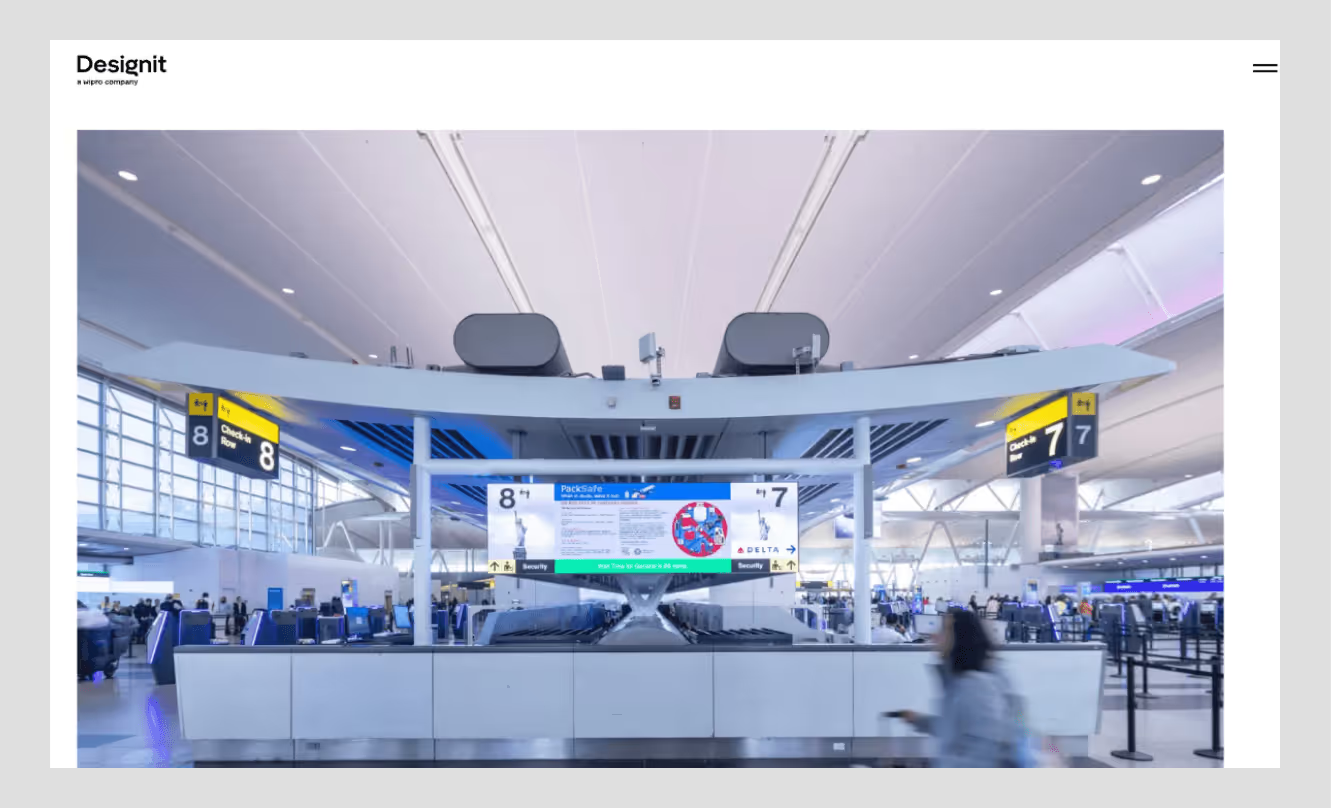
Designit was founded in 1991 in Denmark. Now they are a sister concern company of a global company called Wipro. Designit works on design, technology, and business together.
Key services:
- UX and service design
- Digital product design
- Business and design strategy
- Customer experience design
Notable clients and works:
They have worked with prominent companies and brands. Some of them are JFK Terminal 4, Los Angeles World Airports, and Pandora. They help improve both digital products and customer journeys.
What makes them stand out:
Designit connects design with business goals. Their designs are not only just good-looking but also drive real results.
Ideal for:
Large companies that want to improve their digital services and their customer experience.
13. Cyber-Duck
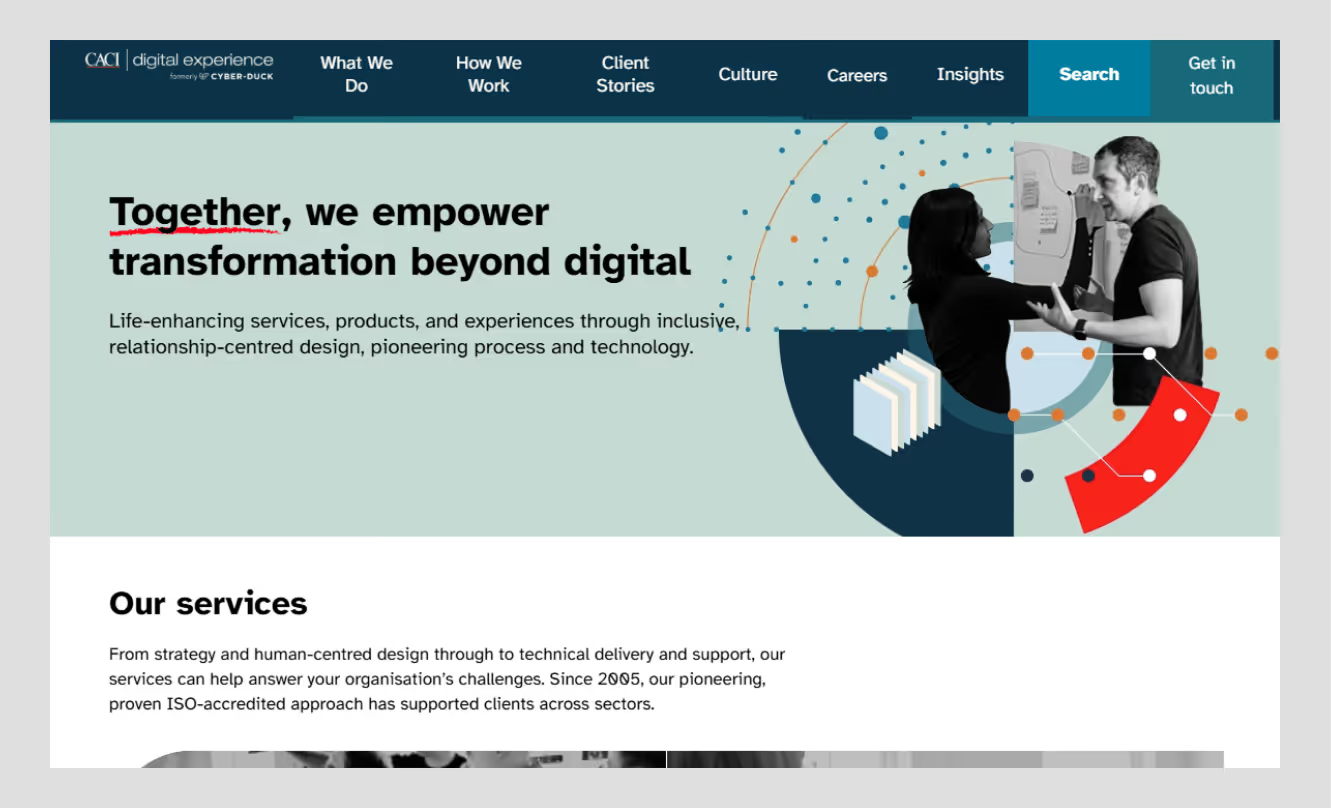
Cyber-Duck started in 2005 in the UK. Now they are known as CACI digital experience, a part of California Analysis Center, Inc. (CACI International Inc.) They focus on secure and accessible digital products. They have a track record of working with banks, the government, and healthcare.
Key services:
- UX/UI design
- Web and app development
- Accessibility and usability testing
- Digital transformation
Notable clients and works:
Cyber-Duck has a huge work range. They worked with the Bank of England, Cancer Research UK, Cadbury, and the UK Government. They are known for following strict rules and standards.
What makes them stand out:
The best experts in accessibility and security. Ensures products are safe and easy for the general public to use.
Ideal for:
Enterprises that need secure systems, like finance, healthcare, or government.
14. Goji Labs
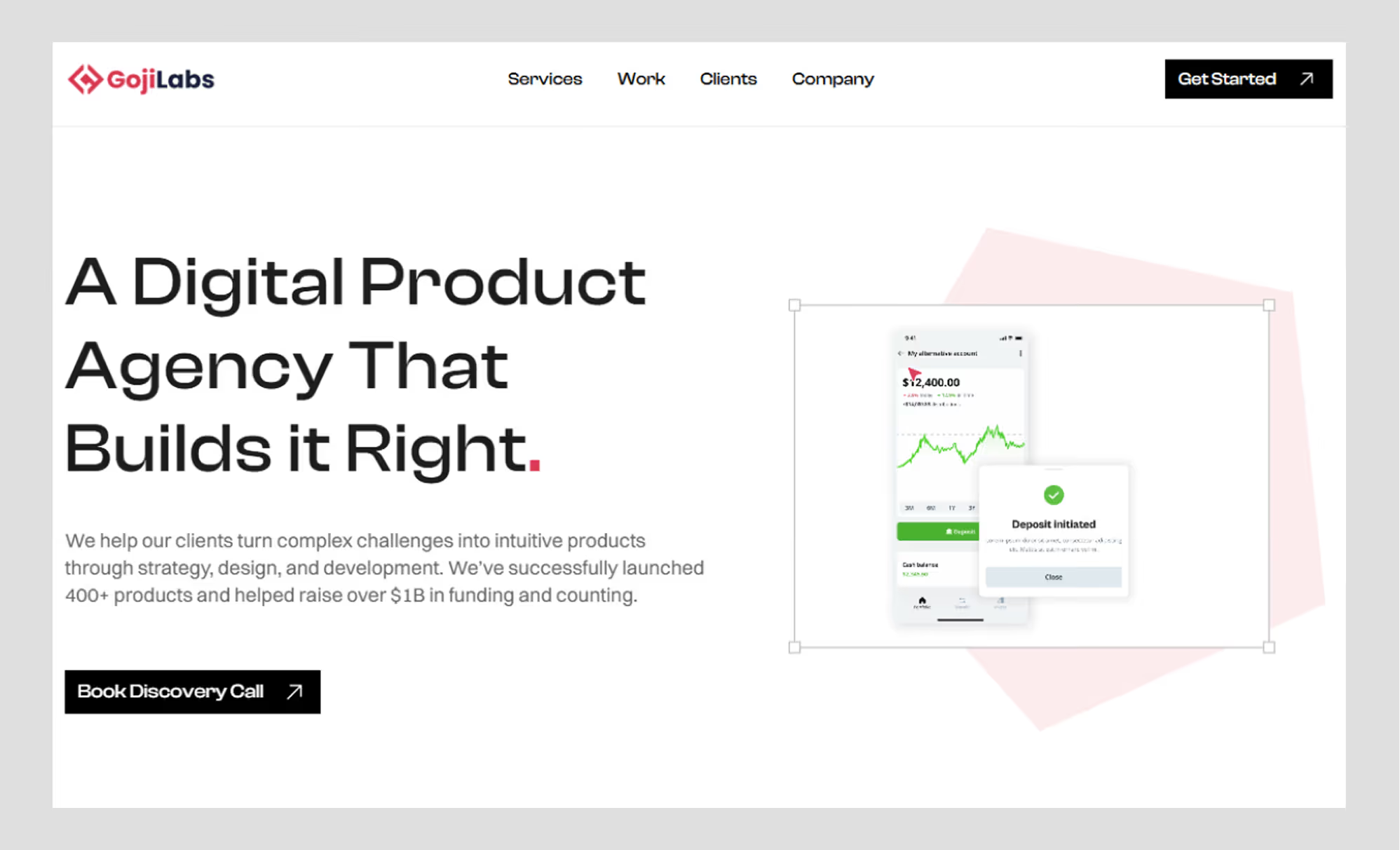
Goji Labs was founded in 2014 in the USA. They work on designing and building digital products for startups and enterprises. Mainly focuses on solving real user problems.
Key services:
- UX research and design
- Mobile and web app development
- Product strategy
- UI design
Notable clients and works:
They also build apps for startups and growing companies. They have previously worked with the World Health Organization, the United Nations, and a non-profit organization WWF (World Wildlife Fund).
What makes them stand out:
They combine design and development in one team. This helps move projects faster from idea to launch.
Ideal for:
Companies that want both design and development.
15. Neuron
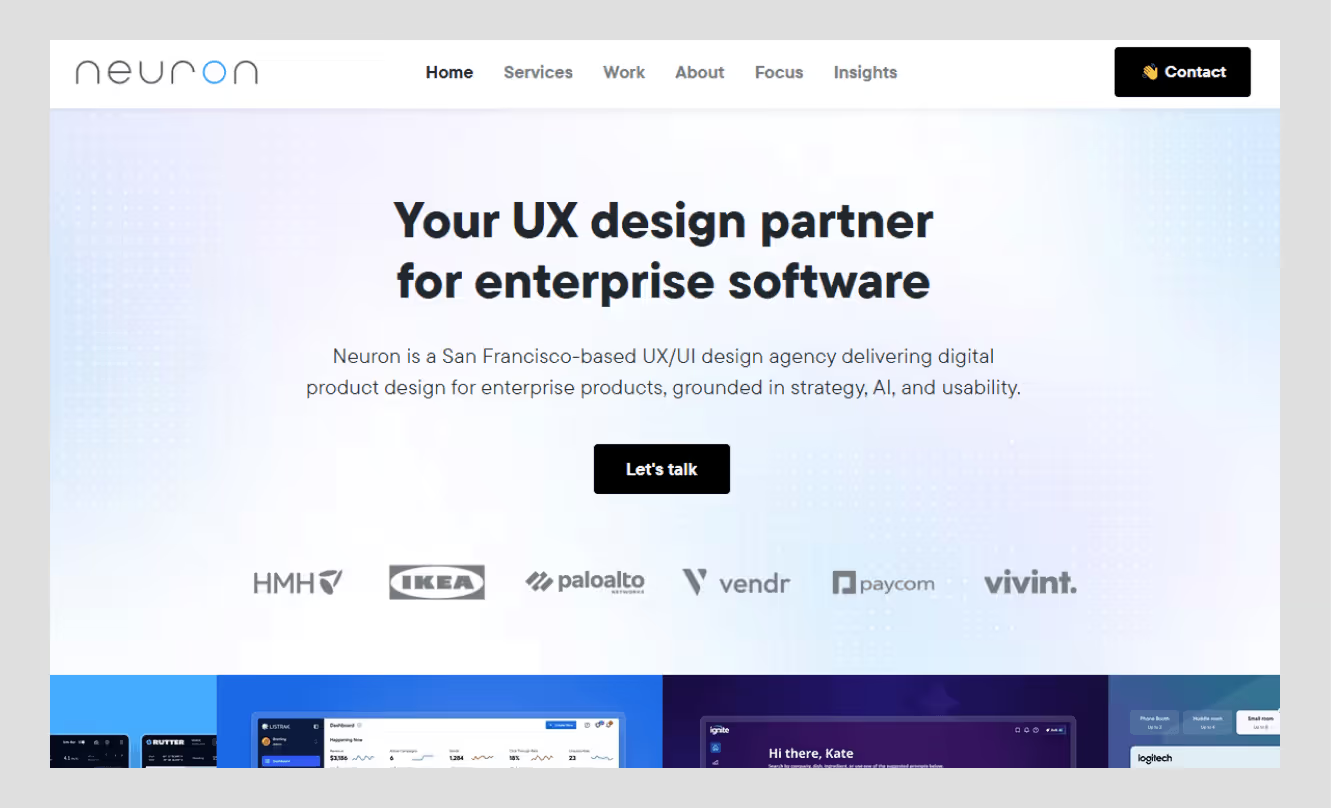
Neuron is a U.S-based UX design agency. Their primary work focus is on complex software and enterprise tools. They come with more than a decade of experience that gives them an advantage in making hard-to-use systems simple.
Key services:
- UX/UI design for enterprise software
- Design systems
- User research and testing
- Dashboard and workflow design
Notable clients and works:
They have worked with HMH, IKEA, and Paycom companies. Neuron also works on fintech, AI, and enterprise software. Their projects often include dashboards and internal tools.
What makes them stand out:
They are very good at simplifying complex workflows so that users can adopt them easily. They design systems that are easier to learn and use.
Ideal for:
Enterprises with complex software that need better usability and user experience.
How to choose the right enterprise design partner
Finding the right agency is the most important when hiring a design agency. It is just like finding the product-market fit. The wrong partner can cost your budget, time, and push you off the track.
Fear not, Wavespace is here to guide you. We’ve been in the industry since 2019. We are here to help you out.
Here is how to make a smart choice.
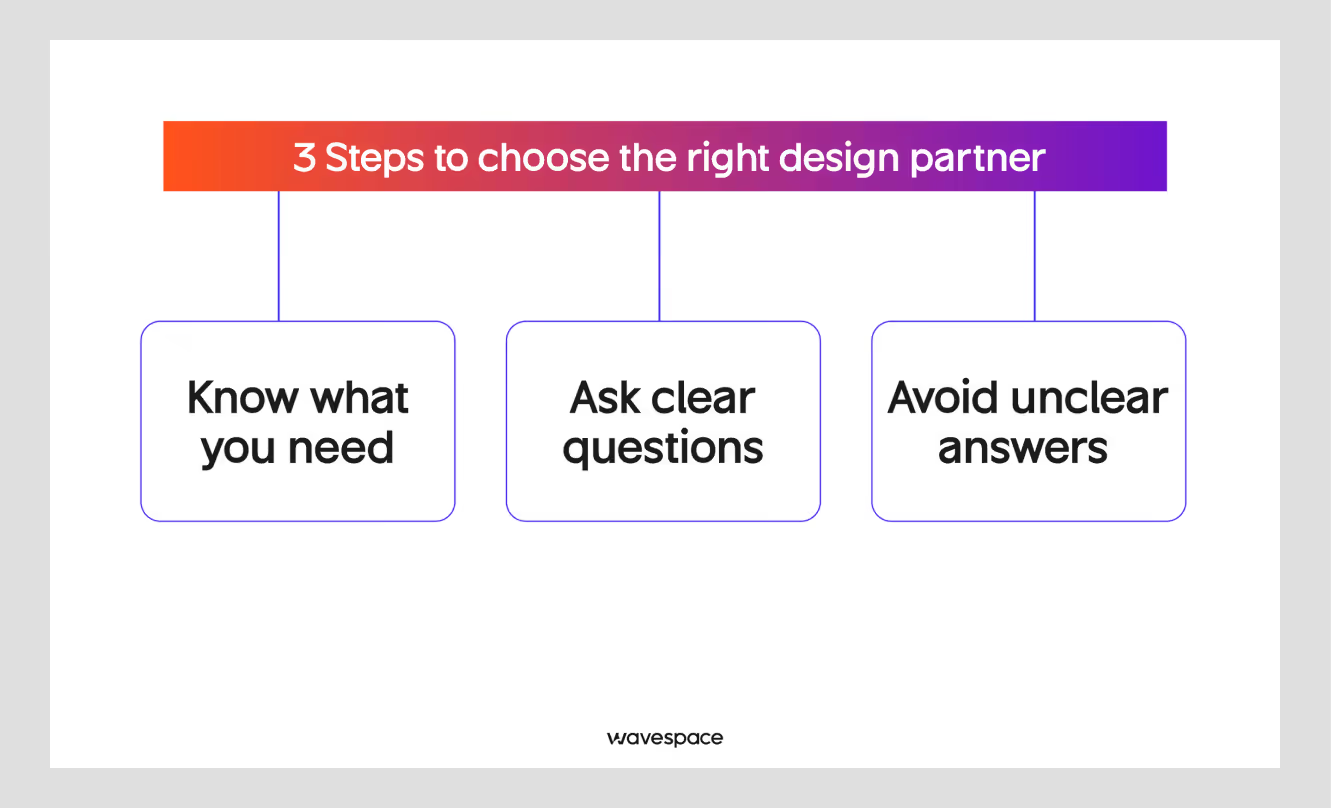
Identify your business needs first
Before talking to any agency, ask yourself these questions and answer them honestly:
- Are you building something new?
- Are you fixing something that already exists?
- Do you need UX/UI design and brand identity?
- Are your users internal (employees) or external (buyers, customers)?
- What's your timeline: a matter of weeks, months, or an ongoing project?
- What does your success look like? (more signups, faster sales cycles, better retention)
This matters because agencies specialize more than their websites suggest. If you need a SaaS platform redesigned in three months, Clay or Wavespace are more helpful options than IDEO or Pentagram, regardless of how impressive the latter two look in a deck.
Questions to ask before hiring
- Have you worked with companies like ours?
- Can you show me those case studies?
- Who will work on our project? (senior designers or junior teams)
- How do you measure success for design?
- What does your discovery process look like?
- How do you work alongside an in-house team?
The answers matter less than how they answer. Agencies that talk confidently about business outcomes have usually done this before. Agencies that mostly talk about their process don’t have experience.
Red flags to avoid
- Great portfolio, no data on what it actually did for the client
- Can't tell you who the senior designer on your project will be
- Ask almost nothing about your users, your product, or your goals
- Offer everything, such as branding, UX, dev, motion, with no real specialization
- Get vague when pricing or scope comes up
The clearest signal is how they run the first call. If it feels like a pitch rather than a conversation, that's probably what the whole project timeline will feel like.
Conclusion
The best enterprise design company in 2026 is not one-size-fits-all. Pentagram is best for brand prestige. Clay is best for B2B SaaS product design. IDEO is best for cultural transformation. Wavespace is best for complex AI and SaaS platforms.
As a Founder or existing product owner, you need to find an agency that matches the strengths to your specific needs. Use the comparison table in this guide to shortlist two or three agencies. Then reach out, ask the right questions, and look for an agency that doesn’t just work for you, find someone who treats your goals as their own.
Enterprise design is not just a cost center. It is a growth engine. According to a 2023 Forrester report, companies that prioritize design see a return of up to $100 for every $1 spent.
Frequently asked questions about enterprise design

A landing page showcases a project and turns random visitors into customers. High-converting landing pages are designed for a single purpose. Sign up, buy a product, or download a product. A good landing page design helps lower ad costs by improving conversions.
Some of the enterprise companies are JPMorgan Chase, Oracle, Walmart, and Vodafone. In simpler terms, an enterprise is a type of company that has thousands of employees. Their wings are spread across the world. They operate multiple business units, and have products that serve internal teams and external customers.
- Small enterprise: Small number of employees with a simpler organizational structure.
- Medium enterprise: Run more complex operations, with departments that are actually starting to mean something.
- Large enterprises: Global organizations whose systems span multiple business units. Companies that have entire teams just to manage other teams.
Social enterprise: Organizations that treat social or environmental goals as seriously as profit, not just as a footnote in an annual report.
- UI/UX agencies: Interfaces and user experience.
- Product design agencies: Start to finish of a product experience.
- Branding agencies: Identity, messaging, visual systems.
- Enterprise design agencies: Large-scale platforms and cross-team workflows.
- Web design agencies: Websites and digital experiences.
- Service design agencies: Full customer journey work.
The difference between design agencies and enterprise agencies is mostly about what and how they handle a product. Complex permissions, multiple user types, legacy integrations.
The price of a design agency depends on the scope and complexity of the product: The average industry price is given below.
- Hourly: $50-$250+
- Monthly retainer: $10,000-$100,000+
- Project-based: $50,000-$500,000+
Large projects can go past these figures once research, testing, and developer handoff are taken into consideration.
1. User-centric design: Research and testing with real users, not assumptions about what people need.
2. Systems thinking: Designing for the whole ecosystem: users, technology, processes, data.
3. Iterative improvement: Enterprise systems are never finished. The goal isn't a perfect launch; it's making the product easier at every iteration.

More related blog
Design & development in one team. Let’s talk!














.png)



Francisco, CA 94105, United States



















.avif)