

You want to build an in-house UX team? Great news! But building an in-house UX design team doesn’t mean posting a job opening. It is more than that; building an in-house UX team means hiring your own researchers, designers, and a design lead without paying an outside agency.
The hiring process is not easy, especially if you are a new startup founder. It takes an average of 44 days to fill a position in the US. But it's entirely possible in just four easy steps.
By checking when to build an in-house UX team, defining the roles you need, picking a team structure, hiring in the right order, and setting up the tools and support that keep the team working well, you can build a strong UX team in a month that most companies need 6 to 9 months for a stable team.
Here's what each step looks like in practice.
Do you actually need an in-house UX team?
An in-house team makes sense once your design work is continual. It doesn't if you only need design support once a month.
If you have a big project coming up or your product plan changes every month, a design agency with a design subscription or embedded design team may serve you better than hiring an entire team because it costs way less.
This math is worth doing before you start posting job listings on LinkedIn.

A design subscription service can start this week instead without the delay of hiring. It runs a few hundred to a few thousand dollars a month.
If your launch is six weeks away, a hire can't get there in time. A subscription of UX design agency or freelancer can.
So how do you know it's time to go in-house? Watch for these signals:
- You're running more than one product or feature line at once.
- One outside designer can't keep up with all of them.
- Your design backlog keeps growing faster than an agency retainer can fix.
- A design team is shipping inconsistent interfaces with no one to fix.
Running companies don't jump straight from zero to a full in-house team without a design lead. They keep an agency or an embedded team for their day-to-day work. In parallel, they hire and train an internal UX design team. This hybrid method usually lasts one or two quarters.
What roles make up a full UX team?
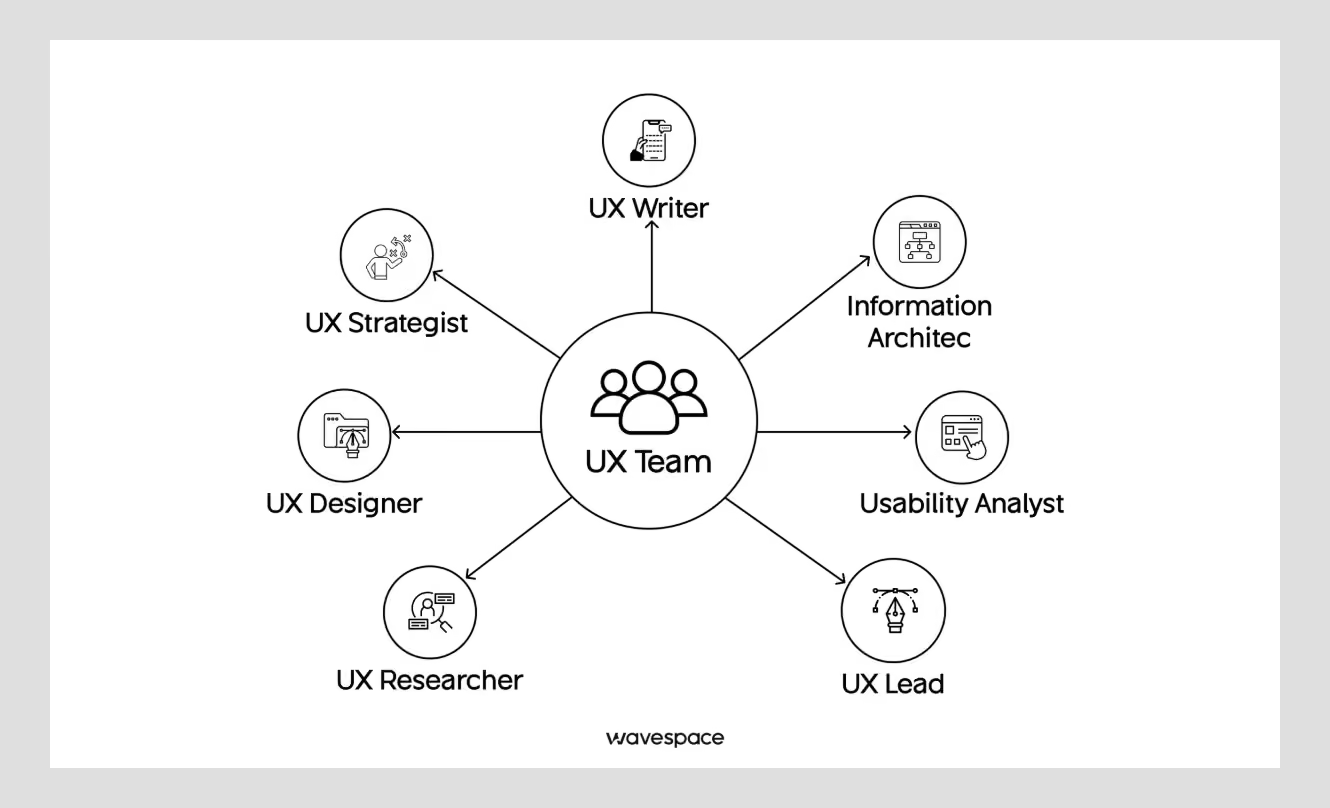
"UX" itself is not a single job. Depending on the industry, it is a combination of four or five separate skills that some people combine, and others specialize in.
- Product or UX designer: This role maps user flows, builds wireframes, and creates prototypes.
- UX researcher: This role focuses on running interviews, usability testing, and surveys to collect data and uses findings to recommend actionable improvements.
- UI or visual designer: This role is for creating visual language, components, and a design system that match the brand.
- Content designer or UX writer: This role is responsible for writing copy that helps users complete tasks and improves conversion, as well as words users read, such as button labels, empty states, and error messages.
- Design ops or UX manager: This role runs the process and handles hiring and team health.
Which roles you need at each stage
First thing, you’re not a UX design agency, and you don’t need all five roles from day one. You need to understand what you need because the size of your team depends on your needs.
- If you have one designer, you need a generalist UX designer who can do a bit of everything, from light research and wireframes to high-fidelity UI designs.
- Once you have three designers, add a dedicated researcher or a content specialist. A generalist starts to lose depth once they split time three or four ways.
- Once you have eight or more designers, add a design manager or design ops lead. Quality and consistency start to slip without someone owning the process.
How many designers should you actually have?
Airbnb's former VP of Design recommends growing design headcount alongside engineering. His rule of thumb is roughly one designer for every 6 to 8 engineers.
Many teams have 1 designer per product manager, especially in user-facing products. There is no strict rule, so use these numbers as a starting point. Because, based on your needs, you might need more or fewer employees in your team.
A company built around user experience needs more designers than one that mostly sells APIs.
What your UX team structure should look like
There are three common ways to structure a UX team. From startups to small and medium-sized businesses, and established enterprises can run with this structure without a sweat. Building the UX team that fits with your company size and model.
Most companies start with a centralized UX team structure. A centralized UX team structure is the simplest model to run from here.
This is the reason most companies start with a centralized model and grow toward an embedded or matrix model as their product grows. This method helps designers to build real context in the products they are working on or supporting.
Who should you hire first?
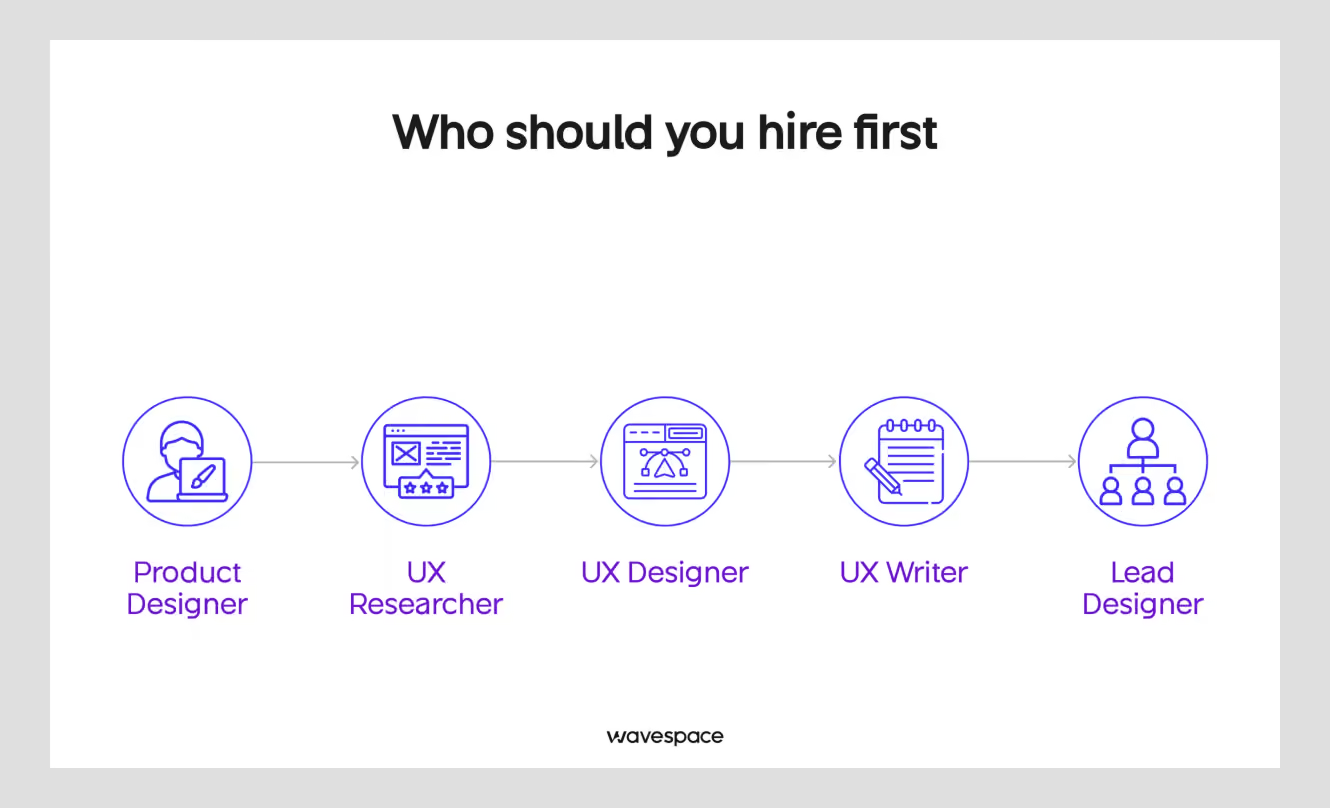
Follow this order to build the best team for you.
Hire one senior, versatile product designer before you hire anyone else. Not a niche specialist, and not a junior generalist or freelancer.
The most common early mistake is hiring one junior designer. Companies then ask that person to cover research, UX, UI, and testing all at once. That person fails to deliver and burns out. Every design decision at the company then rests on one inexperienced set of shoulders.
You need someone with real experience. A senior designer who dipped their toes in everything. They can carry that same workload. They also have better judgment about when to cut corners and when not to.
A strategic hiring order should look like this:
- Senior product designer: Covers UX, UI, and light research for your first product area.
- Second product designer or researcher: Hire when the backlog outpaces one person, or once you need dedicated user research.
- Content designer: Hire when your product needs dedicated attention to microcopy.
- Lead designer or design manager: Hire when the team has four to six people and needs someone dedicated to focusing on process and quality.
Build hiring time into your roadmap. Design roles currently take about 4 to 12 weeks from job posting to a working start date. That's based on 2026 recruiting data from Filta and onehour.digital. If you need someone contributing by a specific date, start the search at least three months ahead.
How should you hire and interview UX designers?
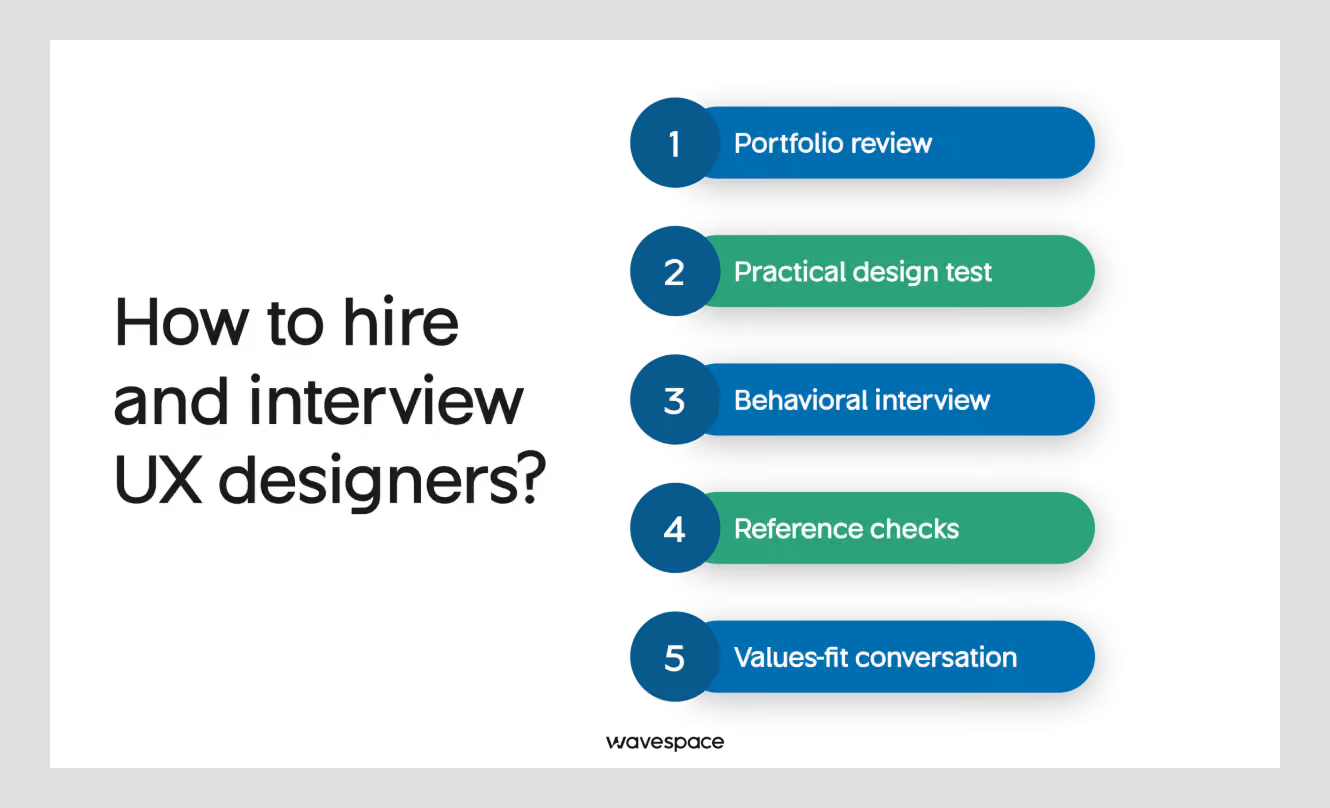
Start hiring once you have decided your structure and which roles for your in-house UX team. Hiring can be tough if you don’t have design knowledge. You should get someone experienced to hire UX designers, especially for the interview process.
Interview is the best way to find a good UX designer. Portfolio can lie; interview can’t.
A solid interview for a UX designer consists of five parts process:
- Portfolio review
- Practical design test
- Behavioral interview
- Reference checks
- Values-fit conversation
The portfolio review and the design test assess design skill. The behavioral interview and references test interpersonal skills. How they work and behave under pressure. Most hiring gets stuck in the behavioral interview.
Tread lightly: Watch out for perfect culture fit. It can quietly turn into "people who have the same views as me." It can be dangerous. It narrows your team instead of strengthening it. Judge potential employees by their working style and collaboration habits, not their views.
How much does it cost to build an in-house UX team
The cost of hiring to build an in-house UX team differs depending on the region you are in. The cost of building an in-house team can be similar in the US and Europe. On the other hand, it will cost 2–4 times less in Southeast Asia.
Expect to spend $250,000 to $450,000 a year for a small team consisting of two or three people.
That number should cover salary, benefits, software, AI tools, and all.
Here's what individual roles typically cost in the US as of (2026, Glassdoor):
Salary is only part of the bill. Add benefits on top, which usually run 25 to 40 percent of base pay. Then add design and research tool licenses, plus the time cost of recruiting itself.
A senior in-house designer costs $116,000 to $185,000 a year and takes about 68 days to hire. A design subscription service can start the same week instead, for a few hundred to a few thousand dollars a month.
This is the major gap, which is why so many companies use a subscription or agency first. If you need a remote in-house team, consider Wavespace; they bridge the time between needing help now and having a hired team.
In-house tends to win on cost only when the work is steady and ongoing, especially when not project-based. If your design work overwhelms you, outside help can help you quickly, usually their cheaper option even over a year or two.
How do you set up UX workflows and tools?
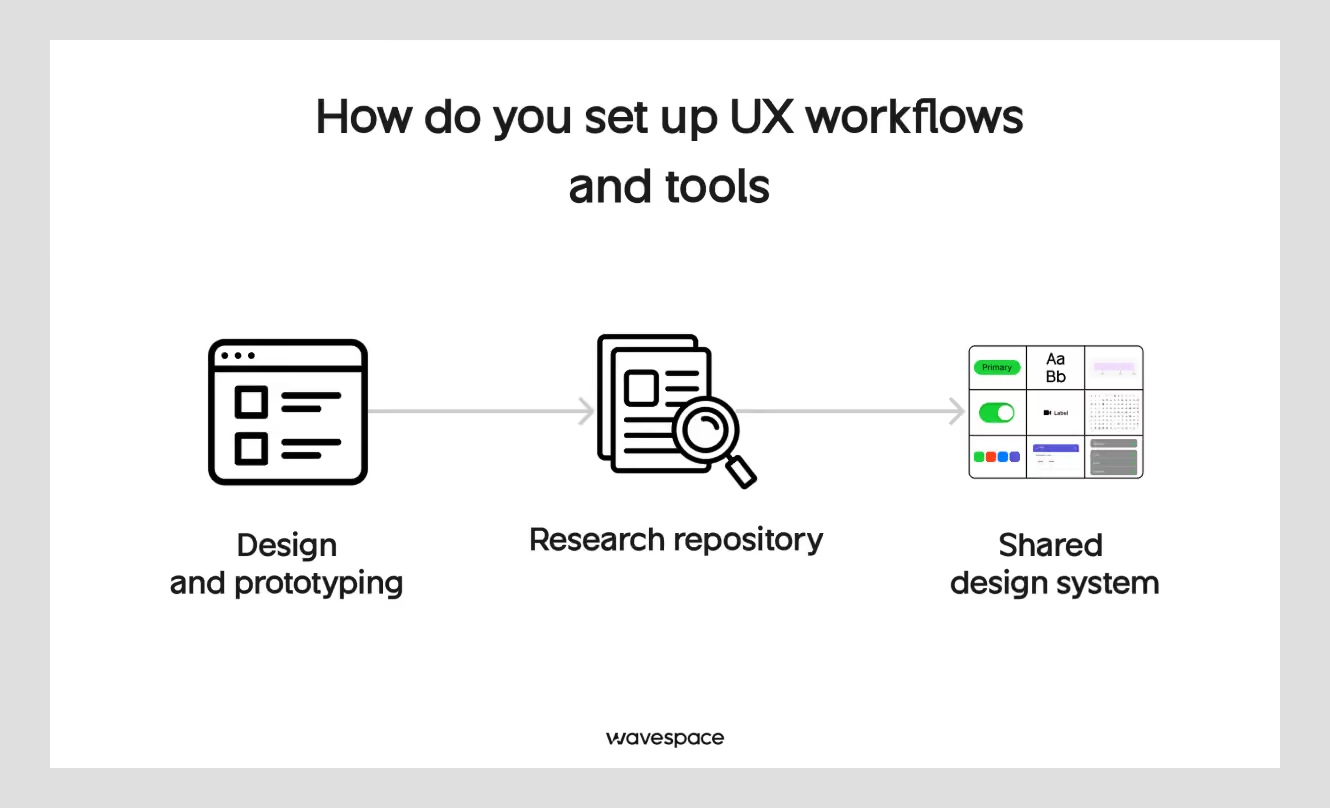
Another thing you need to take into account before starting to hire your team. A new team needs three basics.
- Design and prototyping tool
- Research repository
- Shared design system
For design and prototyping, Figma is the default design tool in the design industry right now. More than 85% of product design job postings mention Figma in their job postings.
For a research repository, you will need Dovetail or a well-organized Notion workspace. This keeps interview notes and usability findings in a centralized system so team members can access them from anywhere.
Tread the Culture fit part. It can quietly turn into "people who have the same views as me." It can be dangerous. It narrows your team instead of strengthening it. Judge potential employees by their working style and collaboration habits, not their views.
Start your design system right after forming the team, even a small one covering just buttons, colors, and form fields. Waiting until the team is bigger makes this harder to create later.
A few ground rules are worth setting up from the start:
- Daily stand-up at the start of the workday, so confusion doesn’t build up.
- A weekly design critique, so work gets feedback before it ships.
- A biweekly design review with stakeholders outside the design team.
This will keep everyone aligned on priorities. Written documentation for any decision that affects more than one product, especially important if your team works across time zones.
How to get your company to value UX
Every year, hundreds of UX startups launch with ambition. But most of them fail to survive more than 6 months. It's because UX teams don’t fail for lack of talent; they fail because they stop upholding the value of UX.
Don’t let this happen to your UX team. Start by writing a short UX strategy that the team must follow. Tie design work with business goals. Everyone wants results; good design and pretty screens come later.
Stakeholders only invest when they want what they can measure. Providing a better user experience won’t get you hired. Frame strategy around conversion, retention, and support ticket volume.
Talking about UX outside the design matters just as much as doing good design. Share what changed and why in business terms. A lead cares about deal speed, not information architecture. Translate your work into their terms.
At some point, a client will ignore a research finding. This is common in every company and not a sign of breaking an agreement. You need to be clear in advance which decisions the design team can make independently. And which ones need executive sign-off.
How do you measure whether your UX team is succeeding?
By tracking. To find out whether your UX team is succeeding or not. Track these three metrics. Output, Outcome, and Business Impact. Tracking only one gives an incomplete picture and makes you stuck in limbo.
Output metrics:
- How many projects shipped.
- How much of your interface uses the shared design system.
Outcome metrics:
- Task success rate
- System Usability Scale (SUS) scores
- Time on task during usability testing.
Business impact metrics:
- Conversion rate, retention, and support ticket volume for specific UX changes.
Use metrics to sell your work. You might have heard, X dollars spent on UX returns XXX amount. That comes from a 2016 Forrester report. This won’t make sense to everyone without any context. Therefore, use your metrics as a talking point, not a formula.
Here’s a trick: A better approach is to pick one or two KPIs tied to an actual redesign. Measure them before and after. Build your own evidence using real data. This will give you more credibility in the industry.

Conclusion
Building an in-house UX team is not about hiring faster, and it’s more about selecting the team structure and hiring in the correct order. First, decide which structure you want to build (centralized, embedded, or matrixed) before starting to hire.
Don’t fall into the trap of hiring a junior designer. Hire one senior generalist first in your UX design team. Pick the structure that suits you best based on how many products need to be run. Track more than just output after building your UX team.
Output is the easiest metric to hit, yet the least useful to show your team's expertise. Teams that get these four things right build strong, scalable in-house UX organizations.
Every UX team is different. Book a complimentary 30-minute consultation to get tailored advice on building yours.
Frequently asked questions of an in-house UX team

Two to four people are enough for most early-stage UX teams. A UX researcher, a UX designer, and a UI designer. A company or organization with multiple products or projects working simultaneously might need eight or twelve or more people.
UX is how a product works. It focuses on flow & logic and solves usability problems. UI is how it looks. The color, type, buttons, and layout or overall design. UX ensures the user experience stays smooth and makes sense. On the other hand, UI ensures it visually looks good and makes visual sense.
You should not. If you are starting slow, then hire UX designers with a senior generalist who handles both research and design. A dedicated researcher makes sense when you have a project with enough users to run tests regularly.
Yes, and many senior "product designers" handle both UX and UI, mainly in startups. Most UI designers can conduct UX research and vice versa. However, if you are planning to hire one person to do both, make sure you hire someone experienced enough.
Not for the start. If your startup needs UX work, hire a UX agency. They will give you better results than freelancers and cost you less than the salary of one designer. In-house design starts to make sense once the work is constant, not project-by-project.
One strong designer takes about four to eight weeks to hire. A full team–researcher, UX, UI designer, and design ops- takes six to twelve months depending on budget and hiring speed.

More related blog

Design & development in one team. Let’s talk!















.png)



Francisco, CA 94105, United States





































.avif)