Best UI/UX redesign and prototyping agencies in 2026
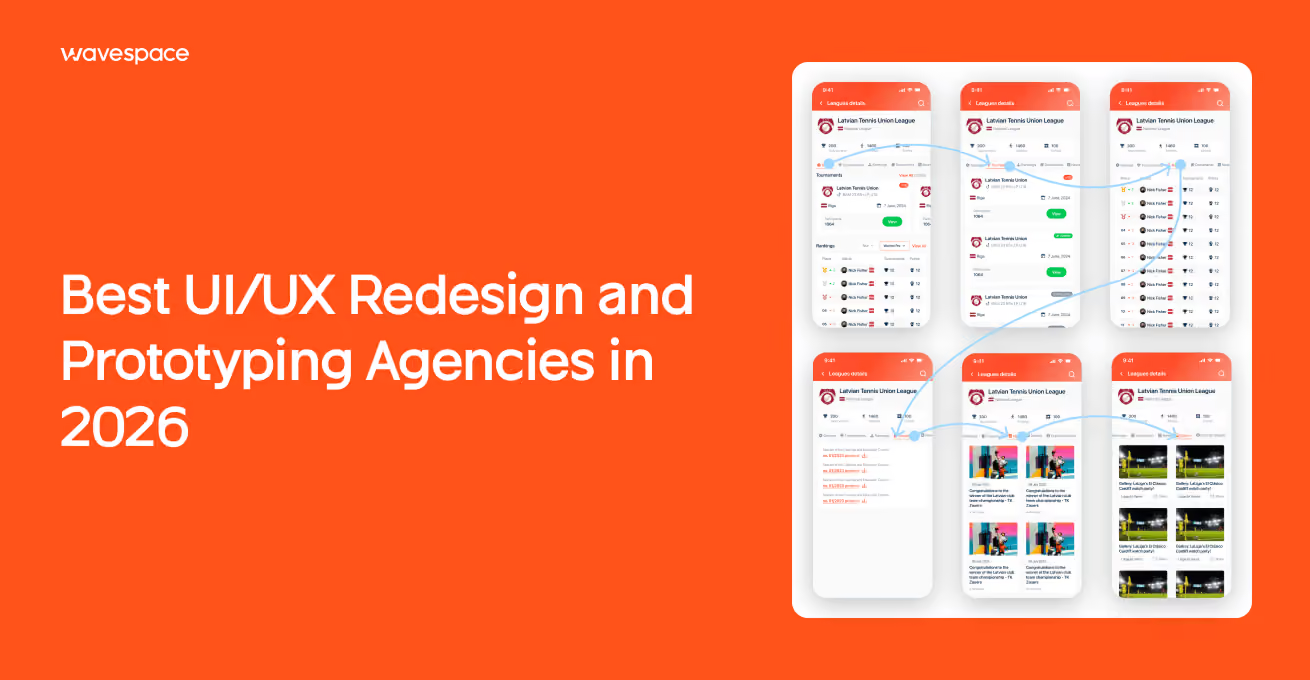


In 2026, the top UI/UX redesign and prototyping agencies will not only offer fresh visuals but also evidence-based research and quick, testable prototypes.
It outlines 12 agencies to consider, how to determine whether your product is ready for a redesign, the cost, the timeframe, and how to select the right agency for your stage and industry.
5 Signs your product needs a redesign
A complete redesign of the screen is not necessary for every clunky screen. It is generally the time when you see these 5 signals:
- Confusion is continually repeated in support tickets. It's not the documentation, it's the interface if users are asking the same "how do I..." question in many channels.
- The number of activations and onboarding is quietly falling. If conversion from trial to paid is declining, it's likely due to a problem with the initial session experience, rather than the product itself.
- Your design system can't keep up with new features. When every new feature ships slightly inconsistent with the last, the interface is patched together rather than designed.
- Competitors look and feel more current. This isn't about chasing trends; it's about whether your product signals the same maturity as your actual technology.
- Your dev team dreads touching the front end. If engineers describe the UI codebase as fragile or "held together with tape," the design debt has become technical debt.
If two or more of these sound familiar, a redesign, not a rebuild, is usually the right next step.
It's worth noting that these signals rarely show up alone. A product that's losing activation and generating repetitive support tickets is often the same product where engineers are quietly avoiding the front-end codebase; the symptoms compound.
That's part of why a UX audit is usually the first deliverable a good agency proposes: it turns a vague feeling of "something's off" into a prioritized list of what to fix first, and in what order.
UI/UX redesign vs. rebuild: What's the difference?
A redesign enhances the experience layer, visual design, information architecture, user flows, and interaction patterns, but doesn't change the product itself or, often, much of the codebase. It's faster, safer, and typically the best answer when the product logic is correct but the experience is not.
A rebuild begins around zero: new architecture, sometimes a new tech stack, and a total rethinking of the product and interface. Rebuilds are useful when it's the technical foundation that is the constraint, not merely the UI on top of it.
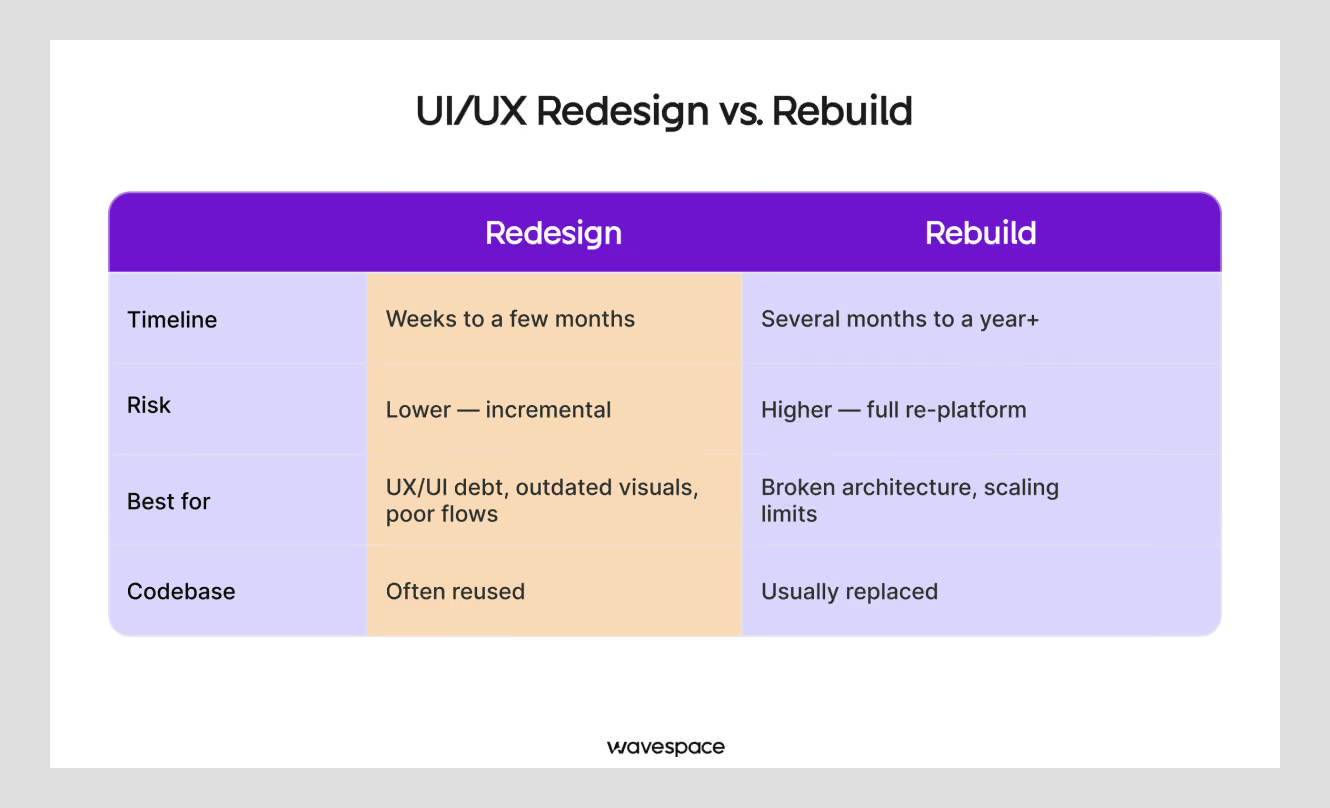
The majority of the agencies listed in this guide specialize in redesign work, and a handful (marked below) can provide you with a total rebuild if your issue is deeper than the interface.

How to choose a UI/UX redesign agency
It's important to understand what sets a good redesign partner apart from a UI shop that offers visuals before comparing names:
- Research depth — Do they show their research process (interviews, usability testing, competitor analysis), or only end screens?
- Case study honesty — Do results relate to specific, named metrics (funding raised, NPS score change, support ticket reduction) or to more nebulous terms such as "improved engagement"?
- Dev-handoff process — Do they really understand how to build the thing without friction?
- Pricing transparency — Published pricing tiers or a "contact us" wall? Neither is inherently bad, but they will indicate how they will work during the entire engagement.
- Industry fit — A team that's redesigned three fintech dashboards will be faster than a generalist studio from scratch on your fintech dashboard.
- Team continuity — Are the same people who are doing the work in your pitch call?
- Keep this list in mind — it's the same rubric applied to every agency below.
During any pitch call, a good gut check is to have the agency explain a project that failed. All professional teams have one.
Their description of the friction and what they did in response to it is more telling of the way they'll deal with your project's inevitable curveballs than any highlight reel.
It's also important to determine at the outset if you want an embedded model (a dedicated designer or small pod working within your team and tools) or a traditional agency model (a defined scope, project manager, and milestone-based delivery).
Either of these will work, and the best one will depend on your own internal product/design leadership to run it.
The 12 best UI/UX redesign and prototyping agencies in 2026
These 12 agencies are not general software development shops, they are not the agencies that publish their own rankings, and they are not the studios that offer a dozen unrelated services, one of which is called "UI/UX".
Below, you will find each entry with what they are best suited for, what they are good at, and a real case study result to help you decide on fit based on the facts, not just the reputation.
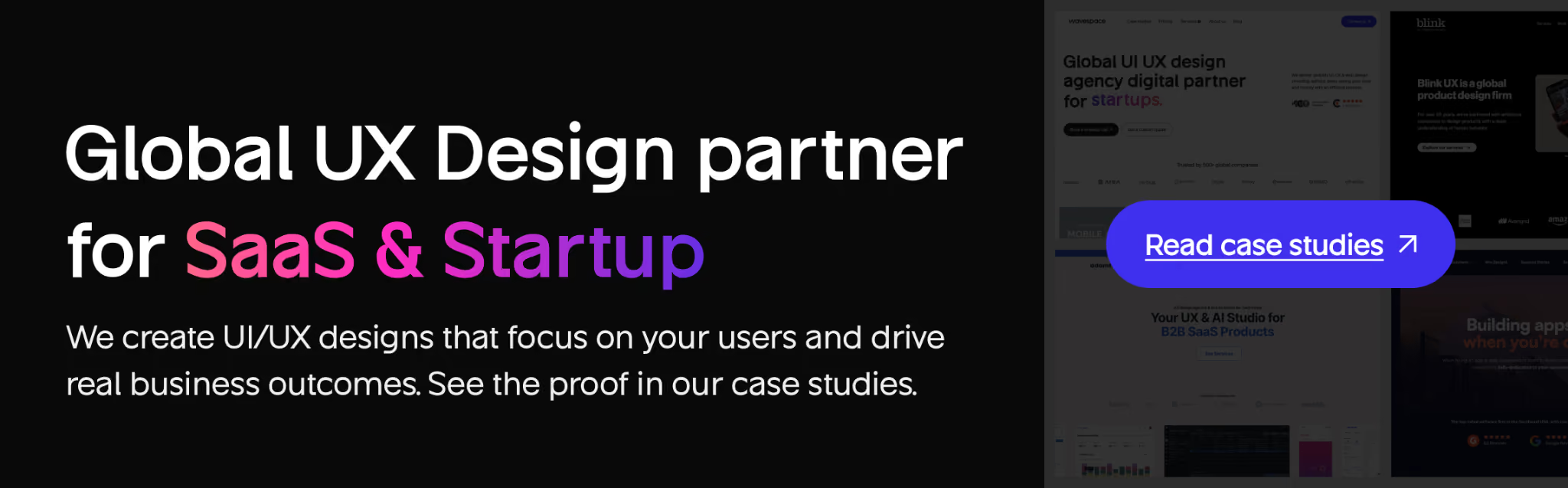
1. Wavespace
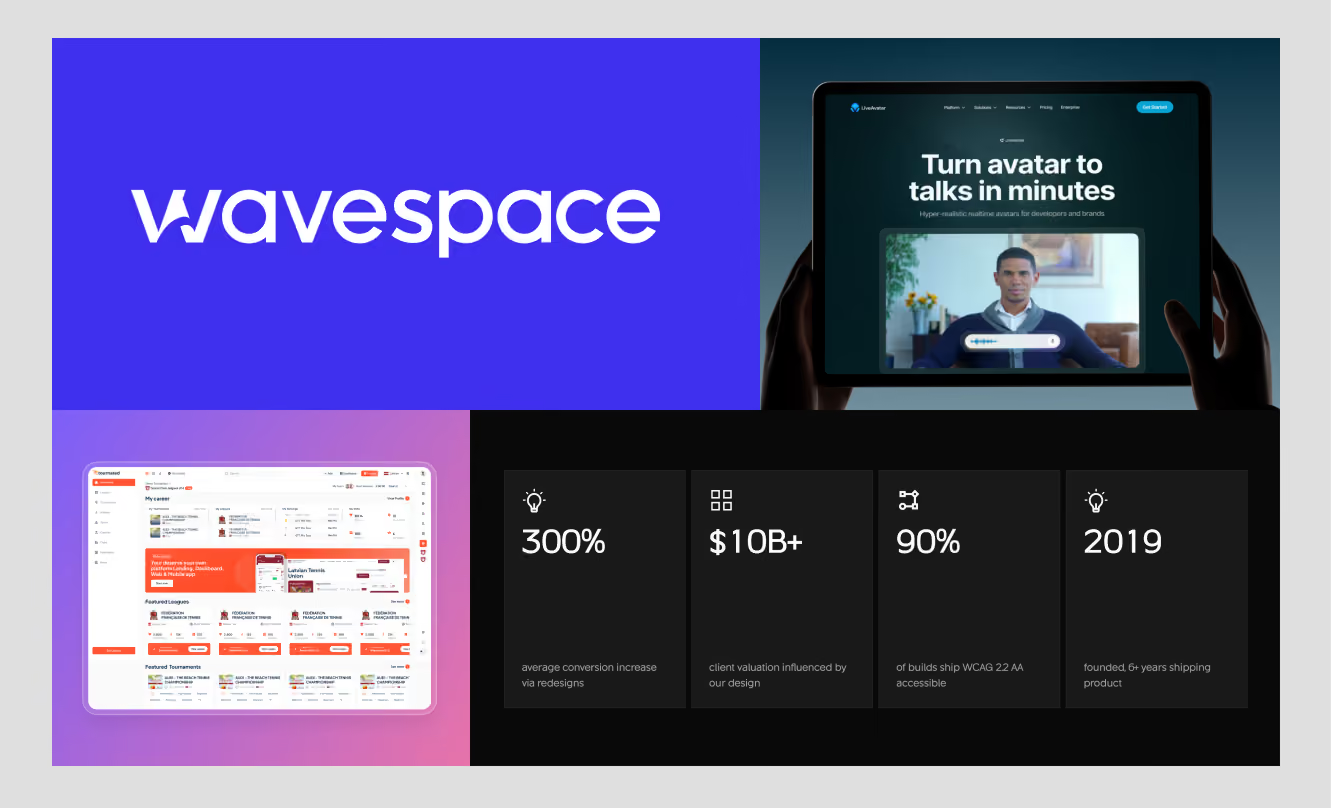
Best for: Startups and growing SaaS companies that seek a product redesign with brand storytelling, rather than interface enhancements.
In one project, Wavespace has combined the two disciplines of brand identity and product redesign, ensuring that the visual language and UX remain consistent from the start.
From SaaS to fintech, mobility to healthcare, the range of case studies has been published with starter pricing that makes it easy to budget for early-stage projects.
Strengths
- Combines brand identity and product redesign in one engagement, visual language and UX remain consistent from day one.
- Clear and published pricing of starters that are easy to budget for early-stage teams.
- The case study field covers SaaS, fintech, mobility, and healthcare.
Weaknesses
- Ideal for small businesses and expanding teams, not for enterprise-level redesigns.
- A younger portfolio than some of the 10+ year old agencies, which means less time to look back on for case studies.
2. Eleken
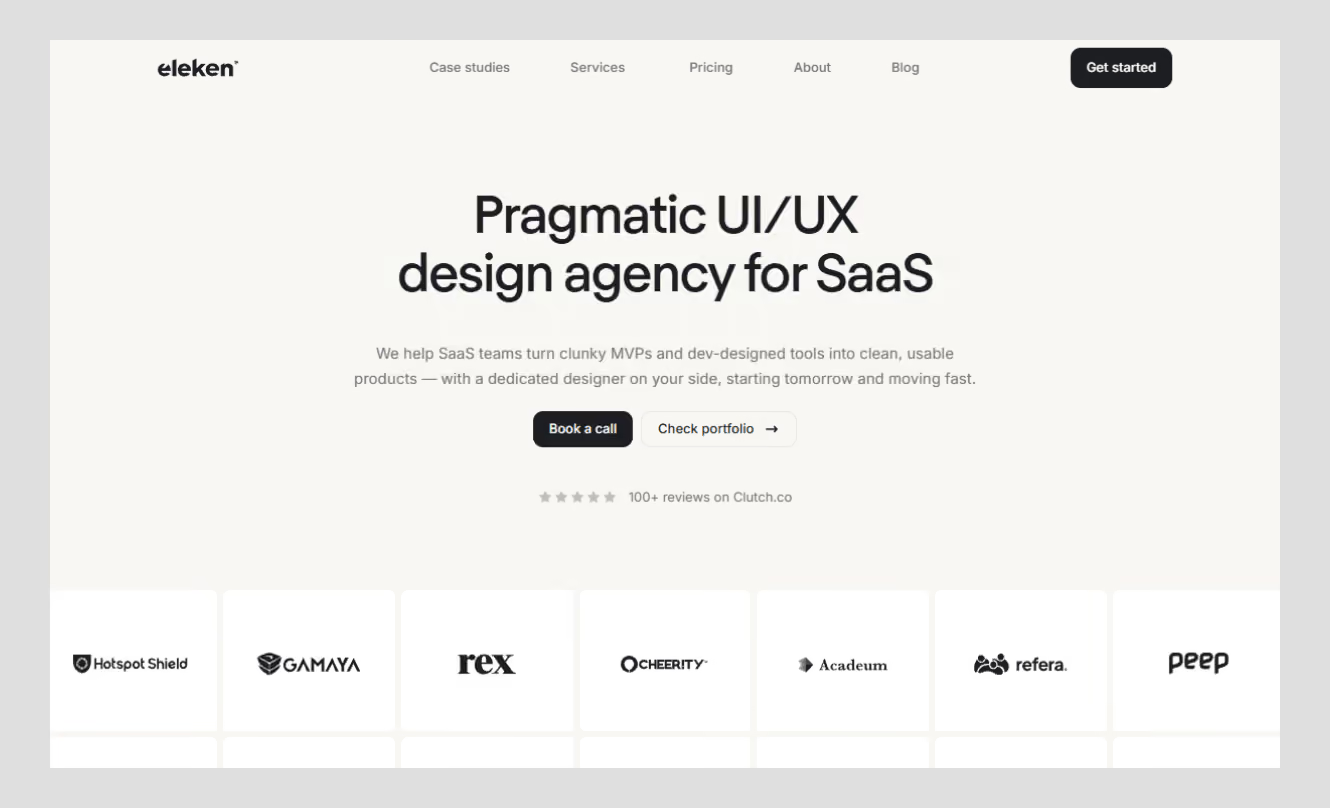
Best for: SaaS teams that want a dedicated embedded designer without full-agency overhead.
Eleken is SaaS-only with no branding or marketing-site distractions with a flat monthly subscription instead of hourly billing. Over 200 documented redesigns back their process.
Strengths
- Fully specialized in SaaS product design — no branding or marketing-site distractions
- Flat monthly subscription pricing, no hourly billing, easy to budget
- 200+ documented redesigns and 70+ published case studies
Weaknesses
- Design-only, clients must have their own development team ready to build.
- Less suitable for consumer or brand-led projects (B2C SaaS).
3. Cieden
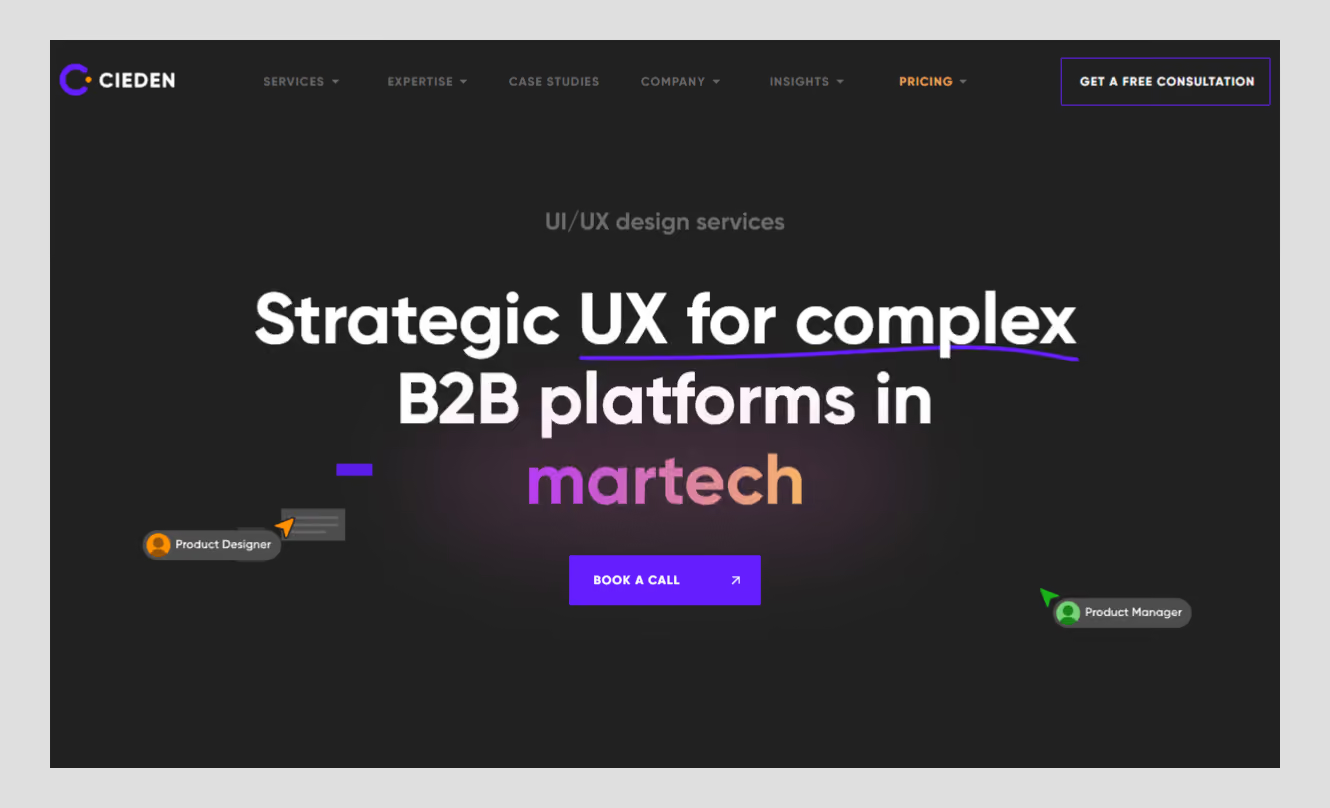
Best for: SaaS, complex B2B, fintech and workflow-heavy products that require outcome-driven redesigns.
Cieden's case studies directly correlate design decisions to business outcomes such as funding raised, NPS growth, adoption in SaaS, fintech, ERP, and healthtech.
Strengths
- Case studies tie business outcomes, funding, NPS growth, adoption increases to design.
- Expertise across the board: SaaS, fintech, ERP, healthtech, logistics.
- Good Clutch and long track record (12+ years).
Weaknesses
- Ideal for workflow driven B2B products, not marketing sites or consumer apps.
- Some published case studies have features that were completely designed and validated but not yet released to the public.
4. Creative Navy
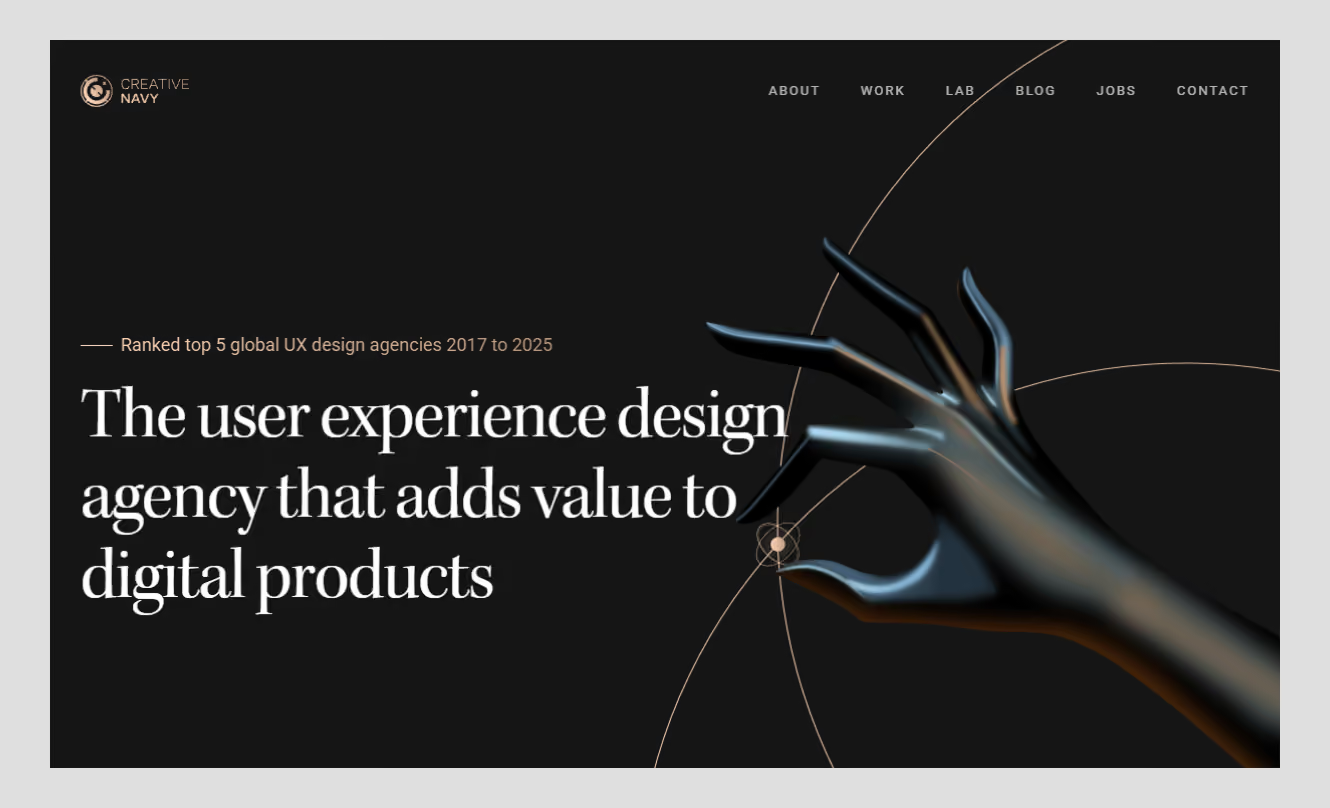
Best for: Regulated, high-stakes, or embedded systems, medtech, government, automotive, industrial software.
Every Creative Navy case study documents interview counts, testing rounds, and research depth. Their client roster includes Jaguar, NHS, JPMorgan Chase, and UNICEF, with an all-senior design team.
Strengths
- Evidence-based methodology: each case study includes interview counts, testing rounds and research depth.
- Industry-leading clients such as Jaguar, NHS, JPMorgan Chase, UNICEF.
- Senior only design team, applicable to safety-critical and compliance driven projects.
Weaknesses
- Pricing and engagement models aren't published, so buyers need a sales conversation to get estimates.
- Best fit for complex technical products; less portfolio evidence for consumer apps or marketing sites.
5. Ramotion
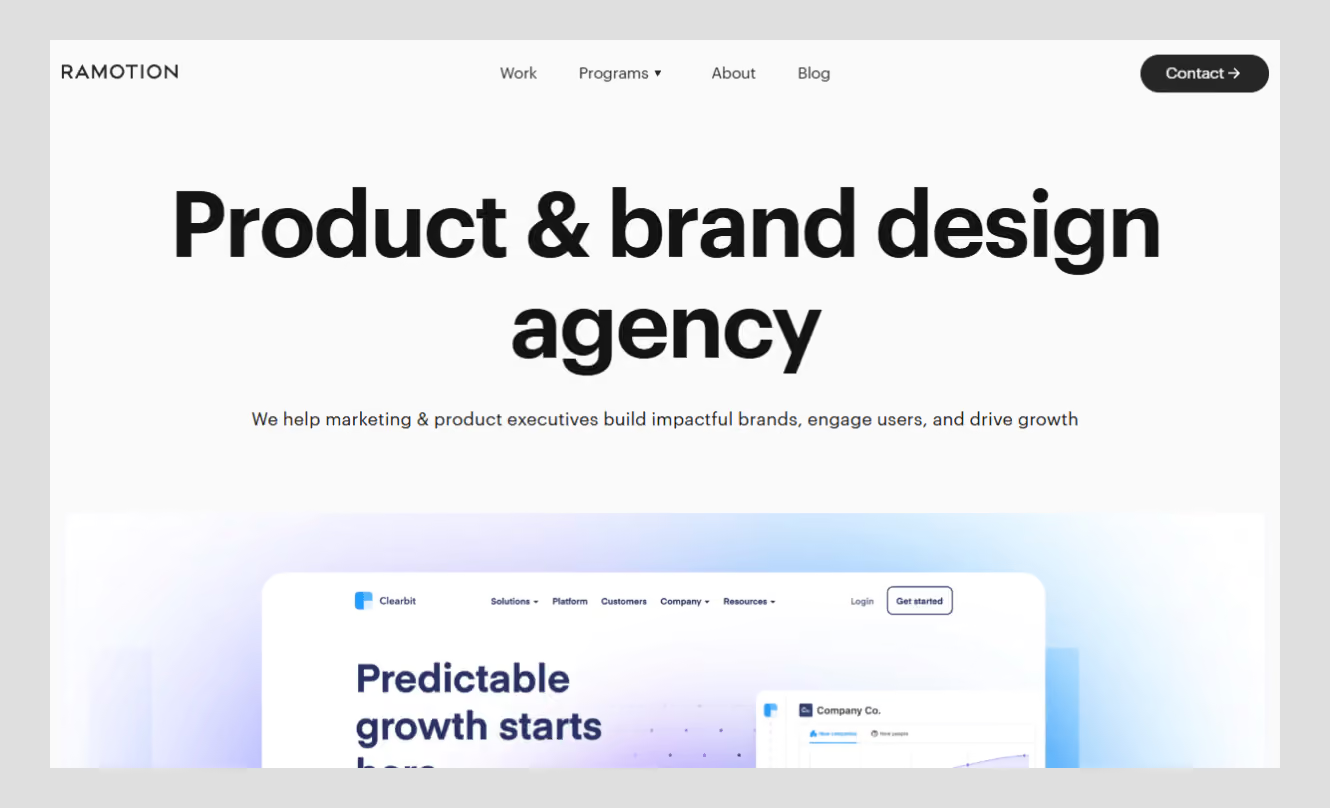
Best for: Enterprise SaaS, consumer applications that require beautiful, research-driven redesigns at scale.
Ramotion has its own rapid prototyping service line, and it has clients such as Salesforce, Adobe, Citrix, and Turo.
Strengths
- The list of their blue-chip clients includes Salesforce, Adobe, Citrix, and Turo.
- A separate rapid-prototyping service that does not involve general UI/UX design
- High third-party review ratings (4.9 average)
Weaknesses
- More services (Branding, Web, Mobile, Dev) = less specialization (SaaS-only studios)
- The price is not listed — must make a specific request
6. Shakuro
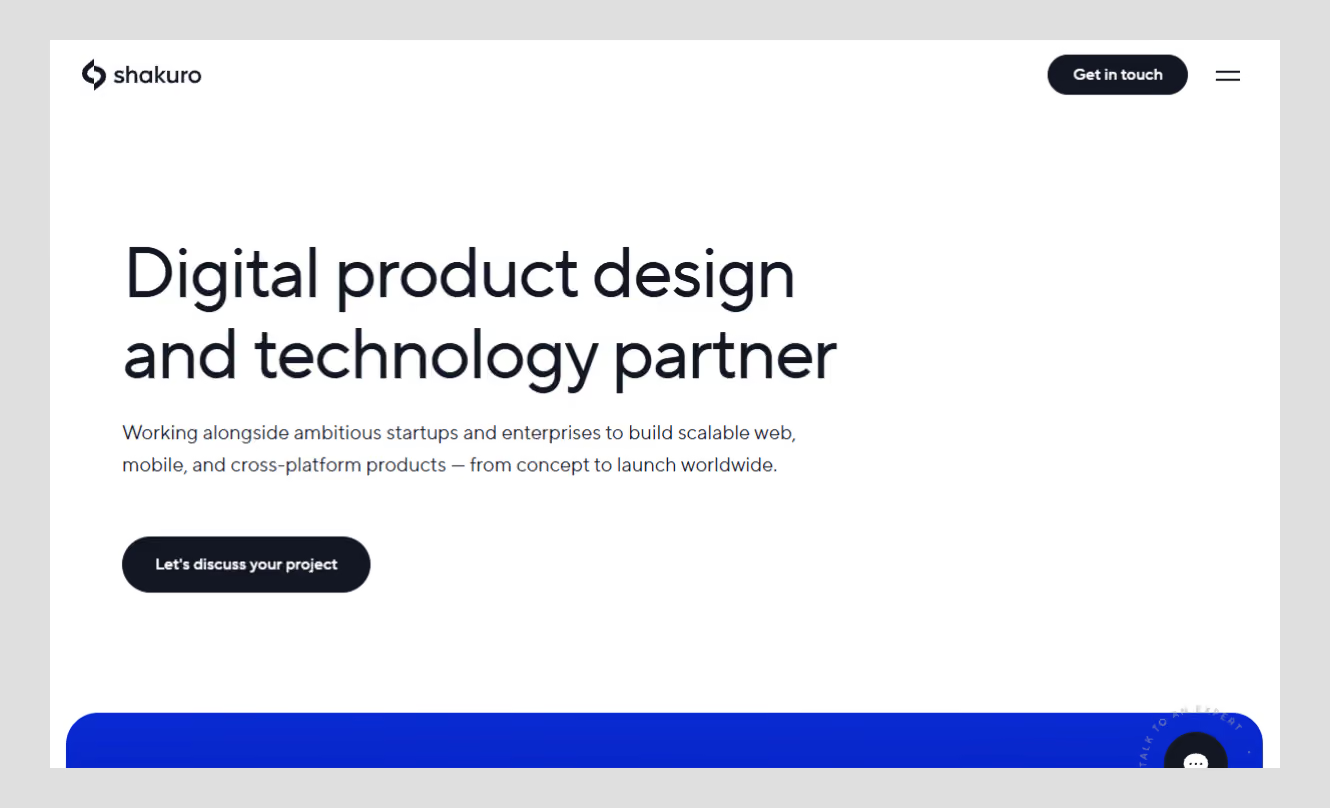
Ideal for: teams that want to redesign for development without changing vendors.
Shakuro provides clear redesign tiers: full redesign, partial UI refresh, and gradual evolution to suit various budgets.
Strengths
- In-house design and build team (to minimise handoff risk between design and build).
- Budgets match scope with clear redesign tiers available - full redesign, partial UI refresh, or a gradual evolution.
- 19 years of experience in disciplined project selection.
Weaknesses
- There are more qualitative than quantitative case study outcomes.
- At the time of writing, there was no public client quote from a verified third party, so please confirm with Shakuro before publishing.
7. UITOP
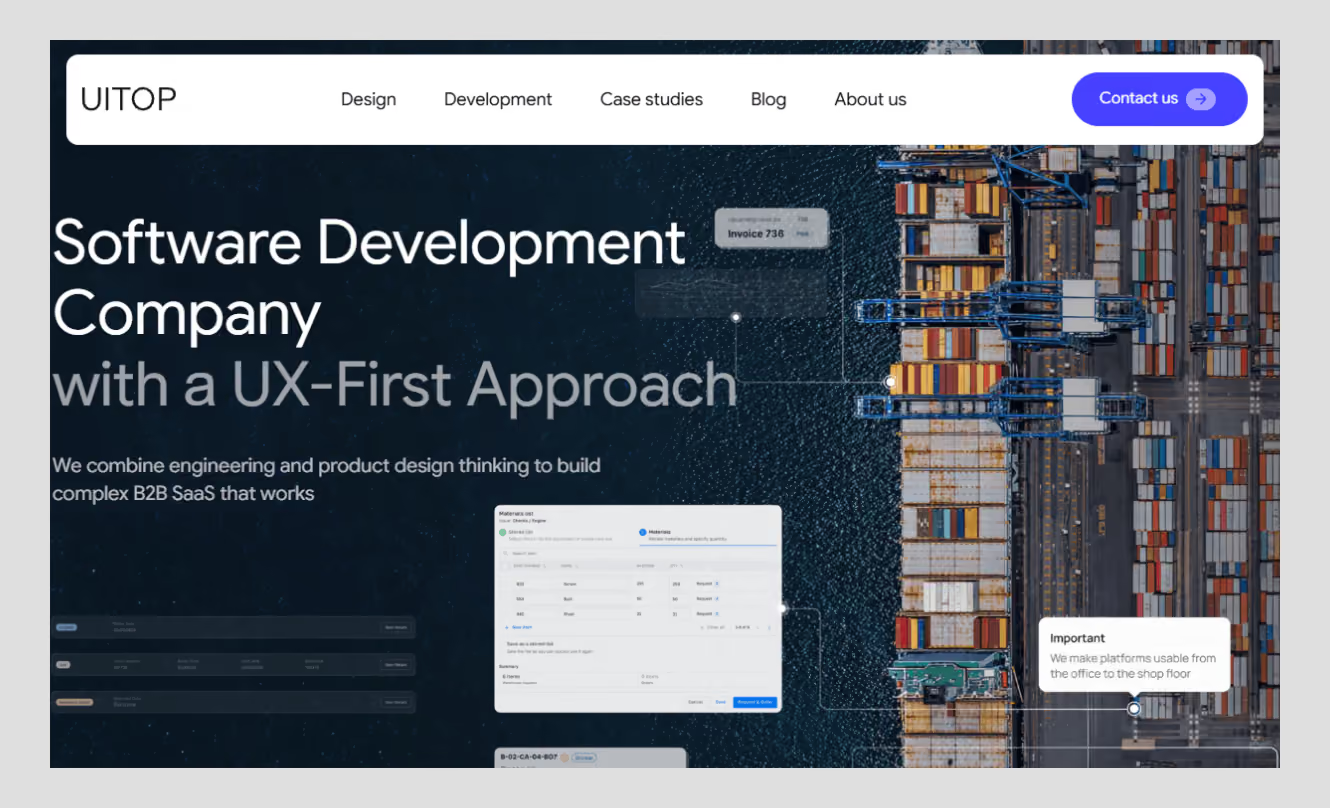
Ideal for: B2B SaaS complex dashboard designs that require a wireframe first for redesign.
UITOP's redesign and prototyping services are complementary, and the company is highly specialized in SaaS, health care, fintech, and EdTech dashboards.
Strengths
- Redesign and prototyping services are provided as separate services, which are beneficial for smaller engagements.
- Focusing in-depth: SaaS, healthcare, fintech, EdTech, crypto.
- The complexity of the dashboard and data visualization is emphasized in case studies.
Weaknesses
- At the time of writing, there were no confirmed third-party client quotes open for public view, so it is advised to verify this with UITOP before publishing.
8. Lazarev.agency
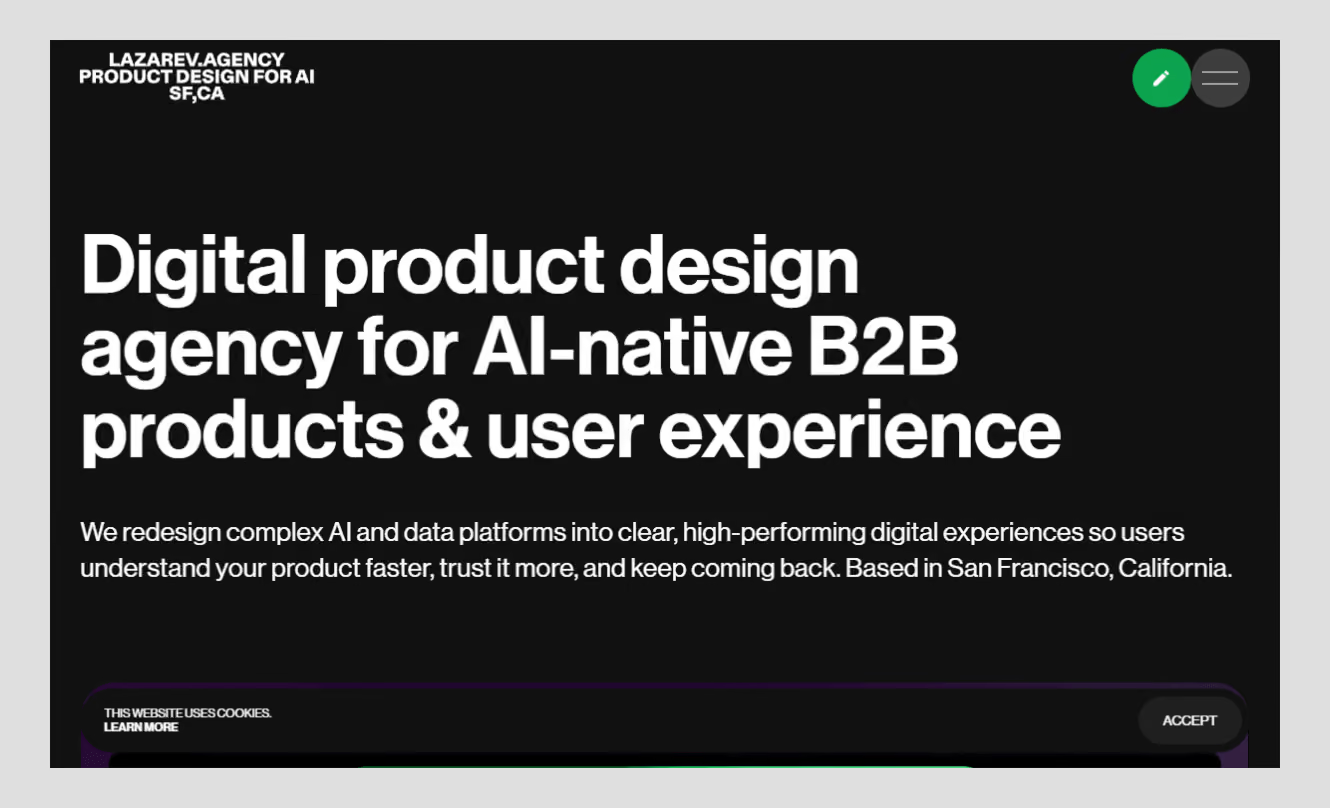
Best for: AI and data-driven products that require quick, accurate prototyping.
Since 2017, an early and consistent focus on AI-native product design (AdTech, SalesTech, FinTech, LegalTech) since 2017 with San Francisco HQ and global reach.
Strengths
- Since 2017, early and consistent investment in AI-native product design (AdTech, SalesTech, FinTech, LegalTech).
- Case studies connect design work with definite business results, such as funding and acquisition.
- Located in San Francisco, truly international scope.
Weaknesses
- Positioning is wider than single-specialty studios, including AI product design, branding, and website redesign.
- A verified third-party client quote wasn't publicly available at the time of writing, recommend confirming directly with Lazarev before publishing.
9. Phenomenon Studio
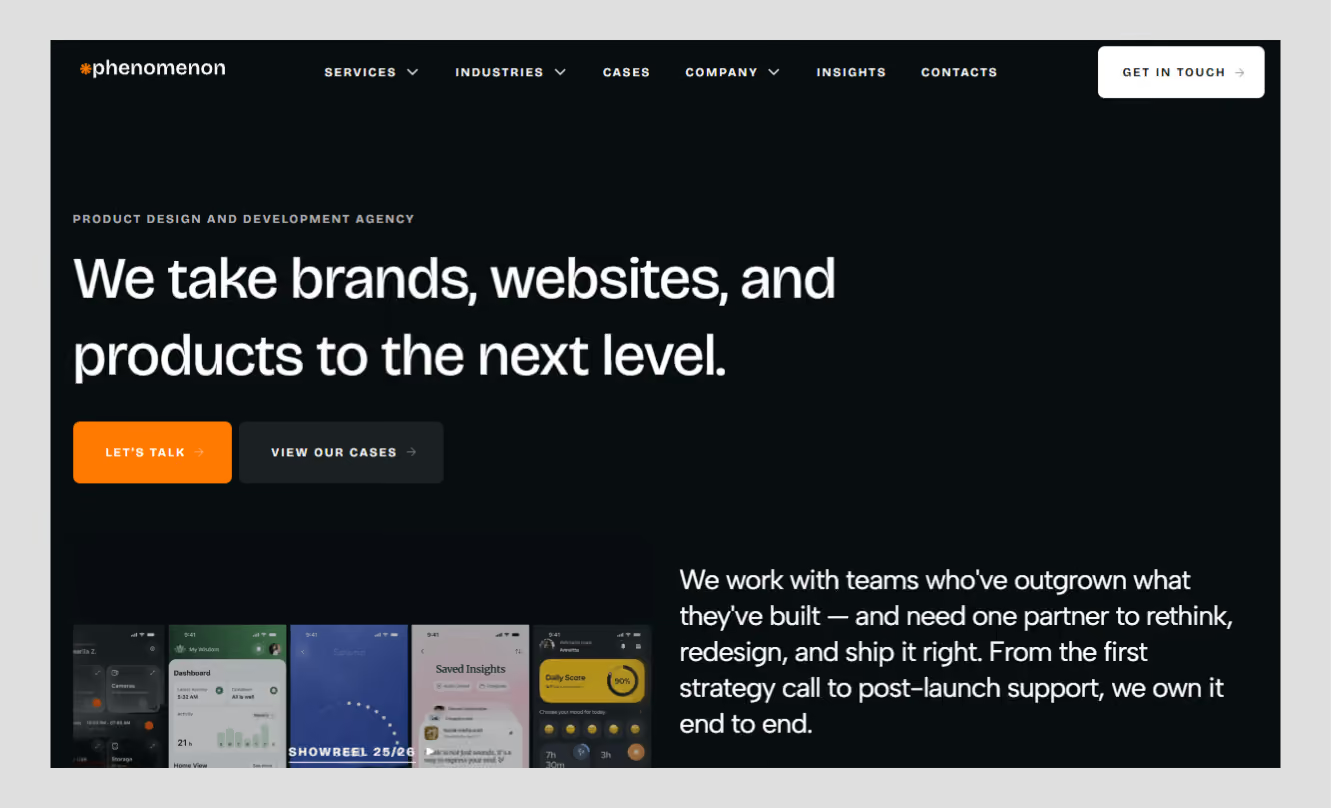
Best for: Distributed teams needing embedded design and development handoff across time zones.
A truly distributed team from across Canada, the United States, Ukraine, Poland, Estonia, and Switzerland, with dev-feasibility reviewed throughout the design process.
Strengths
- True team across Canada, the US, Ukraine, Poland, Estonia, and Switzerland.
- Dev-feasibility review as part of design process, minimising “looks great in Figma, breaks in build” risk.
- Case studies are linked to outcomes of funding and partnership.
Weaknesses
- Younger agency (2019), so not as established as others on this list.
- Greater breadth (design + development + strategy) may result in shallower specialization depth in pure redesign-only engagements.
10. Neuron
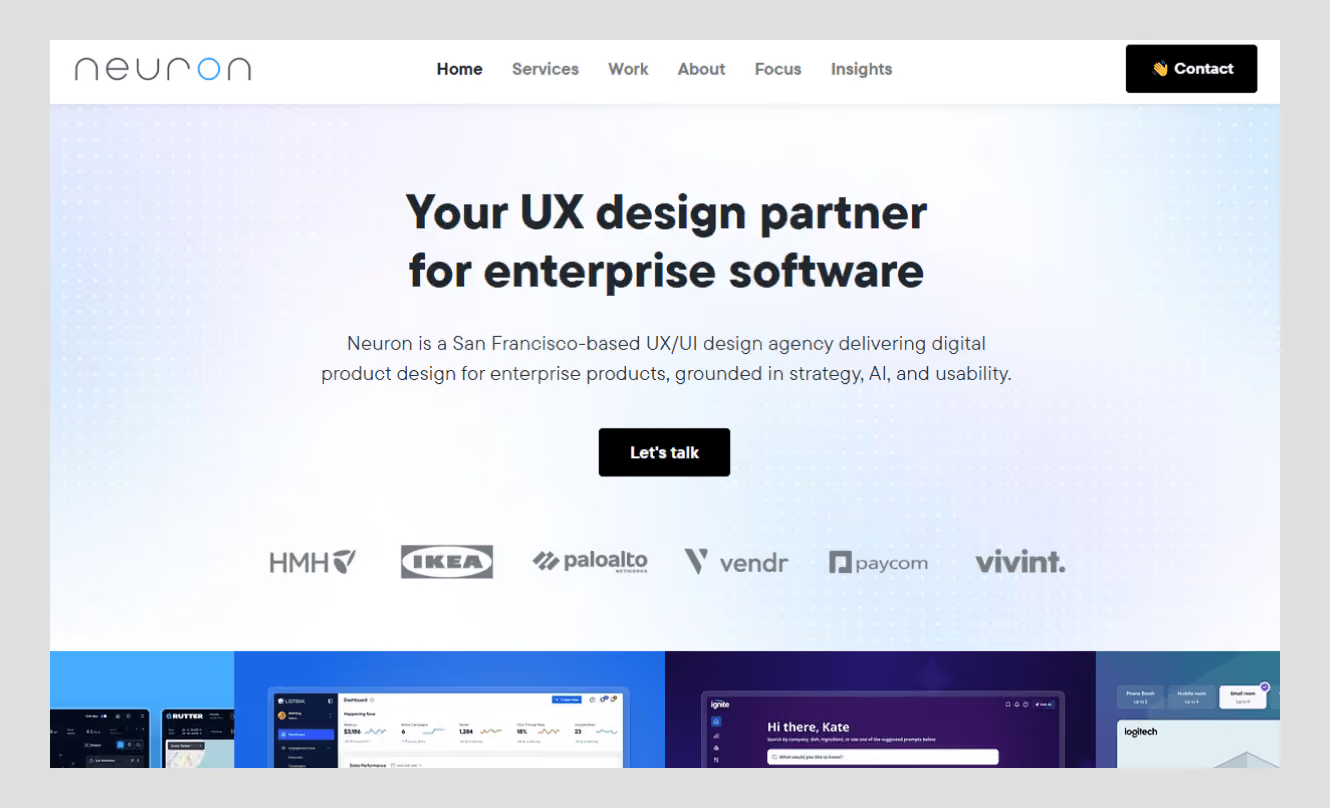
Best for: Enterprise and AI software teams wanting a boutique, senior-only design partner.
A small, senior team model focused specifically on enterprise and AI software, with a stable dual-office presence in San Francisco and Boston.
Strengths
- Small, senior team model, direct access to experienced designers rather than layered account management.
- Focused specifically on enterprise and AI software, a less crowded niche.
- Stable dual-office presence (San Francisco and Boston)
Weaknesses
- Little to no case study information is available from any other agency on this list.
- The pricing and client-metrics data were not made public at the time of this writing, so please contact Neuron directly for these details.
11. Arounda
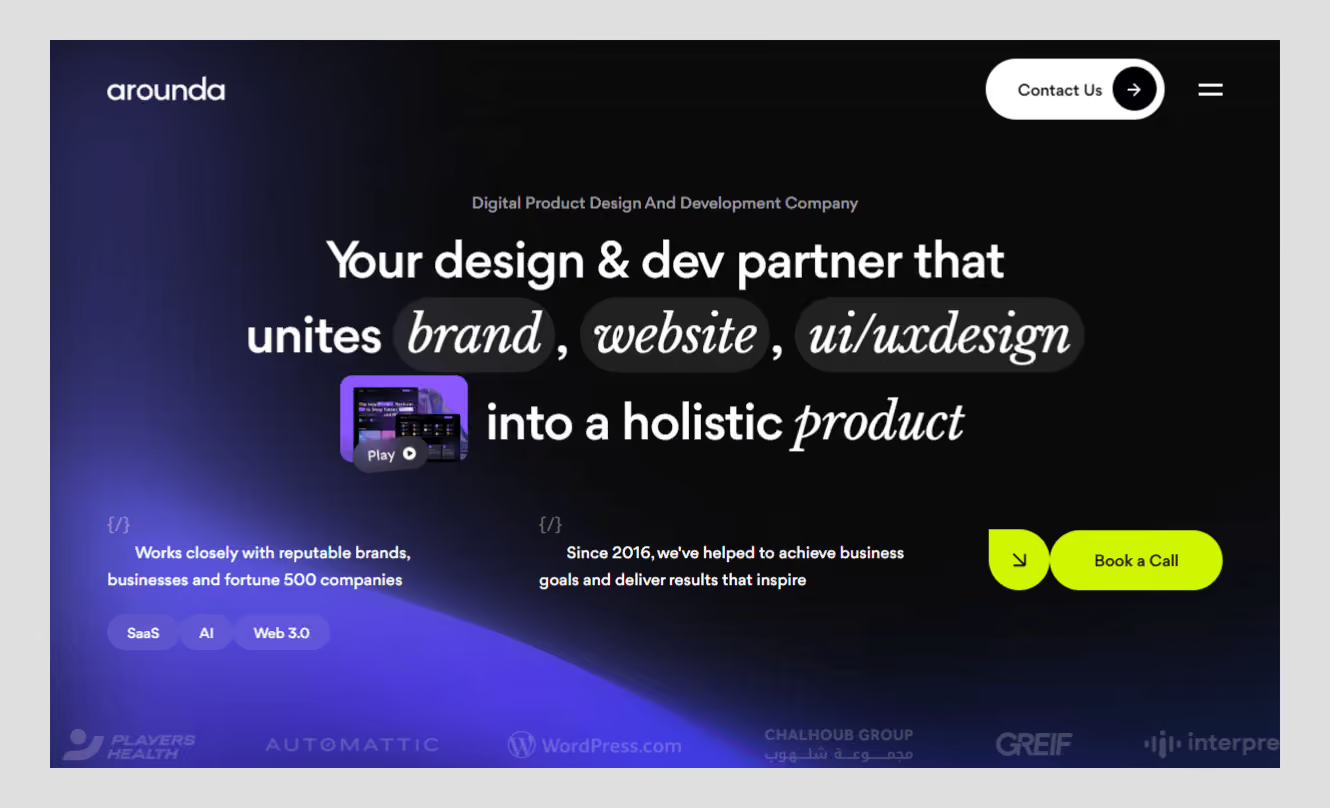
Best for: Mid-market SaaS teams wanting transparent, tiered redesign pricing.
Arounda publishes real pricing logic, an entry point that scales with complexity, with compliance handling (WCAG, HIPAA-aligned decisions) built into the process from the start.
Strengths
- Publishes actual pricing logic (entry point plus complexity-based scaling) rare transparency in this market.
- Compliance handling (WCAG, HIPAA-aligned decisions) is built into the process from the start.
- Broad case study range: health tracking, B2B fintech, and Web3 platforms.
Weaknesses
- Reported outcome percentages are self-published rather than third-party verified.
- Broader focus on retention and MVP launches slightly dilutes pure redesign specialization.
12. Qubika
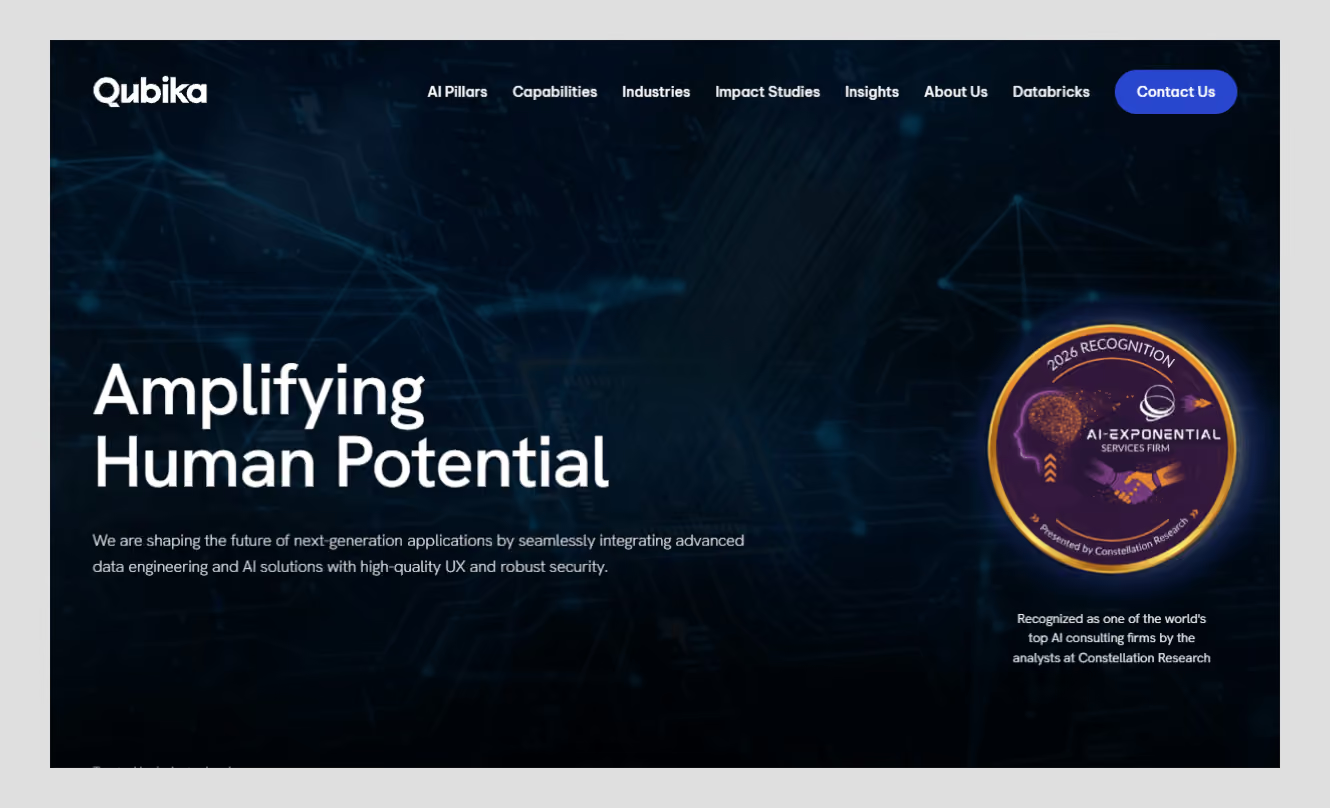
Best for: Teams needing cross-market delivery coverage across the US and Latin America.
Formerly December Labs, Qubika runs a genuine US/Latin America delivery model with strong third-party review sentiment on Clutch.
Strengths
- Genuine US/Latin America delivery model, useful for overlapping time-zone coverage with North American teams.
- Established track record under its prior name, December Labs
- Strong third-party review sentiment on Clutch.
Weaknesses
- Recent rebrand (December Labs → Qubika) may cause some search/portfolio continuity confusion.
- Broader "UX/UI + mobile development" positioning rather than a pure redesign specialty.
Cost of a UI/UX redesign in 2026
There are three general ranges for redesign pricing, depending on the scope of the project:
Full product redesign, multi-role dashboards, compliance requirements, ongoing design system governance
Some agencies (Arounda, Eleken) post their entry-level pricing right on their website, while others (Creative Navy, Ramotion, Lazarev.agency) need a discovery call before they'll provide a quote.
It's not one or the other, but if budget certainty is important early, then go with agencies that have published pricing.
While it depends on the agency, a few factors tend to push a project from the low end of a band to the high end:
- Number of user roles or permission levels — a redesign with three different dashboard views (admin, manager, end user) will cost significantly more than a single-role product.
- Compliance requirements — WCAG accessibility, HIPAA, or financial-services regulations add research and validation time.
- Existing design system maturity — it is quicker to build on an existing documented design system than to reverse engineer an inconsistent legacy system.
- Number of iteration rounds included — some agencies will have a set number of revision rounds, or unlimited iterations will cost more.
That's another question that's worth asking outright: Does a quoted price contain usability testing and developer handoff documentation, or just the design files?
How long does a product redesign take
The time to redesign depends on the scope, but most redesigns go through three stages. Let's look at each and what usually makes a project last longer or shorter than usual.
By project size
Startup / single product area (4–8 weeks total)
A focused redesign, one dashboard, one onboarding flow, one core feature, can move fast because there's less to coordinate. Discovery is often compressed into a one-week sprint, and testing may happen with a handful of existing users rather than a formal research panel.
Mid-size SaaS product (2–4 months total)
This is the most common band. It usually involves multiple screens or user roles, a proper discovery phase with 8–15 stakeholders and user interviews, and enough design iteration to catch usability issues before build. Cieden and Eleken both publish timelines in this range for standard SaaS engagements.
Enterprise-scale redesign (4–8 months, sometimes longer):
Multiple stakeholder groups, compliance requirements (WCAG, HIPAA, SOC 2), and multi-role dashboards extend every phase, not just design, but also sign-off cycles between them.
Creative Navy's technical software case study, for example, documented a six-week research phase alone, followed by months of design and a multi-year developer support period for a system meant to last 25 years.
What actually stretches a timeline
- Slow internal decision-making — design work often stalls waiting on stakeholder sign-off, not on the agency itself. Fixing this is usually about setting a clear approval owner before the project starts, not about the agency working faster.
- Scope creep mid-project — adding new screens or user roles after discovery is locked resets parts of the research and design work.
- Compliance and accessibility review — WCAG or industry-specific review (Healthcare, Finance) requires an additional 1-3 weeks of dedicated review that's easy to miss.
- Content readiness — if real copy, data, and assets aren't ready when design starts, teams often design with placeholder content and have to revisit screens later.
A realistic rule of thumb: a focused SaaS redesign wraps in 2–4 months end-to-end. Typically, enterprise-scale projects with several stakeholder groups or regulatory requirements take 6 months to a year.
Keynote: Best agencies by use case
Different products have genuinely different redesign problems; a fintech dashboard with five user roles has almost nothing in common with a startup's first onboarding flow. Here's how to match the agency to the actual shape of your problem, not just the industry label.
- Best for SaaS dashboards: UITOP, Eleken
- Best for regulated/embedded systems: Creative Navy
- Best for startups needing brand + product together: Wavespace
- Best for enterprise scale: Ramotion, Creative Navy
- Best for AI/data-heavy products: Lazarev.agency
- Best for transparent, tiered pricing: Arounda, Eleken
- Best for distributed/global delivery: Phenomenon Studio, Qubika
- Best for full-cycle design-to-development: Shakuro
Short Q/A about UI UX redesign and prototyping agencies

Search for research-based case studies that have named outcomes, a clearly defined dev-handoff process, and industry experience that is similar to your own. Do not use agencies that only present the final screens without explaining how they have been created.
A redesign is a change to the experience layer, but doesn't change much of the underlying product. A rebuild will involve replacing the architecture and, in some cases, the tech stack. Redesigns are less risky and quicker; rebuilds are required when the technical foundation is limiting growth.
Most startup-scale redesigns run $5,000–$15,000, mid-size SaaS redesigns $15,000–$60,000, and enterprise-scale projects $60,000 and up, depending on scope and compliance requirements.
A typical SaaS redesign takes 2–4 months from discovery through developer handoff. Enterprise projects with multiple stakeholders or regulatory requirements can take 6 months or more.
Repeating support questions, declining activation rates, an inconsistent design system, a dated look next to competitors, and a dev team that dreads the front-end codebase are the clearest signals.
If you have internal product leadership to guide the work day-to-day, an embedded designer or small pod is effective. A standard agency contract has its own project manager and milestones and is best for teams that prefer more structure and less hands-on management.
Not always, but it helps. An audit turns a general sense that "something's off" into a prioritized, evidence-based list of what to fix, which makes it easier to scope the redesign accurately and avoid paying to fix the wrong things first.

More related blog
Design & development in one team. Let’s talk!
















.png)



Francisco, CA 94105, United States




































.avif)