Top 10 design system agencies for enterprise-level UX in 2026


Why design systems matter in 2026
Picture this. Your company has just closed Series B. You currently have 12 product interfaces: web application, mobile iOS, mobile Android, marketing site, customer portal, administration dashboard, API documentation, email templates, Chrome extension, Slack bot, public documentation, and chatbot using AI. They all appear a bit different. Different buttons. Different colors. Different spacing.
Your head of design just quit. It takes the new designer four months to learn where everything is. Your programmers take three hours on each feature to enquire what shade of blue?" Your QA team finds 23 inconsistencies per release.
Because in 2026, design systems aren't nice-to-have documentation. They're competitive infrastructure.
What is a design system? [definition + benefits]
A design system is not a logo file. Not a PDF style guide. Not a Figma template someone downloads once and forgets.
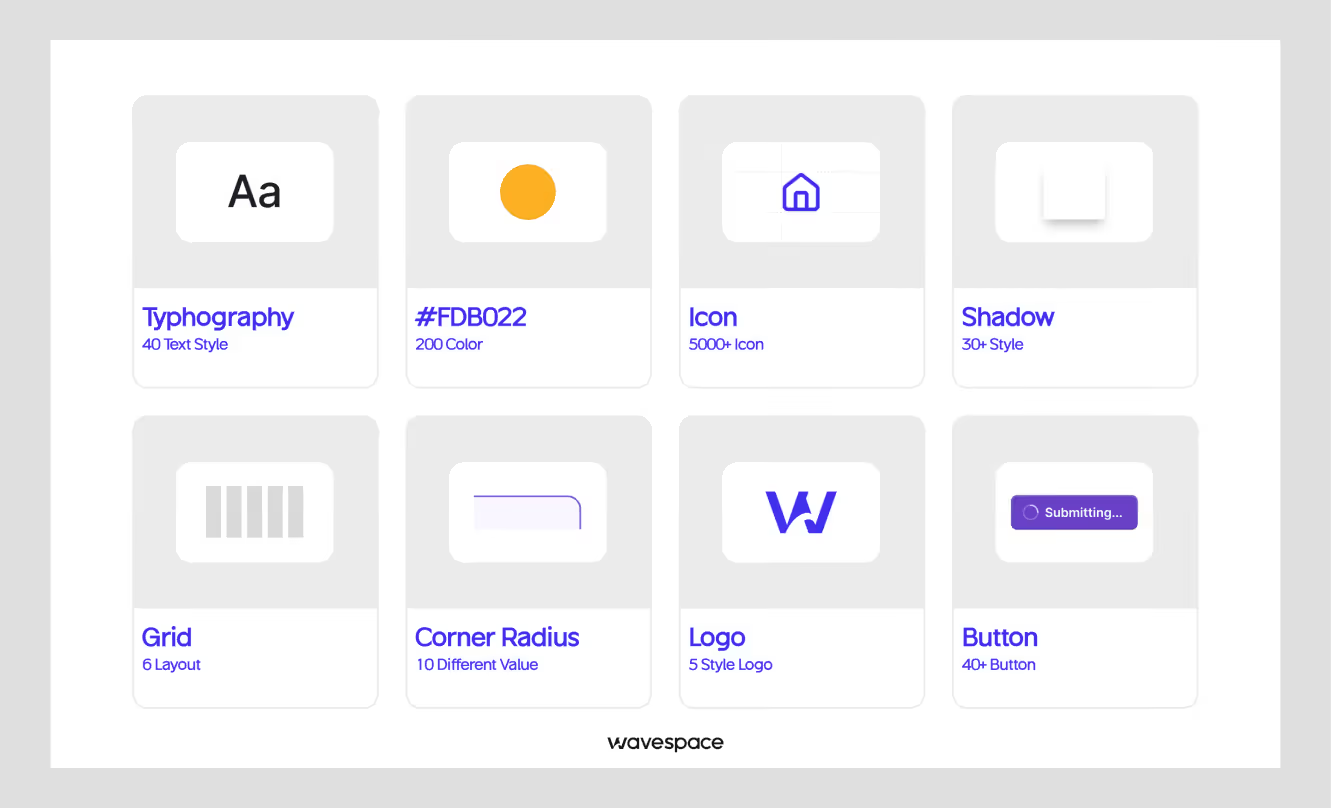
A living ecosystem is a design system that contains:
- Foundation layer: Brand values, design principles, accessibility standards
- Design tokens: Named variables that hold design choices (color, typography, spacing) that are cross-platform.
- Components library: Buttons, forms, navigation, all designed and coded, with various states.
- Documentation: Clear guidelines showing when to use each component, with visual examples and code snippets
- Governance: Version control systems, contribution workflows, deprecation policies. Complexity between startups and enterprises is exponential.
- Startup: Startups require 20-30 core components with simple documentation. Timeline: 4-8 weeks. Investment: $25K-75K.
- Enterprise: Businesses require 100+ features, multi-brand support, compliance with accessibility, and governance structures. Timeline: 12-24 weeks. Investment: $150K-500K or more.
The ROI justifies the investment.
New to design systems? Start with our Design System 101 (2026 Guide) and discover how they improve.
What do design system agencies do?
Design system agencies build scalable infrastructure, not just pretty pixels.
Creation of Component Libraries: Agencies develop libraries that are holistic and based on atomic design methodology, including atoms (buttons, icons) and organisms (navigation bars, data tables). Every element has several states and operates on responsive breakpoints
Design Token and Documentation: Tokens are the DNA of your system, and these are called color-primary: #0066CC, which is used in the web, iOS, Android, and email. Doc-less tokens are worthless.
Documentation converts technical variables into practical instructions that have graphical illustrations and snippets of code.
Implementation Support: The most successful agencies use a developer handoff process, legacy product migration planning, training, and pilot projects.
Maintenance & Governance: COBE actively maintains and enhances existing design systems by revamping visual identity and enhancing component organization. Without governance, design systems decay into abandoned Figma files within 18 months.

Design system agencies vs. regular UX agencies
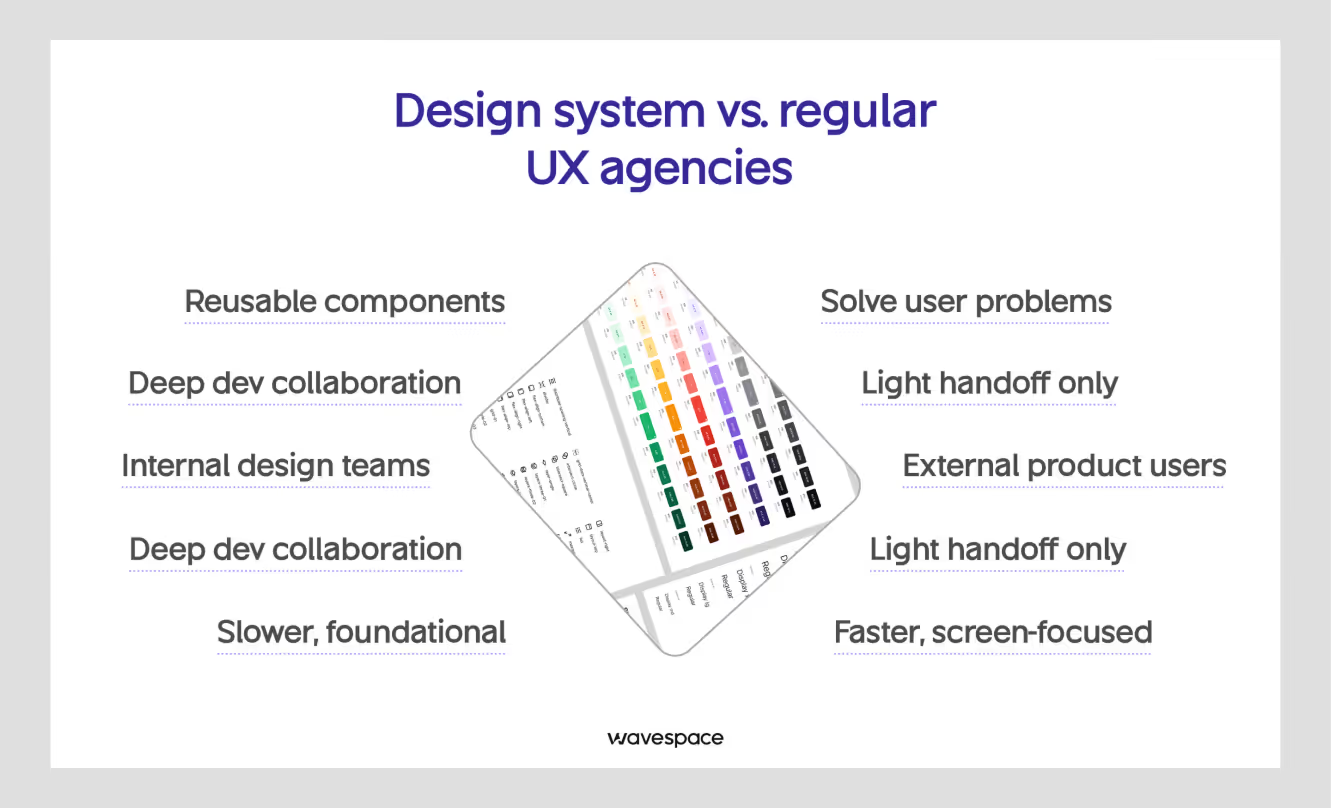
Regular UX agencies redesign your website. Design system agencies rearchitect how your whole organization constructs products. In generalist designers, regular agencies provide in 4-12 weeks, static mockups and PDF style guides.
With design technologists, front-end engineers, and systems architects, design system agencies create coded libraries, living documentation, and governance frameworks within 12-24 weeks.
A UX agency makes your existing product appear nice. Your full product range is made scalable in the coming five years by a design system agency.
The regular agencies are platform-specific designers. Design system agencies make sure that your design language works in web and native apps, email templates, and future platforms like voice UI interfaces and AI chat interfaces.
Ramotion's modular components ensure multi-platform usability in dynamic cloud interfaces.
Take the next step in your design system journey with our guide on building a scalable design system for growing SaaS products.
How to choose the right design system agency
Budget & pricing models
Project-Based ($50K-$500K): Ideal when there is a defined scope in a one-time building. Risk: No continuous assistance after launch.
Retainer/Subscription ($10K-$50K monthly): Ideal in terms of changing systems that require regular updates. Superside is a long-term support and subscription-based design partner.
Hybrid (Most Common): Start-up (fixed fee) and continued maintenance (retainer). Most common for enterprise engagements.
Industry expertise
In regulated industries, the generic design systems do not work. Find agencies with domain experience:
- FinTech: Ramotion develops financial dashboards and secure transaction systems.
- Healthcare: Ramotion is a union of medical data standards and the design that is compliant with accessibility.
- Enterprise: ProCreator developed design systems with Fortune 500 companies.
Ask for case studies from your specific industry.
Success metrics
Specify measurable targets before signature:
- 80% of new features use system components by Month 6
- 40% lowering of design-to-development hand-off time.
- 100% WCAG 2.2 AA compliance
The most effective agencies not only provide deliverables, but also results.
Top 10 design system agencies for enterprise-level UX (2026)
1. Wavespace
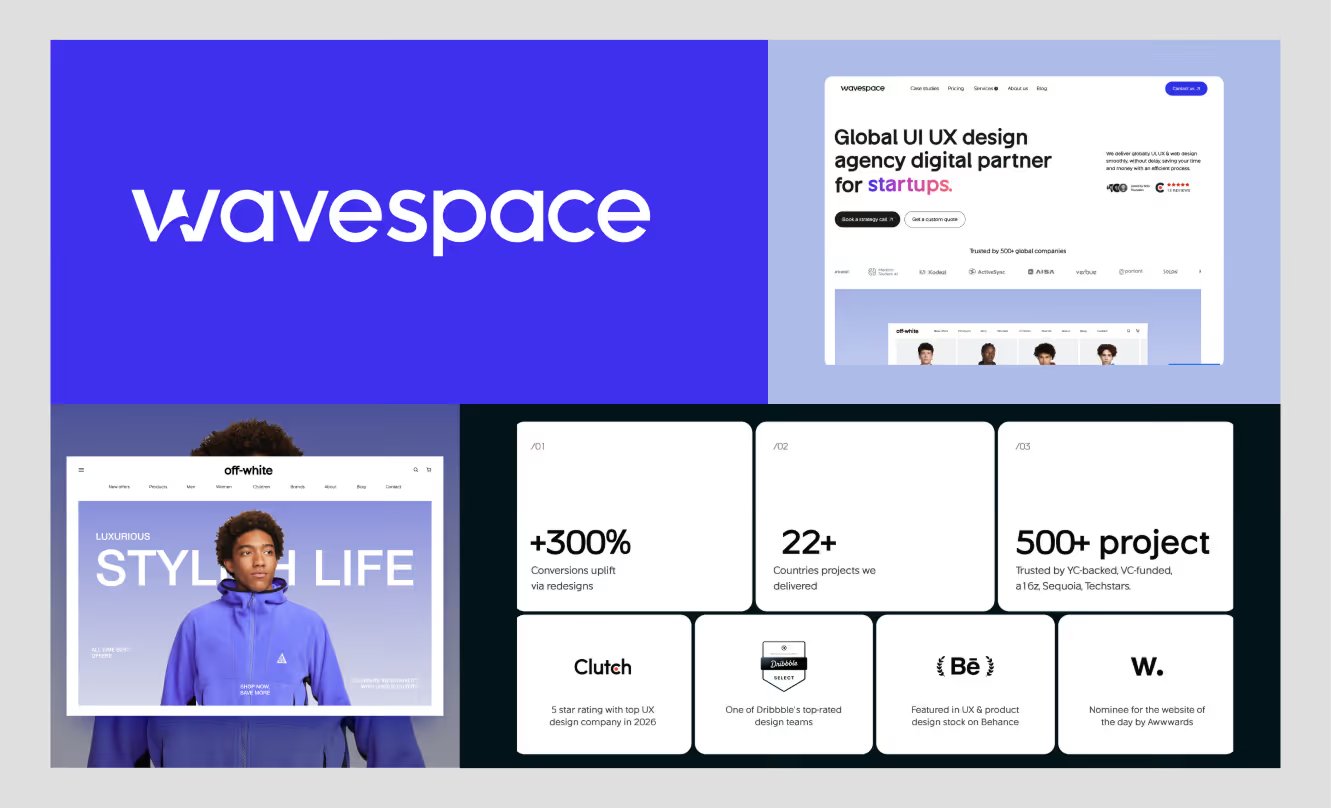
Website: wavespace.agency
What They Do: Award-winning global UX design agency specializing in outcome-driven design. Worked with 500+ companies in 22+ countries since 2019, served 100M+ users, and clients have raised 2B+ and achieved 400% conversion uplifts and 114 ROI per dollar spent.
Best For: Y Combinator and 500 Global-backed startups going to enterprise. B2B SaaS businesses require quick and conversion-driven design systems.
Design System Specialties:
- Scalable design systems that are reusable and have handoff-ready files.
- Fast, scalable component-based interaction design.
- Complete design system packages including visual style, interface rules, and code-ready UI kits.
- Digital platforms can be used with IT-ready components, which maintain the same user experience.
- Rapid deployment approach to early-stage teams (weeks, not months).
- Design-to-development partnership with smooth integration into the dev team.
- Subscription-based design service model with 2-3 business-day delivery.
- SaaS, fintech, and healthcare multi-platform systems.
2. Superside
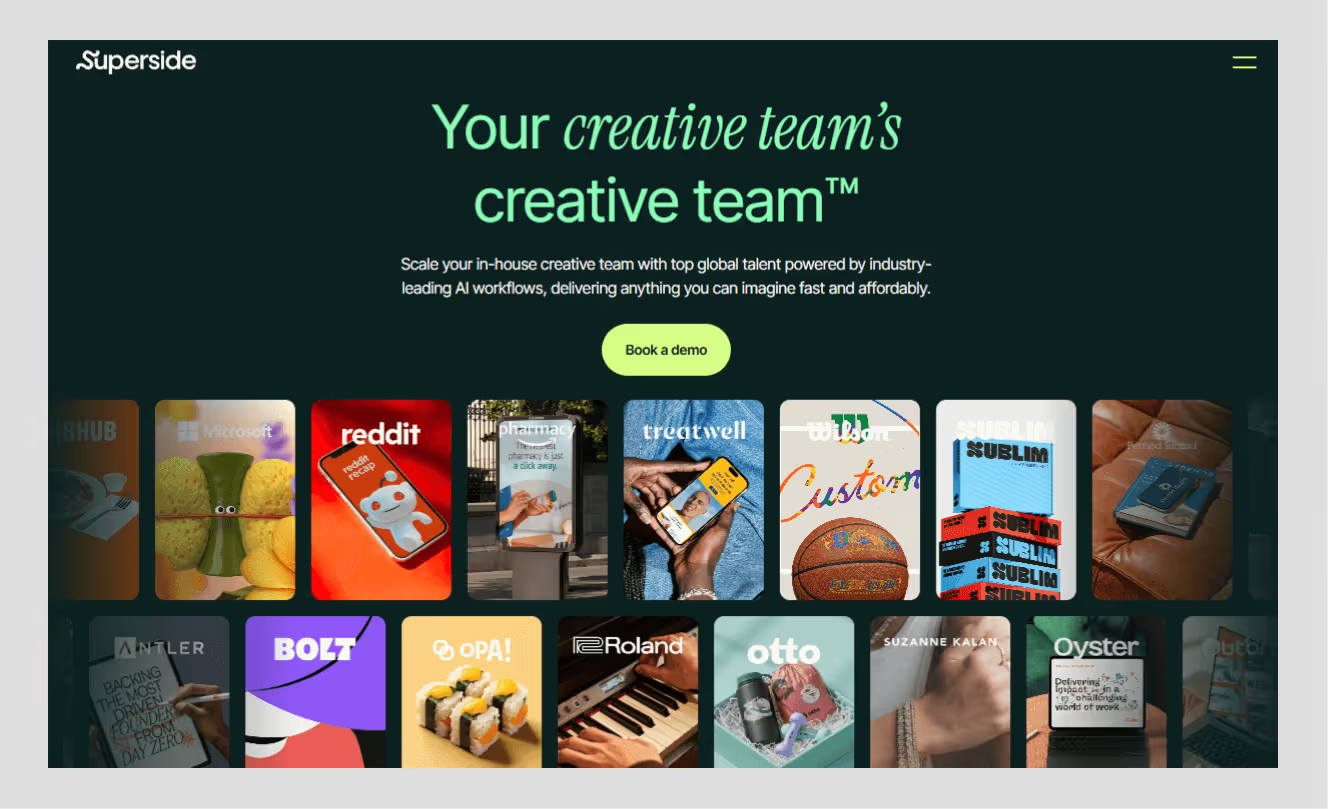
Website: superside.com
What They Do: What They are: AI-based creative service that has embedded global talent, powerful AI-powered tools, and a creative management platform. Provides design systems, component libraries, and governance on a subscription basis, which is integrated with enterprise workflows.
Best For: Large enterprises (750+ employees) needing always-on design support with AI-accelerated workflows.
Design System Specialties:
- Atomic Design design approach to interfaces as building blocks.
- Design systems with AI will minimize rework and enhance teamwork.
- Modular email design, website design, and product design.
- Cross-platform, consistent design token management.
- Well-documented component libraries and structured adoption services.
- Integration of Figma, Storybook or custom tools based on best practices.
- Ongoing development of new parts, system changes, and brand development.
- Delivery by subscription and pods of design system experts.
3. Ramotion
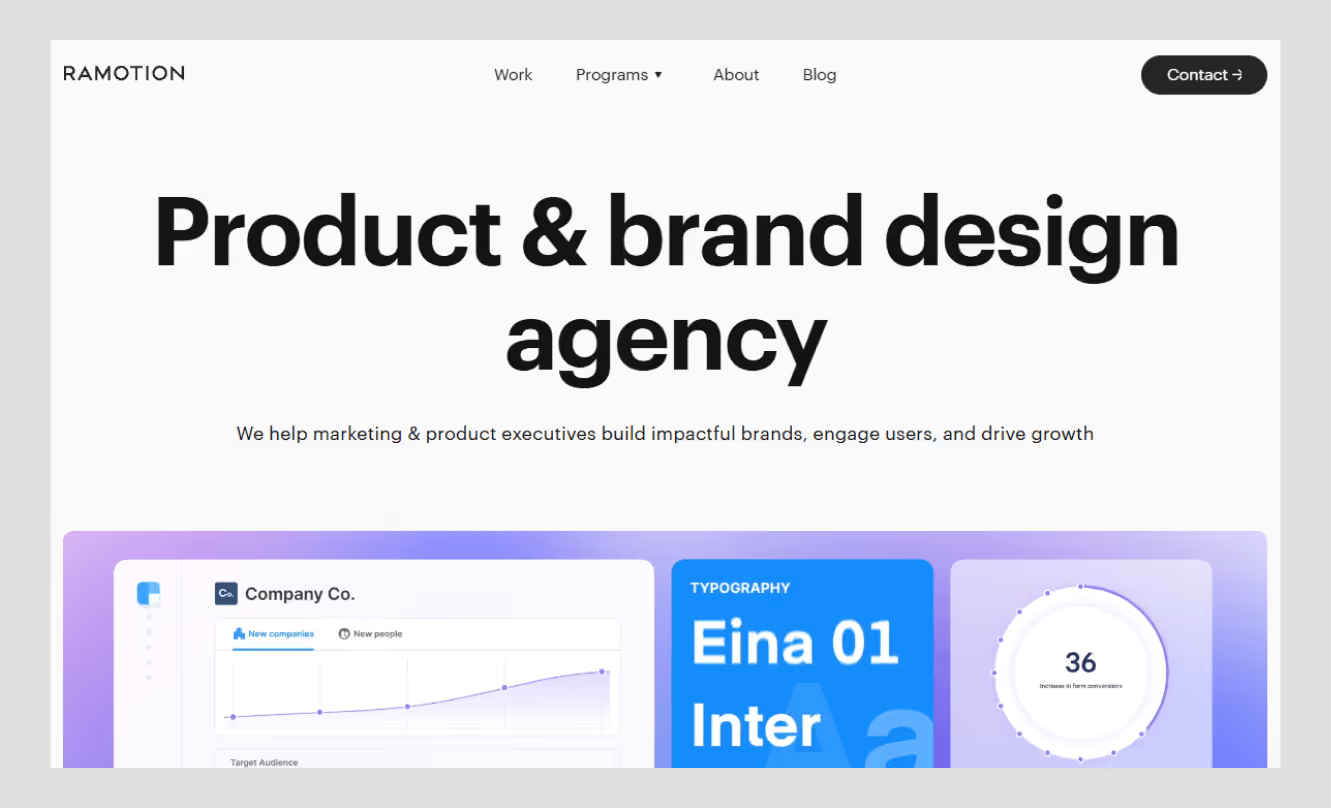
What They Do: A 70+ person multidisciplinary digital product team with 15+ years of experience. Specializes in scalable and robust design systems of enterprise B2B, startups, and Fortune 350+ organizations. Startup customers raised over 1B.
Best For: Enterprise B2B SaaS. The process of going from Series A to IPO requires a cohesive product and brand system.
Design System Specialties:
- Reusable elements, style guides, and documentation.
- Multi-platform usability of dynamic cloud interfaces (enterprise workflows).
- Secure transaction systems, financial dashboards, and compliance criteria.
- Combining medical data with patient portals that are accessibility-friendly.
- Lightning Design System micro-interactions for user engagement
- Design systems in iconography (500M+ users worldwide, Stripe, Citrix, OPPO).
- Small UI kits to full-scale design systems that are scalable to business requirements.
- Constant assistance to refine parts, add libraries, and revise the documentation.
4. ProCreator
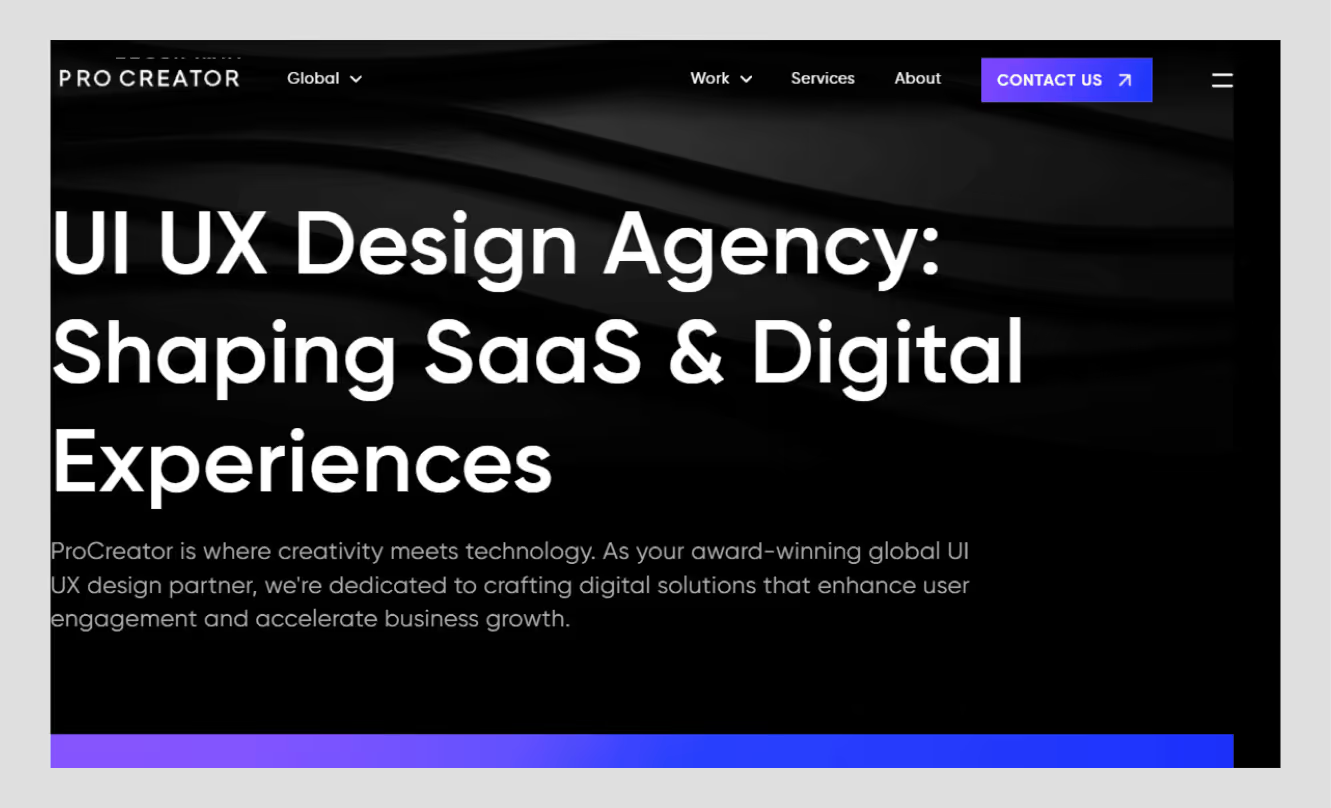
What They Do: AI-based, 50+person, Mumbai, Singapore-based, and Wyoming-based UI/UX design studio. Focuses on data-driven UX in SaaS companies and with human-driven design and engineering.
Best For: SaaS businesses in the growth stage (Series B-D) that require design systems that influence the activation, retention, and conversion metrics. Enterprises are modernizing legacy products.
Design System Specialties:
- UI complete elements, style specifications, and patterns of interactions.
- Scalable design systems with simplified user experiences.
- Business consulting and AI Innovation Strategy integration
- User-insight-driven design pattern research and validation
- Development of design systems at the Fortune 500 level.
- Integration with existing design and development processes
- Continuous maintenance and upgrades, assuring system development.
- Human-centered design approach to strategy and implementation.
5. R/GA
Website: rga.com
What They Do: Founded in 1977, a multinational innovation consultancy and digital design agency with global offices. Experts in smart brand systems that integrate knowledge, design, and technology to transform business.
Best For: Fortune 500 companies in the process of digital transformation. Global brands need design systems bridging physical and digital experiences across 50+ markets.
Design System Specialties:
- Smart brand operating system with differentiation and expansion.
- Brand Design Consulting (BDC) practice of digital-first design systems.
- Integration in product, experience, campaign, and CRM design.
- Intelligent adaptive operating systems that change with the market.
- Integrated practice between business strategy, technology architecture, and design.
- Multi-channel digital, retail, packaging, and events brand experiences.
- Flexible design systems, responsive and iterative for future growth
- Create systems to make decisions and growth directions.
6. Clay
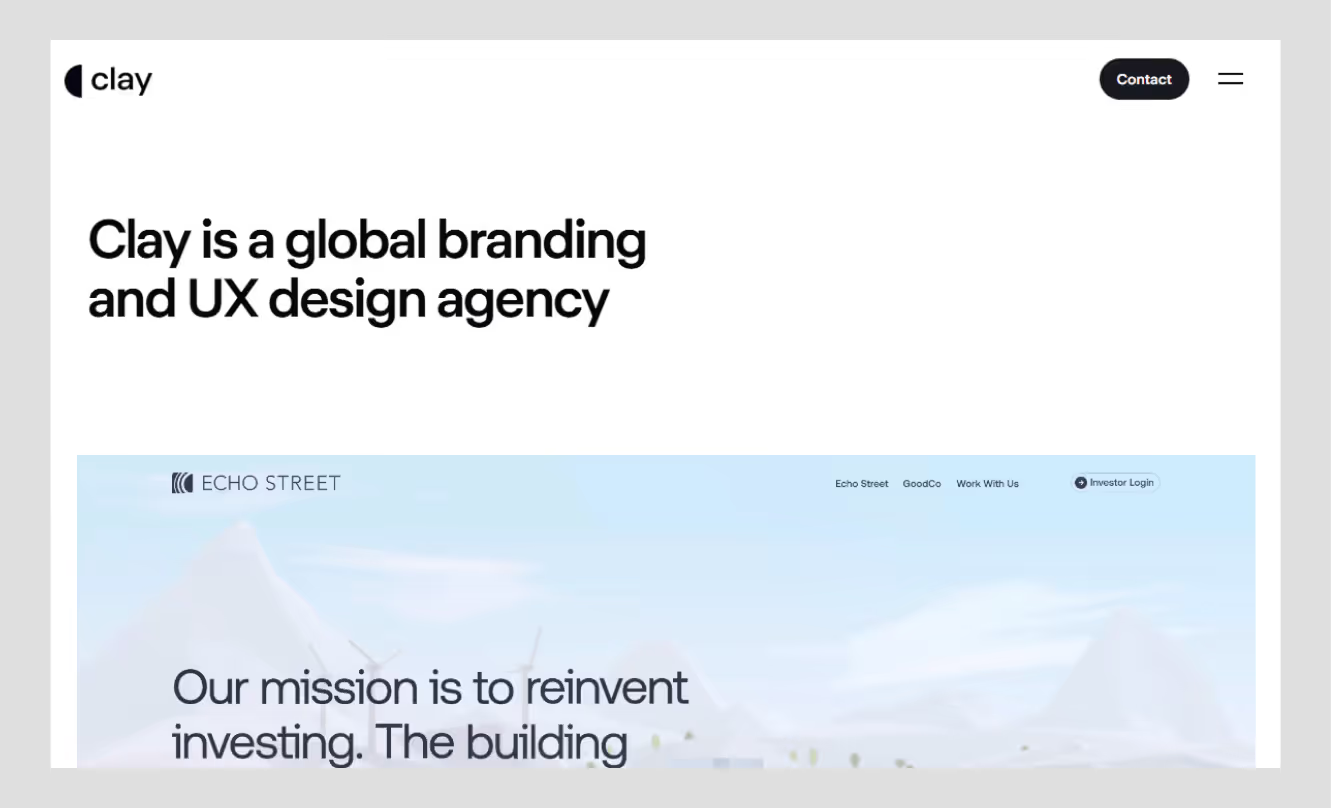
What They Do: A 78-person full-service creative agency with offices across San Francisco, New York, Austin, Denver, Lisbon, and Belgrade. 16+ years of experience specializing in fintech, crypto/Web3, and enterprise UX transformation.
Best For: High-growth fintech startups and consumer brands needing polished, premium design systems. Complex data products in enterprises need a defined hierarchy of information.
Design System Specialties:
- Scale-consistent approach based on a design system.
- Comprehensive design systems empowering in-house teams for continuity
- Consumer-level UX design in enterprise.
- Intelligence is the native experience of AI.
- Scalable component libraries with strict spacing and visual hierarchy
- Premium motion design with deliberate micro-interactions and 3D elements
- Several years of design collaboration with Fortune 100 enterprises (ADP, VMware, Cisco).
- Visual design exploration for open-source design systems (Clarity)
7. CodeTheorem
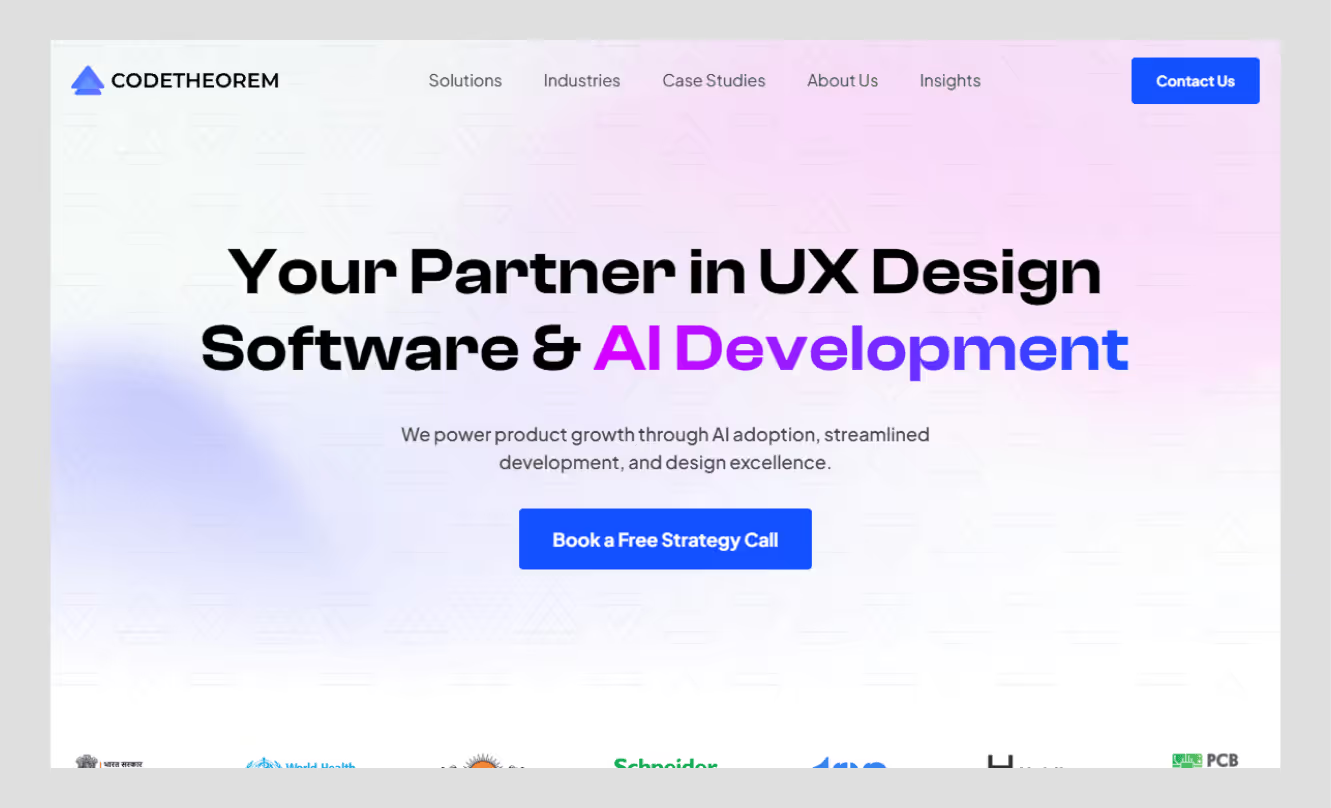
Website: codetheorem.co
What They Do: Ahmedabad-based design and development agency with global delivery. Focuses on full-stack development services specializing in robust design systems in the SaaS, healthcare, edtech, and e-commerce industries.
Best For: Mid-market businesses (10M-100M revenue) that require affordable design system development and implementation services. Startups that need a design and development collaboration.
Design System Specialties:
- UI library of reusable interface elements (buttons, forms, navigation)
- Extensive style manuals with color schemes, fonts, and icons.
- Design patterns offer solutions to design problems.
- Accessibility guidelines ensuring usability for all abilities
- Clear documentation to guide designers and developers.
- Scalable design systems streamlining design processes
- Design-to-code integration with frontend development capabilities
- User-centered design philosophy with extensive user research confirmation.
8. COBE Is Fresh
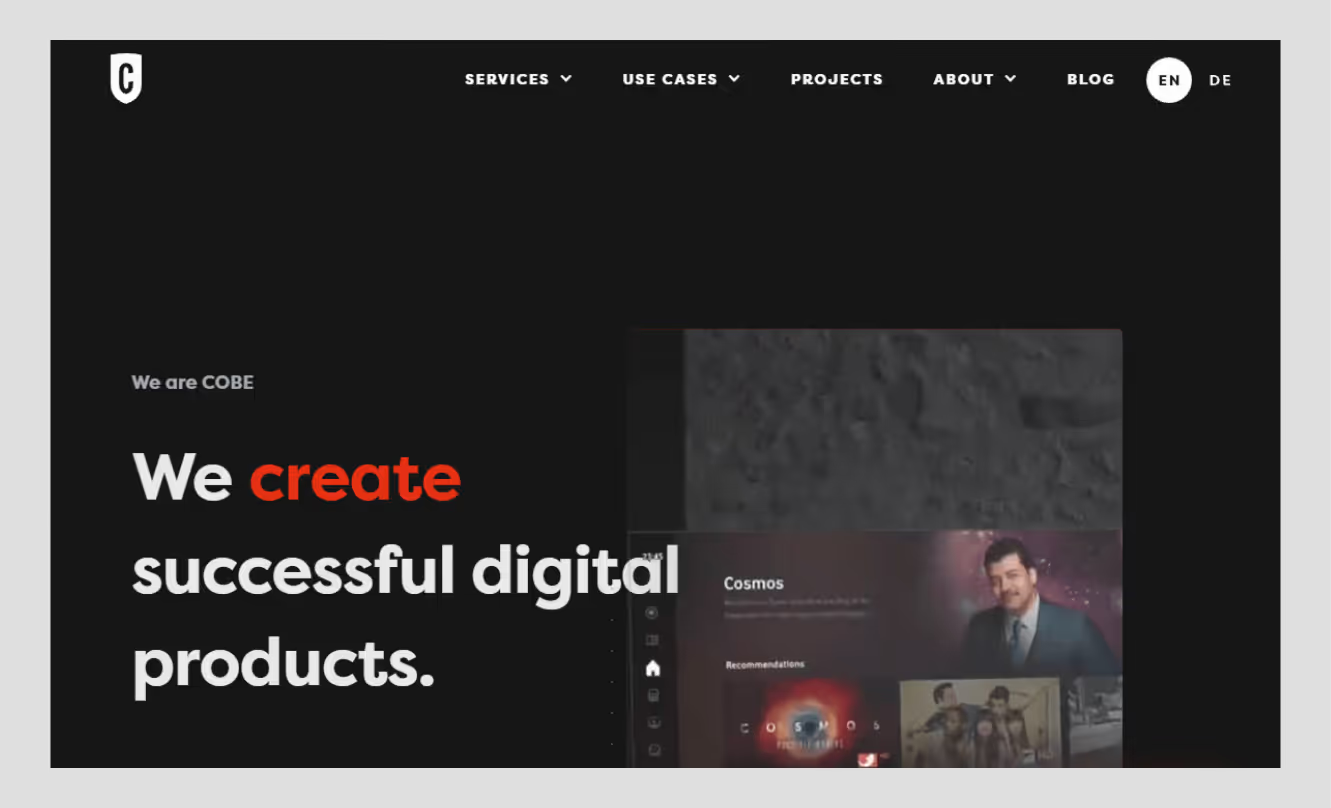
Website: cobeisfresh.com
What They Do: Since 2012, creating and innovating leading digital experiences in Munich, Germany, and Osijek, Croatia. End-to-end design system services using User Experience Identity (UXi).
Best For: European companies and automotive/industrial ones that require design systems that provide the precision of German engineering and the modern UX. Multi-brand organizations require flexible, scalable frameworks.
Design System Specialties:
- User Experience Identity (UXi) converts brand values to UX/UI choices.
- Tokens, variables, and Atomic Design components.
- Multi-brand platform systems (19 countries, 10 brands of Porsche Holding)
- Strategy, UX design, and development from concept to code.
- Precision parts libraries of automotive grade.
- Proactive repair and improvement of current design systems.
- Rebranding and streamlining of components.
- Brand-based design governance in European markets.
9. Door3
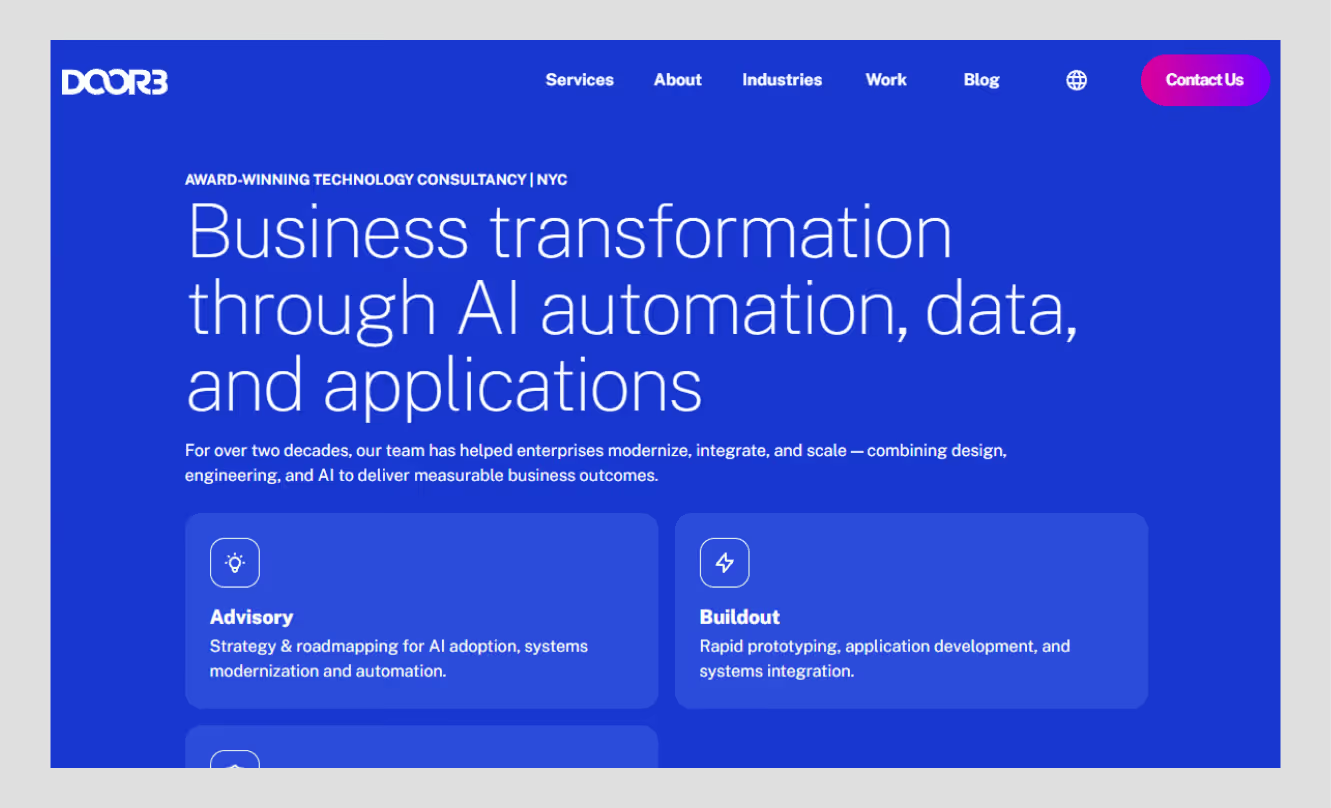
Website: door3.com
What They Do: An independent technology consultancy, software development, and UX design firm based in New York City, founded in 2002. Startups and S&P 500 companies update technology.
Best For: Enterprises with legacy systems needing design systems integrated with technical modernization. A security-first design is needed in regulated industries (finance, healthcare, government).
Design System Specialties:
- Enterprise architecture with de-risked design systems.
- An architecture of security-first regulated industries.
- Patterns of integration and migration of legacy systems.
- Integration API design with component libraries.
- Governance (HIPAA, SOC 2, and PCI DSS frameworks) is compliance-ready.
- Technical modernization and integration of UX design.
- De-risking complex software projects with on-time delivery.
- Consultative style based on informed knowledge.
10. MetaLab
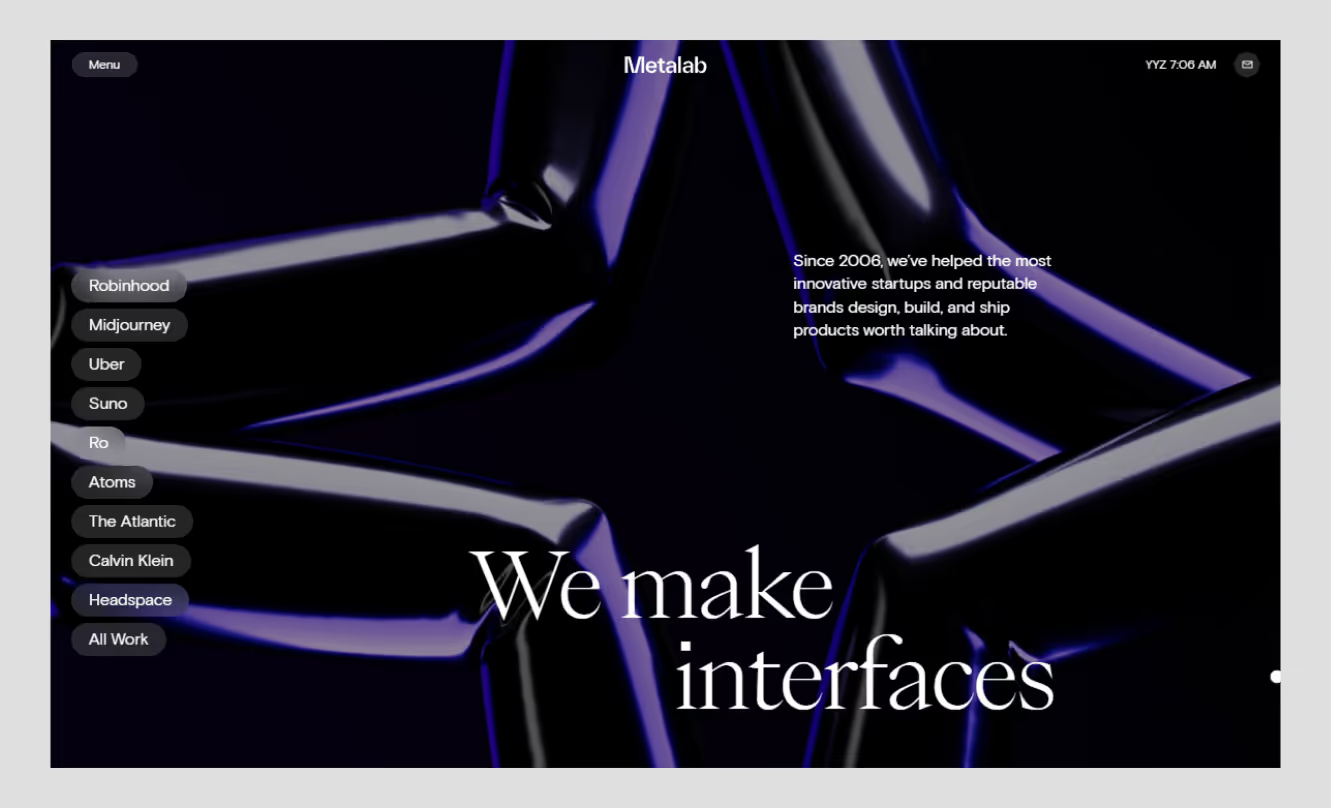
Website: metalab.com
What They Do: Established in 2006, a 160-person international design firm with representation in 17 countries across 14 time zones, in Victoria, Canada. Combines design and engineering expertise for user-centered, scalable solutions known for "juicy" UI interactions.
Best For: Scale-ups with sufficient funding (50M+ raised) creating category-defining products. Platform businesses need consumer-grade aesthetics applied to complex enterprise software.
Design System Specialties:
- Libraries of advanced micro-animations of interaction-first components.
- Systems of juicy UI patterns that drive active use.
- Patterns of collaboration tools (benchmark of tools such as Slack)
- Typography and rigid spacing systems with an obvious visual hierarchy.
- Intuitive, natural interface elements on the first click.
- Design systems with a focus on interaction design, rather than on static elements.
- Enterprise software of consumer grade.
- Scalable solutions with design and engineering knowledge.
Design system agency comparison table
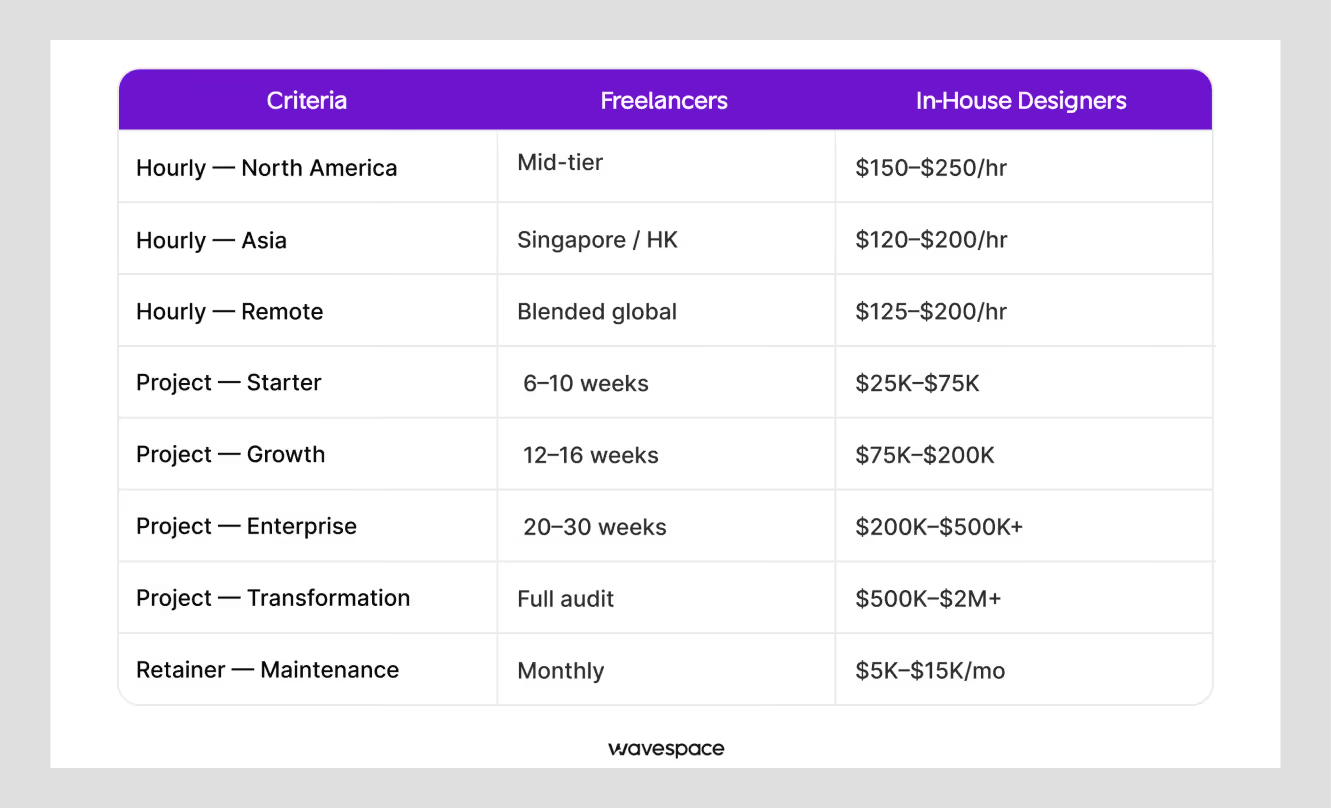
Design system pricing guide 2026
Hourly rates by region
North America:
- Premium agencies (SF, NYC): $250-$400/hour
- Mid-tier agencies: $150-$250/hour
- Junior/offshore-supported: $100-$150/hour
Europe:
- Western Europe (UK, Germany): €150-€250/hour
- Eastern Europe (Poland, Croatia): €80-€150/hour
Asia:
- India, Philippines: $75-$150/hour
- Singapore, Hong Kong: $120-$200/hour
Remote/Distributed:
- Blended global teams: $125-$200/hour
Project-based estimates
Starter System (Startups, 1-2 products):
- Scope: 20-30 components, basic documentation, Figma library
- Timeline: 6-10 weeks
- Investment: $25K-$75K
- Best for: Pre-seed to Series A companies
Growth System (Scale-ups, 3-5 products):
- Scope: 50-75 components, coded library, contribution workflows, multi-platform
- Timeline: 12-16 weeks
- Investment: $75K-$200K
- Best for: Series B-C companies, mid-market enterprises
Enterprise System (Large orgs, 10+ products):
- Scope: 100+ components, multi-brand support, accessibility compliance, white-labeling, governance framework
- Timeline: 20-30 weeks
- Investment: $200K-$500K+
- Best for: Fortune 1000, global enterprises
Transformation Program (Legacy modernization):
- Scope: Full audit, migration strategy, phased rollout, change management, training
- Timeline: 6-18 months
- Investment: $500K-$2M+
- Best for: Organizations with 5+ years of design debt
Retainer models
Maintenance & Support ($5K-$15K/month):
- Monthly component updates
- Bug fixes and version control
- Quarterly audits
- Slack/email support
Active Development ($15K-$40K/month):
- 2-4 new components/month
- Feature requests and customizations
- Weekly syncs
- Dedicated designer + developer
Strategic Partnership ($40K-$80K/month):
- Embedded team (3-6 people)
- Product roadmap alignment
- Multi-product support
- Executive workshops
Hidden costs to watch for
Migration Labor: Updating existing products to use the new system (often 2-3x the build cost)
Training Programs: Onboarding 50+ designers/developers ($20K-50K)
Tooling Licenses: Figma Enterprise, documentation platforms ($10K-$30K/year)
Accessibility Tests: WCAG compliance test of every component (15K-40K)
Internationalization: RTL language component adaptation, cultural variants ($25K-$75K).
Version 2.0: Redesigns every 2-3 years with technology/brand improvements (50% of original cost)
Budget Rule of Thumb: Spend 30-40% of initial build cost on maintenance, governance, and evolution each year. A system with a cost of 200K will require between $60K and $80K/year in investment to remain healthy.
Choosing your design system partner
In 2026, no enterprise will be able to compete without design systems. The 10 agencies described here represent various philosophies:
- Speed + outcomes: Wavespace, Superside
- Enterprise scale: R/GA, MetaLab, Ramotion
- Cost efficiency: CodeTheorem, ProCreator
- Niche areas: COBE (European/automotive), Door3 (regulated industries), Clay (fintech/premium).
Your next steps:
- Evaluate condition: Survey available design resources, detect pain points.
- Measures of success: What will be the business results of the investment?
- Select 3-4 agencies: Find an agency that fits your industry, budget, and time.
- Request discovery workshops: 1-2 week paid engagements to test chemistry
- Review proposals: Don’t just check on the pretty slides-evaluate methodology, team structure, maintenance plans.
- Pilot: Develop a system of 1-2 products, validate value, and scale.
One last cautionary note:
Design systems do not work as design projects. They are effective when managed as product infrastructure, which needs continual investment, management, and cultural integration.
The agencies listed here don't just deliver Figma files. They build scalable design infrastructure that compounds value over years, not months.
Ready to transform your product ecosystem?
FAQs about the design system agency

Hire an agency if: You want to get results within 2-4 months, do not know design systems, work with 5 or more products, or have a budget of $75K -500K.
Build in-house if: You have 3 or more design technologists, 6-12 months, strong Figma/code knowledge, and fewer than 3 products.
Best approach: Agency builds foundation (12-16 weeks), trains your team, then transitions to internal maintenance with quarterly advisin
Timeline by scope:
- MVP (20-30 components): 8-12 weeks
- Full system (75-100 components): 16-24 weeks
- Multi-brand enterprise: 24-36 weeks
- With migration: Add 50-100% to the timeline
Typical 16-week breakdown: Weeks 1-2 (audit and strategy), Weeks 3-6 (design tokens and foundations), Weeks 7-12 (component library), Weeks 13-14 (documentation), Weeks 15-16 (training and handoff). Plan for 6-9 months of adoption and refinement after launch.
Top ROI industries:
SaaS/B2B (10x ROI): Multi-product portfolios benefit from consistency and faster shipping.
Financial Services (8x ROI): Regulatory compliance and trust require systematic design approaches.
Healthcare (7x ROI): HIPAA compliance and accessibility standards demand design systems.
E-commerce (6x ROI): Consistent checkout flows increase conversions by 15-30%.
Enterprise Software (5x ROI): Complex workflows need standardized patterns, reducing developer rework by 60%.
- UI Kit: Static Figma/Sketch files with pre-designed components. One-time download costing $0-$500. Best for small projects and freelancers.
- Design System: Design, code, documentation, and governance of a living ecosystem. Continuous updates with version control. Custom prices around 25K-$500K and above. Best for enterprise products and multi-team organizations.
Basic analogy: UI kit = purchasing IKEA furniture. Design system = hiring an architect for a modular building.
Four maintenance pillars:
Version Control: semantic versioning (v2.3.1), document changes, and graceful sunset notices (6 months).
Contribution Workflows: Develop RFC process, establish approval gates, develop proposal templates, and conduct monthly governance meetings.
Health Monitoring: Conduct quarterly audits, monitor adoption metrics, survey users, and find components that are not in use.
Continuous Improvement: Quarterly bug fixes, bi-annual new components, annual major updates, and team training.
Budget: Spend 20-30 percent of the initial build price per year. A 200K system will require $40K-$60K/year maintenance (0.5-1 FTE or agency retainer).

More related blog
Have a Project? Let’s talk!







.png)



Francisco, CA 94105, United States



































.avif)