The Ultimate 2026 guide to rebranding costs for businesses



Rebranding is one of the most crucial steps for a business. No matter the size. It's like revamping/changing into something new. Like a fresh new engine with more horsepower. A new coat of paint and wraps. Better handling and breaks all at the same time.
While it might sound exciting to rebrand, there are many caveats to it. Many questions arise in the minds of business owners. Such as, "How much does a rebranding cost?" "Which type of rebranding should I do?" or "Is this a good time for rebranding?"
Understanding your rebrand budget is about more than just looking at a price tag. It is about knowing what you need to increase the value of your business's reputation.
In this guide, we will break down every possible expense of rebranding. From the $500 logo to the $100,000+ corporate transformation, in order to help you plan for success.
Why understanding rebranding costs matters
Importance of budgeting for a rebrand
Budgeting is important for every size of business. It's the simple act of matching your expectation with your bank account. Without proper budgeting, a rebrand can quickly get out of hand.
Many owners start rebranding with a "simple logo change". Slowly ends up spending thousands on other things that they didn't see coming at the beginning.
Prevent resource waste
Many brands spend too much on other things that don't matter at first. These things are like high-end physical items (office stationery), while their website is broken and unusable. A budget scope helps to focus and better control your money where it has the most impact.
Predictable cash flow
Depending on the size of a business, rebranding can take from 3 months to years. Knowing beforehand that you need to pay for design or web development helps you manage the company's cash flow without stress. This helps to not waste money on a $10,000 bill in a month when sales are slow.
Internal buy-in
When you show a clear budget to your partners or investors. They are more likely to support the project for knowing the path. It shows you are acting with expertise and care.
Avoiding uncontrolled expansion
A project that grows bigger and bigger without a plan can be a major issue. A budget keeps the project focused on the original goals.
Financial stakes of a successful vs. a failed rebrand
A rebrand is an investment technique, but like any other investment, it has risks. Doing it well will lead you to healthy growth. Doing it poorly will bleed you of money.
Confusion cost
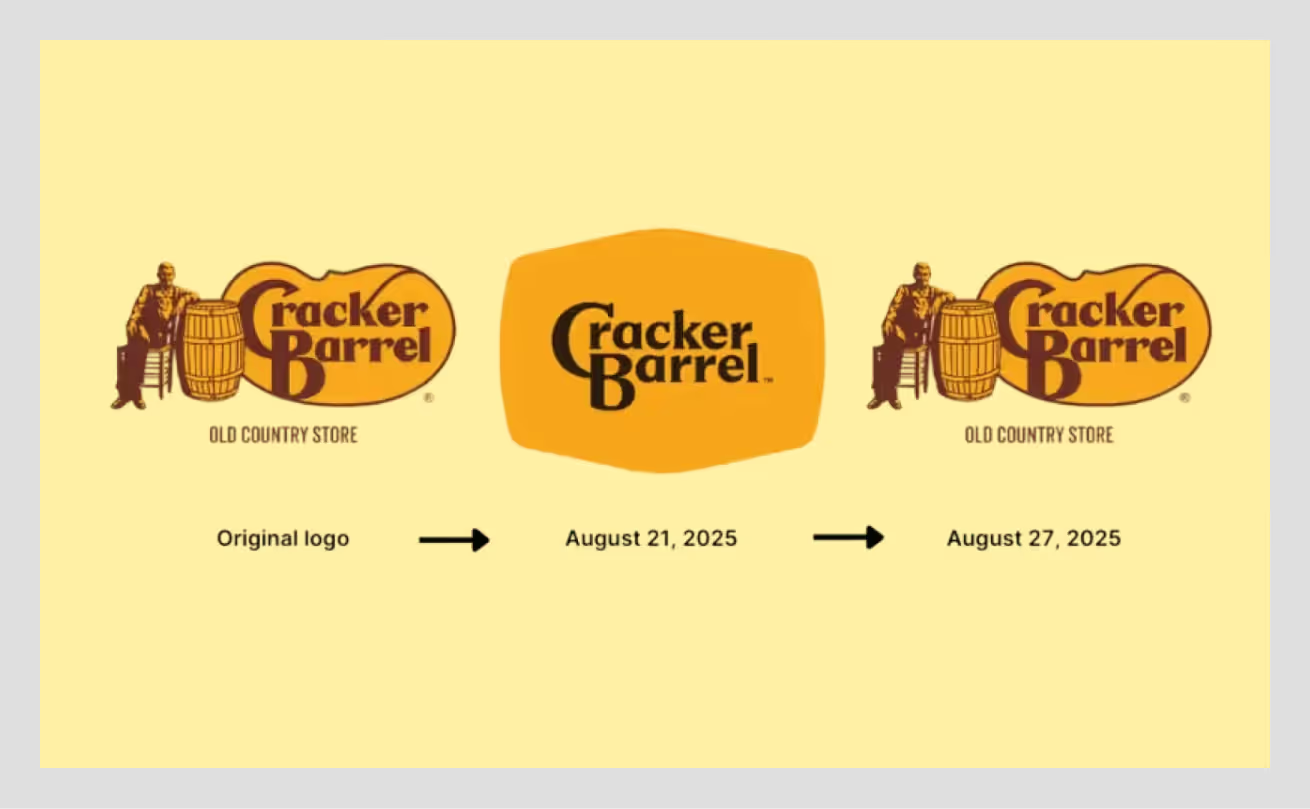
If you change your brand but don't explain it well to your customers, you lose brand equity, as Cracker Barrel did. Cracker Barrel lost nearly about 100 million due to branding mistakes.
Brand equity is the value and trust you earned/built over the years. Customers feel betrayed when they don't recognize you after rebranding. Or rebranding goes another direction. Then they go to your competitors because customers think your ideology has changed. Your brand has new owners.
Redo penalty
Often, owners hire the cheapest freelancer they can find to save money. In these situations, If the branding is poor quality, they end up hiring an expensive agency to fix the mistakes. This ends up making the total brand overhaul cost higher. Which could have been avoided by hiring professional brand strategy consulting.
Market momentum
A rebrand by the experienced branding agency can lead to a 10% to 20% increase in revenue. By attracting a higher-paying type of customer. And increasing the retention through a strategy. A well-executed rebranding helps you charge more for your services by making your service appear higher-quality.
Wondering if rebranding is right for you? First, understand the fundamentals of what makes strong branding.
Signs your business needs a rebrand

How do you know it's the right time to spend money on branding or rebranding? Most business owners ask this question. But there are signs, "red flags" indicating when to act.
Market relevance and visual identity
Your visual identity is the "face" of your business. Customers/users trust your brand by seeing this face. If the face doesn't fit with their expectations, the user won't trust you.
Embarrassing factor
Do you get embarrassed? While handing out your business card or when people visit your website? If true, then you need to change it immediately. You should be proud to show your visuals and feel confident to talk about your business.
Identity crisis
Ask yourself, do you look exactly like three other companies in your town? If yes, customers won't be able to differentiate why you are special. A rebrand helps you stand out. If everyone in your industry uses the color blue, maybe you should use something different.
Mobile-first design
Most of the new customers don't just show up at your place. They visit your website from their phone first. If your logo looks out of place or the website feels janky on a smartphone, it won't attract quality users. Stop using older logos, because they were made for paper. Get modern logos that are made for screens.
Brand messaging misalignment
Words matter, they stick to your business. You cannot oversell your business but deliver low. If your tagline is "we are the fastest," but your website is slow and cluttered, you have created a misalignment.
Your brand is failing if users have to spend ten minutes in exploration to understand what your business is. Your brand should explain in seconds what you do and what you provide. An expert web design agency can help you get the most out of your website.
Change in services
Suppose you started as a plumbing company, but now transitioned to full home renovations. Now, if your brand only talks about pipes, you are not attracting new customers, meaning losing customers = money. You are missing out on a big chunk of renovation jobs because you aren't telling them.
Attracting wrong people
If you want high-paying "Premium" clients but your branding looks "Discount," you will always struggle to raise your prices. You are attracting people looking for a bargain. Not the people who are looking for the best service.
Business growth or market expansion
Business transition and growth require brand changes. You cannot stay in the same "line" if you have grown twice as big. You need to visually show your changes/upgrades. Branding has an amazing psychological effect on people. Branding can make people believe a product has changed without actually changing.
In this aspect, branding will give you a significant advantage if you manage to achieve both of them.
New horizons
Moving from a local shop to an online store requires a more professional, "global" look. A local look might work in your neighborhood, but it won't work in another state.
Merger
When two companies merge, there is often a "culture war". A new, shared brand acts as a middle line. It creates a fresh start for both teams and shows the world you are one single, unified, strong unit.
Starting from scratch instead? Our branding packages offer structured plans for new businesses.
Types of rebranding and budget impact
Not every rebrand is the same. There are three main "levels" of change depending on their size and type. Choosing the right level is the best way to control your rebranding costs.
Brand refresh vs. Brand reboot vs. Full overhaul
Brand refresh (A new look):
- What is this: Most common type of branding. With a brand refresh, keep your name and basic mission. But you update your looks. Including a color palette, cleaning up or updating the logo, and changing to new fonts.
- Who it’s for: Successful businesses that need to change their old look, behind the times, or need to appeal to newer customers.
- Brand refresh cost impact: Lowest of the three. Most of your existing assets stay the same. Businesses don't need to change their legal name or web domain.
Brand reboot (Total renovation):
- What is this: Businesses keep their name, but change their message and entire visual style. You might change how you talk and behave to customers and what you promise them.
- Who it’s for: Companies moving into a new market territory or trying to reach a younger audience.
- Brand reboot cost impact: Medium out of these three. You will need new strategy documents, new images, visuals, and a total website update.
Full overhaul (A changed entity):
- What is this: It's a big change. Brand overhaul often consists of a new name, new logo, new font, new slogan, new strategy, and new mission. From A to Z, everything changes for a business.
- Who it’s for: Companies with a bad reputation. Or undergoing a massive change in leadership where the old name no longer aligns with the new vision.
- Brand overhaul cost impact: Highest of these three. It requires legal fees for the new name, new trademark, new papers, and a total replacement of every sign, every physical item, and document.
Comparison table of Brand refresh vs. Brand reboot vs. Full overhaul
How the rebanding scope affects cost
The cost of branding changes with the scope and size of the business. Branding or Rebranding of a small coffee shop will cost less, since it has fewer components. However, the cost will increase if the branding is for a chain restaurant business.
Project size
A small local shop at one location will pay much less than a global corporation with 50 shops/offices.
Strategy vs. Visuals
Just changing a logo is a "visual" change. Visual change costs less. On the other hand, researching the market and changing your entire message is a "strategic" change. Strategy costs more than a visual change. Because it requires experts to interview your customers, study the competition, and conduct complete research.
Key components of a successful rebrand (cost breakdown)
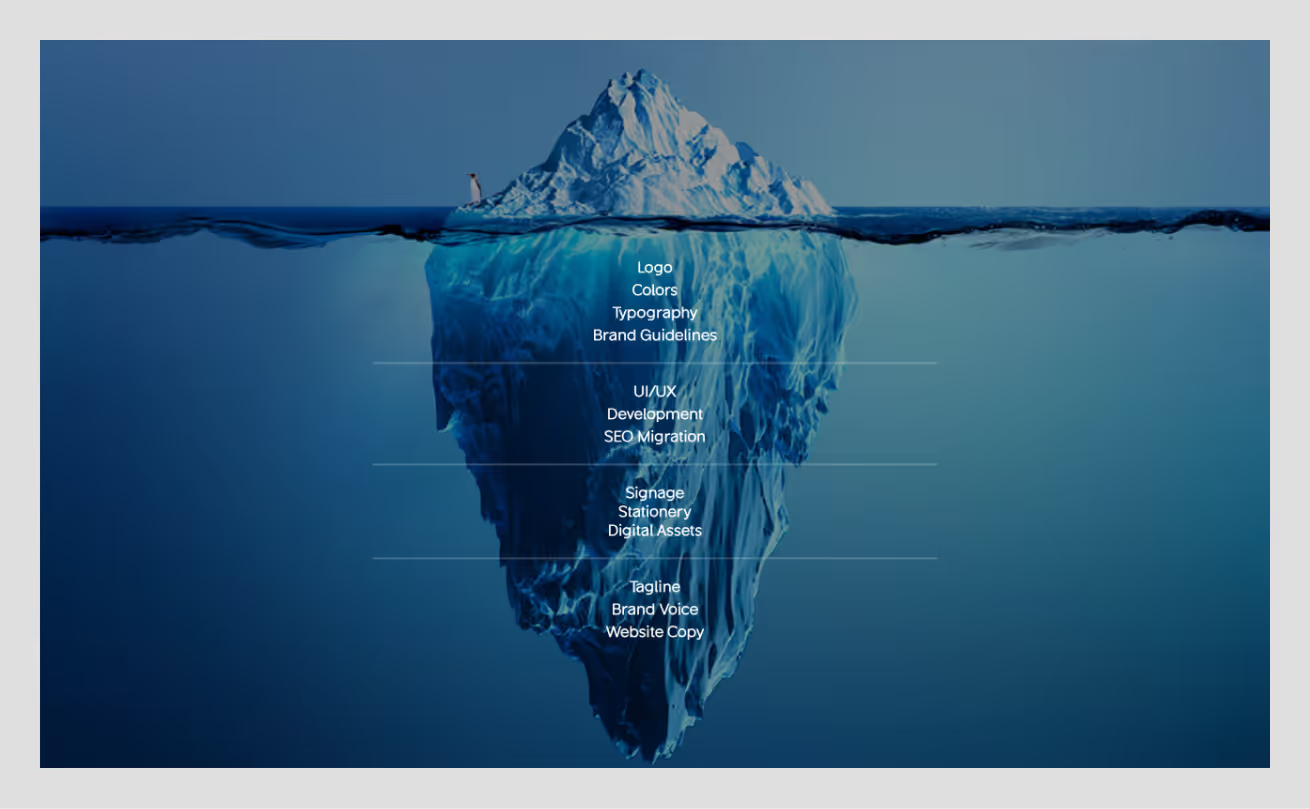
You must be wondering, why does branding cost this much? A simple logo change or website change shouldn't cost this much. Let's find out where the money actually goes in a typical rebrand.
Logo and visual identity
A logo is just the start of branding. Just like the tip of an iceberg. A full visual identity branding includes everything customers see on digital or physical brand assets.
Primary and secondary logo: You need a main logo and a smaller version for other mediums like websites, Instagram icons, pens, or stamps.
Color palette: Color is important; it visually tells a story. How a business stands and its presence. A set of 3–5 colors represents your brand's "mood." Blue color makes people feel trustworthy. While red feels energetic.
Typography: Looking at fonts lets users know what type of business it is. Fonts need to match and should be easy to read. Using "Script Fonts" for a consultant firm is a terrible idea. Using a proper font-family & professional font makes you stand out.
Brand guidelines: A brand "rulebook" is often 10 to 50 pages. It tells everyone how to properly use the logo. Which includes a set of specific rules to keep the logo consistent.
Typical cost: $1,000 to $15,000 for small to mid-sized firms.
Website redesign
Your website is your digital storefront. A well-designed website is important. People visit your website more than they come to the physical office. Getting a professional to design your website is the right choice.
UI/UX design: User Interface (how it looks) and User Experience (how it works). A good UI/UX designer knows how to turn every visitor into a customer. They ensure users don't get frustrated and leave your site to get service from others.
Development: Building the "coding" part of the web design. Complex sites with stores, member logins, or custom calculators cost much more than a landing page design.
SEO migration: It’s one of the hidden costs of rebranding. Just changing your website address (URL) without a plan will lead you to lose your spot on Google. Regular customers will have a hard time finding the business. You need an expert to "point" the old links to the new ones.
Typical cost: $5,000 to $50,000+
Marketing materials or collateral
Rebrand comes with the need to update everything a customer touches. And the cost of marketing collateral varies depending on the need and size of the business.
Stationery: Business cards, letterheads, and envelopes. These physical items are an essential part of business, even if your business is centred around the digital world.
Signage: Office signs, stamps, car stickers, shop banners, employee uniforms, and more.
Digital assets: Email signatures for employees, PowerPoint (presentation) templates, and Social media (LinkedIn, Facebook) banners. All of these things make sure your team looks unified, and your brand stays consistent.
Typical cost: $1,500 to $20,000+
Copywriting and messaging
A rebranding only works when the messaging of the brand is on point. Messaging is the words you use to tell a story and influence people to sell a service. If visuals(image) are attractive but words are out of place, any type of rebrand will fail to meet expectations.
Taglines: A short, catchy, memorable line that makes you different.
Brand voice: Tone of the brand. It can be witty, serious, casual, sarcastic, or corporate. A great branding agency comes with copywriting. It helps you find brand voice & tone. This way, every email and ad sounds the same.
Website copy: Rewriting every page of your website to match the new look and tone.
Typical cost: $1,000 to $15,000+
Stills & video assets
Stock images (photos you buy/license online) look low-effort and scream unoriginality. No one believes a brand that uses stock images. Stock images decrease the value of a business. Getting help from 3rd-party for custom photos increases trust value.
Headshots: People like to watch real people behind a business. It creates an intimate human connection. Professional photography of leadership teams boosts trust.
Product shots: High-fidelity image of the product you sell. Users don't trust photos that look cheap or taken from online, as it gives a cheap vibe.
Brand video: Video is the best way to let people know about your new direction and look. A 2-3 minute video trailer to show who you are now.
Hidden cost of rebranding
Many believe hiring any branding agency will do the job 100%. The total bill for the branding process will cover all of the costs.
However, this is never true (it depends on business or brand type). There are many hidden costs that come with rebranding. This is the reason a proper analysis and budgeting is the ideal way of finding out the cost of branding.
Some of the hidden costs of rebranding are:
Employee training & Internal rollout
Your employees are your walking brand ambassadors. If they don't believe in the change, they don't look changed, nor will customers.
Brand books: Printing or sharing digital guides so everyone knows the new rules, tone, and approach.
Team merchandise: New badges, shirts, or pens get the team excited. It makes employees feel new and gives motivation for a new chapter(brand identity).
Training: This costs money in lost hours. Taking time away from usual work and explaining to employees about a new vision.
Customer communication & retention
Ad: You have to get your word out, and it can be expensive. You may need to spend cash on Facebook or Google ads. This is a perfect way to tell old + new customers, "We have upgraded to provide better service. We have a new look!"
Direct mail: Send a postcard or a gift to your top 10% of clients to remind them you value them during this transition.
Legal and trademark costs
Trademark search: Making sure no one already owns & has the license of your new name, logo, or slogan. This is really important. You don't want to get sued for your new name. Getting sued will triple your rebrand budget; you'll have to pay lawyers and change everything from scratch.
Registration: Filing the paperwork with the government to own your brand.
Professional services vs. DIY approach
Agency vs. In-house vs. Freelancers
Agency approach:
Hiring an agency for rebranding is the most expensive option. However, the bright side is that agencies handle everything, from start to finish. It's the best option for "Full Overhaul" or if you want to have a stress-free transition.
An affordable rebranding agency comes with a team of experts to do the heavy lifting.
Freelancer approach:
Hiring freelancers is the middle ground. Businesses are able to hire individuals for their expertise for each part. One for the logo, one for the website. It is more cost-effective than getting an agency. But the downside is that owners have to oversee the progress and act as the Project Manager. Founders have to explain their goal to each freelancer.
In-house approach:
This is the most money-saving option out of the three. But if you already have an expert design team in-house. It gives more "freedom" and costs less than the other two options. But this option stops your team from doing their tasks. It creates friction. Because if your designers are focused on rebranding, they won't be able to do regular work.

Step-by-step rebranding strategy & budget plan
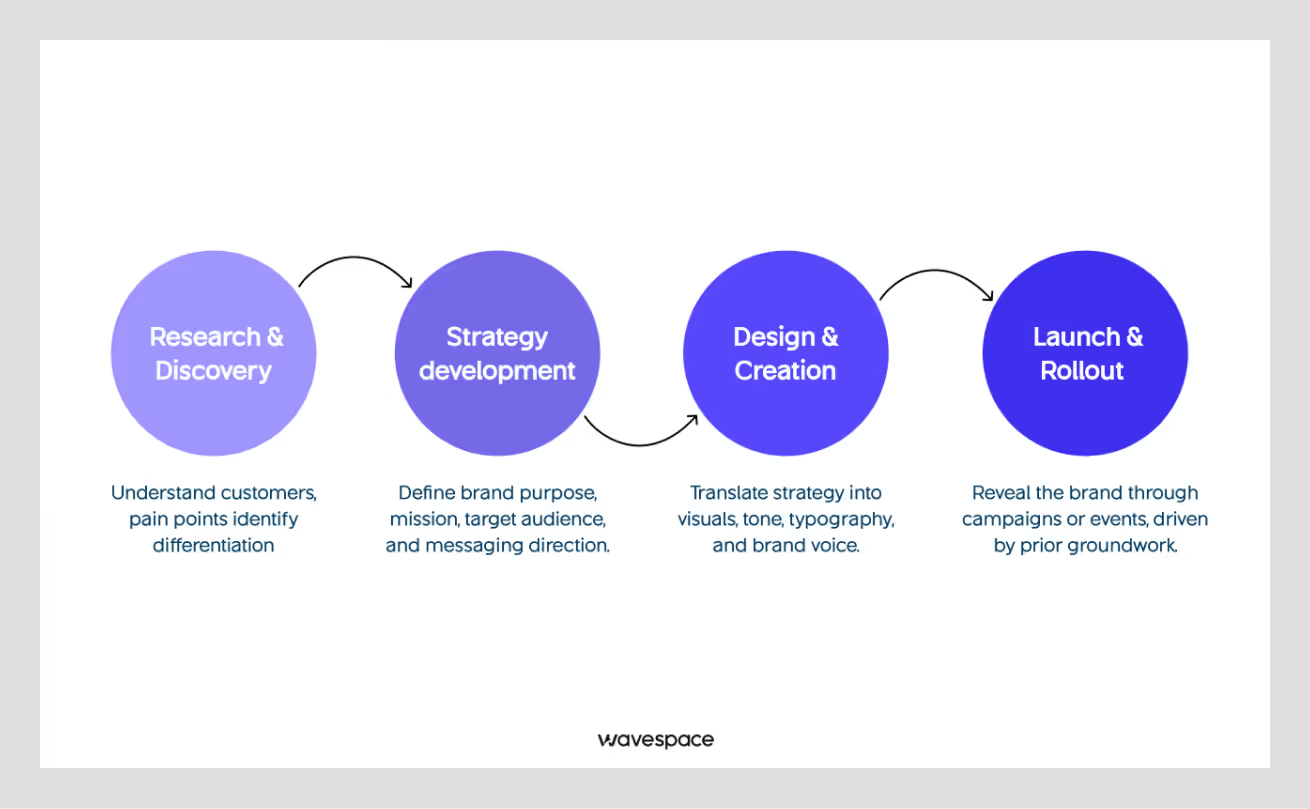
Four phases of a rebrand
Phase 1: Research & discovery
Talk to your customers, try to understand them. What do they like about the business? What do they hate? Check on your rivals. Competitor analysis is important for branding. What colors are they using? What are their taglines/slogans? You must be different to stand out.
Phase 2: Strategy development
This is the chassis of your brand. Set your mission & target. List down your mission statement. "What is the purpose of the business?" Analyse your target audience. "Who is your cookie-cutter perfect customer?" and "How do you want your message to be delivered?"
Phase 3: Design & creation
It's the phase where the researcher takes all the gathered information to the designers to start articulating your brand voice via design, color, font, tone, graphics, & writting.
Phase 4: Launch & rollout
Big Reveal stage. It's a critical stage that depends on the previous 3 stages. Success is dependent on previous stages. Here, companies officially announce their new look with a celebration. Whether it's a party or an online marketing campaign to tell people about the change.
How to allocate costs for maximum ROI
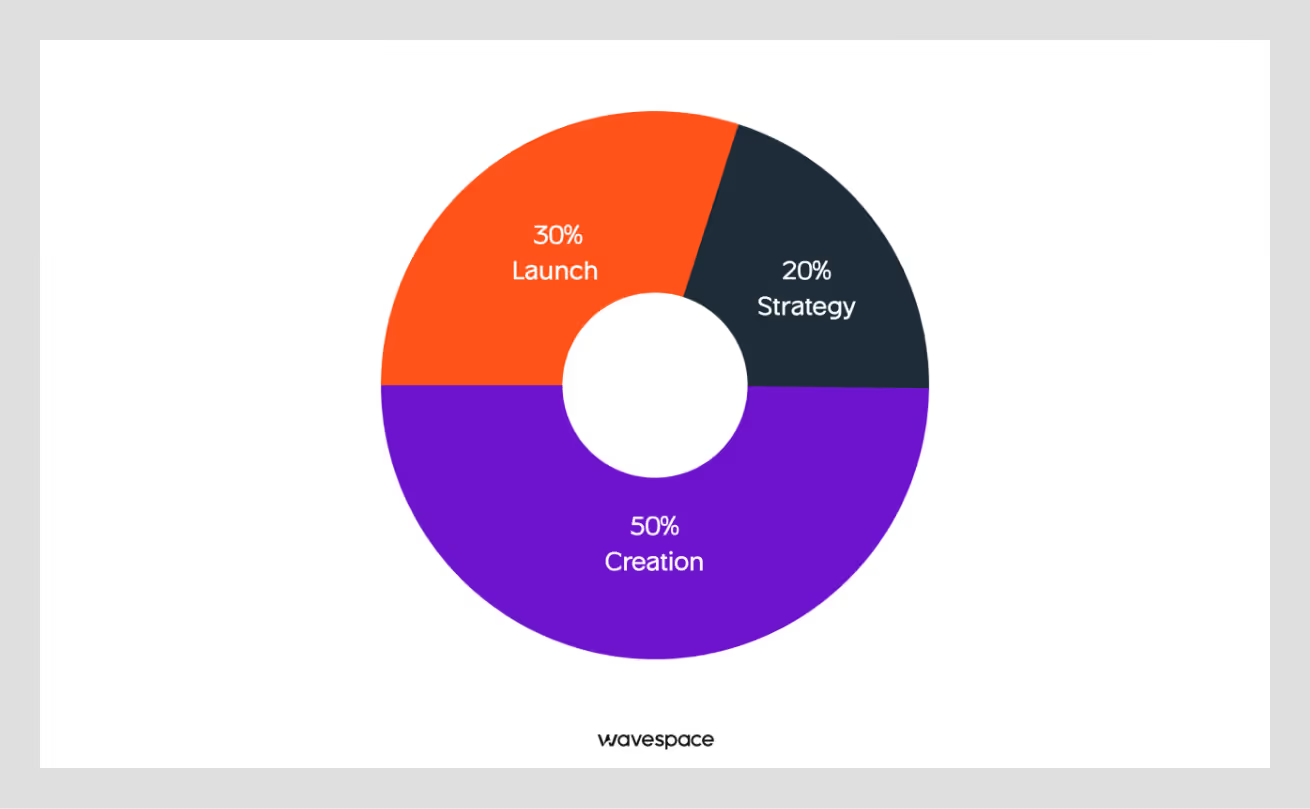
- 20% on Strategy: IMPORTANT! Always invest in strategy. It is a foundation of success. A good strategy gives better results. If you don't know who you are, the best branding suit in the world won't save you.
- 50% on Creation: Your website and social media are the places where customers spend 90% of their time to buy from you.
- 30% on Launch: Ensure people actually see the change. Use campaigns to promote your branding. Old Customers and new users need to know about the changes.
Cost-saving rebranding strategies without quality loss
The rebranding process can seem an expensive task, but you don't need to be a 7-8 figure business to have good rebranding. Check out our small business guide. Any business can have great branding by focusing on the need.
- Prioritize high-impact elements: If you don't want to spend too much, try spending on the website first. Do other elements, such as the "Marketing Collateral", a few months later.
- Phased rollouts: Don't change everything on day one. Change your digital brand first. After that, change your physical signs. Phased rollout spreads the branding budget over years. However, it needs a perfect strategy to be successful.
- Self-service tools: Use design and website services that allow you to do it yourself. These tools aid in maintaining professionalism. With it, you won't need a designer or a developer to make tiny changes.
Measuring ROI & tracking the success of branding
Many wonder since rebranding is just changing the look or visuals. How to measure? If the money spent on rebranding is well executed. To measure that, you need to peek inside the data.
- Customer feedback: Observe what users are saying, "I love the new look" or "It looks fresh"? Are they sharing your new website? Are they leaving positive reviews?
- Sale frequency: When customers trust you, they say "yes" sooner. Measure the ratio of before & after branding. Does it take less time to make a sale? A strong brand package builds user's trust more than ever.
- Smooth sailing: A well-executed rebranding changes the perspective of the business. An up-to-date brand attracts better talent. Check if it is easier to hire new people. People want to associate with companies that are winning.
- Simple math: If your branding costs you $20,000. And helped you get three new "premium" clients in less than a year, rebranding paid for itself.
In the end
Rebranding is not just a logo or color change. It is a strategic business decision that changes the overall brand value. It affects how existing & new customers see and trust your business. However, without proper planning, it can waste cash and damage your reputation.
The cost of rebranding mainly depends on the business goal and size; it can cost thousands to millions. Because rebranding is an investment, not an expense. The right branding agency helps to make sure this investment doesn’t go to waste.
However, business owners should move with caution before spending a single dime. They need to understand why they need rebranding. What things need to be changed, and how they will help in business growth.
Rebranding is another opportunity to grow. When done right, rebranding can attract new premium customers.
Comparing rebrand vs new brand costs? See our pricing breakdown for first-time branding.
Frequently asked questions

Brand identity design services provide a unified company/brand visual. It consists of logo, color palette, typography, and brand tone. It also includes brand guidelines, templates, and other brand collateral, as well as print materials. It helps to shape the brand and maintain consistency across multiple media.
A recent good example of a successful rebrand is Microsoft Office. They unveiled their new logos without any controversy. Instead, they received praise from all over the world. Another great example is Honda Motor Co, they have finally changed their logo after 24 years.
Rebranding costs something along the line of $5,000 to 100,000+. However, this is very dependent on the size and scope of the business. A larger company comes with more elements and complexity. On the other hand, it also varies depending on the person/agency doing the rebranding.
A full rebrand usually takes 3 to 12 months. This takes time because a rebranding needs time to conduct brand research, a full-proofing strategy, create a visual identity, and update digital and physical items. Also, larger brands train their staff to align with the new vision and business tone.
Yes, it is possible to rebrand on a tight budget. For rebranding on a limited budget, businesses need to focus on must-have components. Set priority on units that need a quick rebrand and gradually work on them. Instead of hiring an agency, get a freelancer to rebrand piece by piece.

More related blog

Have a Project? Let’s talk!



















.png)



Francisco, CA 94105, United States





































.avif)