How much does branding cost for a small business



TLDR;
A small business branding in the US is usually between $500 and $30000, and above. At the bottom is DIY branding, middle is freelancers, and agencies deal with full brand systems at the top. The correct budget is not about the size of the company, but about the development objectives, competition, and the intended use of the brand. When branding influences sales, hiring, trust, or pricing, then it becomes not optional. It is made into a business choice.
Branding cost insights from small businesses
Across small businesses, branding costs usually follow clear patterns. Most founders do not struggle with whether branding matters. They struggle with when to invest and how much is enough.
A common pattern is that early-stage businesses underestimate branding costs because they connect branding with a logo. As the business grows, branding expands into messaging, consistency, and trust. That is usually when costs increase.
Budgets also tend to shift once a business begins serious marketing efforts. Paid ads, content, partnerships, or sales teams can quickly expose brand gaps. What felt “good enough” at launch often stops working when visibility increases.
Another surprise for many founders is that branding costs are not one-time. Brands evolve as offers, audiences, and positioning change. Small businesses that plan branding in phases usually spend less over time than those that rush or redo everything later.
In practice, the most effective branding spend is not about doing more. It is about doing the right level of work at the right stage.
Before investing in branding, understand why it matters for your business growth.
What does branding mean for a small business?

To a small business, branding is the way people identify, comprehend and have confidence in the business. It influences customer first impressions and expectations even before they make a purchase.
Branding is reflected in the appearance, sound, and positioning of a business. It determines whether one will click, call, register, or simply walk. Customers find it easier to make decisions where the brand is strong. A weak one brings about hesitation.
At its core, branding answers three questions:
- Who are you?
- Who is this for?
- Why should anyone care?
Branding vs logo design
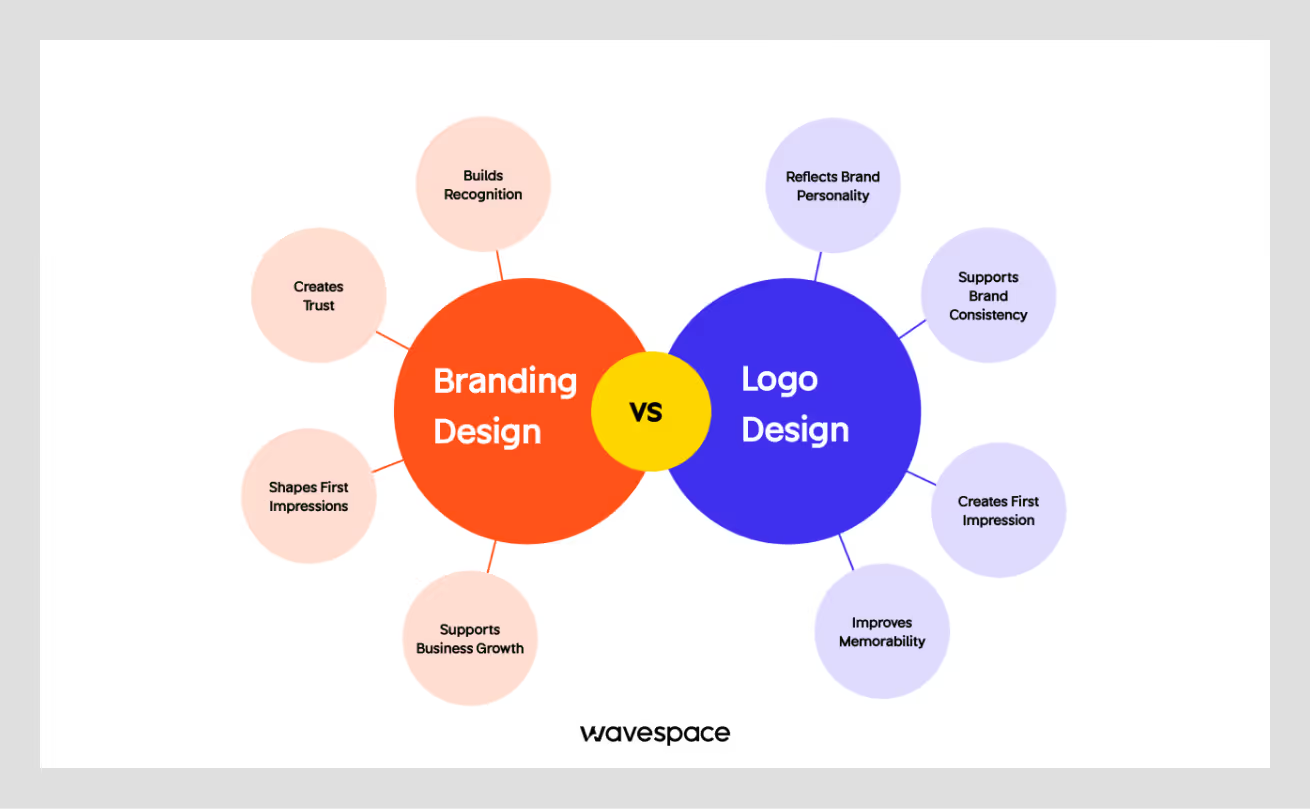
A brand is a logo, not the brand. A logo is a visual symbol. Its system is branding. Such a system consists of colors, typography, messages, tone, and uniformity across all touchpoints. A lot of small businesses begin with a logo since it is easy to touch and inexpensive.
Over time, they realize a logo alone cannot carry trust, clarity, or differentiation. Without supporting elements, the logo has little impact. Branding works when everything feels connected. The logo supports the brand. It does not replace it.
Brand strategy vs brand identity
Brand strategy defines what the brand stands for. Brand identity defines how the brand shows up visually.
Strategy covers positioning, audience, messaging, and differentiation. Identity turns those decisions into visuals like colors, typography, and layout.
When strategy is missing, identity often looks polished but feels empty. When identity is missing, strategy stays invisible to customers.
Small businesses get the best results when strategy leads, and identity follows. This creates alignment instead of guesswork.
What small businesses actually need at each stage
At the initial level, clarity is better than polish. One can start with a plain logo, simple visuals, and straightforward messages.
Consistency is important at the stage of growth. Marketing expands. New channels appear. Having a clear brand identity makes the business appear authoritative and familiar anywhere.
At the scaling phase, branding helps in providing trust at volume. Recruitment, collaboration, pricing, and growth rely on a brand that seems to be established and trustworthy.
Branding work is the right work, which is done depending on where the business is, not where one wants to be overnight.
Average branding costs for small businesses in the US

The cost of branding in the US is diverse due to the variety of scope, quality, and levels of experience. The majority of small businesses lie between agency-based and DIY.
Price variation is the largest based on the depth, customization, and long-lasting use rather than quality design.
DIY branding costs
DIY branding usually costs $0 to $1,000.
This will involve logo creators, templates, and simple design tools. Time cost is high, and financial cost is low. The founders can spend hours trying out variants without any clear guidance.
DIY is ideal when working with extremely young businesses or side projects. It is prone to failure in marketing, sales, or growth.
Freelancer branding costs
Freelancer branding typically ranges from $1,000 to $8,000.
This typically incorporates a unique logo and restricted brand components. Quality is an issue that requires the experience and process of the freelancer.
The missing element is usually strategy, documentation, or scalability. Most freelancers are more visual, but they lack deeper brand thinking. That can lead to rework later.
Small agency branding costs
Small agency branding usually starts around $8,000 and can exceed $30,000.
At this stage, branding is more organized. Strategy, identity systems, and guidelines are often included. The work is designed to scale across marketing, sales, and digital products.
Costs increase because agencies involve research, collaboration, and long-term thinking. The outcome is usually more durable and consistent.
Subscription and package-based branding
Subscription and package-based branding sits between freelancers and agencies.
The costs are commonly budgeted every month and are dedicated to incremental delivery. The model is effective with small businesses that require flexibility without incurring a high initial investment. Such arrangements enable brands to develop over time and maintain a stable cost.
What is a brand identity design service?
A brand identity design service is concerned with designing the visual system that presents a business in all customer touchpoints. It converts brand choices into uniform images, which individuals can identify, recall, and rely on.
For small businesses, brand identity design is often the step that moves the brand from “functional” to “credible.” It ensures that the business looks intentional, not improvised, whether someone visits a website, sees an ad, or opens a pitch deck.
This service is not about decoration. It is about clarity and consistency as the business grows.
What’s included in a brand identity design service?
One of the common brand identity design services is the visual essences that constitute how a brand appears. This usually covers a logo system with variations, a defined color palette, typography choices, and visual rules that guide layout and styling.
Depending on how the brand will be used, identity services may also include basic digital assets or UI elements. The purpose is not to create as many assets as possible, but to create a system that works across platforms without constant redesign.
When done well, brand identity design reduces confusion and saves time long-term.
What brand identity design is not
A brand identity design is not simply a logo. It is not a website alone, nor is it marketing copy or advertising creative.
Most small businesses mix identity design with single project design work. A one-off design is a solution to one problem. The identity design forms a reusable system. Without that system, brands usually face the issue of inconsistency as soon as they expand.
Understanding this difference helps businesses avoid rework and wasted spend.
Brand identity vs brand strategy
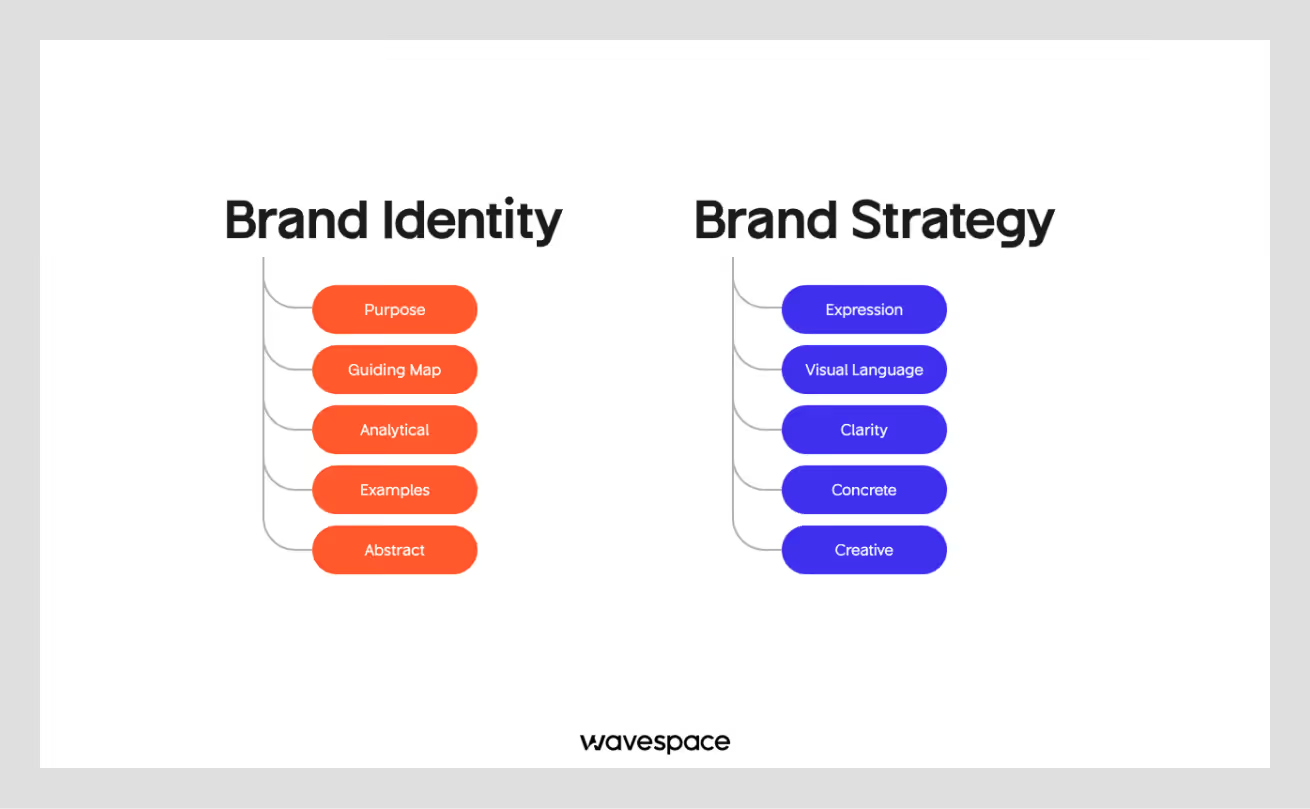
Brand strategy provides direction. Brand identity determines expression.
Strategy provides answers to positioning, audience, and differentiation. Identity transforms those decisions into visuals that the customers can see and identify.
The identity with no strategy is often polished, yet empty. A strategy without identity is invisible.
They are both important, although they play different roles and are not to be confused.
When a small business needs brand identity design
A small business usually needs brand identity design when it starts to grow beyond its initial launch phase. This often happens when marketing expands, multiple people begin creating content, or the business wants to look more established.
If branding starts to feel inconsistent or unclear, identity design becomes a practical investment rather than a cosmetic one.
Branding cost breakdown by service
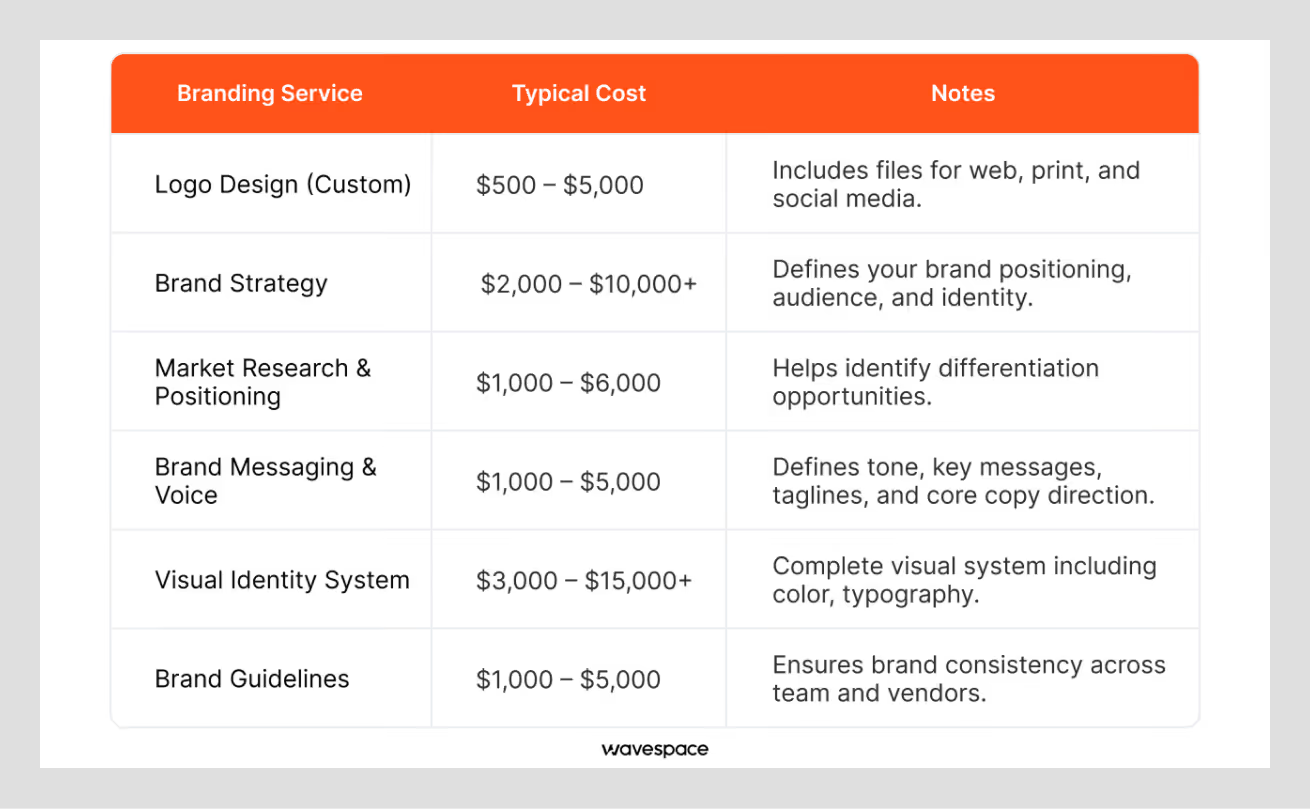
Branding is more reasonable when you divide it into separate services. A small business may just require one or two pieces initially, followed by the rest as the business expands. These prices are typical of US pricing, but the ultimate price will be determined by scope, quality, and work performed by whom.
Logo design costs
Logo pricing is based on whether you would use a template-based or invest in a custom design solution. It is not merely the difference in style. It has an impact on flexibility, originality, and the utility of the logo in practice.
Template-based logos
Template logos are usually free or up to $500. This involves logo generators, marketplaces, and ready-made marks that can be slightly edited. These are options that are good when you are in a hurry and you are experimenting with your business.
The tradeoff is that template logos often look similar to other brands, and they rarely come with a full system. If you plan to run ads, build a strong web presence, or compete in a crowded market, you may outgrow this approach quickly.
Custom logo design
Custom logo design typically costs $500 to $5,000. At this level, you pay for original concepts, refinement, and a design that matches your industry and audience.
A proper custom logo also brings some actual files to use, such as web, print, and social media files. A logo is better even than when related to a larger identity system and not in isolation.
Brand strategy costs
A brand strategy typically costs between $2,000 and $10,000 or more. Strategy work helps a business in establishing its identity, customers, and market position. This is where branding is made not subjective or inconsistent.
Research and messaging are two key cost drivers within the strategy.
Market research and positioning
The range of market research and positioning work is usually between $1000 and $6000, depending on the level of research. It examines competition, customer expectations, and category norms, and how your brand will be differentiated.
Even minor research can save small businesses from expensive errors. It can also help you understand what you want to focus on for your site, in your pitch, and in your marketing.
Brand messaging and voice
Messaging and voice can range between 1,000 and 5,000. It includes the explanation of the brand in simple language, including any key messages, tone, taglines, and even the general direction of core copy on the website.
Powerful messaging removes resistance. It makes customers know what you do fast, and your team is consistent in ads, sales conversations, and content.
Visual identity system costs
A visual identity system typically costs $3,000 to $15,000+. This is where branding becomes a usable system rather than a set of isolated assets. It typically consists of color, typography, and reusable design elements to make it all look similar.
This is the upgrade that makes the marketing feel whole to many small businesses. It is also time-saving since teams no longer need to recreate designs on a weekly basis.
Brand guidelines and documentation costs
Brand guidelines usually cost $1,000 to $5,000. Guidelines are the rules of use of the logo, colors, typography, spacing, image style, and other visual regulations. When more people touch the brand, they make it the same.
It will be especially useful when you hire contractors, hire a marketing person, or begin to work with a variety of vendors. Documentation can avoid confusion and redundancy.
Website branding and design costs
Website branding and design typically range from $2,500 to $25,000+. Pricing depends on how many pages you need, how custom the design is, and whether the project includes copy, SEO setup, and responsive design work.
In small businesses, the brand is frequently focused on the site. It is the place where customers build credibility, make option choices, and make decisions to contact or purchase. This is why the price of a site work is usually higher than most people expect.
Want a ready-made solution? Check out our breakdown of the best branding packages and what you get in each.
What factors influence branding costs the most?

The cost of branding is not arbitrary. Two companies may demand the same service and get very different quotes. It is often a matter of context rather than quality.
The following factors justify why the prices of branding increase or decrease among small businesses.
Business size and revenue stage
Branding scope directly depends on business size and revenue-stage. New businesses usually require minimal requirements to start. Their branding efforts are not polished but rather straightforward and functional. When revenue increases, branding expectations evolve.
An expanding company requires stability in marketing, sales, and recruitment. The more touchpoints, the greater the assets, the rules, and the coordination. That increase in scope naturally raises costs.
When the brand must support scale, and not just launch, branding becomes more costly.
Industry and market competition
Other industries require more branding than others. Brands in competitive markets have to work harder to be different and earn trust. This usually demands further research, better positioning, and more polished images.
Branding is easier in less competitive sectors. The brand will not have to struggle so much to draw attention. Branding will have to work harder in competitive spaces, and this is more expensive.
Competition not only increases price but also the bar.
Scope and depth of deliverables
The cost of branding increases with the increase in deliverables. A basic logo and a color scheme are much cheaper than a complete identity system with a message, documentation, and web resources.
Quality is as important as quantity. Light branding can include only images. The deeper branding involves strategy, rationale, and long-term usability. Greater depth results in greater time, greater thinking, and greater collaboration.
A clear scope prevents surprise costs later.
Level of customization required
One of the largest cost drivers is customization. The template-based solutions are cheaper as they utilize existing structures. Custom branding is more expensive, as it begins afresh.
The art of custom work is an explorative, refining, and decision-making process. It also develops a brand that fits the business and not the business to fit the brand.
The more unique the brand needs to be, the higher the investment.
Timeline and urgency
When timelines are reduced, branding costs are higher. Rush work demands concentration, fewer cycles, and quicker decisions. That usually comes with increased prices.
A flexible schedule makes it possible to plan better and think more. Costs are more predictable when branding is perceived as a long-term investment rather than a last-minute job.
Time pressure almost always increases spending.
How branding costs differ by industry in the US
Industries also differ in branding costs. Various industries have varied trust, competition, and branding demands.
Service-based businesses
Branding can cost service-based businesses between $2,000 and $10,000. Trust and clarity matter more than visual complexity. Customers would want to know what the service is and why it is trusted.
Typically, branding involves messaging, credibility, and a clean visual, which helps in sales conversations.
Saas and tech startups
SaaS and tech startups can use between 5,000 and 25,000+ to brand. These are companies that operate in saturated markets and depend on the Internet greatly.
Branding may involve strategy, identity systems, and alignment of websites. Branding has to help with onboarding, pricing, and positioning as the product expands.
E-commerce and DTC brands
Branding costs are usually $3,000 to $20,000 on e-commerce and DTC brands. The role of visual appeal is huge since customers make prompt decisions.
The concept of branding is differentiation, product presentation, and consistency of ad, packaging, and the site.
Healthcare and professional services
Professional services and healthcare typically spend between $5,000 and $15,000 on branding. Branding decisions are influenced by trust, credibility, and compliance. Design is always conservative, yet understanding and professionalism are very important. Words and similarity are equally important as images.
Local and brick-and-mortar businesses
Local companies typically invest between $1500 and $8000 in branding. Branding helps to gain visibility, recognition, and trust in a local market.
Logos, signage, and a strong website presence are common priorities. The goal is to look established and reliable rather than flashy.
How much should a small business spend on branding?
There is no single “right” number for branding. The correct budget is based on the business growth intentions and the extent to which the brand will impact revenue, confidence, and consumer choices.
For most small businesses, branding should be viewed as an investment that supports marketing, sales, and long-term positioning rather than a one-time design expense.
Revenue-based budget benchmarks
One general guideline is to invest 5 to 10% of the annual revenue in joint branding and marketing. Branding is typically a part of that sum, particularly during the initial years.
Very early-stage businesses often spend closer to the lower end of the range. As revenue grows and competition increases, branding typically becomes a larger line item. Businesses that rely heavily on perception, trust, or digital channels often justify higher spend.
These standards are not boundaries, but guidelines. The actual issue is not how comfortable it feels but how much branding helps growth.
Early stage vs growth stage spending
In the initial phase, branding expense must be on clarity. A minimal logo, simple identity, and a clear message can be sufficient to enter the market and test it. Excessive early spending may slacken progress without enhancing performance.
At the growth stage, branding expenditure changes to consistency and credibility. Marketing scales, more individuals are the faces of the brand, and customers are more comparative. Investment in a stronger identity and positioning can usually be rewarded at this stage.
What makes sense at each phase depends on how visible the business is and how quickly it plans to scale.
When spending less is smart
And when it becomes expensive later. Spending less on branding is smart when the business is still validating its offer, audience, or pricing. Lightweight branding allows flexibility and faster iteration.
It becomes expensive later when weak branding creates confusion, lowers conversion, or forces a full rebrand too soon. It is usually more expensive to replace a messy visual, a message, a system, than it is to do it right at the right moment. It is not about spending more, but spending appropriately.
Cheap branding vs professional branding
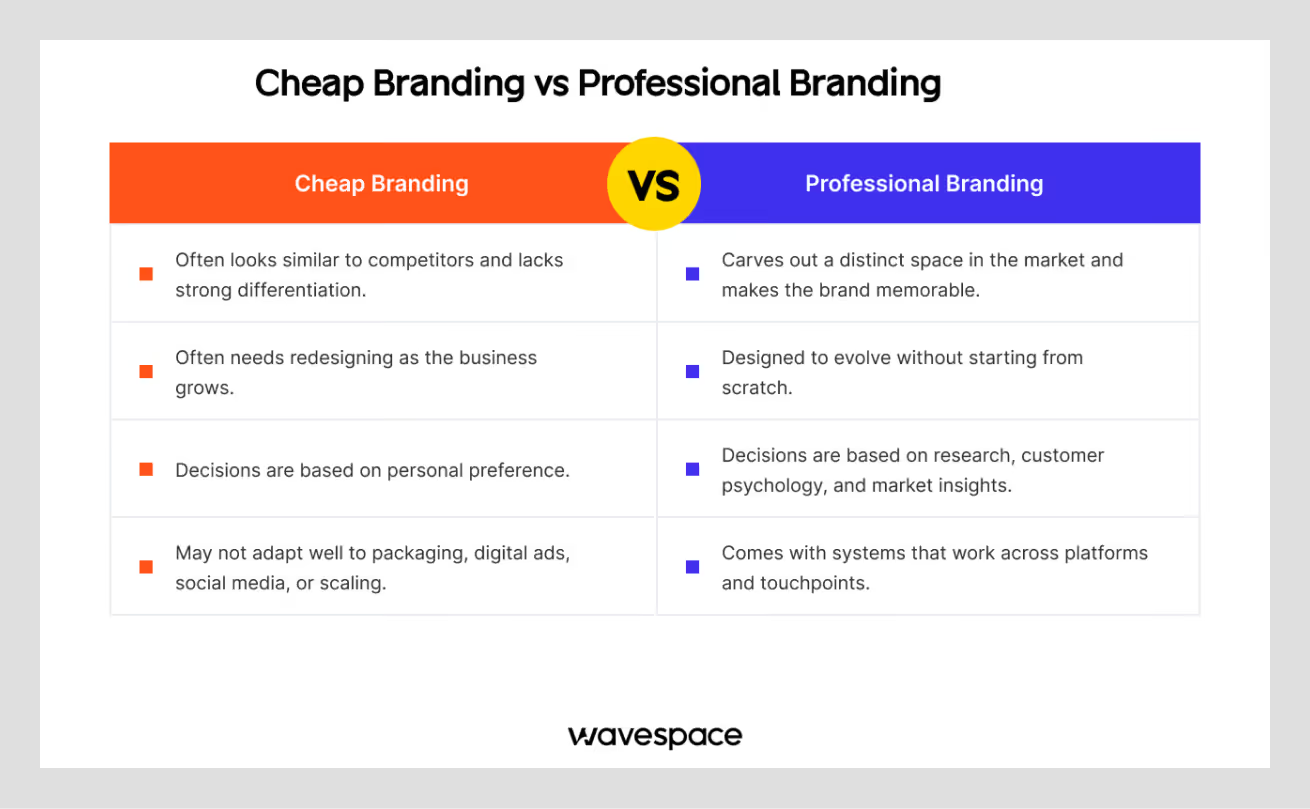
Price is not the only difference between cheap and professional branding. It is outcomes, durability, and how well the brand supports growth.
DIY and low-cost branding options
Low-cost and DIY branding solutions are cheap and easily available. They are suitable for testing ideas or launching speedily with a low risk. The tradeoff is limitation. These solutions are not always strategic, original, or scalable.
The brand might begin to feel generic or inconsistent with the growth of the business. Low-cost branding is a quick-fix solution that hardly helps in the long run development.
Mid range freelancers
Mid-range freelancers provide a compromise between price and quality. The pricing is also diverse depending on experience and process. Here, quality differs the most. Other freelancers offer well-considered work and a reason.
Others focus mainly on visuals without addressing brand clarity or scalability. Choosing well in this range requires careful evaluation.
Agency-led branding
Agency-based branding is usually more expensive, as it is more organized, multi-lensed, and long-term oriented. Agencies frequently bring strategy, identity, and execution to a unified system. The result is more likely to be constant, repeatable, and reliable.
Agency-led branding can lower the amount of rework and long-term expenditure of businesses planning to grow, although the initial investment will be more expensive.
Is branding worth the cost for a small business?
Branding is a justified investment for most small businesses when it aids trust, clarity, and decision-making. Branding does not make demand, but affects the selection of persons once they know about you.
When the branding is effective, it eliminates friction. When it does not succeed, it silently damages marketing, sales, and growth.
Impact on trust and credibility
One of the largest reasons why branding is important is trust. Before customers have any idea about a product or service, they usually judge the business. Lack of visual inconsistency, clarity in message, and professional appearance are indicators of legitimacy.
Even if the offering is good, a poor or unsteady brand can create the element of doubt. A clear brand helps customers feel confident that the business is established and reliable. This perception gap is important to small businesses that are competing with larger players.
Branding does not replace trust built through delivery, but it strongly influences first impressions.
Impact on conversion and sales
Branding influences the ease of action choice. Positioning makes customers aware of what the business is about and who they target. The same images and messages cause less hesitation in purchasing.
Customers will hesitate when branding is not clear. They compare more. They delay decisions. That friction manifests itself in reduced conversion rates, longer sales cycles, and a reduced response to marketing.
Good branding will not make a sale, but poor branding can easily prevent a sale.
Long-term roi and brand equity
Branding generates long-term value. Marketing becomes efficient as recognition increases. Customers are more likely to come back. This is the cumulative brand equity.
It is hard to quantify in the short run, but it builds up. With clear brands, businesses incur lower costs to gain the same outcomes as their competitors that have weak brands. Branding is a long payback game, and it takes consistency to pay off.
Common branding budget mistakes small businesses make
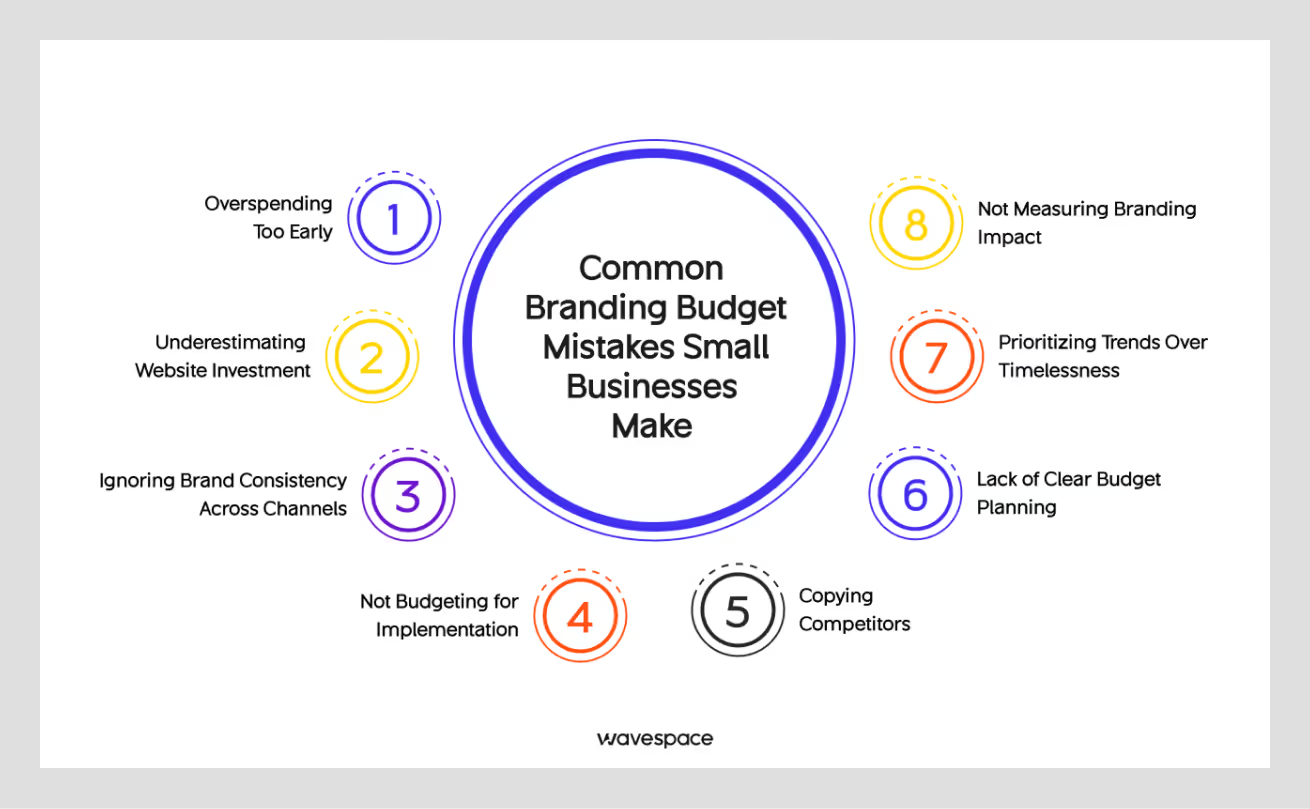
Many branding problems do not come from underfunding alone. They come from spending in the wrong order or for the wrong reasons. Avoiding these mistakes can save both time and money.
Paying only for a logo
A brand can not be supported by a logo only. When companies invest in a logo only, they tend to receive images that are not contextual and disjointed.
The logo is not effective without reinforcing factors such as messaging, color, and usage guidelines. It frequently results in multiple redesigns in the business.
Skipping strategy to save money
Skipping a strategy may feel efficient, but it often creates confusion later. Without a strategy, branding decisions become subjective and inconsistent.
This usually leads to rework when messaging does not resonate or when the brand fails to stand out. The cost of fixing unclear positioning is often higher than addressing it early.
Choosing based on price alone
Selecting branding services by price alone is risky. Low-cost alternatives may be effective under certain circumstances, yet they may be shallow and short-term oriented.
The lowest cost is not the most cost-effective in the long run. It is not only affordability that adds value to clarity, usability, and durability.
Rebranding too early or too late
Early rebranding may use up resources before the business gets to know the audience. Late rebranding may destroy reputation and reduce progress.
Timing matters. Branding must be business-driven, rather than a response to frustration and pressure.
Existing businesses looking to refresh? Rebranding has different cost factors; read our complete guide.
How to reduce branding costs without sacrificing quality
Cutting branding expenses is not equal to cost-cutting. It involves making intelligent choices on timing, scope, and reuse. Branding is not expensive; many small businesses spend a lot of money doing it wrong. The goal is to get value early without creating problems later.
Phased branding approach
A gradual strategy divides branding work over time rather than committing everything to a single huge project. This enables companies to invest only what they require at the stage.
At the initial stage, it is concerned with clarity. Simple visuals, straightforward messages, and simple consistency are usually sufficient.
Branding may grow as the business grows to cover more in-depth identity systems, documentation, and refinement. The phasing will lessen risk and allow branding to develop in line with actual business requirements.
MVP brand systems for small businesses
The MVP brand system contains just the minimum to run smoothly. This can be a single logo system, a specified color palette, typography, and simplified rules of use.
This will prevent overbuilding. It develops a framework without committing the business to the decisions it will eventually outgrow. MVP brand systems work well for small teams that want to stay flexible while still looking professional. The system can grow without beginning anew as the brand matures.
Reusing and scaling brand assets
One of the simplest methods of managing cost is reusing brand assets. When branding is designed as a system, assets can be applied across websites, social channels, marketing materials, and sales documents without constant redesign.
Scaling becomes cheaper when teams stop reinventing visuals. Clear rules and reusable components reduce design time and prevent inconsistency. This is where proper branding saves money in the long run.
Real-world branding cost examples from small businesses
It is useful to show the practicality of branding costs using real-world examples. These situations are typical of small businesses in various phases.
Local service business
- What they thought branding would cost:
They would spend a couple of hundred dollars on a logo and simple images.
- What they actually paid:
They also spent about $3,000 to $5,000 on a logo, basic identity, and basic web renewal.
- What changed after branding:
The company appeared older. The number of queries grew, and the customers became more confident with pricing. Sales dialogues became more direct and brief.
Saas startup
- What they thought branding would cost:
They had prepared a simple logo and a landing page, with branding not exceeding $5,000.
- What they actually paid:
They invested $10,000 to $20,000 in brand strategy, identity, and website alignment.
- What changed after branding:
Messaging became clearer. Onboarding improved. The marketing performance became more stable as the brand became more consistent and credible.
E-commerce brand
- What they thought branding would cost:
They assumed branding would mainly involve product visuals and packaging.
- What they actually paid:
They spent $5,000 to $15,000 on identity design, packaging direction, and website branding.
- What changed after branding:
The brand was more prominent in advertisements and on the webpage. The conversion rates were getting better because the experience was less fragmented and purposeful.
Consultant or personal brand
- What they thought branding would cost:
They expected branding to be optional or minimal.
- What they actually paid:
They spent between $2000 and $7000 on messaging, identity, and a professional site.
- What changed after branding:
The consultant gained more appropriate clients, greater confidence in pricing, and less time to explain their value.
How to choose the right branding partner for your budget
Selecting the appropriate branding partner is just as important as determining the appropriate budget. An equal sum of money could work wonders, depending upon who has it and how he gets about.
It is not about seeking the lowest price. It is to seek a partner whose process, experience, and scope are consistent with your level of business.
Freelancer vs agency decision framework
Small, well-defined projects will usually suit freelancers. They are best applied in situations where the scope is small and the business has gained a sense of direction. The prices are generally lower, yet the outcome is heavily dependent on the experience and process of the individual.
Agencies are better suited for broader branding needs that involve strategy, identity systems, and long-term use. They typically cost more because they involve multiple perspectives and structured workflows. For businesses planning to grow, agencies often provide more durable outcomes.
The correct decision is based on the level of direction, organization, and expandability required by the business.
Questions to ask before hiring
It is a good idea to pose some direct questions before contracting a branding partner. These show how the partner thinks and how his/her approach suits you.
What are their definitions of the success of a branding project? Inquire about deliverables and decision-making methods. Question how the work will increase with the business.
Clear answers signal a clear process. Vague answers often lead to confusion later.
Red flags to watch for
There are indications of a bad fit. They promise quick returns without knowledge of the business. Another is the focus on visuals and neglect of strategy.
A lack of documentation, unclear ownership of files, or resistance to explaining decisions can also create problems. Branding is not to confuse, but to simplify.
Trust your judgment. A good partner should make the process feel structured and understandable.
Last lesson for small business owners
Branding expense is not a matter of designing. They refer to investing in clarity, consistency, and trust.
In the case of small enterprises, the ideal branding choices match the budget with the phase. Underfunding may lead to tension and duplication. Excessive expenditure at an early stage may slow down. The correct decision is practical and long-term.
Branding becomes one of the most valuable investments that a small business can make when it helps in the growth, credibility, and decision-making.
Branding cost faqs for small businesses

The cost of branding a small business in the US typically falls between $500 and 30,000+ depending on the extent, the supplier, and the level of business. The former is cheaper, whereas agencies are more costly in terms of strategy and scalable systems.
Yes, branding is worth it when made to enhance trust, clarity, and conversion. Good branding makes customers learn about the business and makes them more certain about the choice.
A small business branding usually has a logo, color scheme, font type, message, and simple brand rules. Advanced branding can also involve strategy, positioning, and web branding.
New startups usually use $1,000 to $5,000 on branding, not on finishes. Expenditure normally rises with the development of the business and marketing.
A logo refers to a single visual property. The concept of branding consists of images, communication, and uniformity in every customer touch-point.
Yes, DIY branding is possible at the extremely early stage. Nevertheless, the majority of the businesses exceed DIY branding as marketing, sales, or competition grow.
The design of brand identity generally takes between $3000 and $15000 and above, depending on the in-depth customization and output. This is not only a logo but also a visual system.
Prices on branding depend on scope, experience level, industry competition, customization, and time frame. Greater strategy and scalability are more expensive.
Freelancers are good at small and concentrated projects. Full brand systems and long-term growth are better with agencies. The appropriate decision is based on costs and corporate objectives.
When a small business begins to take marketing seriously, feels out of place, or desires to appear more credible and established, it should invest in branding.

More related blog

Have a Project? Let’s talk!


















.png)



Francisco, CA 94105, United States





































.avif)