Top 10 user testing companies in 2026 | Best usability testing services compared
.avif)


Why user testing matters in product success
There is a point when each product faces reality. It is the moment when a real user is dropped on the screen, and they stop, smile, become confused, act, or fall asleep permanently. And the truth is simple. Whether it works or not, the user will decide the beauty of your design.
That is why user testing is one of the most significant stages of the development of a modern product. It is no longer a nice-to-have for founders, product teams, and UX professionals. It is the distinction between a product people trust and one they give up.
And the challenge is real. The majority of the teams believe that they know their users. However, once you set ten real people to work on the simplest task in your interface, you start to realize the truth. You have friction points that cannot be explained by analytics. You see through the point of discontinuity. You see how clarity, emotion, and trust influence every click.
The secret of every successful product is one thing:
A design that does not waste the time, feelings, and anticipation of the user. And that is why the selection of the right user testing company is more important than ever.
The right partner introduces sanity, statistics, compassion, and narrative into your product decisions. And in 2026, the competition between user testing companies is smarter, more AI-driven, and stronger than ever. This guide will help you navigate that world, clearly, confidently, and without the technical noise.

What is usability testing?
can attempt tasks in usability
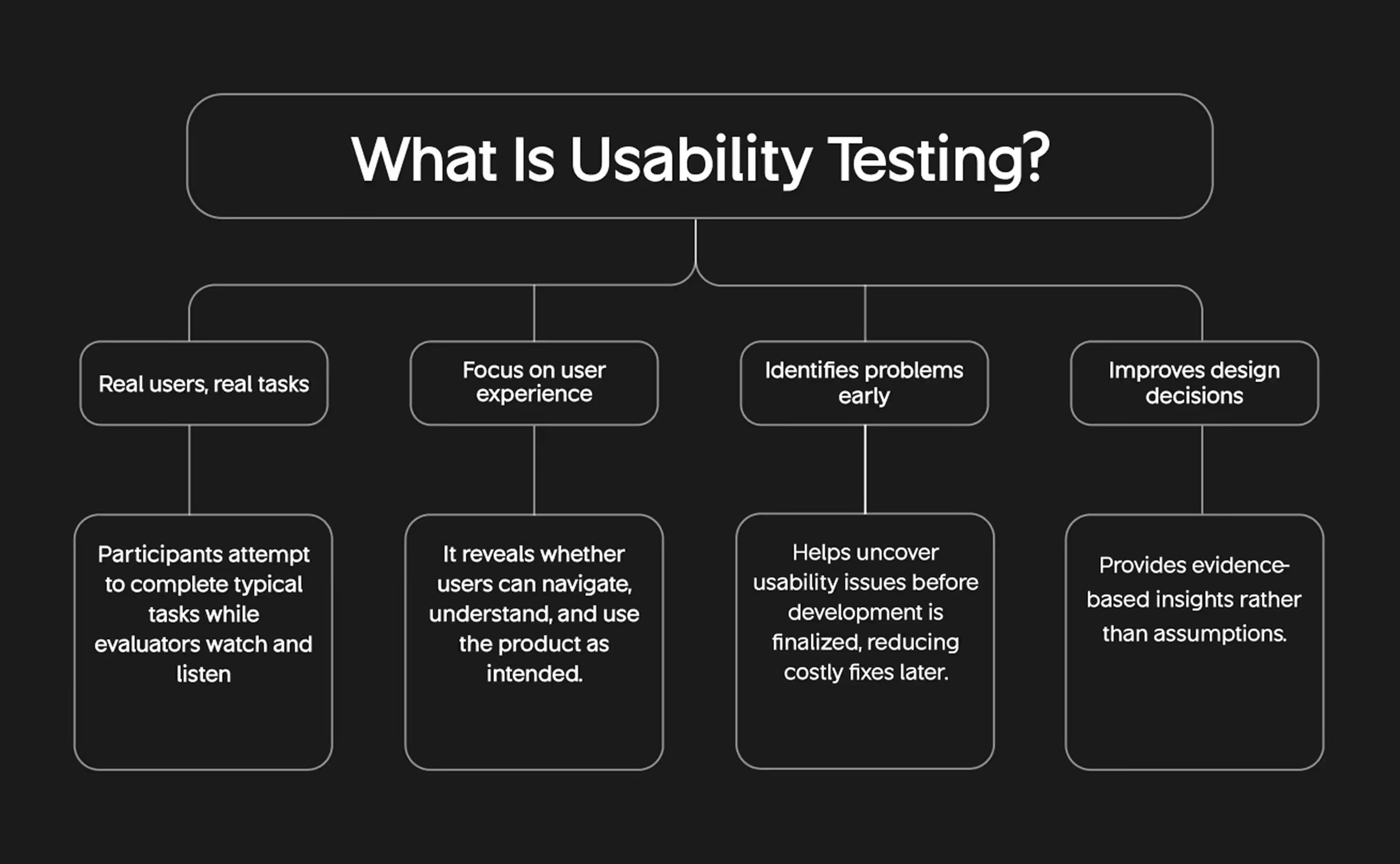
Usability testing is the process of watching real users interact with your product to understand what works and what doesn’t. You’re not just checking UI. You are finding out how users think, feel, and behave when they attempt to accomplish something.
And the beauty of usability testing is that it's brutally honest. And the beauty of usability testing lies in the fact that it is painfully honest. It breaks through assumptions and shows the difference between your lifestyle and how people live with your product.
Users can attempt tasks in usability testing, such as:
• Completing a signup flow
• Finding a product
• Exploring a dashboard
• Understanding pricing
• Checking out
• Navigating an app without assistance
You observe their behavior, their confusion, their delight, and all the silent decisions happening in their minds.
Good usability testing answers real business questions:
• Why are users dropping off on this page?
• Which part of the flow breaks trust?
• Which design convinces users fastest?
• How do different audiences respond to the same flow?
And most importantly:
What should we fix first to generate the highest impact?
This is why the world’s best SaaS, AI products, and mobile apps rely on usability testing before scaling. Because every hour spent understanding users saves weeks of rework and thousands in development costs.
User testing vs usability testing: Are they the same?
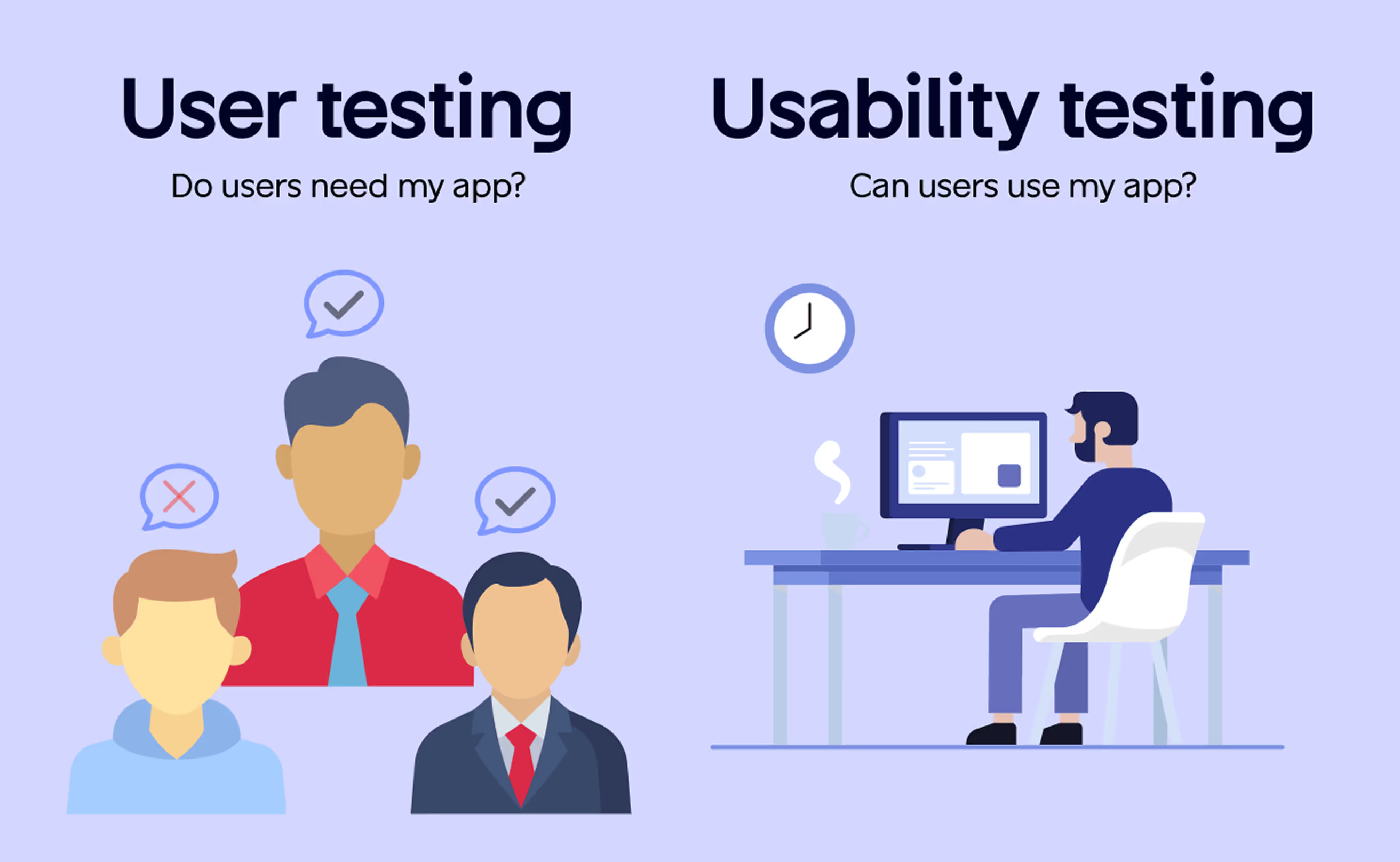
These two terms are often used together, and while they overlap, they’re not entirely identical. Understanding the difference helps you choose the right user testing company for your project.
User Testing focuses on the overall user experience. It answers broader questions like:
Usability Testing, on the other hand, focuses on task performance. It answers more specific questions such as:
Think of it like this:
User testing is the story.
Usability testing is the details of each chapter.
Both matter. And together, they reveal the full picture of product experience. This is why, in 2026, the best user testing companies provide a mix of both — so you don’t just know what users are doing but also why they’re doing it.
Types of usability testing
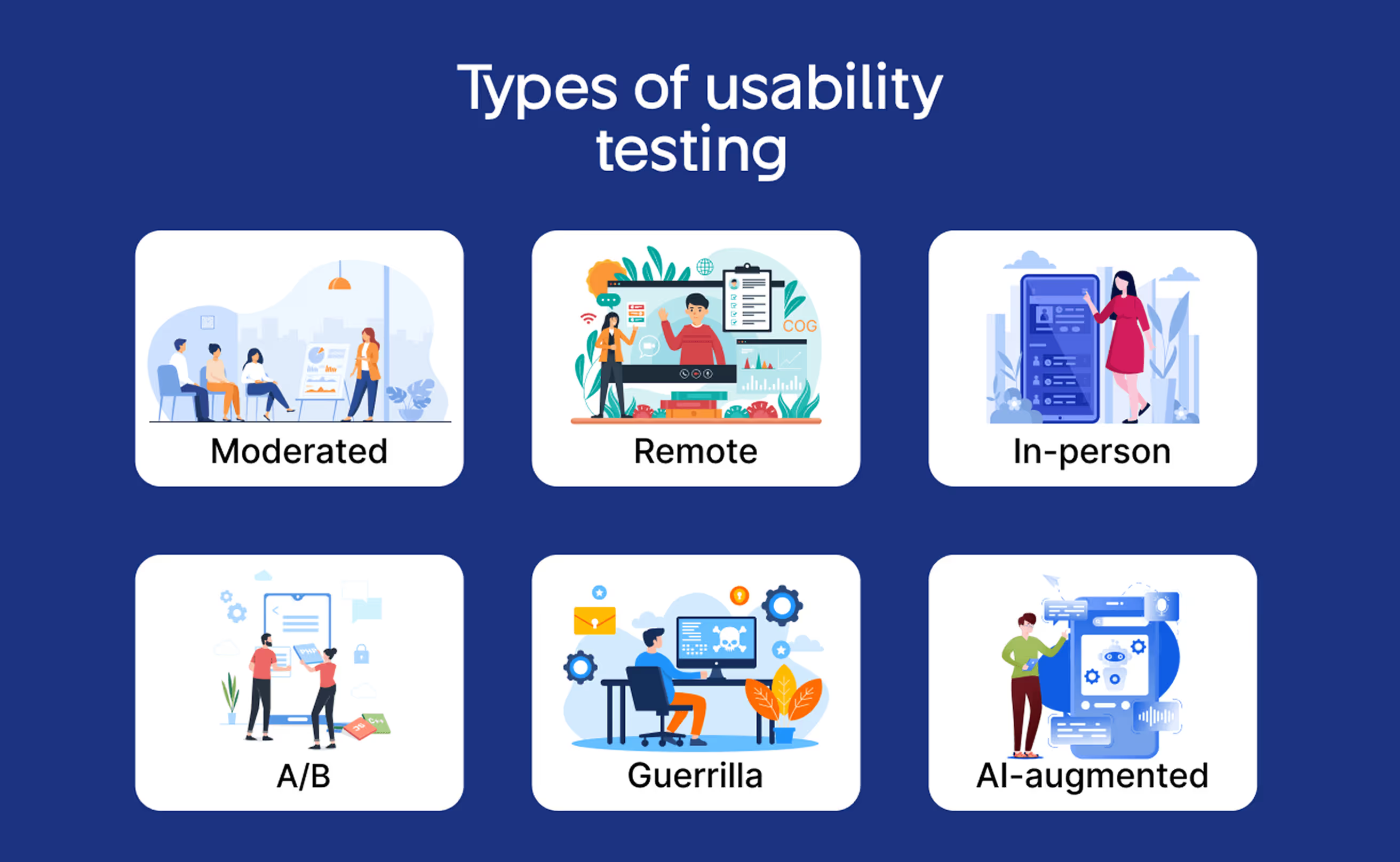
To build products that work in the real world, you need different types of testing. Because every product problem has its own flavor. And not every insight comes from the same kind of session.
Here are the main types you’ll see in 2026:
1. Moderated usability testing
A facilitator guides the user live, asks questions, and observes decisions. It suits profound learning, emotional response, and intricate streams.
2. Unmoderated usability testing
Users do things themselves, at their own time. The technique is rapid, cheap, and ideal for large sample sizes.
3. Remote usability testing
The sessions occur online, and you can test users wherever they are in the world. Ideal with SaaS, AI, and global products.
4. In-person usability testing
Best when dealing with physical products, kiosks, hardware, or other prototypes in which body language and real-world environment are important.
5. A/B usability testing
Two versions of the same design are tested by the user to determine which is better. Ideal for conversion optimization and onboarding flows.
6. Guerrilla testing
It came quickly, and feedback was gathered randomly among people in an open area. Fast, raw, and low-cost.
7. AI-augmented usability testing
A rising trend in 2026. AI analyzes sessions to detect patterns, sentiment, hesitation points, and anomalies faster.
Need a full-service partner for complex UX strategy? See our list of the Top 8 Usability Testing Consultancy Agencies You Can Trust.
They all serve a purpose, and the appropriate user testing company must advise you on which approach suits your product stage, budget, and audience.
Who needs a user testing company?

A user testing company is beneficial to nearly all digital product teams. However, it is more important to certain industries, particularly in the context where the risk in decision-making of products is greater.
1. Startups
Founders can’t afford guesswork. User testing validates your product before you pour money into development.
2. SaaS companies
Your onboarding, dashboards, and pricing pages decide whether users stay or churn. Experimentation indicates what makes conversion.
3. AI product teams
AI interfaces must feel predictable and safe. Testing helps you understand trust, clarity, and explainability.
4. Enterprise teams
Some huge companies test early to minimize security risks, compliance concerns, and internal complexity.
5. Mobile app founders
Every tap matters. Testing finds friction that analytics can’t detect.
6. E-commerce brands
One confusing step in checkout can cost thousands.
7. Healthcare, fintech, and education products
These industries need clarity, accuracy, and trust. Testing is non-negotiable.
Since whatever you make, there is one true thing: When users can’t use it, the product is at a loss.
How we evaluated these user testing companies
In order to build this guide, we employed very rigorous evaluation criteria. The idea is very straightforward: make you select a user testing firm that provides tangible, quantifiable value.
We compared both companies according to:
• Features and research capabilities
• Pricing and affordability
• Panel size and participant quality
• Reporting depth and clarity
• Use of AI and automation
• Speed of results
• Industry support (SaaS, AI, healthcare, fintech etc.)
• Moderated vs unmoderated options
• Dashboard & collaboration tools
• Insight accuracy and trustworthiness
• Real client reviews
• Practical value vs marketing claims
Want to know the reason behind hiring a user testing company? Read in detail the benefits of hiring user testing companies.
This way, you are not just picking a big name; you are picking the partner that will suit your needs.
Top 3 Picks (Quick Summary)
Our top three suggestions for 2026 are listed before getting into the entire list.
1. Wavespace
• Exceptional at turning findings into actionable UX improvements
• Strong for SaaS, AI products, mobile apps, and conversion-focused redesigns
• Perfect for teams who want both strategy and execution
2. UserTesting
• Huge participant pool
• Reliable platform for continuous testing
• Detailed video-based insights
3. Maze
• Great for rapid validation
• Surveys, usability flows, heatmaps
• Affordable for startups
These are the firms that most teams are attracted to based on their product stage, budgeting, and needs.
1. Wavespace
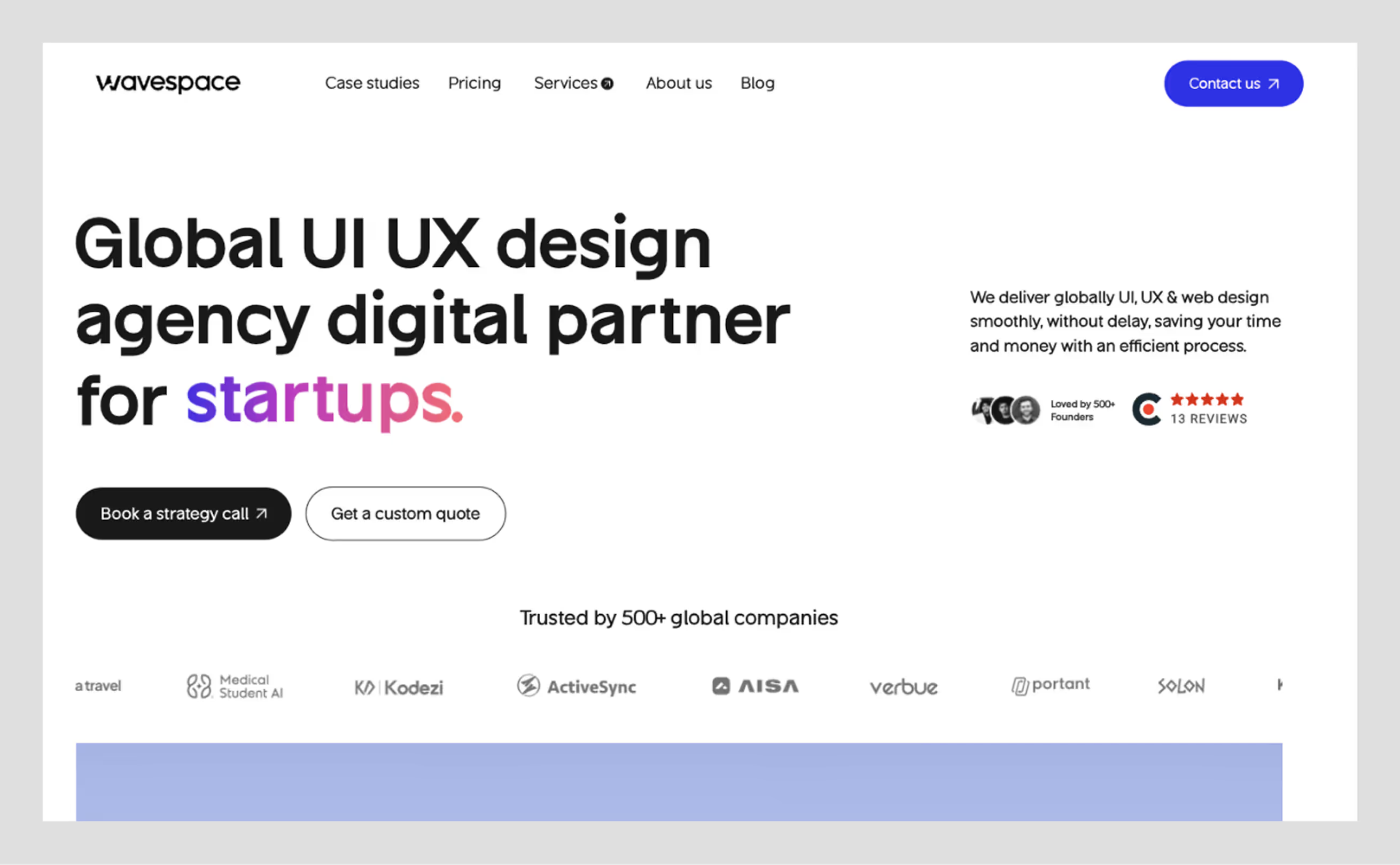
Wavespace is always a good choice when the team is seeking a user testing firm that is proficient in research and storytelling. And it is not only because of the design expertise. And it is because Wavespace treats user testing as a process, and not a checklist.
Each session tries to disclose feelings, times of stalling, psychological hurdles, and clarity possibilities. In a world where consumers demand hassle-free experiences, such kind of depth counts.
Wavespace collaborates with SaaS, AI, mobile applications, fintech applications, and growth-stage ventures. Their style does not stop at identifying problems. They put insights into practice and enhance user experience, which improves conversions, drops, and user confidence. It is because teams enjoy the fact that they do not merely produce reports. They deliver direction. They also underscore what to correct initially, its importance, and how the ultimate experience is supposed to be.
When founders and product teams require a partner, rather than a platform, Wavespace is considered part of the product team. The analytics will be based on real-world experience, rather than analytics.
Key features
- Moderated and unmoderated usability testing
- AI-driven session analysis
- UX research, wireframes, and redesign recommendations
- Emotional insight mapping
- Usability tests and heuristic analysis.
- SaaS and AI product conversion testing.
Pricing
- Custom packages based on product size.
- Affordable for startups and scalable for enterprise teams.
- AI-based consumer data platform.
2. Lookback
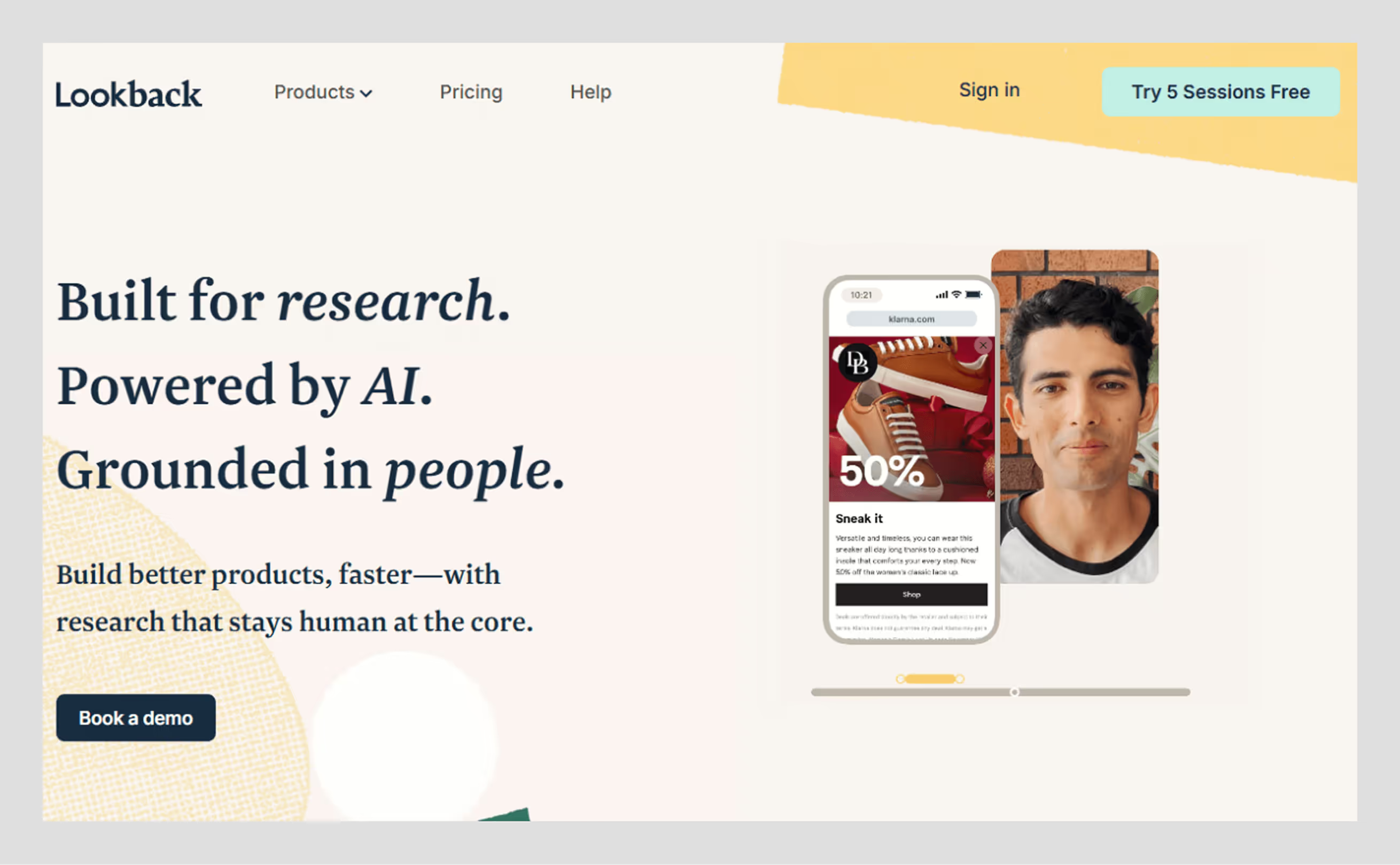
Lookback is a favorite among product teams who value real-time research. It brings teams closer to users with a beautifully simple interface that allows live moderated sessions, notes, highlight reels, and interactive analysis. What makes Lookback powerful is how it creates shared understanding. When teams watch the same user struggle or succeed, alignment happens instantly.
The platform is friendly and almost like you are sitting beside the user. And such intimacy is critical, particularly when experimental emotional streams such as onboarding, pricing, or product discovery are being tested. The streaming quality, observer seats, and time-stamped notes of Lookback make the research work collaborative and fun.
For teams launching new features regularly, Lookback helps you test continuously. It’s not just a tool; it’s a habit builder. It makes research easy enough that you stop postponing it.
Key features
- Live moderated sessions
- Real-time note-taking
- Remote user interviews
- User flow video recordings
- Team collaboration workspace
Pricing
- Mid-range pricing starting from monthly subscriptions.
- Ideal for teams that test frequently.
3. UserTesting
UserTesting remains one of the giants in the user research world for a reason. Their participant panel is huge, fast, and diverse. When you need feedback within hours from a specific audience, from enterprise buyers to mobile-first users, UserTesting delivers. And they do it reliably.
However, the key secret of UserTesting is its depth. The platform not only captures behavior but also emotion. You see facial expressions, tone, hesitation, and reaction moments that reveal the truth behind user decisions. This makes it incredibly useful for enterprise teams working on high-stakes experiences like finance flows, healthcare tools, B2B dashboards, and mission-critical apps.
UserTesting is a giant, particularly in companies that have specific research funds. And in case you have a large-scale study to run, or your processes need predictability, then it is among the safest options in 2026.
Key features
- Massive participant pool
- Moderated + unmoderated research.
- Sentiment analysis
- Task-based feedback videos
- Enterprise security + integrations.
Pricing
- Higher than average.
- Most suitable with funded teams and enterprises.
4. Optimizely
Experimentation is the best-known feature of Optimizely, yet its user testing feature has become immensely valuable to companies that use optimization. When you need to test and experiment with new features or even validate flows before development, and this is important to the success of your product, Optimizely provides you with testing and experimentation under a single roof.
The difference between Optimizely and other tools is the scientific approach. Each of the insights seems to be data-driven and data-structured. Teams who love A/B testing, CRO, and measurable UX changes find it a perfect fit. And since it has a strong integration with analytics and feature rollout systems, the whole workflow will be smooth.
Optimizely particularly works well with SaaS and eCommerce businesses where a single change can have a direct effect on revenue. It assists you in testing without making guesses about what the users want.
Key features
• A/B and multivariate testing
• Feature experimentation
• User behavior insights
• Personalization tools
• End-to-end testing workflows
Pricing
- Custom-based; usually mid to high range.
- Great for growth-focused teams.
5. Hotjar
Hotjar is among the most popular research tools since it allows teams to know reality and not what they think. And it does it quickly. Hotjar provides the ability to view the precise location of user clicks, scrolls, hesitations, and abandonment with the help of heatmaps, session recording, and real-time feedback integrations.
Hotjar is an easy-to-use tool that founders adore. The insights are not hard to grasp without research experience. And due to this simplicity, it is currently one of the most popular tools in industries. Hotjar can display user behavior without having to install complex software, whether you run a SaaS platform, a landing page, or a mobile app.
In user testing workflows, Hotjar plays the role of “behavior detective.” It informs you on the areas of friction and the aspects users overlook. Better design decisions are made as a result of that clarity.
Key features
• Session recordings
• Heatmaps for mobile and web
• Feedback widgets
• Conversion funnel tracking
• Idea prioritization
Pricing
Free tier available.
Paid plans are affordable for startups and small teams.
6. UserZoom
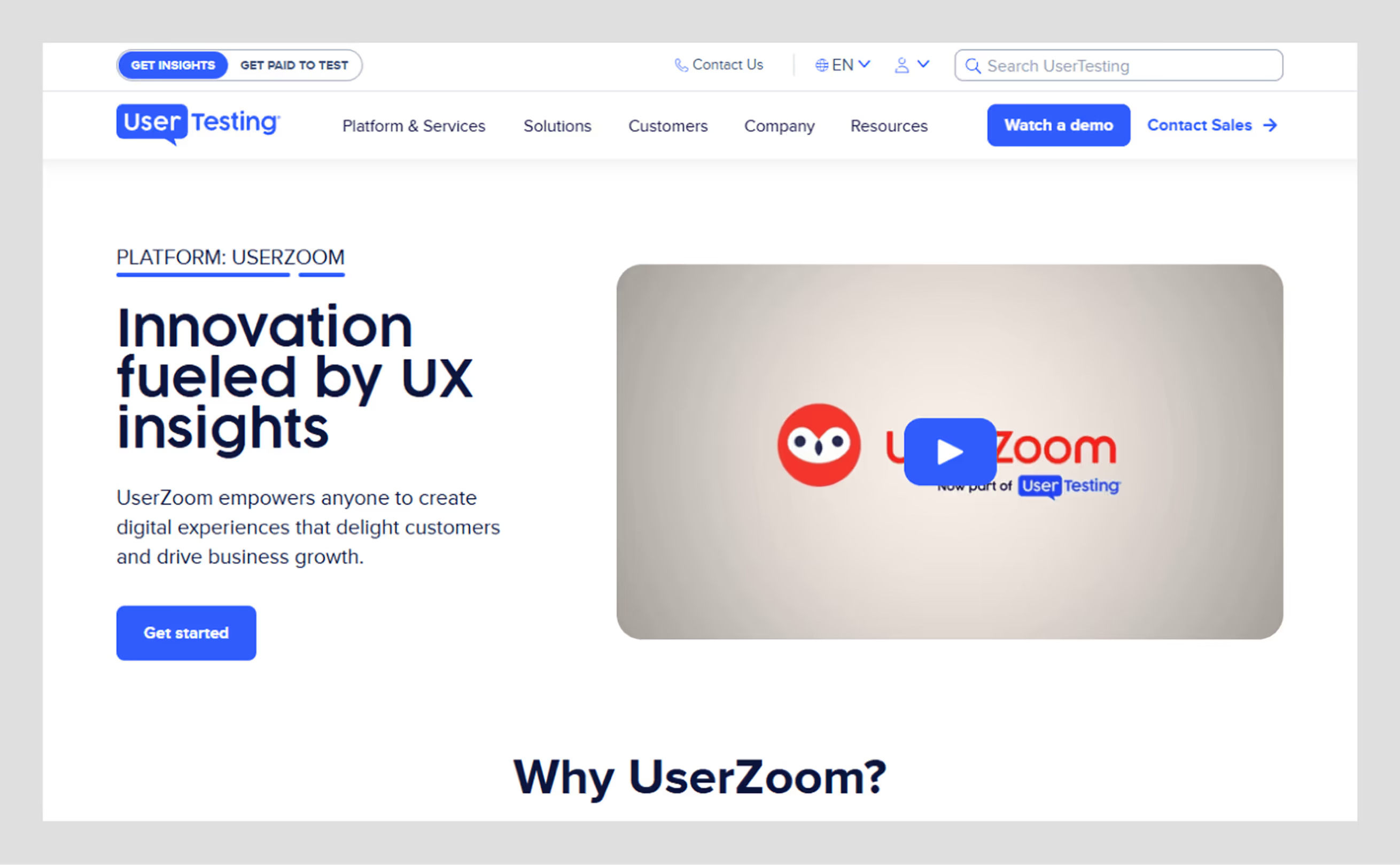
UserZoom is ideal when the team requires structured and large-scale research. Enterprise UX departments use it extensively to provide uniformity in the research process. Compared to other tools, UserZoom is rich in features that are difficult to find in benchmarking studies or in task analysis and surveys.
The platform excels in quantitative testing and complex usability studies. If you want to measure efficiency, comprehension, or decision time across many users, UserZoom gives you accurate data backed by strong methodologies. And its analytics dashboards turn large datasets into clear stories.
UserZoom is ideal when you want research to be reliable, repeatable, and organization-wide. And because it integrates with UserTesting, it covers both qualitative and quantitative research beautifully.
Key features
• Task-based usability studies
• Benchmarking tools
• Surveys and data analytics
• Large research panel
• Enterprise governance
Pricing
Premium pricing aimed at mid-size to enterprise companies.
7. Userbrain
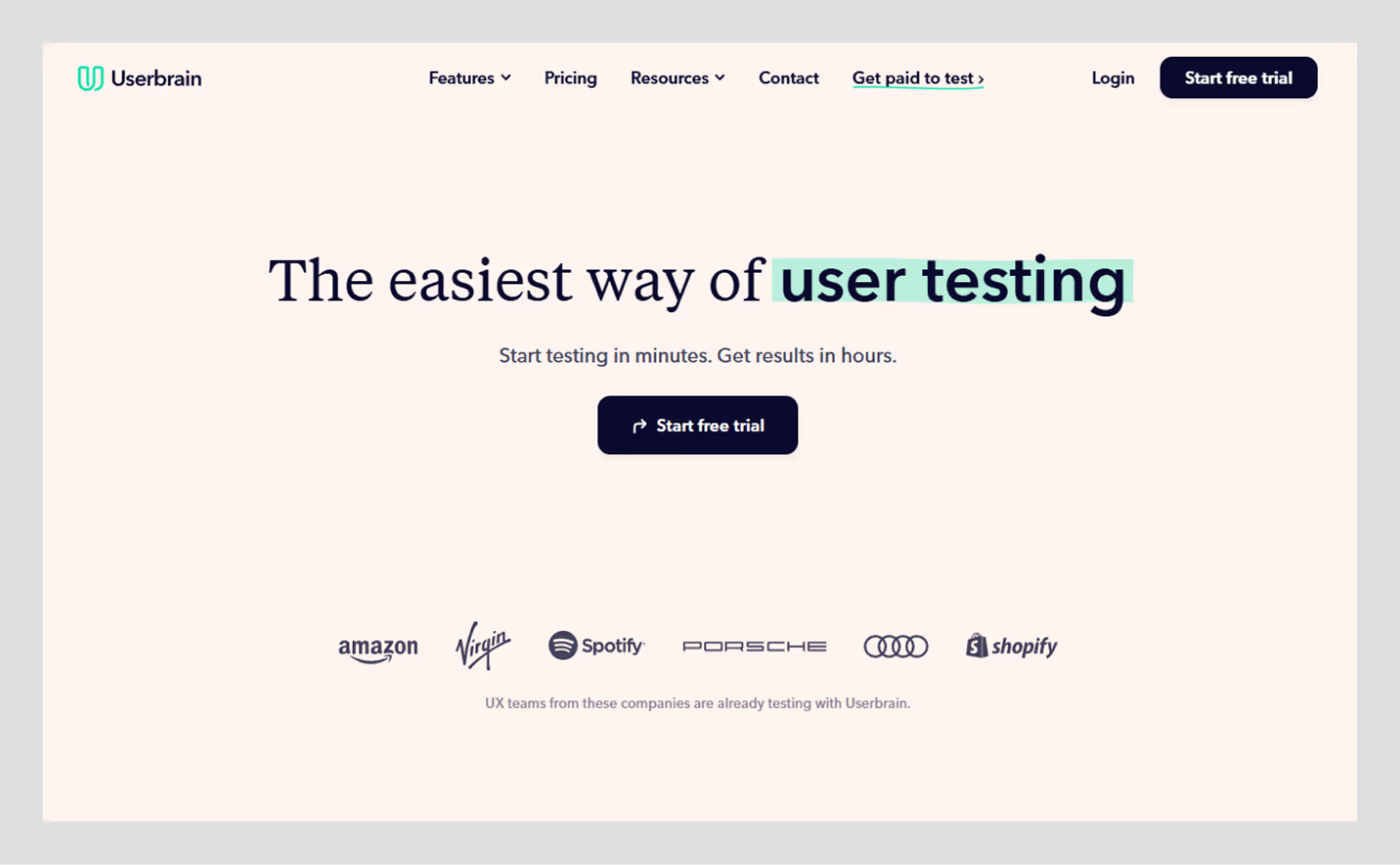
Userbrain is a simple, friendly, and lightweight user testing company built for teams that want fast feedback without overcomplicating the process. And sometimes, that’s all you need, real people trying your product and giving honest reactions.
What is interesting about Userbrain is the subscription model. You pay on a monthly basis and receive a continuous flow of testers who test your site or application. It is like a feedback loop of the UX, and this rhythm is most useful to founders who are designing, improving, and iterating rapidly.
Userbrain does not clutter you with advanced features. It is also concerned with clarity, speed, and actual human response, which is why most start-ups rely on it when they are in a hurry.
Key features
• Unmoderated video tests
• Continuous testing subscription
• Simple task setup
• Global participant pool
• Fast turnaround
Pricing
- Affordable prices with subscriptions.
- Perfect for early-stage startups.
8. UXtweak
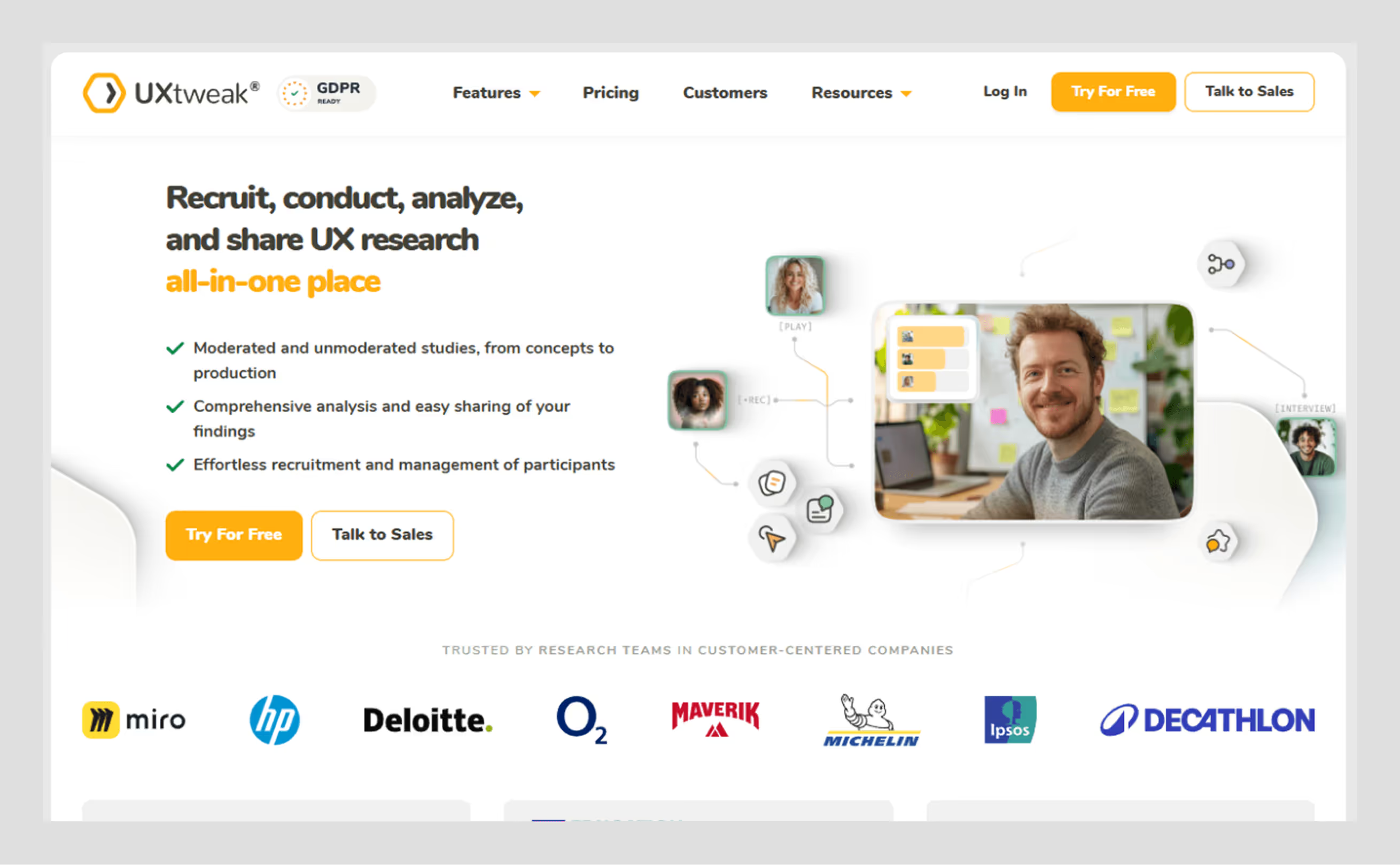
UXtweak has become one of the rising stars in UX research thanks to its rich set of usability tools. It combines card sorting, tree testing, usability tests, prototype tests, and surveys, all under one roof. And for product teams who love structured research, this is incredibly valuable.
What’s impressive about UXtweak is how it supports the entire design lifecycle. From early IA decisions to click testing, to prototype validation, to real user sessions, it gives you everything you need. And the UI feels modern, clean, and intuitive. Teams that love clarity and organization enjoy working with UXtweak.
It’s one of the most complete research platforms for UX designers who want flexibility and control.
Key features
• Card sorting & tree testing
• Prototype testing
• Usability sessions
• Surveys and heatmaps
• Mobile and web coverage
Pricing
- low cost and competitive.
- Very useful to teams requiring various research techniques
9. Maze
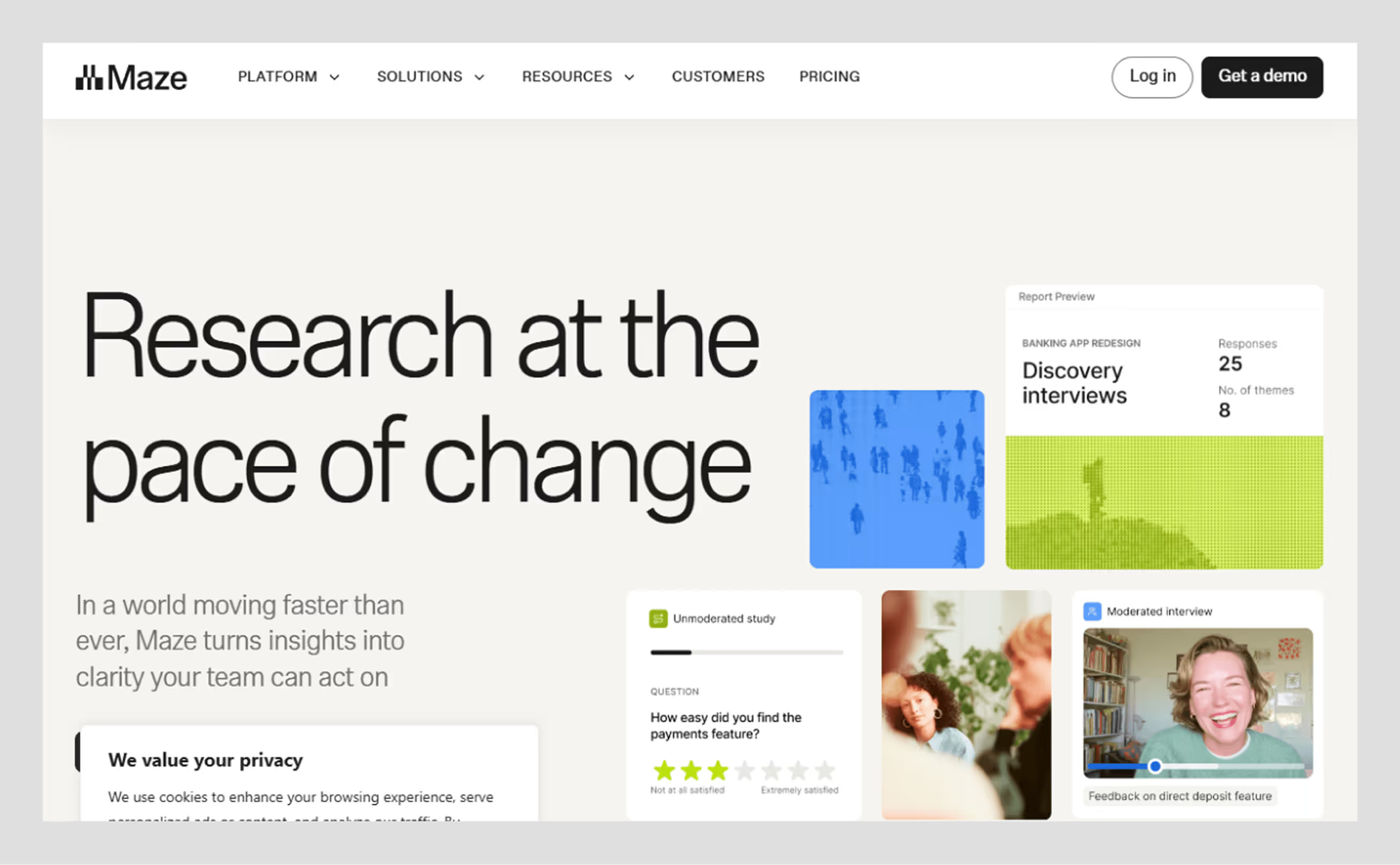
Maze is a favorite among product-led teams that want fast, unmoderated test results. The platform shines when you need quick validation, simple tasks, or instant feedback on prototypes. You upload a design, create missions, send the link, and watch insights roll in.
What makes Maze powerful is its scalability.
You can reach hundreds of users easily. You can test copy, flows, CTAs, dashboards, or new onboarding ideas in hours, not weeks. And for teams practicing continuous discovery, Maze becomes a natural part of the design workflow.
Maze is lightweight, fast, and practical, perfect for designers moving quickly.
Key features
• Unmoderated prototype testing
• Heatmaps and path analysis
• Surveys and rapid missions
• Large user panel
• Fast reporting
Pricing
- Free tier available.
- Paid plans are affordable for small and medium teams.
10. Userlytics

Userlytics is a powerful and versatile user testing firm that is reputable with international brands. Its variety of testing methods is unique. It helps with nearly everything, whether it is mobile, desktop, tablet, moderated interviews, or complex scenarios.
Other features available in Userlytics include eye-tracking, picture-in-picture recording, and sentiment analysis. So those small layers of depth make a difference to enterprise teams that require depth.
When you are developing something complex, delicate, or global, Userlytics helps you to record each level of interaction with the user.
Key features
• Moderated and unmoderated tests
• Eye-tracking technology
• Picture-in-picture recordings
• Global user testing panel
• Multilingual capabilities
Pricing
- Flexible pricing tiers.
- Suitable for mid to large companies.
How to choose the best usability testing company
Selecting a user testing company is not simply a selection of a tool. It is about picking a team that will shape the future of your product. And the fact is that what you will choose will be the level of your confidence about your user experience. Due to the fact that good testing results in making better design choices, improved product development, and reduced costly errors.
This is the way to pick up the right partners:
1. Define your budget and frequency
If you test monthly, choose subscription-based models like Userbrain. If you need in-depth insights, look at Wavespace or UserTesting.
2. Consider your product stage
- Early-stage: Maze, Hotjar
- Mid-stage SaaS: Lookback, Wavespace
- Scaling enterprise: UserTesting, UserZoom
3. Check panel size and audience quality
If your product serves a niche audience, prioritize companies with large, diverse panels.
4. Evaluate reporting depth
Some platforms give you data. A few give you meaning. Choose the partner that makes insights actionable.
5. Look for AI analysis and speed
Modern testing relies on fast turnaround. AI helps detect sentiment, friction, and anomalies faster.
6. Review dashboard clarity
You want insights your team can understand instantly.
7. Ensure it supports your industry
Especially if you’re in healthcare, finance, or AI. Compliance and accuracy matter.
Comparison Table: Top 10 User Testing Companies
Common mistakes people make when choosing a user testing partner
.avif)
Even experienced founders and product leaders fall into these traps. And these mistakes often cost more than the testing itself.
1. Choosing a tool instead of a partner
A tool gives you data. A partner helps you understand what it means.
2. Testing too late
Many teams wait until launch to test. But fixing issues afterward costs 10× more.
3. Ignoring emotional friction
Confusion is not always logical. Users often struggle because the product doesn’t feel clear.
4. Over-focusing on numbers
Behavioral patterns matter more than metrics alone.
5. Not testing the right audience
Your friends and colleagues don’t count.
6. Running too many tasks in one session
This overwhelms users and dilutes insights.
7. Not applying findings fast enough
A good test is a waste unless the team takes action on it. When you prevent these errors, your product will be simpler, clearer, and much more human, and that is what the real users will remember.
Final Thoughts
Every product has a story. It is the products that listen to their users that become storytelling products. Meaningful digital experience building companies are those that release clarity over assumption, empathy over ego, and testing over guesswork in 2026.
Whether you are a founder who needs to win the first 1,000 users of your product or a big company that needs to upgrade a complicated enterprise tool, finding the correct user testing company can help you learn about your users faster and also design confidently for them.
Since great products do not occur by chance. They occur when teams are concerned enough to pose the right questions, see the little things, listen to actual people, and get better and better. If you build with users, you build with confidence. And confidence leads to growth.
Frequently asked questions about user testing

The wider term is User Testing, which is interested in the general user experience, and it can explain why a user is acting like that (motivation, emotion, value perception). Usability Testing is a sub-discipline concerned with task performance, in which measures such as performance rate, time-on-task, and effectiveness (can the user perform the task?).
In the majority of typical usability tests, 5 participants in a unique user group are adequate to reveal up to 85% of fundamental usability issues within an interface. Researchers suggest small and frequent tests instead of a large one that is done infrequently.
No, AI is not going to substitute human researchers; it is a multiplier of efficiency. AI excels at processing and analyzing vast amounts of data (transcription, pattern detection), but human researchers remain essential for empathy, understanding emotional nuance, and providing strategic, actionable design recommendations.
The largest financial gain is the drastic decrease in the cost of rework. Studies indicate that a usability bug can be resolved 100 times cheaper at the design stage than at any other point, and even leads to a direct increase in conversion rates and retention of users.
- Moderated Testing: It is a method that involves a researcher guiding the user (live, either in-person or remotely). Best when the prototype is complex, there is much to understand about it, and when one is required to follow up on a particular response, emotional or otherwise.
- Unmoderated Testing: This testing method follows the approach where users complete tasks on their own timetable, which is documented by the platform. Most effective with high volumes of quantitative data within a short time, scale, simple task validation, and speed.

More related blog
Design & development in one team. Let’s talk!
















.png)



Francisco, CA 94105, United States





































.avif)