The Complete Guide to Building a Sales Funnel for SaaS (High-Converting)


But before we get any deeper into frameworks, metrics, and UX strategies, what is the one question that people have in the back of their mind but would really love to know big picture: How do fast-growing SaaS products turn strangers into loyal customers? Since all founders, designers, and product strategists have experienced the pressure of the slow conversions at some stages.
And the truth is simple. A brand of a high-performing SaaS is not created by chance. It is based on a strategic, human-based sales funnel that takes users through confusion-clarity, curiosity-confidence, and ultimately from first-click to long-term loyalty.
A sales funnel for SaaS is not only a marketing plan. It’s the emotional journey your users experience with your product. And when you design that journey intentionally, something powerful happens: users don’t just buy; they believe in your solution.
This guide will show you exactly how to build that system. Step-by-step. Practical. Story-driven. Designed for SaaS founders, design leaders, and product teams who want clarity and results.
What is a SaaS Sales Funnel?
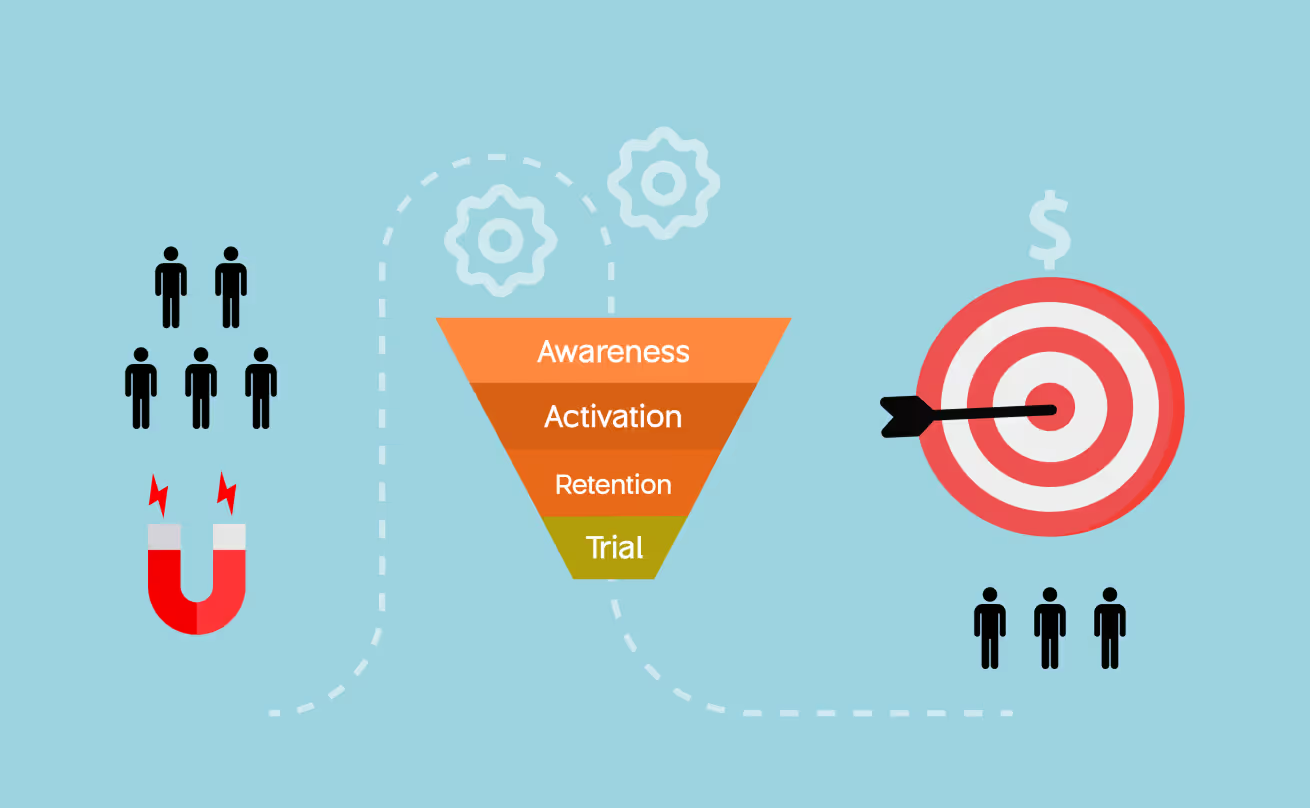
A SaaS sales funnel is a well-organized process that can direct your potential customers through the stages of learning about your product, becoming an active, paying, and loyal user. However, a SaaS funnel does not stop at the purchase, unlike traditional ones. Since in SaaS, the true success comes after sales, in terms of retention, engagement, and growth.
Think of the funnel as a relationship. You don’t rush someone from hello to commitment. You build trust, answer doubts, remove friction, and give them reasons to stay. And that’s why the sales funnel for SaaS focuses as much on long-term value as it does on first-time conversion.
What makes SaaS funnels different from traditional funnels
Conventional funnels usually end at the point of purchase. But SaaS doesn’t work that way. SaaS products rely on renewals, monthly subscriptions, frequency of use, and long-term interaction. Even a good acquisition strategy fails without retention.
A SaaS funnel is not linear but continuous. It is almost like a cycle, and each stage nourishes the next. You must cultivate, mobilize, sustain, and entertain the users even after they have registered. And since users of SaaS tend to shop around, the funnel should focus on clarity, trust, and usability throughout the touchpoints.
Why multi-touch journeys matter in SaaS
SaaS buyers don’t make decisions instantly. They read reviews. Watch demos. Ask for recommendations. Test products. And because they evaluate multiple options, you need a multi-touch journey that nurtures them with content, trust signals, and meaningful experiences.
A multi-touch approach ensures that users don’t feel rushed. Instead, they feel guided. And this emotional comfort becomes a competitive advantage because a confident user is a converting user.
B2B vs B2C SaaS Funnel (Key Differences)
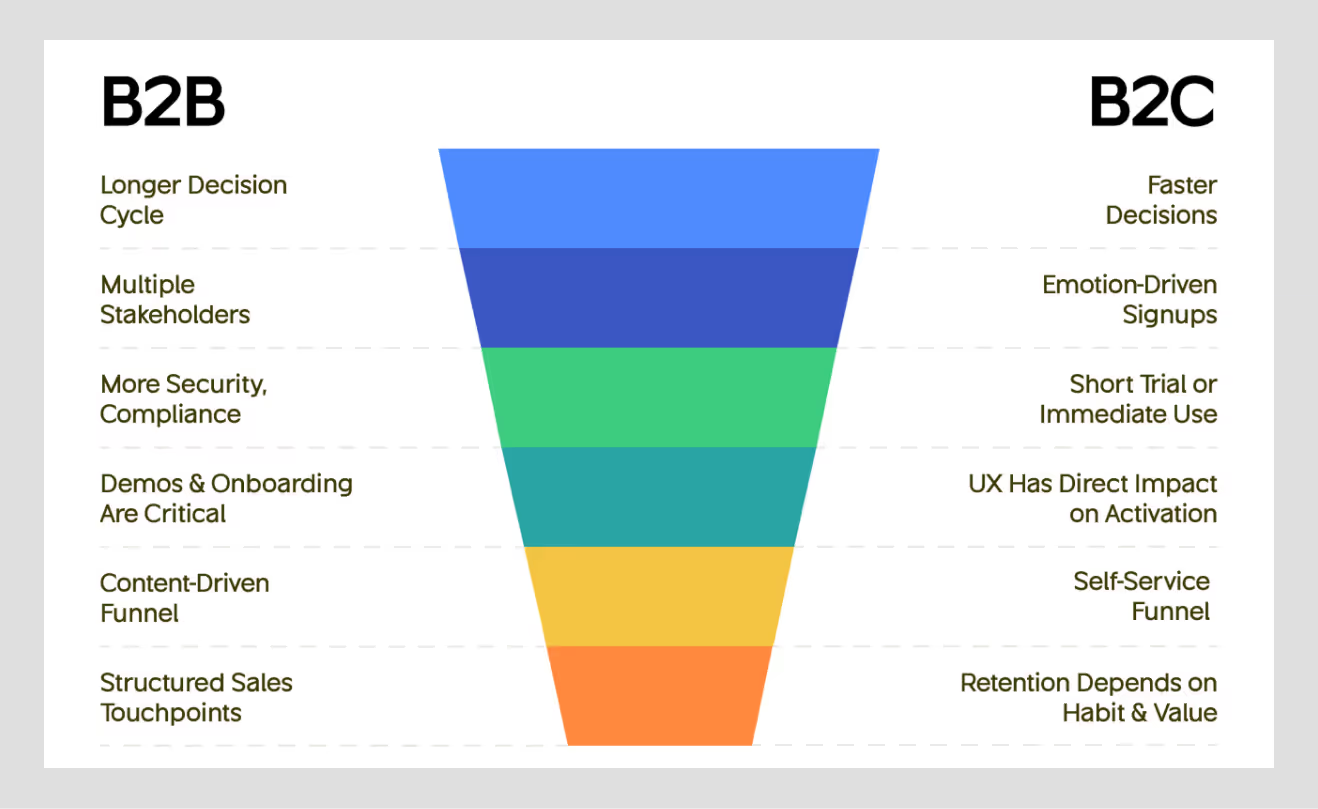
The sales funnel for SaaS looks different depending on who you serve.
B2B SaaS
• Longer decision cycle
• More stakeholders
• More security and ROI questions
• Demo and onboarding heavily influence conversion
B2C SaaS
• Faster decisions
• Emotion-driven signups
• Shorter trial periods
• UX directly impacts immediate activation
But in both cases, one thing never changes, people buy software that feels trustworthy, simple, and tailored to their goals.
SaaS Sales Funnel Stages

A sales funnel for SaaS works best when you treat it like a conversation, not a pushy transaction. Every stage has one job, to move the user from uncertainty to understanding. And when each step feels natural, your conversions rise without forcing anything. Let’s break down the seven core stages that shape the journey from first touch to long-term loyalty.
1. Awareness
The awareness starts as soon as a person learns about your brand. Perhaps they read a LinkedIn post, read about your tool from a friend, or end up on a blog post you wrote. And in that instant, they make a fast judgment: “Is this relevant to me?”
At this point, it is not your job to sell. It’s to spark curiosity. The buyers of SaaS seek solutions that are modern, reliable, and easy to comprehend. The better you articulate what you resolve, the more you get the next step taken by people.
At this point, users don’t know your features. They don’t care about pricing. They just want to know whether you understand their problem. And the moment they feel that emotional alignment, they start paying attention.
2. Engagement
As soon as they know about you, they gradually start communicating. Perhaps they visit your homepage, read about guides, watch a little video, or subscribe to you. This is where true interest develops.
Engagement is the moment users say, “Let me look deeper.”
And this stage is delicate. When you speak in a way that makes no sense, or your user experience is complicated, people just abandon you. However, when your content answers their questions, and your design makes them feel without effort, they will be tempted to stay longer, and this will move them one step closer to trusting you.
Remember: engagement is emotional. When something is worth their time, people will continue to interact.
3. Consideration / Evaluation
In this case, the users begin to compare your product to alternatives. But they do it so, without your knowing.
They check:
• Pricing pages
• Videos
• Product walkthroughs
• Social proof
• Review platforms
This is the step of developing confidence. Since the SaaS buyers are not interested in making a mistake. They would like to know that your product best fits their needs before they invest their time or money.
You can only do one thing here, and that is to eliminate doubt before it develops. Clear messages, clear pricing, and examples of actual success stories can make the users connect to the idea of using your product and being successful.
4. Immersion (Demo, Free Trial, Walkthrough)
The immersion is where a product does the marketing. This is where users try out your solution, it could be in the form of demos, guided tours, or on a free trial.
At this stage, the users will pose two questions to themselves:
• “Is this easy?
• “Can this help me achieve my goal?”
This is where your UX is putting a foot on the conversion, or not. Even the slightest friction can lead to a loss of interest by a user. Experience is more likely to create trust than a sales message. And once users get empowered, they take the natural steps towards activation.
5. Conversion (Paid Activation)
The conversion does not occur because a person likes your product; it occurs because he believes that your product will be able to produce value on a regular basis.
When a user chooses to upgrade, it is because each step that preceded this one was in harmony. The messaging was clear. The design felt seamless. The trial had an impact. And the onboarding gave them a sense of confidence.
Here, you want to ensure that paying becomes painless. No hidden fees. No confusing pricing. No long checkout flow. The less effort you make, the more your conversion rate will skyrocket.
6. Retention & Customer Success
SaaS survives or dies by retention. A funnel that ends at purchase is not complete. The only real growth is to keep customers interested, informed, and maintained.
Retention comes from:
• Timely support
• Personalized help
• Proactive product guidance
• Meaningful onboarding
• Clarity, not complexity
But retention is also emotional. Users remain when they feel well attended to. And a happy customer turns into a lifelong supporter with the help of your customer success team.
7. Advocacy & Expansion
The last stage is advocacy, which is the most effective. Customers speak when they are in love with your product. They recommend friends, leave reviews, and upgrade to premium plans.
It is a sustainable growth stage since it attracts warm leads rather than cold traffic. Doing all the right things is rewarded by advocacy. And when a SaaS product has gone this far, it is not just software anymore. It becomes a reliable companion in the workflow of a person.
How to Design a High-Converting SaaS Sales Funnel
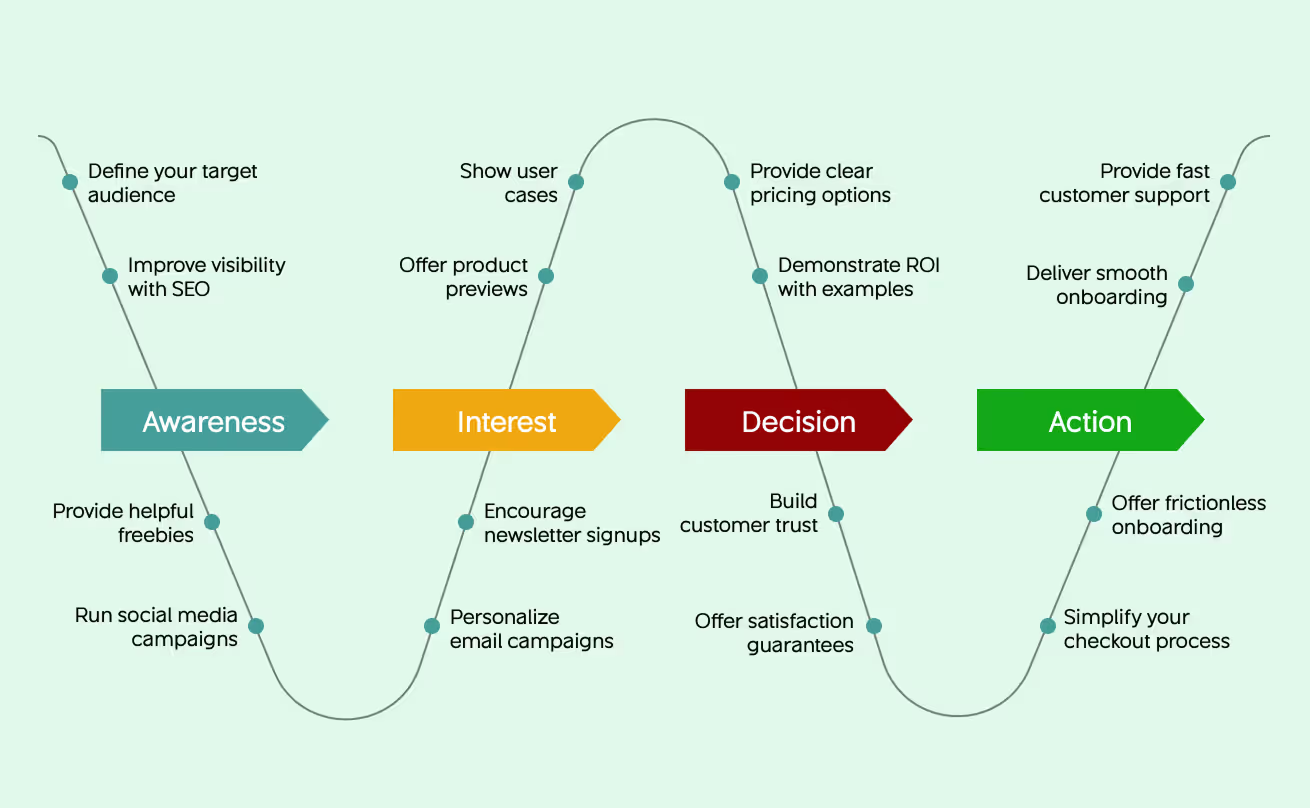
A sales funnel design of SaaS is not a matter of new tactics or touchpoints. It is creating an emotionally smart adventure that knows how individuals make decisions. The reason is that people do not purchase software as soon as they see it. They will purchase when the experience helps them feel known, heard, and secure.
This is where high-converting funnels come in. They eliminate friction, uncertainties, and ensure clarity to the user. We should reverse engineer the main processes to develop a funnel that not only makes customers but also keeps them in the long run.
1. Map the Full Customer Journe
Before you create any funnel, you have to know all the steps that your user will experience, starting with the first time when they hear your name and the date when they renew their subscription.
The journey mapping process makes you think about your users. You notice the pain that they go through, the questions they pose, and the emotions they bring along with them at every level. And when you know those feelings, you can make a funnel to help them all the way.
This map is your base of the SaaS sales funnel. It will assist you in determining where users will lose track, where they will become lost, and where they will require the most assurance. And when you fix those moments, your funnel becomes naturally stronger.
2. Identify User Intent at Each Stage
Each funnel stage represents a particular attitude. A user browsing your home page is not prepared to have a demo. A trial person does not require a generic material; he should be provided with clarity and assistance.
When you align content and intent, you make people think that you are reading their minds. It is this emotional intelligence that makes the difference between curiosity and action.
To do this well, ask:
• What is the user feeling right now?
• What clarity do they need?
• What objection might stop them?
• What proof will reassure them?
When you match your message with their mindset, users will go through your funnel without being pressured.
3. Build Your Content & Marketing Strategy
Your content is your SaaS funnel voice. Each article, landing page, video, or email will have to direct users to see your value.
Awareness is created by top-of-funnel pieces. Middle of the funnel parts create confidence,
It’s a system of experiences. Pieces at the bottom of the funnel generate commitment.
Good content is strong as it creates a relationship, and the user even chats with your team. And, when you do it well, you will have your silent salesperson working 24/7 to educate, nurture, and convert.
An effective content strategy is like mentorship. It educates, coaches, and encourages users until they are prepared to proceed further.
4. Set Up Lead Scoring & Qualification
Not all leads are equal. Some are curious. Some are comparing. Some are ready to convert. By scoring leads on behavior and intent, it is possible to cut corners and not waste time on a user who is not prepared.
Lead scoring gives your funnel structure. It makes your marketing and sales teams aware of who to target and when to target. And since SaaS deals can have several stakeholders, scoring allows you to locate the buying signs early.
A qualified lead is not simply an interested person but a person who feels in line with what you have to offer. And those are the best converting leads.
5. Optimize Your Sales Process
A sales process in SaaS should feel supportive, not salesy. Users want clarity, not pressure. When your sales process is transparent and user-friendly, you build trust quickly.
This means:
• Clear messaging
• Value-driven demos
• Fast responses
• Helpful resources
• Honest guidance
The most effective SaaS sales teams do not sell; they diagnose. They discover actual issues, reveal the way ahead, and detail the way that the product can assist. And such a consultative style results in emotionally charged conversations.
6. Improve Trial-to-Paid Through Onboarding
Onboarding is the heart of your SaaS growth. Because users don’t convert when they love your product. They convert when they experience value.
A strong onboarding feels like a guided journey, not a checklist. It shows users exactly how to achieve their goals and feel the difference your product makes.
When onboarding feels effortless, trial users become paying customers. But when onboarding feels confusing or overwhelming, even the best product loses them. This is why onboarding is often the make-or-break moment in every sales funnel for SaaS.
7. Create a Strong Support & Customer Success System
Support is not merely problem-solving. It is all about confidence-building.
A strong support system tells users:
“We care about your success. We’re here for you every step of the way.”t’s a system of experiences. Pieces at the bottom of the funnel generate commitment.
And when customers feel appreciated, they will remain longer, dive deeper and will refer to your product. This trust between the heart is a competitive edge that cannot be substituted with feature comparisons. Customer success is not merely about troubleshooting. It is about training users, mentoring them, and ensuring that they meet results. Since they are winning, you are winning as well.
8. Improve Retention & Renewal Workflows
The evidence of the real value is renewal. And it becomes easier to retain a customer when they keep getting results.
To increase retention, you require:
• Proactive check-ins
• Personalized guidance
• Educational resources
• Clear communication
• Easy renewal processes
But keep in mind the fact that renewal is an emotion. People upgrade because they believe that your product will still help them live more easily. And this trust is gained with each minor contact within your funnel.
9. Use Data to Track Every Stage
Data removes guesswork. It tells you where exactly the users stop, or become stuck, or lose interest. And when you fix those points, your whole funnel becomes stronger.
Track:
• Website behavior
• Trial engagement
• Conversion triggers
• Drop-off points
• Customer satisfaction
• Retention patterns
Data gives you clarity. And transparency creates wiser choices that directly translate into more conversions and less churn.
10. Continuously Optimize the Funnel
A SaaS funnel is never “finished.” Because user behavior changes, market expectations evolve, and product features grow. Continuous optimization is the key to staying relevant.
Improving your funnel doesn’t always mean adding more. It often means simplifying. Removing friction. Clarifying your message. Enhancing your UX. Strengthening your support.
Small improvements compound into long-term growth. And this mindset is what separates fast-growing SaaS companies from stagnant ones.

SaaS Funnel Content Strategy
An effective content plan is the pulse of any effective sales pipeline of SaaS. Since content is not only marketing material, it is the moment to educate, reassure, and emotionally direct users in the process of making a decision.
And when your content talks to them directly about what they are struggling with and what they are trying to achieve, it becomes the key between interest and conversion. We are going to deconstruct the way content is applied at each level of your funnel.
TOFU Content to Attract
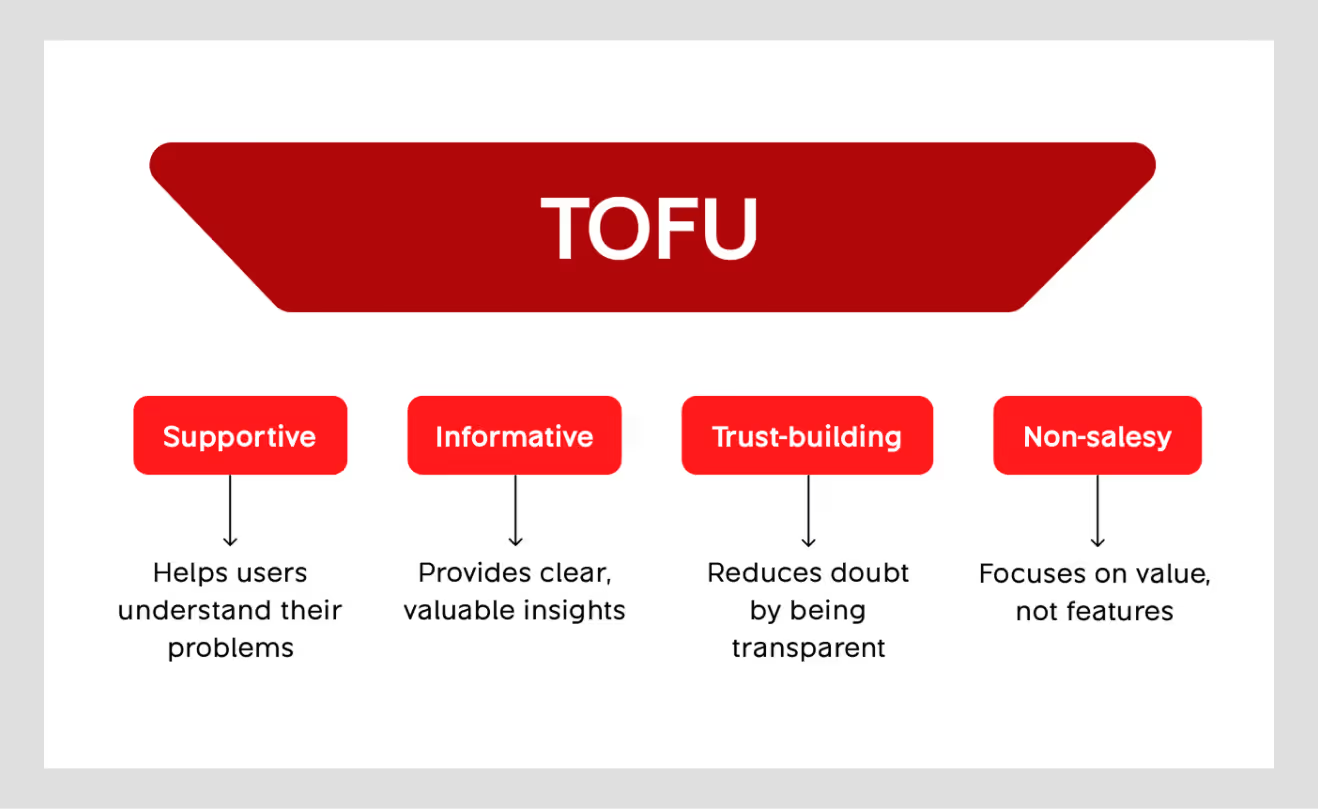
Top-of-funnel (TOFU) content is concerned with awareness. In this case, your audience is not familiar with you. They are just trying to get familiar with their issues. It is your duty to guide them first before they consider your products.
TOFU content must be supportive, informative, and simple to digest. It is not selling, it is building trust. When users become truly encouraged, they proceed to go further into your funnel.
Powerful TOFU content includes:
• Blogs
• Beginner guides
• Industry insights
• Awareness videos
• Entry-level tutorials
MOFU Content to Educate
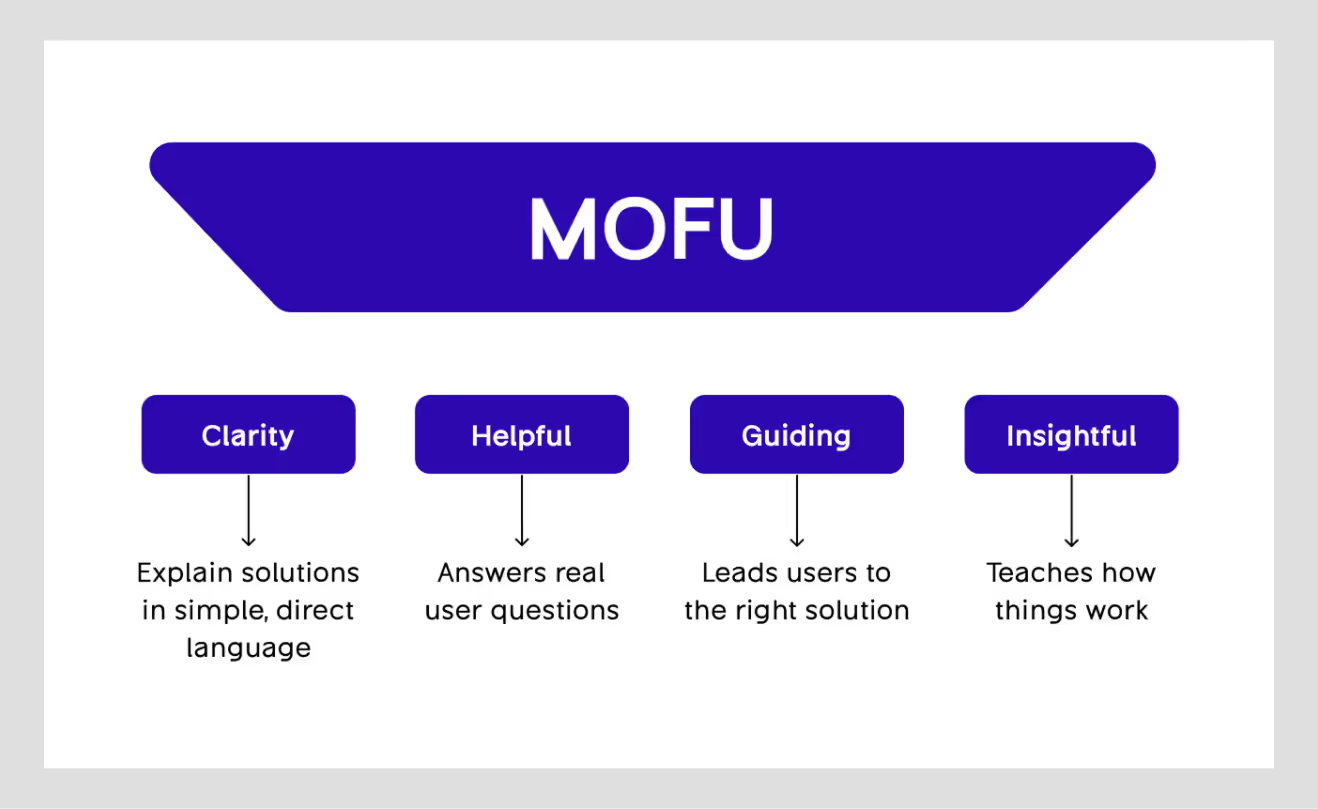
It is called mid-funnel (MOFU) content, and real engagement starts. Now the users are aware of their issue and are in search of solutions. They are weighing options, comparing, and seeking to know what will make one product superior to another.
They are met with clarity and value by MOFU content all the way there. This content will change awareness to guidance, so that the users know why your approach is good.
The strong content of MOFU contains:
• How-to guides
• Feature breakdowns
• Comparison pages
• Educational webinars
• Use-case content
BOFU Content to Convert
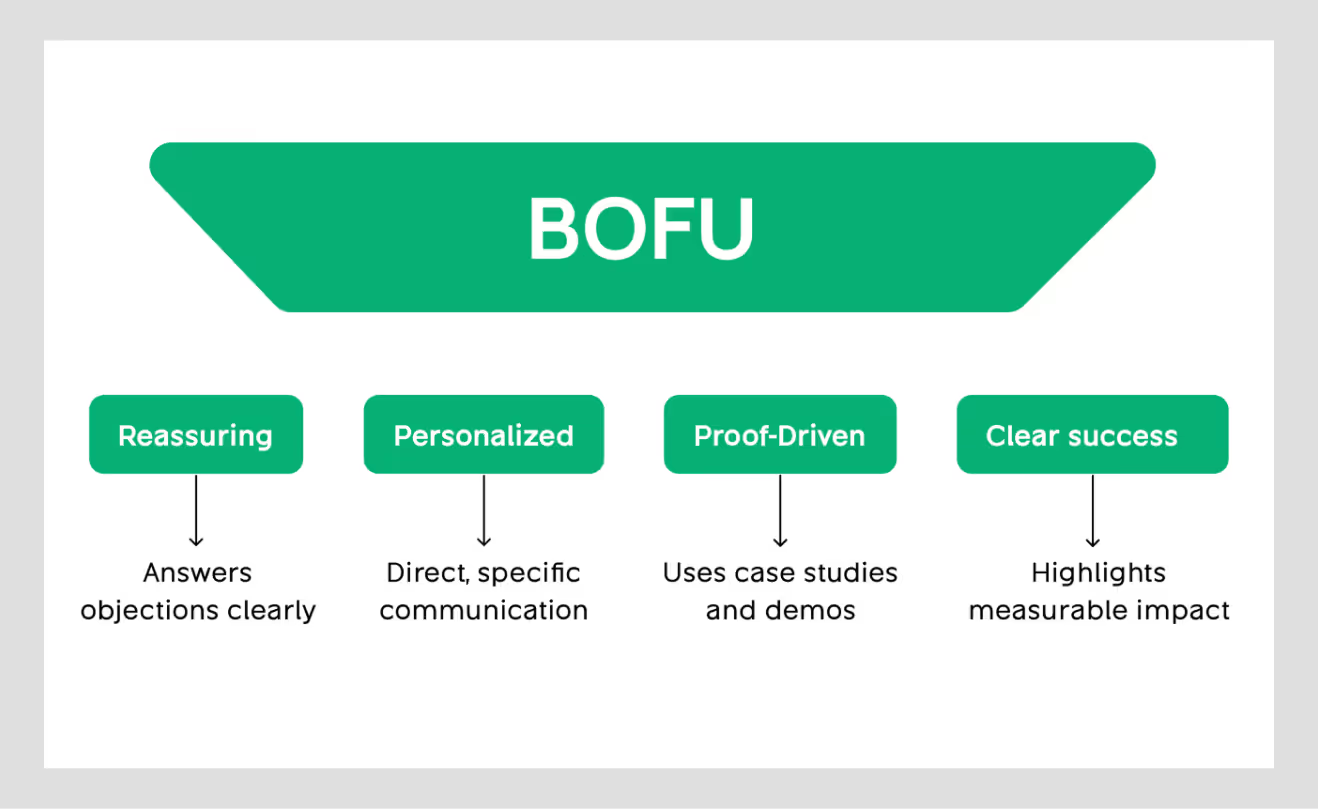
Decisions are made at the bottom-of-funnel (BOFU) content. At this stage, the users are serious. They require confirmation, evidence, and assurance that they are doing the correct thing.
The content of BOFU needs to be based on real objections, real results, and clear paths to success. Your communication must be personal and not general.
Best BOFU content includes:
• Customer stories
• Product demos
• Case studies
• ROI breakdowns
• Trial onboarding flows
Post-Conversion Content to Retain
After conversion, the process does not stop. Actually, this is where the greatest work starts. After conversion, material makes users feel confident, educated, and attached to your product. Retention content is on how to get your customers to the value faster and faster, and stay longer, so they grow their usage.
Strong retention content includes:
• Onboarding tutorials
• Advanced feature guides
• Monthly product updates
• Help center content
• Customer success emails
Best formats (guides, webinars, demos, case studies)
Content formats are important since various users do not learn in a similar manner. Some like pictures, others like step-by-step, and a number of them learn by seeing the actual examples. Combining formats will assist you in reaching all types of audiences.
Some of the most effective formats include:
• Step-by-step guides
• Webinars and live sessions
• Interactive demos
• Customer case studies
• Product walkthrough videos
• Templates and checklists
AI workflows to scale content
The current SaaS teams build AI workflows to enhance the content creation speed without compromising the quality. However, the most important thing is to use AI to help with strategy and not to substitute it. Artificial intelligence assists in research, writing, and recycling, whereas human abilities guarantee precision and appeal to emotions.
Effective AI-supported workflows include:
• Reducing long posts to short posts.
• Generating content variations
• Accelerated keyword research.
• Writing structure of articles.
• Recycling webinars into manuals.
• Summing up customer interviews.
The Role of UI/UX Design in SaaS Funnel Performance
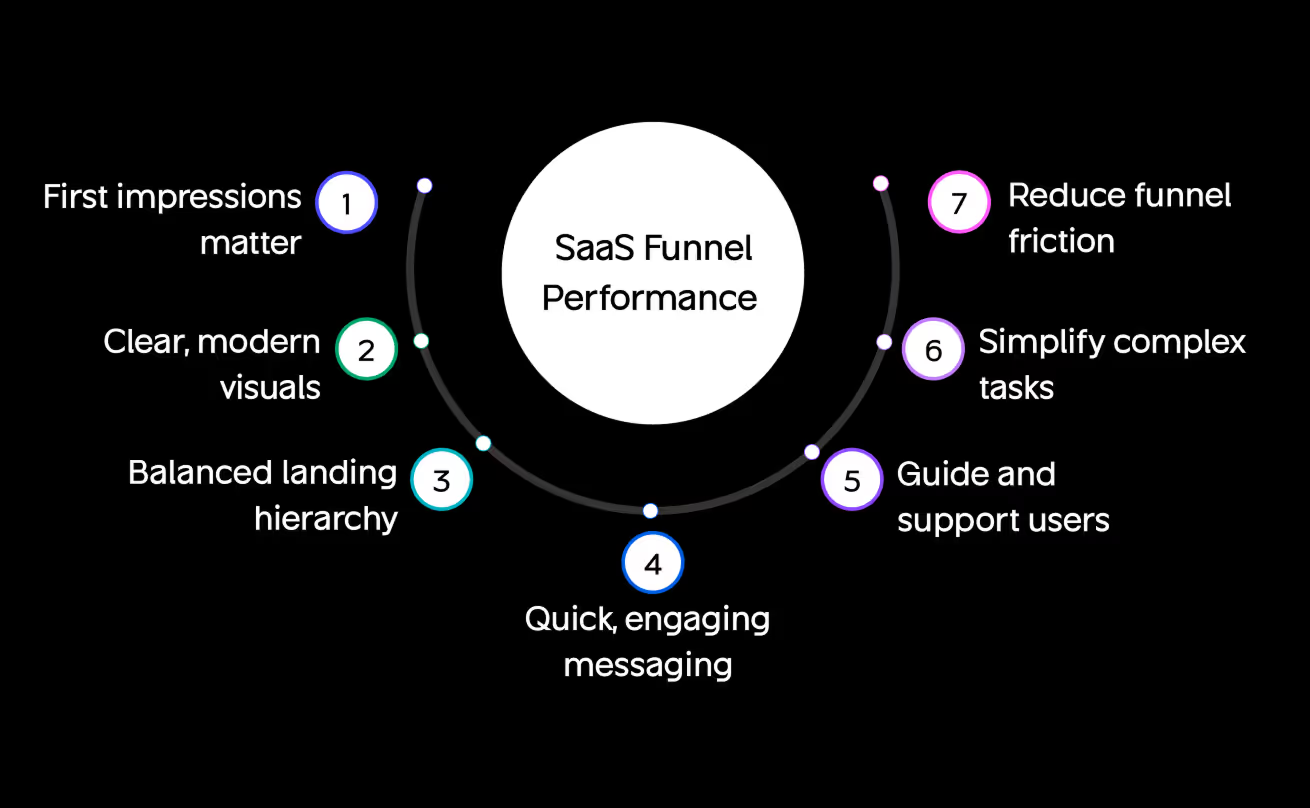
A SaaS sales funnel is made or killed by UX. A Since the most effective marketing plan fails when users face friction. The clearer the design, the more conversions. And the more natural the experience, the greater the retention. Let us look at the role that UX plays at each funnel stage.
First Impression & Landing Page UX
This is the first actual contact that a user has with your brand, and it is normally your landing page. And within a few seconds, people evaluate design. Users can immediately trust you when your visuals are modern, and your message is direct and to the point.
Great landing page UX balances:
• Hierarchy
• Contrast
• Clarity
• Storytelling
• Quick answers
Onboarding UX for Higher Activation
Onboarding is where the users make their choice on whether your product will be a part of their daily workflow or not. When the onboarding process is overcomplicated, overwhelming, or excessive in duration, users will be lost before they even know what you are all about.
A great onboarding experience:
• Guides
• Supports
• Simplifies
• Motivates
And since SaaS users frequently use several tools, onboarding turns into a competitive edge. Become smooth and users will transform at a greater speed.
Reducing Friction Across the Funnel
Each loss of time is agony. Any ambiguous button, puzzling procedure, or sluggish interface drives people away. And friction is a silent killer of conversions.
Reducing friction means:
• Simplifying pages
• Improving microcopy
• Removing unnecessary steps
• Optimizing performance
• Giving users clear pathways
Using Design to Build Trust
The reason why the users do not trust the software is not due to its features. They believe in it due to clarity, consistency, and credibility. Details can enable trust even through design.
Trust- building design involves:
• Consistent typography
• Clean layout
• Proper spacing
• Polished visuals
• Transparent messaging
• Real testimonials
How UX Improves Retention & Expansion
When users feel valued on a repeated basis, retention enhances. This is supported by UX, which simplifies complicated tasks and allows users to get a result more quickly.
A strong UX:
• Increases daily usage
• Reduces support requests
• Helps users explore features
• Will promote brand loyalty.
• Opens pathways for upgrades

Tools & Systems to Build Your SaaS Sales Funnel
A high-converting sales funnel with SaaS is not based on effort, but rather systems. Consistency, clarity, and speed are generated by the right tools. They make you get to know your users, tailor their experiences, and quantify what really matters. And with the proper stack in your team, all components of your funnel become easier and more predictable.
We can decompose the key tools to a modern SaaS sales funnel.
CRM Tools (HubSpot, Salesforce)
A CRM is the funnel headquarters. It monitors all the interactions, all the conversations, and all the buying indicators. Without a CRM, you’re guessing. However, with one, you can view your users with their face, who is ready, who needs nurturing, and who needs help.
HubSpot is best suited to growing teams that do not need any complexities. Salesforce fits well in enterprise SaaS that have larger sales cycles and various stakeholders. Both give you structure and visibility, which makes your funnel stronger at every stage.
Analytics Tools (Mixpanel, Amplitude)

The truth is data, although it is sometimes uncomplimentary. Analytics tools will provide you with the exact way users behave, drop-offs, and conversion actions. Behavior is more crucial in a SaaS funnel than assumptions.
Mixpanel is good at monitoring user activity and feature usage. Amplitude helps you with the patterns, groups, and the trends. These insights reveal which parts of your product create value and which create friction. Once you have knowledge on user behavior, it is possible to create a funnel that takes into consideration actual needs rather than making assumptions.
Automation Tools (Customer.io, Mailchimp)
Manual follow-ups don’t scale. Automation will keep your users active without having to overwork your team. Even when the messages are automated, the right automation provides a sense of personal support.
Customer.io is robust with behavioral triggers, which send emails or messages to customers when they perform certain actions. Mailchimp has a straightforward, trusted layered communication.
Effective automation serves as an unspoken guide. It reminds the users at the right time, it answers the unasked questions and it leads to activation.
UX Tools (Hotjar, FullStory)
The UX tools will enable you to observe what the user says but does not feel. Recordings, journey maps and heatmaps identify friction points that cannot be revealed by analytics. And when you look through the eyes of your users, you will never see your product the same way again.
Hotjar provides plain and visual user behavior insights. FullStory provides more advanced replay and debugging capabilities. Both help you design a smoother, more intuitive funnel. When you know why people are struggling, you will be able to eliminate the friction that destroys conversions.
AI Tools (ChatGPT, Perplexity, Jasper, Mutiny)
The AIs facilitate speed, consistency, and personalization. They assist the teams to overcome the bottlenecks in content creation, research, messaging, personalization, and experiments.
- ChatGPT is used to write, ideate, and communicate to customers.
- Perplexity assists in profound research and industry knowledge.
- Jasper promotes marketing content workflows.
- AI is used by Mutiny to tailor web experiences to various audiences.
Such tools do not overtake strategy, they enhance it. They can make you run as fast as you can without going unnaturally fast.
Track Sales Funnel Effectiveness
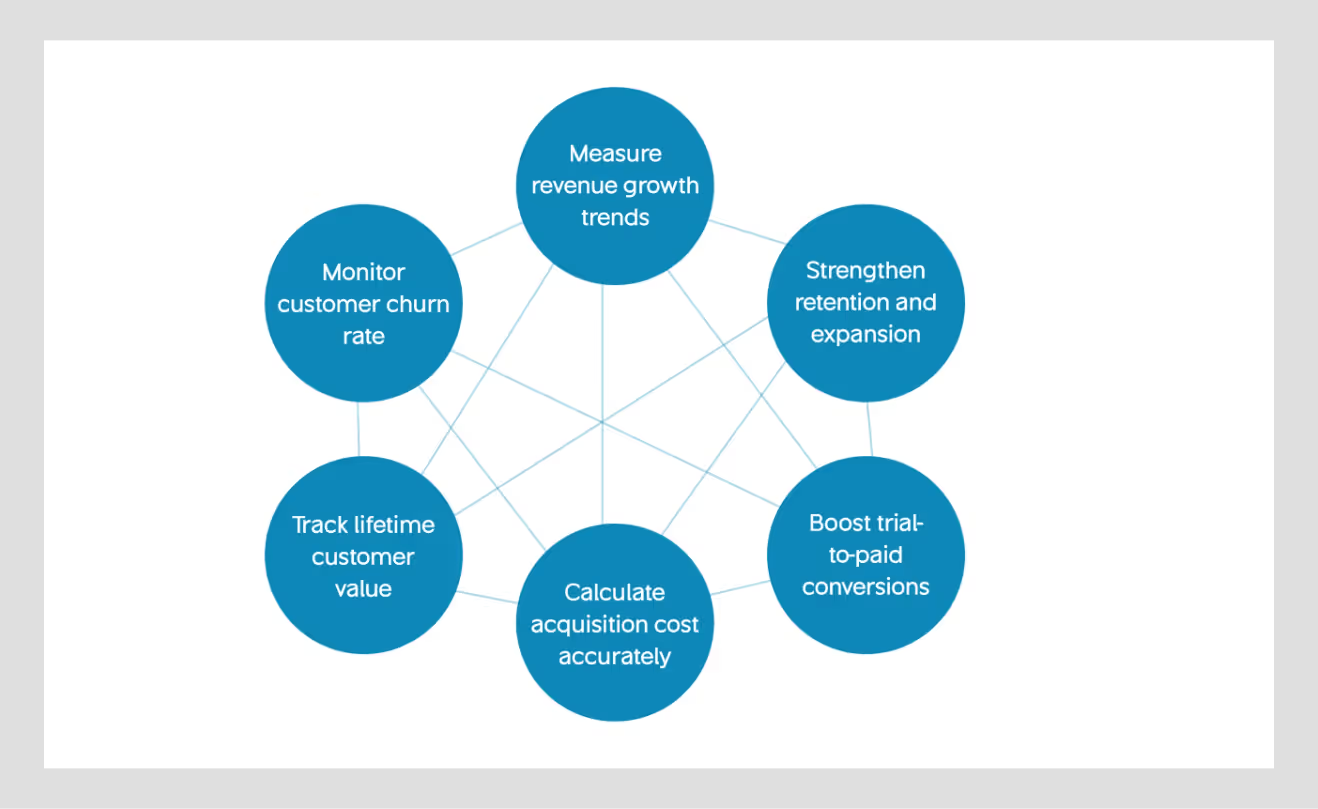
A healthy funnel is a measurable type of funnel. Because numbers don’t lie. They uncover the unspoken trends of conversions, drop-offs, and long-term loyalty. And once you are taking the right measures, you can see where you are improving.
We should divide the key metrics that every SaaS company should monitor.
Revenue Growth
The best indicator of funnel health is growth in revenues. It demonstrates that your funnel is reaching the correct people, turning them into customers at the appropriate time, and maintaining them to be valuable in the long term.
Revenue does not increase accidentally. It grows when your funnel supports users emotionally, functionally, and strategically. And when all the touchpoints collaborate, revenue is the logical outcome.
Customer Churn Rate
Churn is the chancer of SaaS growth. The best acquisition strategy cannot rescue a company that has poor retention. Churn informs you about the frequency and the number of users leaving. And this is a direct index of product value, support, and experience.
A high level of churn means that your funnel is leaking. A low rate of churn means that your product is performing. Any increase in churn rate that you implement increases your long-term revenue.
Customer Lifetime Value (CLV)
CLV is the financial worth of each customer throughout their lifetime. And since SaaS is based on recurring revenue, CLV is among the most effective in your funnel.
Having a good CLV will guarantee that your users remain, develop, and have confidence in your product. Low CLV is an indication of poor onboarding, lack of engagement, or retention. The higher the CLV, the more valuable is each additional user, and acquisition costs do not rise.
Customer Acquisition Cost (CAC)
CAC informs you about the cost of acquiring one new customer. A large CAC indicates that you have an inefficient funnel. When your CAC is low, your content, UX, and nurturing system are good.
You just want to achieve one thing: reduce CAC, raise CLV. At that point of balance, your SaaS will be unstoppable. And since CAC is directly related to profitability, it is among the most significant figures to measure.
Activation Rate
The point when customers first feel real value is called activation. It’s the heart of your funnel. When the activation is low, the conversions will never be successful. High activation implies that you are onboarding, UX, and product visibility matched.
Activation presents the idea of whether your product is simple, intuitive, and helpful at the beginning or not. And since long-term retention is predicted by activation, enhancement should always be a priority.
Trial-to-Paid Conversion Rate
This ratio indicates the degree of your trial or demo performance that is convincing users to upgrade. It reveals whether you are guiding users effectively, showing value early, and reducing friction in the decision-making process.
When users see results fast, they convert with confidence. When they find it difficult, they go silently. The best indicator of onboarding strength is trial-to-paid conversion.
Retention & Expansion Metrics
Retention measures indicate customer loyalty that supports acquisition expenses. Expansion metrics indicate how they increase over time, upgrading plans, adding seats, or increasing usage. Combining retention and expansion will show whether your product is generating long-term value.
Net Revenue Retention (NRR)
NRR is a metric of the amount of revenue you retain and increase with current customers. High NRR implies that the longer you use your product, the more you value it.
Gross Revenue Retention (GRR)
GRR reflects the level of revenue retained without upgrades. It is the purest of churn and product health.
Common Mistakes SaaS Teams Make
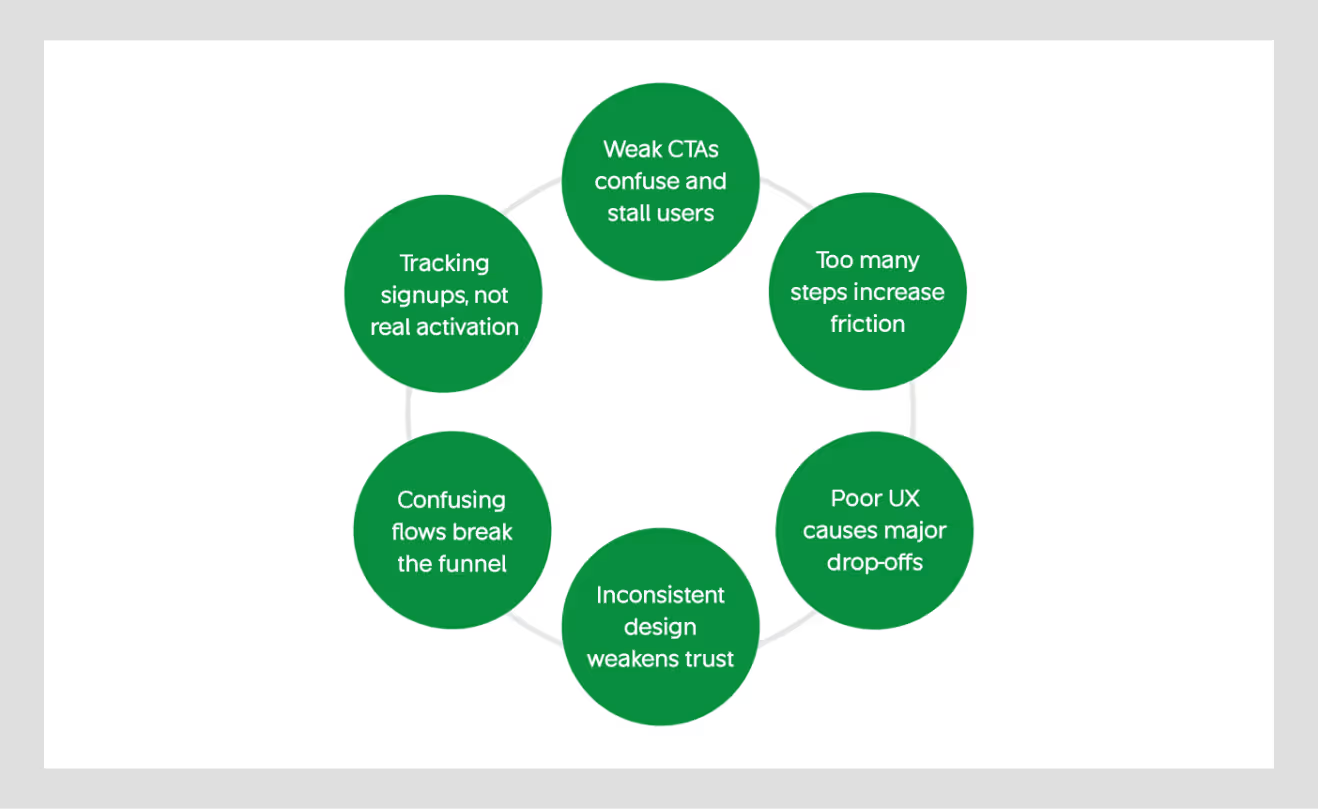
All SaaS teams desire growth, and most of them create friction in their funnel without intending to. And even tiny mistakes may lead to delay or abandonment by the users.
Let’s break down the most damaging mistakes, so you can avoid them.
Overcomplicating onboarding
Complex onboarding kills activation. Users do not need complexity, but rather transparency. When onboarding is too complex, users fail to get value before they give up on the product.
Weak or unclear CTAs
Users who do not know what to do next do nothing. There are clear CTAs to focus on and minimize confusion. Weak CTAs silently break the funnel.
Lack of follow-up nurturing
The conversion rates of SaaS buyers are not immediate. They require care, instructions, support, and encouragement. Interest fades away without follow-ups. Nurturing is part of the relationship. Without it, your funnel stalls.
Not tracking activation metrics
Active teams also monitor signups and disregard activation. However, empty metrics are signups without engagement. Conversations start where the conversations are really taking place. Follow what is important, not what appears to be good.
Poor UX is causing a drop-off
The most common cause of exit is bad UX. The confusing designs, disorganized flows, and ambiguous messages send users away without even trying the product.
How to Grow Faster with UX Design
A high-converting sales funnel of SaaS does not increase by marketing. It develops with experiences as users experience them when they open your homepage, when they register, when they test some feature, and when they choose to remain. UX is not only a part of the funnel. UX is the funnel. It creates trust, transparency, inspiration, and loyalty.
When your UX feels effortless, users move through your funnel naturally. When they feel confused, they become slower or silent. We can discuss the way UX is the driver of the accelerated, long-term growth of SaaS.
UX improvements for conversion
Conversion is emotional. Users become converted when they feel clear, confident, and in control. Nobody can impact these feelings more than UX does.
Strong UX for conversion includes:
• Intuitive navigation
• Clean layouts
• Fast-loading pages
• Simple forms
• Guided flows
• Reassuring microcopy
Every small improvement builds momentum. And when users develop momentum, they translate faster. Once you eliminate friction in the process, you eliminate doubt in the decision.
Visual hierarchy & clarity
People do not read websites but rather scan them. Visual hierarchy makes them learn without thinking about what is important. It focuses the mind, lightens the burden on the brain, and makes the decision-making process less difficult.
Elements that shape hierarchy:
• Typography size and weight
• Spacing and grouping
• Contrast
• Button placement
• Color psychology
When your design communicates clearly, your funnel becomes smoother. And clarity will gain trust, which directly enhances activation and conversion rates.
Trust-building design
Trust is the currency of SaaS. Users will not invest their workflow, money, or data in a product that is not certain. Design here comes in as an unspoken messenger.
Trust-building design uses:
• Consistent branding
• Real testimonials
• Case studies
• Transparent pricing
• Clean and modern interfaces
• Credible visual language
Since users are convinced of reliability when they see professionalism, they will be convinced. And when they are safe, they act confidently. Funnels created using design systems.
Funnels built through design systems
Design systems are not only used for product consistency. They strengthen your funnel by creating predictable, familiar experiences across pages, emails, onboarding flows, and support touchpoints.
A good design system will guarantee:
• Less friction
• Fewer visual inconsistencies
• Faster user understanding
• Easier navigation
• Clear pathways to value
The users believe the journey when everything seems to be a unit. And the integrated experience results in less bumpy funnels.
How Wavespace can help
We are the team at Wavespace that assists SaaS companies in creating high-performing funnels that are designed using clarity, user psychology, and conversion-centric UX. We have collaborated with AI, fintech, real estate, healthcare, and enterprise SaaS teams to design onboarding experiences for landing pages, dashboards, and design systems, which produce real business outcomes.
We make funnels that are not strict. Friction-reducing funnels rather than complexities. Funnels that guide users toward value with clarity and empathy. You need a team that knows design and growth, so you can build your SaaS product or redesign it:
Let’s build your high-converting SaaS experience together.
Book a call or reach out at Wavespace.

Final Takeaway
Creating a high-converting sales funnel in SaaS is not a matter of tactics but a matter of people. Behind each sign-up, each interaction, and each renewal is a human being trying to find a solution to a real problem.
The funnel is a great one, and it leads them. An excellent product smoothly helps them.
And large UX makes them feel secure, comfortable, and empowered. All three working together not only get your SaaS customers, but they also retain them, expand with them, and gain their loyalty.
Remember:
A funnel is not a system of pages.
It’s a system of experiences.
And once you create those experiences on purpose, growth will be a natural process, and not a relentless pursuit.

More related blog


Have a Project? Let’s talk!


















.png)



Francisco, CA 94105, United States

































.avif)