Top 20 Brand Slogan Examples And Their Impacts On Brands



Introduction
A brand is remembered by people more often by a slogan rather than the logo. That is not accidental. A good slogan creates a lasting impact in the brain as it is linked to emotions, identity, or feelings we are already familiar with. Logos need repetition. Slogans create instant memory.
This is the reason why brands such as Nike, Apple, and Coca-Cola are not remembered for what they sell, but for what they make people feel.
What a slogan really is
- How a brand slogan is different from a tagline
- Why slogans matter for long-term brand growth
- And the top 20 brand slogan examples with real analysis
- This is not a theory. It is practical and founder-focused.
What is a slogan?

A slogan is a brief phrase that helps people recall a brand.
That is it.
A slogan is not marketing fluff. It is a memory trigger. It exists to stay in someone’s head long after they see an ad, a product, or a website.
Good slogans are:
- Short
- Easy to say
- Easy to recall
They are effective because the human brain favours plain language and emotions. When a slogan is simple and memorable, it becomes a part of thought. When they can repeat your slogan without their thoughts, then it is working.
What is a brand slogan?
A brand slogan is beyond a campaign line. It is the identity, promise, and positioning of a brand. Ads do not remain the same, but a good brand slogan remains the same over the years.
A brand slogan provides answers to at least one of the following questions:
- Who is this brand for?
- What does this brand stand for?
- How does this brand want people to feel?
Good brand slogans do not concern features. They are about meaning. They assist individuals in choosing whether a brand suits them or what they desire. This is why the most successful slogans are personal, even when a global brand speaks them.
Slogan vs tagline (Clear difference)
A brand slogan and a tagline are both brief, catchy phrases, but they are used in brand communication in different ways.
A slogan helps a brand to convey a certain message at a certain stage, campaign, or target in the market. A tagline is the long-lasting ideology of the brand, and it is constant. This difference mattered since the confusion of the two may undermine brand clarity and brand recognition.
Short comparison
Purpose
- Slogan: Communicates a specific marketing message or campaign focus
- Tagline: Expresses the brand’s core belief, identity, or philosophy
Lifespan
- Slogan: Short-term and flexible, often updated or replaced
- Tagline: Long-term and stable, designed to last for years
Usage
- Slogan: Used in advertising campaigns, promotions, and launches
- Tagline: Used across brand identity, websites, culture decks, and positioning
Example context
- Slogan: Supports what the brand wants to say right now
- Tagline: Defines what the brand stands for over time
This distinction between slogans and taglines is a common strategic branding practice, and it is often cited in brand strategy coverage by agencies and companies like HubSpot, Forbes, and Interbrand.
What they have in common
Slogans and taglines are both meant to enhance the visibility and memorability of the brand. They use appealing language, emotional appeals, and simple language to remain in the minds of people. This is the reason why they may be confused despite their strategic differences.
Simply put, a slogan is used to convey a brand message in the short term, whereas a tagline is used to ensure brand recognition in the long term.
Types of brand slogans

Not every brand slogan works. Various brands apply various forms of slogans based on their market, maturity, and positioning objectives. Being familiar with these categories enables founders and marketers to take the correct path rather than imitating what appears trendy.
Descriptive slogans
Descriptive slogans describe clearly what a brand does or what it offers. They are more concerned with being clear over feeling and thus are particularly effective with new brands or categories that are not familiar. Such slogans minimize confusion and enable audiences to easily grasp the role of the brand. They might not be as creative, but they work well where awareness and understanding are the primary goals.
Example of descriptive slogans
FedEx
Slogan: When it absolutely, positively has to be there overnight
Why this fits:
This slogan is clear on what the brand does and why. There is no abstract and emotional first approach here. It minimizes the uncertainty and develops trust by being clear. It proved particularly effective when there was no expectation of shipping soon.
Emotional slogans
The emotional slogans concentrate on how people feel about the brand and not on what it is selling. They seek to establish a personal touch through drawing on emotions such as happiness, confidence, belonging, or motivation. These are catchy slogans, since emotions are remembered more than facts.
Example of Emotional Slogans
McDonald’s
Slogan: I’m Lovin’ It
Why this fits:
The food is not mentioned in the slogan. Rather, it is about fun and friendship. The emotional tone contributes to the feeling of comfort and normal happiness, which is in line with how people perceive the brand.
Aspirational slogans
Aspirational slogans refer to what the customer aspires to be. They create a vision of the future, a perfect life, or even a better version of the user. They do not describe reality, but assure progress or change. The kind of slogan is effective with those brands that identify themselves as agents of growth or success.
Aspirational slogans are effective when the brand adopts the alignment with self-improvement and ambition.
Example of Aspirational Slogans
Nike
Slogan: Just Do It
Why this fits:
This is a slogan that appeals to action, confidence, and self-belief. It is the image of the customer rather than what the customer is. Nike also positions itself as a brand in personal realization, not a sportswear brand.
Functional benefit slogans
Functional benefit slogans highlight a clear and practical advantage of the product or service. They focus on outcomes such as speed, reliability, quality, or convenience. These slogans appeal to logic and decision-making rather than emotion.
They are particularly useful in competitive or utility-based markets where differentiation is based on performance.
Example of Functional Benefit Slogans
M&M’s
Slogan: Melts in your mouth, not in your hands
Why this fits:
The slogan brings out a certain and practical product advantage. It deals with a generic issue and explains why the product is unique in a clear manner. This kind of a slogan will work well when the purchase is made out of functionality.
Brand philosophy slogans
Brand philosophy slogans indicate a belief, value, or view of the world that directs the brand. They do not sell, but they have meaning. These slogans can be abstract, yet they are used to create culture and long-term perception. Gradually, they get highly identified with the way the brand thinks and acts.
This kind is most effective on well-known brands with a strong point of view.
Example of Brand Philosophy Slogans
Apple
Slogan: Think Different
Why this fits:
This slogan is more of an ideology than a product promise. It explains the way the brand perceives the world and challenges customers to share that attitude. Gradually, it grew to be closely related to the culture and identity of Apple.

What are the benefits of a strong brand slogan?
A good brand slogan is not simply a text. When properly executed, it is a business asset that can be long-term and can silently drive growth, trust, and recognition in all touchpoints.
Builds brand recall
A catchy slogan provides something easy to recall. Logos demand visual presentation and repetition. Slogans operate on the language that is faster to process and remember by the human brain. When a phrase is concise, memorable, and repeatable, it will remain in memory even in the absence of the brand.
That is why people could recall slogans many years after their last contact with the brand.
Creates emotional connection
Powerful slogans relate to emotions, rather than purchases that people make. Emotion is a significant factor in decision-making, even in logical buying. A slogan that shows a sense of confidence, belonging, or aspiration can make people establish a personal relationship with the brand.
People become more likely to trust and come back when they feel that they are understood.
Supports differentiation
Products in crowded markets usually appear the same. A slogan may explain what makes a brand different without noting features. It provides the brand with a unique voice and perspective that is hard to replicate by competitors.
Language differentiation is frequently more permanent than feature differentiation.
Builds trust over time
Consistency builds trust. When a brand repeatedly spreads the same message using the same slogan, people start relating that message to reliability. With time, the slogan becomes an indicator of expectations of the brand.
This is particularly crucial when the brand is based on long-term relationships but not on single purchases.
Contributes to long-term brand equity
A good slogan is an addition to short-term marketing outcomes. The more it becomes familiar, the stronger the overall brand is. This built recognition and value is what marketers call brand equity.
Strong slogans make brands easier to use in launching new products, venturing into new markets, and also staying relevant over time.
What makes a good brand slogan?
The best brand slogan seems straightforward, but it is never straightforward. It is effective because it fits in the way individuals retain language, bond emotionally, and create meaning. Although the creative styles differ in industries, good slogans always have some basic components.
Short and simple language
Good slogans are brief and simple. Brand messages are normally encountered without reading them and not in quiet reading areas. A brief phrase saves mental work and enhances the possibility of remembering. When a phrase can be understood instantly and repeated naturally, it becomes easier to remember and share.
Emotional resonance
Good slogs resonate with people and not what a product performs. Memory and decision-making focus a lot on emotion. When a slogan shows confidence, a sense of belonging, motivation, or reassurance, there is a connection that is stronger than a slogan that concentrates on practical information.
High memorability
The essence of slogans is memorability. Rhythm, intelligibility, and familiarity all lead to phrase stickiness. The most catchy slogans are those that are easy to pronounce and are natural to repeat.
Alignment with brand voice
A slogan should sound like part of the brand. When the slogan has the same tone, language, and attitude as the voice of the brand, it reinforces the unity of the touchpoints. Mismatch may cause confusion and a lack of trust.
Timelessness over trends
The best slogans are not fashionable and temporary cultural allusions. Slogans are here to stay, and trends disappear fast. Classic slogans deal with classical human values, emotions, or beliefs that will not fade away under any market changes.

How to write a memorable brand slogan
A good brand slogan is not written using clever words. It is the process of reducing the true meaning of a brand to a concise, memorable phrase. This process is most effective when both deliberate and based on clarity, and not creativity.
Start with the brand truth
Any good slogan starts with a sincere knowledge of the brand. This is not what the brand wants to sound like, but rather what it actually believes, offers, or represents. A slogan based on exaggeration or stealing concepts may sound quite good at first, but not for long.
When the slogan is real about the brand, it is not forced; it becomes natural.
Identify the emotional hook
After knowing the brand truth, you should know what the brand wants to make people feel. This may be trust, encouragement, inspiration, inclusion, or ease. The emotional hook makes the slogan meaningful.
Even useful or technical brands can put an emotional result on their list, as it is emotion that makes people remember.
Remove extra words
Good slogans are products of subtraction, not addition. After drafting multiple versions, the goal is to remove unnecessary words while preserving meaning. Each word should earn its place.
If a word does not add clarity or emotion, it weakens the slogan.
Say it out loud
A slogan must be easy to pronounce. Reading it aloud helps identify awkward phrasing, forced rhythm, or unnatural pauses. When the slogan is hard to pronounce, it will be hard to remember.
A lot of the best slogans are almost conversational and hence easy to remember.
Test for clarity and recall
A slogan must be tested before considering it final. When a person reads it once and can repeat it roughly afterwards, then it is functioning. And when it has to be explained, it must be refined.
A catchy slogan must be understandable without a background or context.
Three simple brand slogan formulas
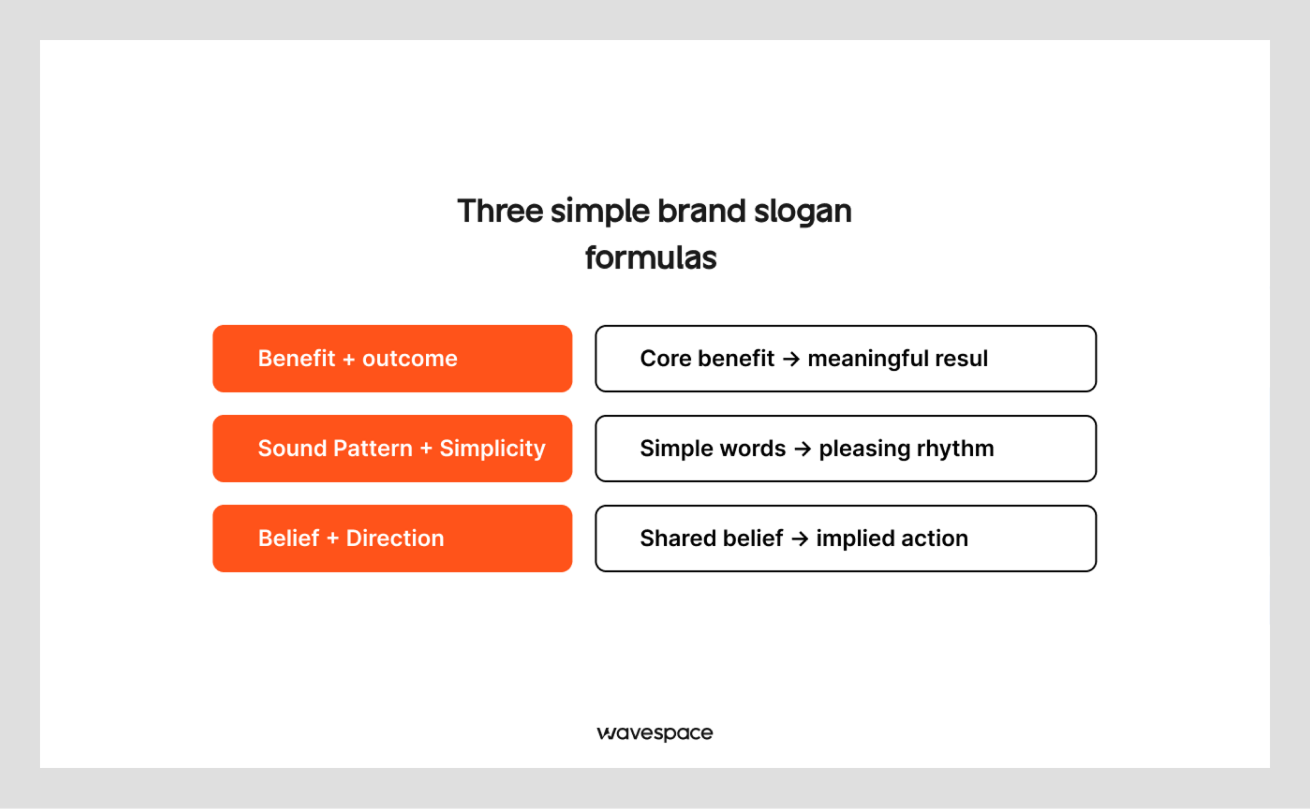
Good brand slogans are not a coincidence. Once they are broken down, most fall into basic linguistic structures that conform to how people process meaning, sound, and purpose. Three original slogan formulas are listed below, not templates to follow.
Benefit + outcome
This equation connects an actual advantage to a definite good outcome. It is effective because it gives a yes answer to two unspoken questions: What do I gain? and Why does it matter? The language remains down-to-earth and not exaggerated.
This is a useful structure when a brand is interested in explaining its value in a short time and does not want to sound promotional. It is particularly practical when dealing with practical products, services, and brands in their early stages that require clarity over creativity.
Formula pattern:
Core benefit → meaningful result
Sound Pattern + Simplicity
The formula is based on the sound of a slogan and nothing more. The line can be easier to remember and repeat through repetition, rhythm, or balanced phrasing. The significance remains plain, yet the framework provides the permanence.
Brands with this strategy focus on recall and familiarity. The slogan must be easy to read aloud, even conversational, and not in need of clarification.
Formula pattern:
Simple words → pleasing rhythm
Belief + Direction
This formula expresses a belief and subtly points the audience toward a way of thinking or acting. It does not describe the product. Instead, it reflects a mindset the brand aligns with. The tone is confident, sometimes challenging, but never instructional.
This model is most effective when the brand aims to communicate values, culture, or perspective instead of functionality. In the long term, it helps the brand to represent something other than what it is selling.
Formula pattern:
Shared belief → implied action
Top 20 brand slogan examples (With analysis)
These 20 famous brand slogans are discussed not only on their popularity but also on their effectiveness and what their founders can learn.
1. Nike

Slogan: Just Do It
Why it works:
This slogan eliminates hesitation. It is not about sports, shoes, or playing. Rather, it appeals to a common inner conflict: beginning. The complexity enables it to be applied to athletes, beginners, and ordinary people.
Founder takeaway:
Good slogans may inspire action, but not buying.
2. Apple
Slogan: Think Different
Why it works:
The slogan makes the brand a mindset and not a product. It targets the sense of creativity and self-sufficiency and lets users see their reflection in the brand philosophy instead of the specifications.
Founder takeaway:
Slogans based on identity generate more loyalty than those based on features.
3. McDonald’s

Slogan: I’m Lovin’ It
Why it works:
The slogan is about fun, not food. It is informal and intimate, making the brand personable instead of corporate. This is an emotional tone that cuts across cultures.
Founder takeaway:
Emotion speaks louder than product descriptions.
4. Coca-Cola

Slogan: Real Magic
Why it works:
The slogan connects an easy action with an emotional result. It redesigns consumption as experience, rather than transaction, which supports the brand as a positive moment.
Founder takeaway:
Relate your product to something people already appreciate.
5. Google
Slogan: Don’t Be Evil
Why it works:
This slogan promises values, not advantages. It creates trust by declaring a moral position, which was particularly strong in a category where users rely on unseen systems.
Founder takeaway:
Promises take longer to build trust than values-based slogans.
6. L’Oréal
Slogan: Because You’re Worth It
Why it works:
The slogan speaks directly to the individual. It reframes purchase as self-affirmation rather than indulgence, which creates emotional justification.
Founder takeaway:
Talk to the customer about himself, not your product.
7. Adidas
Slogan: Impossible Is Nothing
Why it works:
The motto defies restrictions and redefines doubt as a chance. It resonates with sports and is still generalized to personal ambition.
Founder takeaway:
The ability to reformulate beliefs is more effective than a benefits list.
8. BMW
Slogan: The Ultimate Driving Machine
Why it works:
This motto boasts a distinct stand. It is bold, particular, and unashamed. It creates the brand based on experience and not status.
Founder takeaway:
Defined positioning is better than uncertain excellence.
9. Disney

Slogan: The Happiest Place on Earth
Why it works:
The slogan creates emotional anticipation even before the experience has started. It determines how people need to feel, which will influence perception and memory.
Founder takeaway:
The setting of expectations affects experience.
10. Amazon
Slogan: Work Hard. Have Fun. Make History.
Why it works:
It is an inward-looking slogan, rather than outward. It conveys culture, ambition, and speed, which strengthens the brand operations.
Founder takeaway:
Slogans can guide teams, not just customers.
11. Mastercard
Slogan: There Are Some Things Money Can’t Buy
Why it works:
The motto makes a financial brand human, as it is an emotional and not a transactional value. It is memorable because of the contrast.
Founder takeaway:
Contrast makes abstract categories feel human.
12. Airbnb

Slogan: Belong Anywhere
Why it works:
The motto redefines accommodation as fitting. It speaks to identity and inclusion rather than price or convenience.
Founder takeaway:
A sense of belonging is an emotional motivator.
13. FedEx
Slogan: When it absolutely, positively has to be there overnight
Why it works:
It gets rid of confusion and creates trust through clarity. The specificity reinforces reliability.
Founder takeaway:
Transparency is more convincing than innovation.
14. Uber
Slogan: On Our Way
Why it works:
The slogan focuses on flexibility and control. It makes the service empowering and not transactional.
Founder takeaway:
Control is more important to people than features.
15. Netflix
Slogan: See What’s Next
Why it works:
It creates interest and suggests constant discovery. The future-oriented language concurs with content consumption behavior.
Founder takeaway:
Curiosity increases engagement.
16. Visa
Slogan: Everywhere You Want to Be
Why it works:
The slogan relates the brand to access and lifestyle, but not payment processing.
Founder takeaway:
Technical claims are worse than abstract benefits.
17. Red Bull
Slogan: Gives You Wings
Why it works:
The metaphor is appropriately overstated. It is visual, emotional, and easy to remember.
Founder takeaway:
Metaphors make things easy to remember.
18. Slack
Slogan: Where Work Happens
Why it works:
The slogan makes the product the default workspace. It is confident and category-defining.
Founder takeaway:
Claiming the center of a category builds authority.
19. KFC
Slogan: Finger Lickin’ Good
Why it works:
It works through sensory words to build visual pictures. It is difficult not to notice the audacity.
Founder takeaway:
Sensory language is longer in duration.
20. Spotify
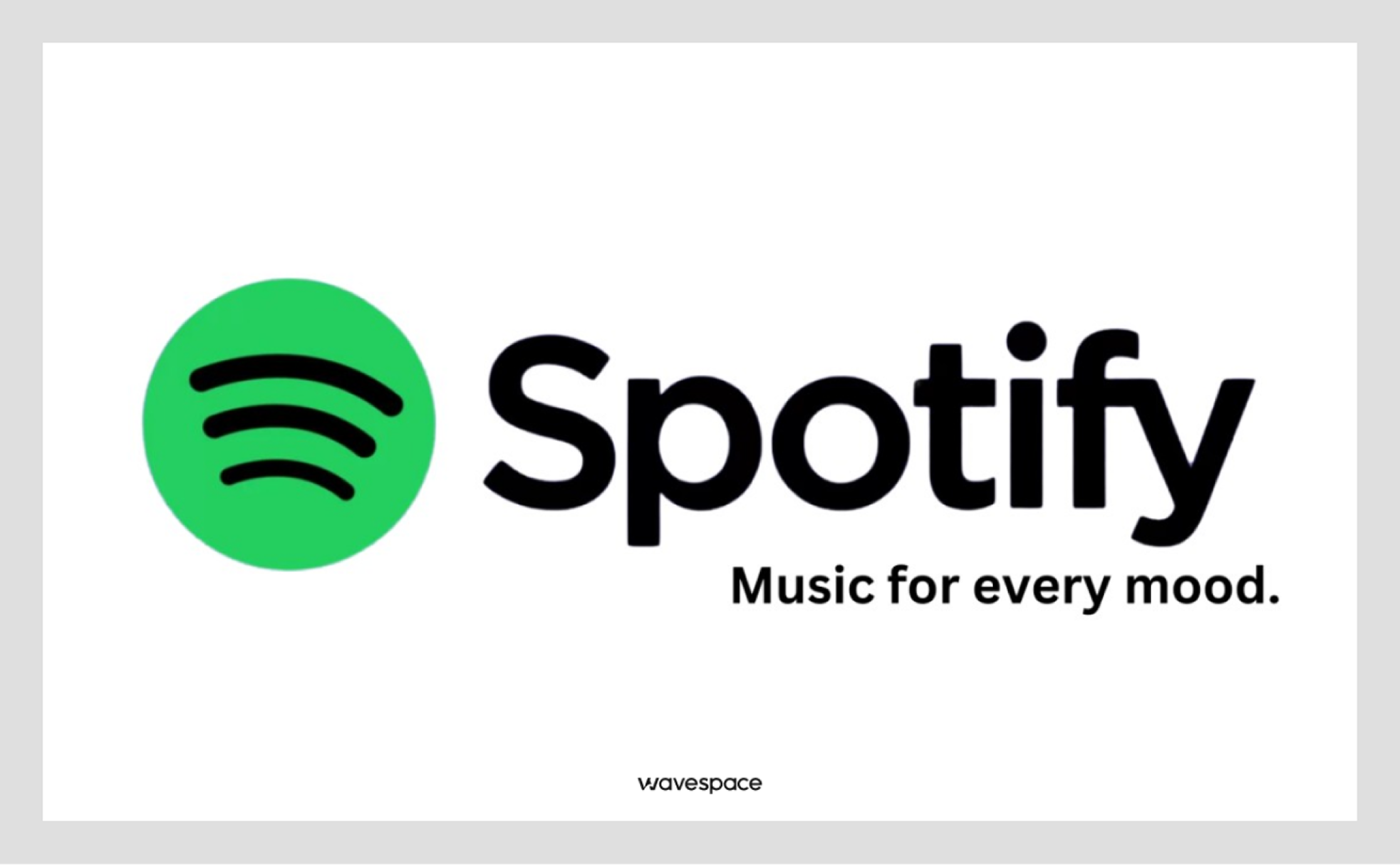
Slogan: Music for Every Mood
Why it works:
The slogan is personalized. It implies flexibility and responsiveness to personal feelings.
Founder takeaway:
Personal relevance increases emotional attachment.

Key takeaways from the top 20 brand slogans
Looking at these slogans collectively, one can see obvious patterns. The most effective slogans are neither the most innovative on paper, but the ones that know how people think and feel.
The majority of the slogans are emotional, even in situations where the brands are highly functional. They address motivation, belonging, confidence, or trust as opposed to product features. It is this emotional dimension that makes slogans remain current over the years and markets.
A few of these slogans tell you what the product does. They are based on experience and identity instead. This indicates that great brands do not need explanation. They rely on association. People will not recall how a brand functions, but the way it makes them feel
Simplicity is another obvious trend. The most powerful slogans are made of ordinary words, short sentences, and natural rhythm. It has no excess complexity. The message is instantly clear, so that it is easier to remember and repeat.
Lastly, these slogans are effective since they are timeless. It is not novelty, but repetition that makes a name. Bands that take slogans as long-term investments instead of campaign copy enjoy better memory and trust.
Summary
A brand slogan is not a decorative line added at the end of branding. It is a strategic tool that shapes how people remember, relate to, and trust a brand.
The finest slogans are direct, touching, and consistent with a distinct view. They do not attempt to make everything clear. They have a single idea and convey it throughout time.
To the founders and brand builders, the lesson is evident. It is not a great slogan that has something great to say. It concerns clarity, belief, and restraint. When these elements are combined, a slogan is more than a phrase. It enters the realm of a living brand in the minds of people.
FAQs about brand slogans

A good brand statement is brief, concise, and emotionally appealing. It is what the brand is all about and easy to remember, repeat, and recall with time.
A brand slogan is a slogan, usually a short phrase, that conveys a particular message about a brand, which may be based on a campaign, phase, or positioning emphasis. It aids recall and recognition.
A marketing slogan is a phrase that is developed to facilitate advertising or promotion. It is usually campaign-driven and can change depending on marketing goals or audience focus.
A business slogan refers to a phrase applied to convey the value or message of a firm to its customers. Depending on its use, it may be used in branding, marketing, or positioning.
Start by identifying what your brand truly stands for, choose the main feeling or benefit you want to communicate, remove unnecessary words, and test if people can remember it after hearing it once.
The slogans, such as Just Do It, are not the most well-known ones, but they are mostly identified due to their simplicity, emotional appeal, and the ability to be repeated throughout the years.
Yes. A slogan can be 9 words or longer, but shorter slogans are generally more memorable. Clarity and recall matter more than word count.
The best slogans are usually centered on emotion, belief, benefit, or identity. Powerful concepts are typically based on knowing the brand better than attempting to sound clever.
A slogan is mostly campaign-oriented and adaptable, whereas a tagline is the corporate image and the ideology of the brand. Slogans are more frequent, and taglines are not.

More related blog

Have a Project? Let’s talk!







.png)



Francisco, CA 94105, United States





































.avif)